

CNHL Lipo Batteries
CNHL aim at providing high-quality Li-Po batteries and RC products to all hobby enthusiasts with excellent customer services and competitive prices
If you're into RC cars, FPV drones, or airsoft, you know that the Lithium Polymer (LiPo) battery is the heart of your gear. But sooner or later, every enthusiast runs into the same frustrating problem: the dreaded "dead cell." One minute your battery is a powerhouse, and the next, it feels weak or flat-out refuses to charge.

This guide will break down what a dead cell really is, look at some risky "revival" tricks, and focus on the best strategy of all: preventing them in the first place.
If you want the broader ownership framework behind battery warning signs, safer handling, and replacement decisions, start with the LiPo Battery Maintenance and Safety Guide.
Think of a LiPo pack like a chain, where each cell is a link. For a battery to be strong, all its links have to work together. In a healthy LiPo, each cell has a nominal voltage of 3.7V, sits at 4.2V when fully charged, and should never be allowed to drop below 3.0V.
A cell becomes "dead" when its voltage plummets far below that 3.0V floor, sometimes down to 2.5V or even lower. This drop damages its internal chemistry permanently. Most smart chargers are designed to spot this danger and will refuse to charge the pack, often flashing a "LOW VOLTAGE" error to protect you.

The effect of a single dead cell is instant and obvious. Because the cells are linked together in series, the whole pack’s performance tanks. Your RC car will feel sluggish, or your drone will barely have the power to lift off. Your run times will be slashed, and the remaining healthy cells will be strained as they try to pick up the slack, which can cause them to fail, too.
Although the odd manufacturing defect is possible, dead cells are most likely to be due to misuse or neglect.
This is the number one killer of LiPo batteries. Letting a cell discharge below its 3.0V minimum will cause a catastrophic chemical reaction. The copper current collector inside the cell can start to dissolve. When you then try to charge it, the dissolved copper can form tiny, pointy bridges known as dendrites. The dendrites can actually puncture the thin separator between the layers of the battery, causing an internal short circuit. Not only does this kill the cell, but it's also a major fire hazard.
If you want the bigger lifespan picture behind aging, cycle wear, and when a battery is no longer healthy, read How Long Can an RC Battery Last?.
Overcharging—pumping a cell above its 4.2V maximum—is equally risky, making it produce gas (puffing) and even ignite. Physical trauma in an impact also can make the internal layers collapse, resulting in an immediate short. All LiPo batteries do age eventually. Following 150-300 charge cycles, their internal resistance rises, and their capacity to hold a charge falls, ultimately causing the cell to fail.

It is easy to diagnose a dead cell if you possess a basic piece of equipment, such as a multimeter or LiPo checker. The ideal way is to measure the individual cell voltages by connecting the small white balance lead of the battery to a checker. In a good pack, all the cell voltages will be very close to each other. A broad disparity indicates a problem.
Here are the key signs to look for:

SAFETY WARNING: Attempting to revive a dead LiPo is inherently risky and can lead to a fire. This should only be done with extreme caution, in a fire-safe location (outdoors on concrete is best), with a fire extinguisher nearby. Never leave the battery unattended during this process.
This method aims to gently nudge a dead cell's voltage back into the acceptable range for a LiPo charger. With the balance lead unplugged, you charge the battery in NiMH mode at a very low current (0.1A-0.2A). You must constantly monitor the overall voltage with a multimeter. Once the pack's total voltage implies each cell is above 3.0V (e.g., >9.0V for a 3S pack), you immediately stop the NiMH charge. Then, you can try a normal LiPo Balance Charge at a low rate. The risk is high because NiMH mode doesn't monitor individual cells and can easily overcharge the healthy ones.
This involves surgically opening the pack, desoldering the dead cell, and soldering in a new one. This is not recommended for anyone but experts. Handling and soldering raw LiPo cells is extremely dangerous, as a puncture or accidental short can result in an instant, violent fire.
The theory that freezing a LiPo can somehow reverse damage is highly disputed and lacks scientific backing. A significant risk is condensation forming inside the battery's electronics upon thawing, which can cause new problems. This method is widely considered an unreliable myth and is not advised.
Let's be clear: a "revived" cell is a wounded cell. It will never have its original performance and will always carry a higher risk. If you choose to proceed, use a quality smart charger with a balance charge function—this is non-negotiable.
For the first few charge cycles after a recovery attempt, always charge the battery in a LiPo-safe bag or another fire-proof container. Stay with the battery for the entire duration of the charge. Periodically and carefully feel it for any signs of heat or puffing. If it gets even slightly warm or begins to swell, unplug it immediately.
You should give up and safely dispose of the battery if the cell's voltage doesn't rise, if it gets hot or puffs up, or if its voltage immediately plummets after being charged. To scrap a LiPo, discharge it completely using a small lightbulb, then take it to a proper battery recycling center.
If the pack is clearly unsafe, follow this LiPo battery disposal and recycling guide instead of continuing to experiment with it.
Prevention is always the best medicine. Following these simple rules will dramatically extend the life of your batteries and keep you safe.

By understanding how lithium polymer batteries work and taking good care of them, you can ensure they have a long and healthy life. Not only will this provide a reliable source of power for your hobby, it will also save you money and, most importantly, keep you safe.。
For the broader habit-side picture behind early battery damage, see Common LiPo Battery Mistakes That Kill Performance Early.
CNHL aim at providing high-quality Li-Po batteries and RC products to all hobby enthusiasts with excellent customer services and competitive prices
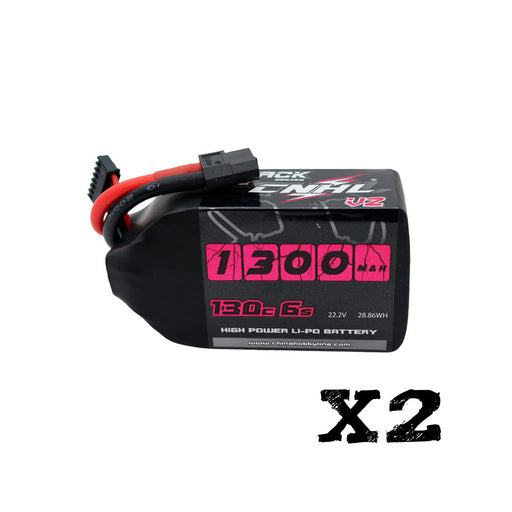
Quick Fit Check The 2 Packs CNHL Black Series V2.0 1300mAh 22.2V 6S 130C LiPo Battery with XT60 Plug is a strong fit for FPV pilots who want a prov...
View full details

Hstar D43-01Q 911 Style is a mini 1/43 alloy drift RC car designed for indoor tabletop fun and realistic drifting. It features full proportional ...
View full details

Spare Parts Availability We know that for RC pilots, reliable spare parts support often determines how long an aircraft can actually sta...
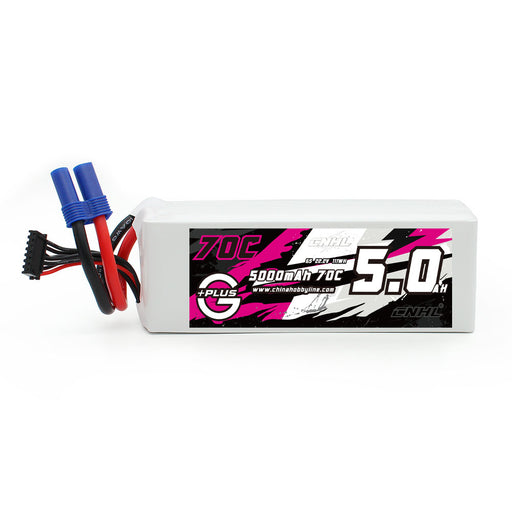
View full detailsSpecifications: Stock Number: 500706EC5 Capacity: 5000mAh Voltage: 22.2V / 6-Cell / 6S1P Discharge Rate: 70C Continual / 140C Burst Charge Rate: ...
View full details
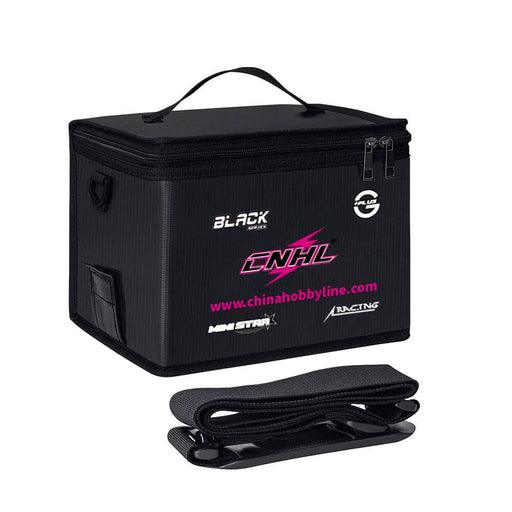
The CNHL LiPo Battery Bag is designed for safer LiPo charging, transport, and storage at home or at the field. It adds a practical layer of protect...
View full details

The Hstar D24-03S is a 1:24 Porsche 911 GT3 RS style 4WD gyro drift RC car built for indoor drifting, smooth-floor practice, and small home t...
View full details

The Hstar D24-04S is a 1:24 Toyota GR Yaris style 4WD gyro drift RC car built for indoor drifting, smooth-floor practice, and compact home tra...
View full details

The Hstar D24-01S is a 1:24 Toyota GR Supra style 4WD gyro drift RC car built for indoor drifting, smooth-floor practice, and small home tracks. ...
View full details

Quick Fit Check The 2 Packs CNHL Black Series V2.0 1500mAh 8S 130C LiPo Battery with XT60 Plug is aimed at advanced FPV pilots who want a higher-ca...
View full details

Quick Fit Check The 2 Packs CNHL Black Series V2.0 1300mAh 8S 130C LiPo Battery with XT60 Plug is built for advanced FPV pilots who want a comp...
View full details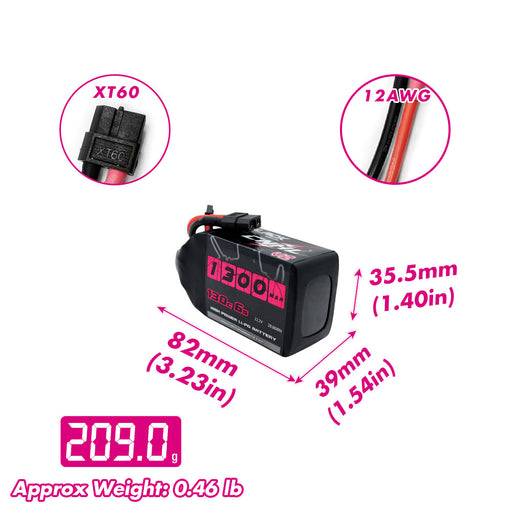

Comments
Leave a comment