
CNHL Baterai Lipo
CNHL bertujuan menyediakan baterai Li-Po berkualitas tinggi dan produk RC kepada semua penggemar hobi dengan layanan pelanggan yang luar biasa dan harga yang kompetitif

The short answer is this: the DeepSpace Seeker 35 DC Drone Analog w/ GPS makes sense for pilots who want a compact 3.5 inch quad that still feels powerful, fast, and genuinely exciting on 6S. It is not the most practical choice for every pilot, and it does not replace either a true sub-250 machine or a versatile 5 inch build. What it does offer is something more specific: a small-frame ripper with quick acceleration, strong punch, and a flight character that feels much closer to a compact 5 inch than to a lightweight park quad.
That distinction matters, because this quad is easy to misunderstand on paper. A 3.5 inch frame with GPS, a dead-cat layout, 2006 motors, an F722 stack, and 6S power could sound like a pile of features borrowed from different categories. In practice, though, the Seeker 35 DC feels surprisingly coherent. It is not trying to be a tiny cruiser. It is not trying to be a fragile sub-250 stunt build either. It is trying to be fun first, and on that front it is unusually convincing.
For readers already looking at battery options, the practical starting point is here: Best Battery for DeepSpace Seeker 35 DC Drone Analog w/ GPS. But the more interesting question is not just which battery fits. It is what kind of quad this really becomes once you put a battery on it.
The easiest way to describe the Seeker 35 DC is this: it is a 3.5 inch quad for pilots who do not want a 3.5 inch quad to feel small. That sounds contradictory, but it matches the way this class of machine is evolving. A lot of smaller quads lean toward efficiency, portability, or legal convenience. The Seeker 35 DC leans toward speed, punch, and attitude.
That shows up immediately in the hardware. The dead-cat geometry is there to keep the front props out of view, which gives the quad a more camera-friendly layout. The 2006 motors are larger than many people expect on a 3.5 inch build, and that is a big part of why the quad does not feel timid. The GPS is mounted far forward, away from some of the clutter and interference that can make small quads slower to lock in. Even the overall shape tells you this is not a minimalist whoop-style philosophy. It is more like a compact machine built around the idea that small and aggressive can coexist.
There are a lot of BNF quads that look fine in photos and then feel generic once they are in the air. The Seeker 35 DC avoids that problem. The design is distinctive enough to be memorable, but the real appeal is that the features are not just there for marketing. The front GPS placement is sensible. The camera cage looks protective without looking oversized. The side plates actually add to the identity of the quad, and compared with some decorative side-plate designs on other frames, these appear more deliberate and more secure.
The dead-cat layout also matters more here than it does on some smaller cinematic builds. On a machine that can actually be flown hard, having a cleaner front view is not a minor feature. It is one of the reasons the DC version will make more immediate sense to pilots who want the freedom to mix fast freestyle with cleaner DVR footage.

The most useful way to describe the Seeker 35 DC in the air is that it feels smaller than a 5 inch in size, but not in attitude. It does not carry momentum the way a full 5 inch does, and you still feel that reduced mass when changing direction or moving through tighter gaps. But the throttle response, recovery power, and general sense of urgency are much closer to bigger machines than many pilots expect from a 3.5 inch platform.
That is why so many reactions to this type of quad come back to the same idea: it feels like a pocket-size 5 inch, or a small ripper, or a little beast. Those descriptions are not just hype. They reflect the same basic flight character. Punch the throttle and it covers ground quickly. Stay on top of the throttle and it feels alive. Keep your inputs clean and it can produce lines that look much bigger than the frame size would suggest.
At the same time, it is not perfect in every situation. The Seeker 35 DC makes less obvious sense if your goal is maximum versatility. A lot of pilots will still be better served by a proper 5 inch if they want one machine that can do nearly everything. Others will still prefer a genuinely sub-250 setup if their priority is lighter weight, easier travel, or a calmer learning curve. The Seeker 35 DC is the quad you buy when you already know that what you want is not “most practical,” but “most fun in this size.”
| Question | Seeker 35 DC | Typical 5 inch quad |
|---|---|---|
| Size and portability | More compact and easier to carry | Larger and less convenient in a small bag |
| Raw versatility | More specialized, more personality-driven | Still the better all-rounder |
| Flight feel | Snappier, quicker to react, smaller footprint | More momentum, more authority, more familiarity |
| Best reason to buy | You want a compact quad that still rips hard | You want one platform that can do almost everything |
This is where the Seeker 35 DC becomes easier to understand. It is not here to prove that 5 inch quads are obsolete. It is here to show that there is room for a smaller machine that still feels serious. The advantage is not only speed or punch. It is that the quad feels more compact, slightly less intimidating, and easier to fit into tighter spaces, while still delivering an aggressive 6S experience.
Yes, more than it first appears. On a small 3.5 inch quad, GPS can sometimes feel like a checkbox feature that sounds better in the listing than it works in the field. Here, the front-mounted position and the general layout make it feel more purposeful. Fast acquisition and usable return-to-home behavior matter more on a compact 6S quad than on a lazy cruiser, because this is the kind of machine that encourages harder flying and more adventurous lines.
That does not turn the Seeker 35 DC into a long-range platform by default, but it does make the GPS easier to justify. It is part of what gives the quad a “finished” feel rather than a stripped-down one.
This is the part most listings gloss over, but it matters a lot on the Seeker 35 DC. A 3.5 inch 6S build with this much motor has enough headroom that battery choice is not just about runtime. It changes the personality of the quad.
A lighter pack around 1100mAh keeps the quad more playful and more reactive. It makes the Seeker 35 DC feel lighter on its feet and more eager to change direction. That suits pilots who already know they like a sharper, more lively setup.
A 1300mAh 6S pack is where the balance starts to make the most sense for most owners. It gives enough weight to settle the quad without making it feel dulled down. This is why the main collection recommendation for this model centers around that size: see the recommended Seeker 35 DC battery collection here.
A 1500mAh 6S pack pushes the quad in a slightly different direction. It adds more planted feel, more inertia, and often a more complete sense of weight in the air. On this type of frame, that can actually help some pilots, especially if the goal is smoother freestyle or carrying a light action camera without the quad feeling nervous.

Surprisingly, yes. That is one of the most interesting things about this frame. A lot of quads in this size class can technically carry extra weight, but the result feels like a compromise. Here, a light action camera does not automatically ruin the experience. In some setups, the extra mass can even make the quad feel smoother and a little more mature in the air, although that usually comes with the obvious trade-off of more crash energy.
That does not mean this should replace a dedicated bigger cinematic setup for every pilot. It means the Seeker 35 DC has enough motor and enough structure that adding a small action camera is not an automatic mistake. On a frame like this, that expands the use case in a meaningful way.
This is another area where the Seeker 35 DC looks more like an enthusiast platform than a disposable BNF. We found that it responds well to tuning changes and preset-based adjustments, especially if the goal is more polished freestyle behavior. That does not automatically mean the stock tune is unusable. It means there is real room to personalize the quad, which is usually a good sign on a platform with this much performance.
That also helps explain why reactions to this quad tend to sound enthusiastic rather than merely positive. Pilots are not only saying it flies well. They are talking about how it can be pushed, how it behaves with different weight setups, and how it can be tailored for a more freestyle-heavy role. That is usually what happens when a frame has enough headroom to reward experimentation.
This quad makes the most sense for pilots who already know what kind of feeling they want. If you already have a 5 inch and want something smaller that still feels genuinely exciting, the Seeker 35 DC makes a strong case. If you want a 3.5 inch quad that does not feel underpowered or overly delicate, it also makes sense. If you travel, like tighter gaps, or simply want a more compact machine without giving up too much punch, this class is easy to appreciate.
That is also why this is not the kind of quad that automatically makes sense for everyone. If you are stepping up from tiny whoops or lighter beginner builds, something calmer may still be easier to enjoy. If you want one machine that can do almost everything, a 5 inch is still the more versatile option. And if your priority is the smallest possible setup with lower pressure flying, sub-250 builds still have a strong case. The Seeker 35 DC makes the most sense when you specifically want this mix of size, speed, and attitude.
If you are comparing this quad with other compact freestyle or hybrid builds, it helps to zoom out and look at the bigger battery categories too. General FPV drone batteries cover a wide range of use cases, but the Seeker 35 DC lives very clearly in the more specific 6S LiPo for FPV space. That is the right lens for understanding it: not as a tiny quad that happens to run 6S, but as a real 6S machine in a smaller footprint.
The DeepSpace Seeker 35 DC Drone Analog w/ GPS is not the answer to every FPV question, but it does not need to be. What it offers is a very specific mix of compact size, real punch, useful GPS integration, and a flight feel that is far more serious than many people expect from a 3.5 inch frame. That alone gives it a clear identity.
For the right pilot, that identity is the whole point. This is not a timid 3.5 inch. It is not a stripped-down ultralight. It is a compact ripper that can be playful, violent, planted, or smooth depending on how you build and battery it. And that is what makes it interesting.
Is the DeepSpace Seeker 35 DC better than a 5 inch quad?
Not in every way. A 5 inch is still more versatile overall. The Seeker 35 DC is better viewed as a smaller, more compact machine that still delivers serious 6S energy.
Is this a good first FPV drone?
For some pilots, maybe. But in general it makes more sense for people who already have a little stick time and know they want something faster and more aggressive than a beginner-oriented setup.
Does the dead-cat frame matter?
Yes. On this quad, the DC layout helps keep props out of view and makes more sense for pilots who want cleaner footage while still flying hard.
Which battery size makes the most sense?
For most pilots, 1300mAh 6S is the best place to start. It gives the Seeker 35 DC the most balanced overall feel.
CNHL bertujuan menyediakan baterai Li-Po berkualitas tinggi dan produk RC kepada semua penggemar hobi dengan layanan pelanggan yang luar biasa dan harga yang kompetitif
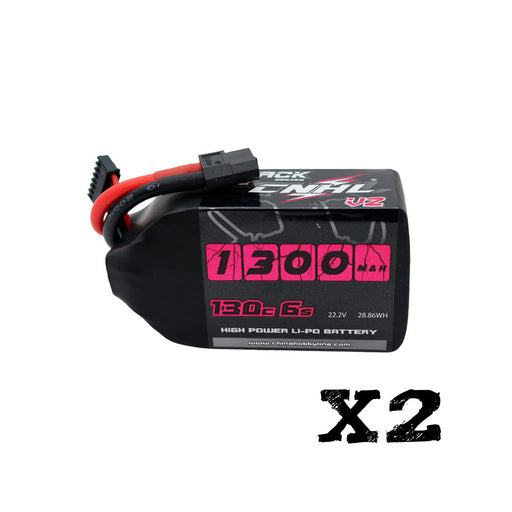
Pemeriksaan Kesesuaian Cepat 2 Packs CNHL Black Series V2.0 1300mAh 22.2V 6S 130C LiPo Battery dengan Colokan XT60 sangat cocok untuk pilot FPV yan...
Lihat detail lengkapSuku Cadang & Dukungan Jangka Panjang Kami memahami bahwa bagi pilot RC, dukungan suku cadang yang andal merupakan bagian penting untuk m...
Lihat detail lengkap
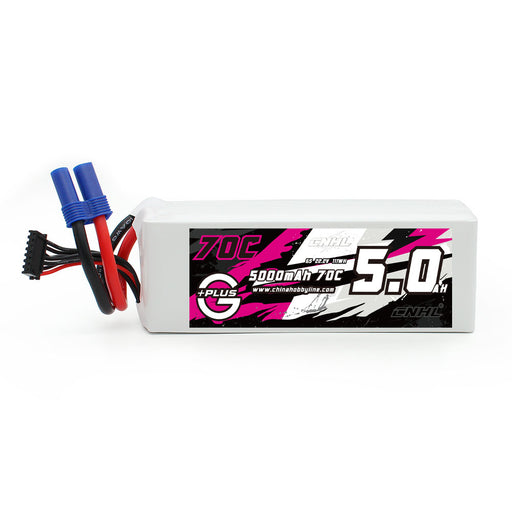
Spesifikasi: Nomor Stok: 500706EC5 Kapasitas: 5000mAh Voltase: 22.2V / 6-Sel / 6S1P Tingkat Discharge: 70C Kontinu / 140C Ledakan Tingkat Pengisi...
Lihat detail lengkap
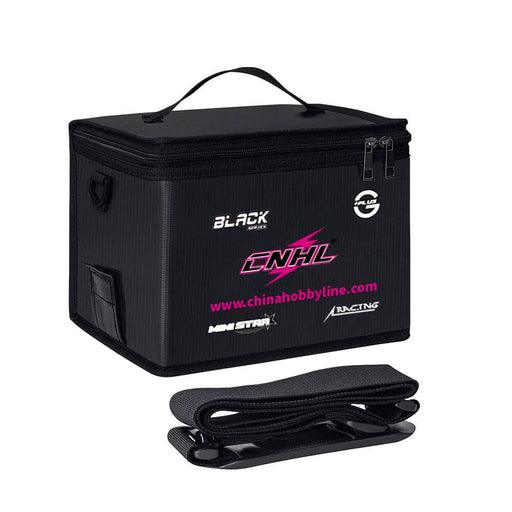
Tas Baterai LiPo CNHL dirancang untuk pengisian, transportasi, dan penyimpanan LiPo yang lebih aman di rumah atau di lapangan. Tas ini menambahkan ...
Lihat detail lengkap

Pemeriksaan Pemasangan Cepat 2 Paket CNHL Speedy Pizza Series Pro 1350mAh 6S 150C LiPo Battery dengan colokan XT60 dibuat untuk pilot FPV 5 inc...
Lihat detail lengkap

Quick Fit Check The CNHL Speedy Pizza Series 2200mAh 22.2V 6S 120C LiPo Battery with XT60 Plug combines the familiar 2200mAh 6S format with a ligh...
Lihat detail lengkap

Quick Fit Check The CNHL Speedy Pizza Series 2200mAh 14.8V 4S 120C LiPo Battery with XT60 Plug combines a widely used 2200mAh 4S format with a sli...
Lihat detail lengkap

Quick Fit Check The CNHL Speedy Pizza Series 2200mAh 11.1V 3S 120C LiPo Battery with XT60 Plug takes the familiar 3S 2200mAh aircraft battery form...
Lihat detail lengkap

The CNHL Long Range Series BAK 65E 6350mAh 21700 Li-ion battery cell is built around one clear priority: maximum stored energy from a lightweight c...
Lihat detail lengkap

The CNHL Long Range Series BAK 50D 5000mAh 21700 Li-ion battery cell is designed for custom high-energy battery packs that need a strong balance be...
Lihat detail lengkap


Tinggalkan komentar