
CNHL Baterai Lipo
CNHL bertujuan menyediakan baterai Li-Po berkualitas tinggi dan produk RC kepada semua penggemar hobi dengan layanan pelanggan yang luar biasa dan harga yang kompetitif

Quick answer: The Eflite UMX Gee Bee R-2 is a re-released ultra micro racer best suited for experienced pilots. Compared to the original version, it adds 2S and 3S compatibility, stronger vertical performance, and refined AS3X tuning—while keeping the demanding landing behavior that defines the Gee Bee character.
The Gee Bee R-2 is one of those aircraft designs that never really disappears. Short wings, oversized fuselage, and an unmistakable presence made it legendary—and infamous—long before radio control models existed. When the original UMX Gee Bee R-2 was released years ago, it quickly became a cult favorite among experienced pilots.
Now, the E-flite UMX Gee Bee R-2 returns as a modern re-release. This is not a simple rebox. While the silhouette remains faithful, the way this aircraft flies today reflects meaningful updates in power capability, tuning, and overall usability.
Community reaction to the re-release has been immediate and emotional. Comments like “ITS BACK!!!” and “I still have one from 12 years ago” show how deeply the original UMX Gee Bee R-2 resonated with pilots. Many kept their V1 models flying for over a decade, which says a lot about both the design and the experience it delivered.
This updated version taps directly into that nostalgia, but it also acknowledges something important: expectations have changed. Ultra micro pilots today expect more usable power, better stabilization, and improved flexibility.

The biggest shift is power system compatibility. The original E-flite UMX Gee Bee R-2 was very much a 2S-era aircraft. The re-release supports both 2S and 3S setups, opening up a much wider performance envelope.
On 2S, the aircraft remains lively but manageable. On 3S, it becomes a different animal entirely—faster, more vertical, and far more authoritative. Pilots consistently describe the climb as “near unlimited vertical” when conditions allow.
Supporting this change are subtle but important updates to structure and tuning. The airframe is better suited to higher loads, and AS3X stabilization does more to smooth out small corrections without masking the aircraft’s natural behavior.
In calm to moderate conditions, the UMX Gee Bee R-2 tracks surprisingly well. At around 50% throttle, the model settles into a smooth groove that feels far less twitchy than many expect from such a short-coupled design.
That said, this is still a Gee Bee. Wind matters. Pilots report that even light gusts require active rudder input, and crosswind approaches demand attention. This aircraft rewards hands-on flying rather than passive cruising.

Landing is the phase that defines the UMX Gee Bee R-2 experience. Even experienced pilots note that it prefers to be flown onto the runway rather than floated in.
Maintaining a bit of extra speed, staying active on the rudder, and avoiding aggressive flare inputs are key. Interestingly, pilots flying in cold weather noticed earlier low-voltage protection, which further reinforces the need for a clean, decisive approach.
Soft landing gear and scale wheels help absorb minor imperfections, but this is not a plane that forgives complacency.
One of the most consistent themes across pilot feedback is that the UMX Gee Bee R-2 does not behave like a typical ultra micro sport plane. Even with AS3X assistance, it asks more from the pilot—especially in yaw management and energy control.
Several experienced pilots noted that while straight-line speed and vertical performance are impressive, the aircraft prefers to be flown deliberately rather than reacted to. Rudder input is not optional, particularly during low-speed passes and final approach.
This behavior becomes more noticeable when compared to common UMX benchmarks such as Timber-series aircraft or warbird-style models. Those designs tend to mask pilot input with higher inherent stability. The Gee Bee does the opposite—it rewards precision and punishes hesitation.
That characteristic is exactly why long-time owners of the original version kept theirs flying for over a decade. It feels involved. It feels different. And it never quite becomes “boring,” even after dozens of flights.
Real-world testing in cold conditions revealed a critical insight: battery health and temperature have an outsized impact on the UMX Gee Bee R-2 experience.
In near-freezing temperatures, pilots observed earlier voltage sag, reduced throttle authority late in the flight, and conservative low-voltage cutoffs—sometimes appearing suddenly rather than gradually.
This does not indicate a flaw in the aircraft. Instead, it highlights how sensitive high-performance ultra micro setups are to battery condition. Older packs or aggressively charged packs showed noticeably shorter usable flight windows.
When temperatures rise and fresh batteries are used, flight time increases significantly. Several pilots estimated roughly 4–5 minutes of usable flight time in warmer conditions on 2S packs, with slightly shorter but more energetic flights on 3S.

Battery choice significantly affects how the aircraft feels. On 2S, flight times tend to be slightly longer and throttle response more forgiving. This setup suits smaller fields and pilots transitioning from other UMX sport models.
On 3S, performance jumps noticeably. Speed increases, wind penetration improves, and vertical climbs become dramatic. The trade-off is reduced margin during landing and greater sensitivity to battery placement.
For pilots looking to explore compatible options across different aircraft sizes, the broader CNHL Airplane Batteries collection provides useful reference points.
Small adjustments go a long way on this airframe. Many pilots shift the battery slightly aft or forward to fine-tune pitch response. Expo is frequently increased to smooth center-stick feel without sacrificing authority.
Cold-weather flying deserves special mention. Multiple flights showed reduced flight time and earlier voltage sag when temperatures drop, reinforcing the value of fresh packs and conservative throttle management.
| Setup Aspect | 2S Configuration | 3S Configuration |
|---|---|---|
| Throttle Response | Smooth, forgiving, easier to manage | Aggressive, immediate, highly responsive |
| Vertical Performance | Strong but limited by weight | Near-unlimited vertical climb |
| Landing Difficulty | More predictable approach | Requires precise energy management |
| Flight Time | Longer, especially in calm weather | Shorter but more dynamic |
| Recommended Pilot Type | Experienced UMX pilots transitioning up | Confident pilots seeking performance |
To simplify setup for both the re-release and earlier versions, compatible 2S and 3S options are organized here:
LiPo Batteries for Eflite UMX Gee Bee R-2 (2S & 3S Compatible)
Why does the UMX Gee Bee feel more sensitive than other UMX planes?
Its short wingspan, large fuselage, and racing-oriented design naturally reduce passive stability. AS3X smooths inputs but does not change the airframe’s core behavior.
Why does flight time feel short on some packs?
High power demand, cold temperatures, and aging ultra micro batteries can all cause earlier voltage sag. The Gee Bee R-2 benefits noticeably from fresh, well-matched 2S or 3S packs charged conservatively.
Is it normal to feel rushed during landing?
Yes. Many pilots describe the landing phase as “busy.” Maintaining airflow is more important than forcing a slow touchdown.
Is landing really difficult?
Landing requires attention, but it is consistent. The challenge is predictable rather than random.
Should I fly 2S or 3S?
2S offers smoother handling and longer flights. 3S delivers performance but demands discipline.
Does cold weather affect it much?
Yes. Like most ultra micros, battery performance drops quickly in low temperatures.
Can I reuse older UMX Gee Bee batteries?
Older packs may work, but flight quality improves noticeably with fresh, well-matched batteries.
The re-released Eflite UMX Gee Bee R-2 does not try to reinvent the design. Instead, it refines it for modern expectations—keeping the character intact while expanding what the aircraft can do. For pilots who appreciate history, challenge, and personality, it remains one of the most distinctive ultra micro experiences available.
Bottom line:
The UMX Gee Bee R-2 rewards preparation and discipline. With the right battery, conditions, and setup, it delivers a uniquely engaging ultra micro flying experience that few models can match.
If you’re also interested in the larger-scale Gee Bee experience, batteries for the full-size platform are organized separately here: LiPo Batteries for E-flite Gee Bee R-2 1.0m (Large-Scale) .
CNHL bertujuan menyediakan baterai Li-Po berkualitas tinggi dan produk RC kepada semua penggemar hobi dengan layanan pelanggan yang luar biasa dan harga yang kompetitif
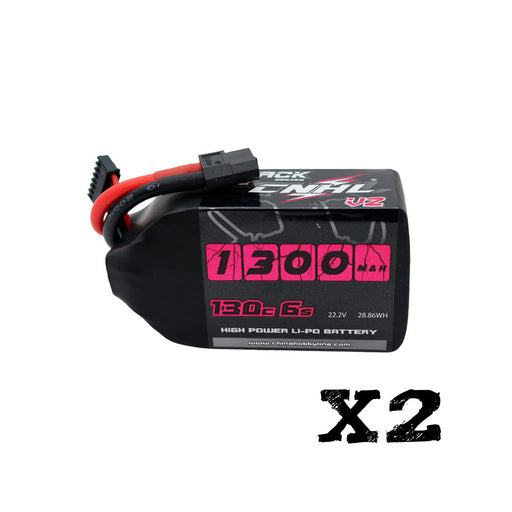
Pemeriksaan Kesesuaian Cepat 2 Packs CNHL Black Series V2.0 1300mAh 22.2V 6S 130C LiPo Battery dengan Colokan XT60 sangat cocok untuk pilot FPV yan...
Lihat detail lengkapSuku Cadang & Dukungan Jangka Panjang Kami memahami bahwa bagi pilot RC, dukungan suku cadang yang andal merupakan bagian penting untuk m...
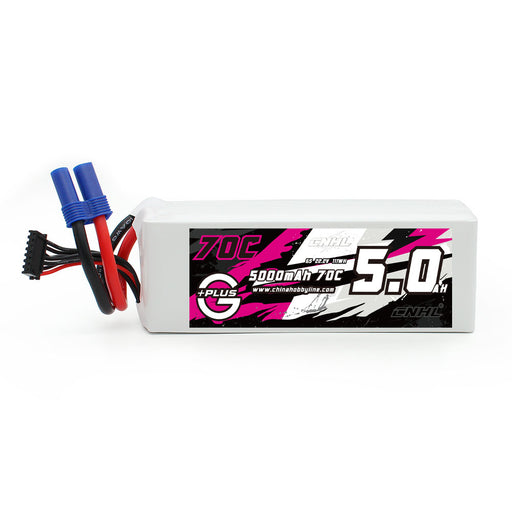
Lihat detail lengkapSpesifikasi: Nomor Stok: 500706EC5 Kapasitas: 5000mAh Voltase: 22.2V / 6-Sel / 6S1P Tingkat Discharge: 70C Kontinu / 140C Ledakan Tingkat Pengisi...
Lihat detail lengkap
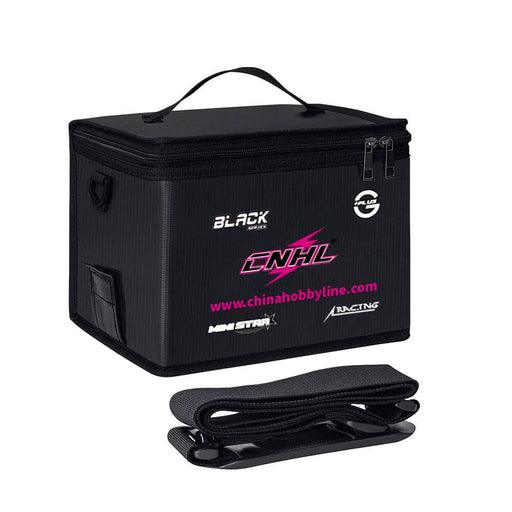
Tas Baterai LiPo CNHL dirancang untuk pengisian, transportasi, dan penyimpanan LiPo yang lebih aman di rumah atau di lapangan. Tas ini menambahkan ...
Lihat detail lengkapPemeriksaan Pemasangan Cepat 2 Paket CNHL Speedy Pizza Series Pro 1350mAh 6S 150C LiPo Battery dengan colokan XT60 dibuat untuk pilot FPV 5 inc...
Lihat detail lengkap

The CNHL Long Range Series BAK 65E 6350mAh 21700 Li-ion battery cell is built around one clear priority: maximum stored energy from a lightweight c...
Lihat detail lengkap

The CNHL Long Range Series BAK 50D 5000mAh 21700 Li-ion battery cell is designed for custom high-energy battery packs that need a strong balance be...
Lihat detail lengkap

The ISDT C4 EVO is a versatile smart battery charger built for AA, AAA and cylindrical rechargeable cells from compact 10440 batteries all the way ...
Lihat detail lengkap

The CNHL Long Range Series 6350mAh 21.6V 6S1P 21700 Li-ion battery combines six BAK 65E high-energy cells into a 137.16Wh pack designed for ultra-e...
Lihat detail lengkap

The CNHL Long Range Series 5000mAh 21.6V 6S1P 21700 Li-ion battery combines six BAK 50D cells into a compact 108Wh pack designed around long-range ...
Lihat detail lengkap




Tinggalkan komentar