
CNHL Baterai Lipo
CNHL bertujuan menyediakan baterai Li-Po berkualitas tinggi dan produk RC kepada semua penggemar hobi dengan layanan pelanggan yang luar biasa dan harga yang kompetitif

LiPo batteries almost always feel different in cold weather, and that difference is not just in your head. A pack that feels sharp and willing in mild conditions can suddenly feel softer, flatter, and less confident in winter. Punch gets weaker, voltage sag shows up earlier, and the whole model can feel like it has lost some of its normal energy. That is one reason winter flying and driving often expose battery behavior much more clearly than warm-weather use does.
Quick answer: LiPo batteries usually lose performance in cold weather because low temperature makes it harder for the pack to deliver current cleanly under load. That usually means more voltage sag, weaker punch, and softer overall power delivery. Some winter performance loss is normal, but severe early sag, unusually weak output, or big differences between cells may also reveal a battery that is already aging or poorly matched to the setup.
If you want the wider performance foundation first, start with LiPo C Rating and Battery Performance Guide. For the two most important related deep dives, continue into What Is Voltage Sag? Causes, Effects, and How to Reduce It and How Internal Resistance Affects LiPo Performance.
Cold weather makes LiPo batteries feel weaker because the pack becomes less willing to deliver current under load. The label on the battery does not change, but the real-world behavior does. A battery that normally feels clean and responsive can suddenly feel more reluctant once the temperature drops, especially when the setup asks for hard acceleration, punch-outs, or sustained throttle.
That is why winter battery feel often changes before anything else looks obviously wrong. The battery may still charge normally and still show reasonable voltage at rest, but once the model is actually used, the drop in usable performance becomes much easier to notice. This is one reason experienced users treat cold-weather battery behavior as a normal part of the equation rather than as a mystery.
There is no single magic number that defines a perfect LiPo temperature range for every pack, but a practical rule is simple: LiPo batteries do not like temperature extremes. For everyday RC use, many hobbyists find that performance feels most normal when the pack starts in a moderate range rather than near freezing or already hot. In practice, something around 10°C to 35°C is a sensible comfort zone for use, while colder conditions usually make voltage sag easier to trigger and hotter conditions usually add more stress to the pack.
A wider operating range may still be possible on paper, but that does not mean performance stays equally strong across the whole range. Cold batteries usually feel weaker and sag more under load. Hot batteries may still work, but they usually deserve more caution because heat accelerates stress and aging. So the goal is not chasing one perfect number, but keeping the battery out of temperature extremes and paying attention to how it behaves once load is applied.

Cold weather makes voltage sag worse because the battery struggles more once current demand rises. The pack may still look acceptable at rest, but the moment the motor asks for serious power, the voltage drops harder than it would in warmer conditions. That is why winter sessions often feel softer even when the battery seems fully charged.
In practical terms, this means a cold pack often loses punch earlier, recovers more slowly, and feels flatter under repeated load. In FPV, that can show up during punch-outs and recovery after aggressive moves. In RC cars, it often shows up in weaker launches and less aggressive repeated acceleration. In airplanes and EDF jets, it often shows up as less confident sustained power.

Cold weather does not rewrite the battery label, but it often makes the pack behave more like a weaker battery. One reason is that internal-resistance-related behavior becomes more obvious when the battery is cold. Even a healthy pack can feel temporarily worse in winter. A battery that is already aging or marginal can feel dramatically worse.
This is why winter often exposes battery truth faster. A strong pack usually remains usable, even if it loses some sharpness. A weak pack often sags much earlier and feels disappointing very quickly. If you want the deeper mechanism behind that, continue into How Internal Resistance Affects LiPo Performance.
In FPV, cold-weather performance loss usually feels like weaker punch-outs, flatter recovery, and a battery that seems to lose its energy sooner than expected. In RC cars, it often feels like softer launches, less aggressive repeated throttle, and a setup that feels heavier or duller than normal. In airplanes and EDF jets, it often feels like less confident climb and a setup that loses clean sustained power earlier in the run.
The exact feeling changes by category, but the pattern stays the same: the pack feels less willing once it is under real load. That is why winter sessions often make battery differences easier to notice than summer sessions do.
| Use case | How cold-weather loss usually feels | What users often notice |
|---|---|---|
| FPV freestyle / racing | Punch and recovery soften quickly | Battery feels flat after a few hard moves |
| High-performance RC cars | Launches and repeated throttle lose bite | Truck or buggy feels heavier and less eager |
| Airplanes / EDF jets | Sustained power feels weaker earlier | Less confident climb or softer later-flight pull |
Mild winter performance loss is normal. A LiPo battery that feels a little softer in cold weather is not automatically damaged or bad. Cold conditions naturally make the pack feel less eager under load, and that alone does not prove the battery is failing.
What matters is severity. If the battery sags extremely early, feels far weaker than it used to, heats strangely after use, or shows one weak cell compared with the others, cold weather may be exposing a deeper problem rather than simply causing a temporary seasonal slowdown. Winter often reveals weakness that was already there.
If your main question is why one pack feels much flatter than another even though the labels look similar, continue into Why Some LiPo Batteries Feel Weak Despite Similar Specs.
Cold weather does not automatically mean the battery is ruined. One disappointing winter run does not prove permanent damage. It also does not mean the printed C rating was fake just because the pack feels softer in low temperatures. A cold pack should not be judged exactly like a warm pack.
That is why it is important not to panic after one weak winter session. The better question is whether the battery recovers once temperatures are normal again and whether the pack still behaves reasonably compared with similar batteries in similar conditions.
The best way to reduce winter performance loss is to make the battery’s job easier before and during use. That usually means starting with a healthier pack, keeping it out of extreme cold before the run, and not expecting an ice-cold battery to perform like one that started at a more reasonable temperature.
None of these steps removes cold-weather softness completely, because some winter performance loss is normal. The goal is to reduce unnecessary stress and keep the battery within a more reasonable operating condition.

It is easy to misread winter sag if the comparison is unfair. A cold battery should not be judged directly against a warm one as if nothing changed. A very old battery should not be compared with a fresh battery and expected to behave the same just because the labels are similar. A small pack in a demanding setup should not be expected to stay clean in the cold just because it was acceptable in mild weather.
That is why the best comparisons happen between similar packs, similar temperatures, and similar use cases. Look for patterns instead of overreacting to one isolated low-temperature session. If the pack feels weak every time, sags much worse than it used to, or behaves far worse than similar packs, then the problem is probably bigger than cold weather alone.
If you want to verify whether rising IR may be part of the problem, continue into How to Measure the Internal Resistance of a LiPo Battery.
Cold weather itself does not automatically make LiPo use unsafe, but extreme cold, very aggressive load, and already weak batteries can become a bad combination. If the pack sags far too hard, one cell behaves worse than the others, or the battery feels badly off even after it should have recovered, more caution is justified.
Physical damage, puffing, obvious imbalance, or unusually erratic behavior are not things to dismiss as “just winter.” Those are signs the battery may already have a deeper issue, and cold conditions may simply be making it more obvious.
Winter often reveals battery truth faster than warm weather. Strong packs usually stay usable, even if they lose some sharpness. Weak packs usually get exposed much more quickly. That is one reason winter is often where real pack quality matters more than label confidence.
The practical takeaway is simple: expect some softness, do not overreact to every small voltage dip, but pay close attention when sag becomes severe, early, and repeatable. In cold weather, the difference between a healthy battery and a tired one becomes much easier to feel.
If you want the broader performance framework first, continue into the LiPo C Rating and Battery Performance Guide. For the core symptom behind much of this winter behavior, see What Is Voltage Sag? Causes, Effects, and How to Reduce It. For the deeper mechanism behind why cold packs often feel weaker, continue into How Internal Resistance Affects LiPo Performance. If you want the bigger question of whether printed C rating alone really solves performance problems, read Does Higher C Rating Really Matter?. If you want to verify battery condition more directly, continue into How to Measure the Internal Resistance of a LiPo Battery.
Do LiPo batteries lose power in cold weather?
Yes. Low temperatures usually make LiPo batteries feel weaker under load, especially in setups that demand strong current.
Why does my LiPo sag more in winter?
Cold weather makes the battery less willing to deliver current cleanly, which usually increases voltage sag under load.
Does cold weather increase internal resistance?
Cold conditions often make internal-resistance-related behavior more obvious, which is one reason batteries feel softer and sag more in winter.
Is it normal for FPV batteries to feel weak in cold weather?
Yes, to a degree. Some winter softness is normal, but severe early sag or unusually weak behavior may also reveal a weak or aging pack.
Should I warm a LiPo battery before use in winter?
Yes. Starting with a battery at a more reasonable temperature usually helps reduce unnecessary winter performance loss.
Can cold weather permanently damage a LiPo battery?
Cold weather alone does not automatically ruin a battery, but extreme cold plus hard use or an already weak pack can create more stress and expose problems faster.
How do I reduce voltage sag in cold weather?
Use healthy packs, keep batteries at a sensible temperature before use, avoid undersized packs, and do not expect an ice-cold battery to perform like a warm one.
CNHL bertujuan menyediakan baterai Li-Po berkualitas tinggi dan produk RC kepada semua penggemar hobi dengan layanan pelanggan yang luar biasa dan harga yang kompetitif
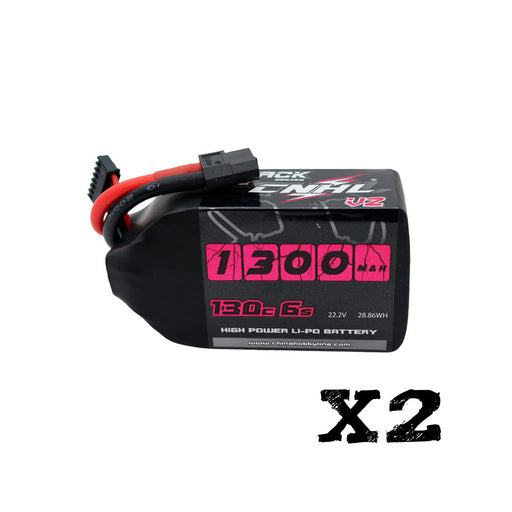
Pemeriksaan Kesesuaian Cepat 2 Packs CNHL Black Series V2.0 1300mAh 22.2V 6S 130C LiPo Battery dengan Colokan XT60 sangat cocok untuk pilot FPV yan...
Lihat detail lengkapSuku Cadang & Dukungan Jangka Panjang Kami memahami bahwa bagi pilot RC, dukungan suku cadang yang andal merupakan bagian penting untuk m...
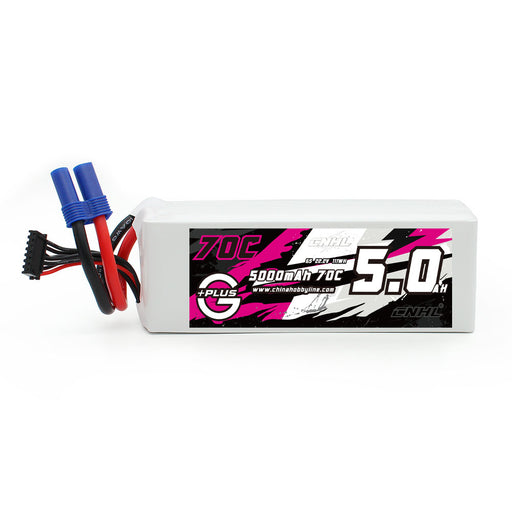
Lihat detail lengkapSpesifikasi: Nomor Stok: 500706EC5 Kapasitas: 5000mAh Voltase: 22.2V / 6-Sel / 6S1P Tingkat Discharge: 70C Kontinu / 140C Ledakan Tingkat Pengisi...
Lihat detail lengkap
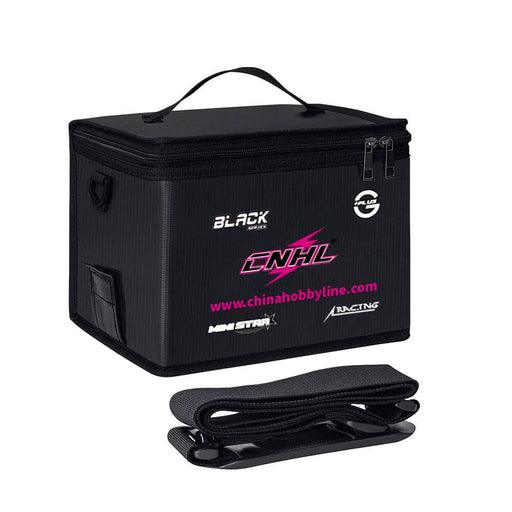
Tas Baterai LiPo CNHL dirancang untuk pengisian, transportasi, dan penyimpanan LiPo yang lebih aman di rumah atau di lapangan. Tas ini menambahkan ...
Lihat detail lengkapPemeriksaan Pemasangan Cepat 2 Paket CNHL Speedy Pizza Series Pro 1350mAh 6S 150C LiPo Battery dengan colokan XT60 dibuat untuk pilot FPV 5 inc...
Lihat detail lengkap

The CNHL Long Range Series BAK 65E 6350mAh 21700 Li-ion battery cell is built around one clear priority: maximum stored energy from a lightweight c...
Lihat detail lengkap

The CNHL Long Range Series BAK 50D 5000mAh 21700 Li-ion battery cell is designed for custom high-energy battery packs that need a strong balance be...
Lihat detail lengkap

The ISDT C4 EVO is a versatile smart battery charger built for AA, AAA and cylindrical rechargeable cells from compact 10440 batteries all the way ...
Lihat detail lengkap

The CNHL Long Range Series 6350mAh 21.6V 6S1P 21700 Li-ion battery combines six BAK 65E high-energy cells into a 137.16Wh pack designed for ultra-e...
Lihat detail lengkap

The CNHL Long Range Series 5000mAh 21.6V 6S1P 21700 Li-ion battery combines six BAK 50D cells into a compact 108Wh pack designed around long-range ...
Lihat detail lengkap




Tinggalkan komentar