

CNHL Baterai Lipo
CNHL bertujuan menyediakan baterai Li-Po berkualitas tinggi dan produk RC kepada semua penggemar hobi dengan layanan pelanggan yang luar biasa dan harga yang kompetitif
The 85″ Phoenix Model F4U Corsair is not a casual warbird, and it does not behave like one. With a flying weight exceeding 22 pounds and a wingspan stretching well into true giant-scale territory, this is the kind of aircraft that changes the atmosphere on a flight line the moment it is assembled. It occupies physical space. It demands runway length. And it requires a pilot who understands that power management, structural integrity, and setup discipline matter far more at this size than they do on smaller sport models.
At 85 inches, the Corsair’s distinctive inverted gull wing is no longer just a recognizable outline — it becomes a dominant presence. The proportions feel different. The mass feels different. Even simple tasks like transport, battery installation, and CG balancing become part of the planning process rather than afterthoughts.
Although the model has recently reappeared in distributor listings, it is not a new design entering the market for the first time. The airframe has existed for several years, and its reputation is already established. That maturity brings both advantages and clarity: the structure is known, the power requirements are understood, and expectations should be grounded in practical reality rather than marketing excitement.

This is not a plug-and-fly weekend toy. It is a 22-plus-pound electric warbird that requires thoughtful preparation, a properly engineered 12S power system, and a builder willing to approach it with the same seriousness that full-scale warbirds once demanded from their pilots.

Despite its recent reappearance in distributor listings, the 85″ Phoenix Model F4U Corsair is not a newly developed airframe. It is built on a platform that has existed for several years, with established tooling, proven construction methods, and a design philosophy consistent with Phoenix Model’s long-standing ARF approach.
In the world of large wood ARFs, maturity is not a drawback — it is a form of refinement. A platform that has been in circulation for years benefits from known assembly sequences, predictable balance characteristics, and a power envelope that builders already understand. Firewall geometry, retract placement, and structural layout are no longer theoretical. They are defined and repeatable.
This matters more in giant-scale aircraft than in smaller sport models. At 85 inches and over 22 pounds, structural confidence becomes a primary consideration. A mature design reduces uncertainty during assembly and allows the builder to focus attention where it belongs: reinforcement of high-stress areas, correct control linkage setup, and accurate center-of-gravity alignment.
At the same time, maturity also means clarity of positioning. This Corsair is not intended to be a boutique-level, hand-finished showpiece competing in the ultra-premium ARF tier. It is engineered as a practical giant-scale flying platform — visually convincing, structurally substantial, and designed to operate reliably within a properly configured electric or gas power envelope.
Understanding that positioning is important. When approached with realistic expectations and a well-matched 12S power system, the airframe reveals its strengths as a commanding, stable presence in the air rather than as a lightweight experimental release.
Eighty-five inches may not sound extreme on paper, but perspective changes quickly once the aircraft is assembled on a flight line. At 22.0–23.5 lb (10.2–10.5 kg) ready to fly, this Corsair crosses the invisible boundary that separates “large models” from true giant-scale aircraft. The physical presence is unmistakable — the inverted gull wing spans nearly the width of a compact car, and the fuselage length alone demands dedicated transport space.
More importantly, the difference is not just visual. The jump from a 70″ warbird to an 85″ platform is exponential in terms of mass, inertia, and energy. Control inputs feel different. Takeoff roll requires commitment. Landing approach speed carries momentum that cannot be casually corrected. Every maneuver reflects the additional weight in the airframe.
| Model Class | Typical Wingspan | Weight Range |
|---|---|---|
| Large Warbird | 70–75″ | 14–17 lb |
| Giant-Scale Warbird | 80–90″ | 20–25 lb |
| Phoenix Corsair 85″ | 85.43″ | 22–23.5 lb |
This is not a backyard airplane. It requires a proper runway, a stable surface for retract operations, and thoughtful transport planning. The two-piece wing helps with storage and travel, but the overall footprint remains substantial. Assembly at the field takes intention rather than convenience.
Size also influences the power system. An 85″, 22+ lb warbird does not tolerate underpowered setups gracefully. The aircraft’s scale mass directly affects current draw, throttle management, and battery stress — which is why a true 12S configuration becomes a baseline requirement rather than an optional upgrade.
From CNHL’s perspective, the 85″ Phoenix Model F4U Corsair should be understood as a practical giant-scale ARF platform rather than a premium, boutique-level replica. It delivers strong visual presence and a recognizable Corsair outline, while maintaining a construction approach typical of large wood ARFs in this category.
At this size and weight class, structural integrity and proper setup matter more than cosmetic perfection. The airframe benefits from careful inspection during assembly, especially in high-load areas such as firewall joints, landing gear mounts, and retract installations. This is common practice for any 20+ lb electric warbird.
The printed covering provides scale detail and saves considerable finishing time. While it may not replicate hand-painted museum standards, it allows builders to focus on structural setup and power system tuning — which ultimately determine how the aircraft performs in the air.
In short, CNHL views this Corsair as a serious flying platform that rewards thoughtful preparation and a correctly matched 12S power system.
Large-scale wood ARFs inevitably invite comparison across brands, particularly in the 80–90″ warbird category. However, meaningful comparison requires context. Different manufacturers approach this size class with different priorities — some emphasize ultra-refined finishing and lightweight materials, while others focus on structural solidity and practical assembly.
The Phoenix 85″ Corsair follows a traditional giant-scale ARF construction philosophy. The structure is substantial, the wood framework is robust, and the airframe is designed to handle the mass and stresses associated with 20+ lb electric or gasoline operation. That structural density contributes to durability and presence, even if it results in a slightly higher overall weight compared to some premium-tier alternatives.
In aircraft of this size, build discipline matters more than brand positioning. Regardless of manufacturer, experienced builders routinely inspect and reinforce high-load areas during assembly. Firewall joints, landing gear mounts, retract bays, and control horn anchor points are all subjected to significant stress once a 22 lb airframe accelerates down a runway.

Rather than viewing this category through a strict “premium versus non-premium” lens, it is more accurate to understand it as a spectrum of construction approaches. The Phoenix Corsair sits within the practical, flight-focused segment of that spectrum — engineered to fly with authority when assembled carefully and powered appropriately.
Ultimately, structural confidence in a giant-scale warbird does not come from marketing tier labels. It comes from proper assembly, thoughtful reinforcement, and a power system matched to the aircraft’s true mass and aerodynamic load.
With a recommended 120A-class ESC and a large-diameter propeller designed to move significant air mass, the 85″ Corsair operates in a power range that simply exceeds what a single 6S system can safely support. In a 22–23.5 lb airframe, throttle demand during takeoff and climb produces sustained current draw that requires both voltage headroom and stable discharge capability.
The practical solution is a 12S configuration created by connecting two identical 6S LiPo packs in series. In a series setup, voltage doubles while capacity remains the same. Two 6S 6000mAh packs in series create a 12S 6000mAh system, providing the voltage required to maintain prop efficiency without forcing extreme current spikes.
At this size, power delivery is less about maximum speed and more about consistency. Voltage sag under load can affect throttle response, increase ESC temperature, and place unnecessary strain on the battery cells. A properly matched 12S system reduces those variables and keeps the aircraft operating within a comfortable electrical envelope.
| Setup | Practicality | Technical Consideration |
|---|---|---|
| 12S (2×6S 6000mAh) | Baseline Recommendation | Balanced voltage, manageable current draw |
| 12S (2×6S 5000mAh) | Borderline | Higher stress during sustained climb |
| 14S | Advanced Configuration | More headroom, increased cost and weight |
Capacity selection also plays a structural role. In an 85″ warbird, battery mass directly influences center of gravity and flight balance. Most pilots find that 6S 6000–7000mAh packs provide a stable compromise between electrical performance and nose weight management. Lower-capacity packs may reduce weight slightly, but they operate closer to their discharge limits in this class of aircraft.
For most real-world flying scenarios — scale passes, warbird circuits, and controlled vertical maneuvers — a well-matched 12S setup delivers authoritative performance without requiring specialized voltage experimentation. While 14S systems can provide additional electrical headroom when paired with compatible motor and ESC combinations, they introduce added complexity and reduced battery interchangeability across other aircraft.
Builders seeking a properly balanced 12S configuration can explore matched 6S options within the 12S (2×6S Series) battery collection for the 85″ Corsair, selecting packs designed for consistent high-discharge operation in giant-scale electric warbirds.
In giant-scale electric aircraft, voltage selection is rarely about chasing peak speed. It is about managing electrical efficiency, thermal load, and long-term component reliability. While some advanced builders explore 14S configurations to gain additional throttle headroom, the decision must be evaluated within the context of the entire power system.
Moving from 12S to 14S increases system voltage, which in theory allows the same power output at slightly lower current draw. However, that advantage only materializes when the motor, ESC, and propeller combination are specifically optimized for the higher voltage. Without careful re-matching of these components, the theoretical benefit can quickly be offset by increased weight and added complexity.
There is also a practical consideration. A 14S setup typically requires less common battery combinations, reducing interchangeability across other aircraft in a pilot’s hangar. For many builders, maintaining flexibility — being able to use the same matched 6S packs across multiple 12S platforms — is a more sustainable long-term strategy.
In the case of the 85″ Phoenix Corsair, a properly configured 12S system already provides ample authority for scale takeoffs, extended climbs, and stable warbird flight envelopes. The aircraft’s mass and aerodynamic profile do not inherently demand 14S voltage to perform convincingly.
For pilots seeking smooth throttle response, manageable thermal performance, and practical battery logistics, 12S remains the balanced engineering solution. 14S becomes an optional refinement rather than a necessity.
The 85″ Phoenix Model F4U Corsair is designed for pilots who already understand the rhythm of giant-scale flying. It rewards patience in assembly, discipline in setup, and restraint in throttle management. This is not an aircraft that teaches fundamentals — it assumes them.
It is particularly well suited for:
Transport planning, battery management, and center-of-gravity precision are part of the ownership experience. The aircraft’s size and mass demand thoughtful preparation rather than spontaneous flying sessions.
For pilots seeking a visually commanding warbird with authentic presence in the air — and who are prepared to match it with a correctly engineered 12S power system — the Corsair can become a centerpiece aircraft within a serious hangar.
It is not an entry-level warbird, nor is it intended to be. Instead, it occupies the space reserved for experienced builders who appreciate scale presence and understand the responsibilities that accompany giant-scale electric flight.
Is the Phoenix 85″ Corsair a new design?
The 85″ Phoenix Model F4U Corsair is based on an established giant-scale ARF platform. While it may appear as a recent listing in some distribution channels, the airframe design itself has been available for several years and represents a mature structure rather than a first-generation release.
Is it comparable to Hangar 9 warbirds?
The Phoenix 85″ Corsair occupies a different market position than premium ARF brands. It offers strong scale presence and practical construction, while Hangar 9 models are typically positioned in a higher finishing tier. Builders should evaluate based on budget, expectations, and intended use rather than assuming direct equivalence.
Can this aircraft run on 6S?
No. A single 6S system is not appropriate for a 22–23 lb giant-scale warbird. This aircraft requires a 12S configuration, created by connecting two matched 6S LiPo batteries in series.
What batteries are typically used in the electric setup?
Most pilots use two identical 6S 6000–7000mAh high-discharge LiPo batteries connected in series (12S total). For reliable performance in this weight class, 80C or higher discharge ratings are commonly preferred.
Is 14S worth considering?
A 14S system can provide additional voltage headroom when paired with a compatible motor and ESC. However, it increases cost and overall weight. For most scale flying applications, a properly configured 12S setup delivers sufficient performance without requiring specialized battery packs.
The Phoenix Model F4U Corsair 85″ delivers a kind of presence that smaller warbirds simply cannot match. At over 22 pounds, every takeoff roll feels deliberate, every pass carries weight, and every climb reflects the momentum of a true giant-scale aircraft.

It is not a boutique showpiece, but a practical large-scale platform that rewards careful assembly and a properly engineered 12S power system. Structural discipline and power matching matter more here than cosmetic detail.
With realistic expectations and thoughtful setup, the Corsair becomes a serious flying machine. Once airborne, it flies exactly as a 22-pound warbird should — steady, composed, and unapologetically large.
CNHL bertujuan menyediakan baterai Li-Po berkualitas tinggi dan produk RC kepada semua penggemar hobi dengan layanan pelanggan yang luar biasa dan harga yang kompetitif
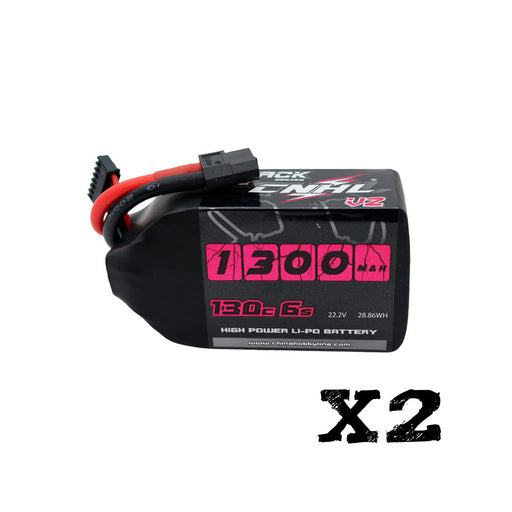
Pemeriksaan Kesesuaian Cepat 2 Packs CNHL Black Series V2.0 1300mAh 22.2V 6S 130C LiPo Battery dengan Colokan XT60 sangat cocok untuk pilot FPV yan...
Lihat detail lengkapSuku Cadang & Dukungan Jangka Panjang Kami memahami bahwa bagi pilot RC, dukungan suku cadang yang andal merupakan bagian penting untuk m...
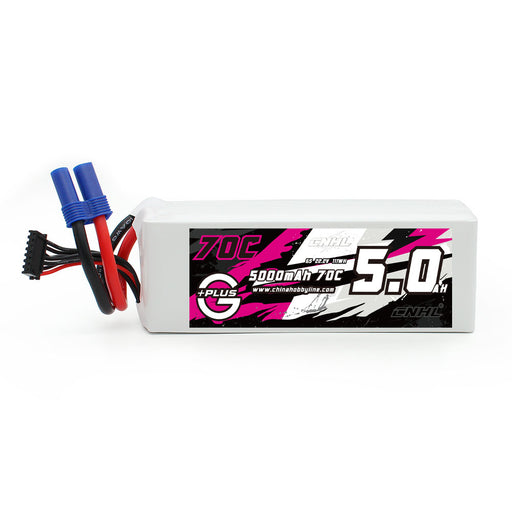
Lihat detail lengkapSpesifikasi: Nomor Stok: 500706EC5 Kapasitas: 5000mAh Voltase: 22.2V / 6-Sel / 6S1P Tingkat Discharge: 70C Kontinu / 140C Ledakan Tingkat Pengisi...
Lihat detail lengkap
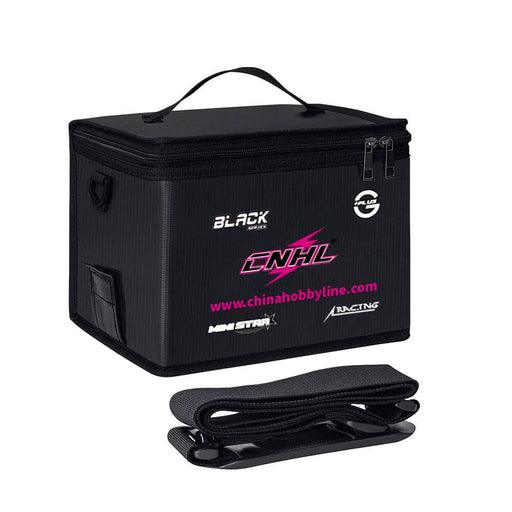
Tas Baterai LiPo CNHL dirancang untuk pengisian, transportasi, dan penyimpanan LiPo yang lebih aman di rumah atau di lapangan. Tas ini menambahkan ...
Lihat detail lengkapPemeriksaan Pemasangan Cepat 2 Paket CNHL Speedy Pizza Series Pro 1350mAh 6S 150C LiPo Battery dengan colokan XT60 dibuat untuk pilot FPV 5 inc...
Lihat detail lengkap

The CNHL Long Range Series BAK 65E 6350mAh 21700 Li-ion battery cell is built around one clear priority: maximum stored energy from a lightweight c...
Lihat detail lengkap

The CNHL Long Range Series BAK 50D 5000mAh 21700 Li-ion battery cell is designed for custom high-energy battery packs that need a strong balance be...
Lihat detail lengkap

The ISDT C4 EVO is a versatile smart battery charger built for AA, AAA and cylindrical rechargeable cells from compact 10440 batteries all the way ...
Lihat detail lengkap

The CNHL Long Range Series 6350mAh 21.6V 6S1P 21700 Li-ion battery combines six BAK 65E high-energy cells into a 137.16Wh pack designed for ultra-e...
Lihat detail lengkap

The CNHL Long Range Series 5000mAh 21.6V 6S1P 21700 Li-ion battery combines six BAK 50D cells into a compact 108Wh pack designed around long-range ...
Lihat detail lengkap




Tinggalkan komentar