
CNHL Baterai Lipo
CNHL bertujuan menyediakan baterai Li-Po berkualitas tinggi dan produk RC kepada semua penggemar hobi dengan layanan pelanggan yang luar biasa dan harga yang kompetitif
The RC4WD Trail Finder 2 1985 Toyota Pickup is not trying to be the most aggressive rock crawler in the parking lot. Its real appeal is scale realism: the old-school Toyota body, leaf spring chassis, detailed engine bay, white-letter tires, and a driving style that rewards patience instead of throttle abuse.
That is the right way to understand this truck. It is a 1/10 scale trail truck for drivers who enjoy the look and feel of a classic Toyota pickup moving slowly through dirt paths, light rocks, roots, and scale terrain. It can crawl, but it is not built around the same mission as a modern competition-style crawler. The Trail Finder 2 platform has its own rhythm: more realistic, more mechanical, and sometimes more challenging in a way that many scale drivers actually enjoy.

The 1985 Toyota Pickup version also brings one practical update that matters more than it may sound at first: quick-release clipless body mounts. On a detailed hard-body truck, easier body removal changes the ownership experience. Battery swaps, wiring checks, trail-side maintenance, and cleaning all become less annoying. For a truck this detailed, that is a meaningful improvement.
The first reason this RC4WD release stands out is the body. The licensed 1985 Toyota Single Cab body gives the truck the kind of old-school pickup personality that scale RC fans notice immediately. The shape, chrome details, roll bar, KC-style lights, grille treatment, and SR5-inspired visual cues all point toward a very specific 1980s Toyota pickup mood.
This is also why the truck creates such a strong emotional reaction. A lot of scale RC buyers do not simply want a vehicle that clears the biggest obstacle. They want something that looks right sitting on a shelf, parked beside other trail rigs, or creeping slowly through a woodland trail. This Toyota body gives that feeling. It is the kind of truck that makes drivers slow down because the small visual details are part of the fun.
The hood, doors, tailgate, windshield trim, chrome door handles, rear light details, bed roll bar, and interior all add to that impression. The engine bay is especially important because it gives the model more depth than a simple painted shell. When a scale truck includes visible mechanical detail under the hood, it becomes more than a body sitting on a chassis. It starts to feel like a miniature truck that happens to be radio controlled.
That does not mean every buyer will ignore small accuracy details. Scale fans are often picky, and that is part of the hobby. Grille shape, windshield angle, pillar proportions, paint match, tire lettering, and engine bay realism are all things people notice. But the overall impression of this Toyota Pickup is clear: RC4WD is leaning hard into scale presentation, and that is exactly where this truck is strongest.
The quick-release clipless body mount system may be the most practical update on this Trail Finder 2 release. Older hard-body scale trucks can look excellent but become frustrating when the body has to come off. Screws, posts, alignment points, and tight wiring can make a simple battery change feel slower than it should.
On a trail truck, that matters. Drivers often want to change batteries outdoors, check wiring, remove dirt, adjust accessories, or inspect the chassis after a run. A detailed hard body is great, but if removing it becomes a chore, the truck can quickly turn into something owners hesitate to use. The quick-release system helps solve that problem while keeping the clean body appearance intact.
This also supports one of the best upgrade paths for this RTR: moving from the included NiMH battery to a cleaner LiPo setup. The truck already uses an XT60 connector, so the battery side of the experience is much more convenient than many older RTR scale rigs. For drivers comparing compatible packs, the dedicated RC4WD Trail Finder 2 battery upgrade collection is the most direct place to start.
The Trail Finder 2 platform has been around long enough that many RC drivers already have a clear opinion about it. It is not a new-school high-clearance crawler chassis, and it does not pretend to be one. Instead, it uses a more traditional scale-truck layout with a metal ladder frame chassis, leaf springs, a single-speed R3 transmission, Hammer transfer case, steel driveshaft components, and Yota II axles.
That construction gives the truck a very mechanical feel. The metal chassis parts, realistic axle setup, locked front and rear axles, and leaf-under-axle stance all contribute to the truck’s scale identity. The tradeoff is that it does not drive like a lightweight link-suspension crawler with huge articulation. It feels more like an old pickup: planted, heavy, deliberate, and sometimes stiff.
That stiffness is part of the conversation around any leaf-spring scale truck. Leaf springs look right, but they are not always as forgiving as a modern four-link crawler suspension. Out of the box, the truck may feel tighter over uneven terrain, especially when compared with a TRX-4, SCX10-style crawler, or other modern trail platform. Over time, the suspension can loosen up, and many hobbyists enjoy tuning leaf packs, shocks, tires, and weight balance to make the truck behave the way they want.
For the right owner, that is not a problem. It is part of the hobby. The Trail Finder 2 Toyota Pickup suits someone who enjoys wrenching, tuning, adjusting, and driving with restraint. It is less about conquering every obstacle and more about making a realistic truck look convincing while doing realistic truck things.
| Feature | Why It Matters | Real-World Character |
|---|---|---|
| Licensed 1985 Toyota Single Cab body | Gives the truck strong 1980s pickup appeal and high shelf presence. | Best for scale trail fans who care about looks as much as capability. |
| Quick-release clipless body mount | Makes battery access and maintenance easier than older screw-mounted body setups. | A practical upgrade that makes the truck more usable outdoors. |
| Leaf spring suspension | Creates a realistic stance and classic scale driving feel. | More realistic than extreme; can feel firm compared with modern link crawlers. |
| R3 transmission and Hammer transfer case | Adds to the mechanical scale-truck layout. | Durable and classic, though not as feature-rich as multi-speed crawler systems. |
| 540 brushed motor and Outcry III brushed ESC | Keeps the truck simple and crawler-focused. | Works best with smooth throttle control and sensible battery choice. |
| XT60 battery connector | Makes modern LiPo upgrades easier. | A welcome improvement for drivers moving beyond the included NiMH pack. |
The most important driving expectation is simple: this is a scale trail rig, not a super crawler. It looks best on mild rock lines, dirt trails, roots, small ledges, and natural outdoor paths. It can handle obstacles, but it asks the driver to think more carefully than a modern performance crawler would.

The hard body, metal chassis parts, and detailed accessories add weight. That weight can feel satisfying on flatter trails because the truck looks planted and realistic. On steep side hills or sharp ledges, however, the same weight becomes something the driver has to respect. The truck can tip if pushed too hard, and the beautiful body makes most owners less willing to risk ugly rollovers.
This is one of the reasons the truck can be so rewarding. A simple obstacle that a more performance-focused crawler might clear without drama can feel more meaningful in the Trail Finder 2. The driver has to choose the line, manage the throttle, let the leaf springs work, and avoid dragging the hard body into trouble. The result is a slower style of RC driving that feels closer to scale overlanding than competitive crawling.
For some people, that is exactly the point. Not every truck needs to be a high-articulation rock machine. Sometimes the fun is in making a realistic truck move realistically. The 1985 Toyota Pickup fits that type of driving extremely well.
The Trail Finder 2 Toyota Pickup uses a brushed power system with a crawler-style ESC, not a high-speed brushless system. For a scale truck, that is not automatically a drawback. A brushed motor can deliver a simple, predictable, old-school driving feel that matches the personality of the vehicle.

The key is understanding what the ESC is doing. In a crawler or trail truck, the ESC is not just about making the motor spin. It controls throttle smoothness, reverse behavior, braking, low-speed modulation, and drag brake feel. Drag brake is especially important because it helps the truck hold itself on descents rather than rolling freely downhill.
This is also why battery choice should be different from a basher or race car. The truck does not need an oversized, ultra-aggressive pack to perform well. It benefits more from a battery that fits cleanly, keeps voltage stable, does not add unnecessary weight, and supports smooth low-speed driving.
Some advanced owners may eventually upgrade to a brushless crawler system or a 2-in-1 motor and ESC setup, especially if they want quieter running, stronger efficiency, or more tuning control. But for the stock RTR, a sensible LiPo upgrade can already make the truck feel cleaner and more consistent without changing its character too much.
The RTR includes a 6-cell 3000mAh NiMH battery with an XT60 connector. That is enough to get the truck running, but many drivers will naturally look toward LiPo for better voltage stability, cleaner power delivery, and more useful pack choices. Because the truck already uses XT60, the upgrade path is much easier than older plug setups.
For most Trail Finder 2 Toyota Pickup owners, 2S LiPo is the best daily setup. A 2S pack keeps the truck smooth and controllable, works well with the brushed crawler character, and is easier on the drivetrain. This matters because the TF2 is a heavy scale truck with a realistic chassis, not a lightweight speed platform.
3S LiPo can make sense, but it should be treated as an experienced-driver choice. The extra voltage gives more wheel speed, which can help on loose dirt, mild climbs, towing-style use, or open trail driving. The tradeoff is extra stress on the motor, ESC, driveshafts, axles, and overall drivetrain. If you run 3S, the better approach is compact pack size, careful throttle input, and regular temperature checks.
| Battery Setup | Driving Feel | Best For | CNHL View |
|---|---|---|---|
| 2S LiPo | Smooth, controlled, scale-like | Daily trail driving, light crawling, realistic throttle control | Best first upgrade for most owners. |
| 2S LiHV | Still controlled, with a premium pack feel | Drivers with LiHV charging support who want longer or stronger 2S-style performance | Useful when fitment and charger compatibility are confirmed. |
| 3S LiPo | More wheel speed and sharper response | Open trails, loose terrain, experienced drivers | Good upgrade option, but not the default choice for every TF2 owner. |
For compatible CNHL options, start with the RC4WD Trail Finder 2 battery upgrade collection. It focuses on XT60 2S and 3S LiPo choices that make sense for this platform. If you are also building other crawlers, trail trucks, or RC cars, the broader CNHL RC car battery collection gives more voltage, capacity, hardcase, and shorty options.
The RC4WD Trail Finder 2 1985 Toyota Pickup is a strong fit for a specific kind of driver. It suits someone who values scale accuracy, hard-body detail, classic Toyota styling, realistic trail movement, and a more hands-on ownership experience. It is also a good choice for hobbyists who enjoy accessories, tuning, and slow outdoor driving rather than pure obstacle domination.
It is less ideal for someone who wants the easiest possible crawler, the widest steering angle, the softest suspension, the lightest chassis, or the most performance per dollar. There are modern crawler platforms that will out-crawl it in a technical sense. But those trucks may not deliver the same old-school Toyota feeling, engine bay detail, leaf spring realism, or hard-body presence.
That distinction is important. Buying this truck only for raw crawling capability would miss the point. Buying it because it looks and drives like a realistic classic pickup makes much more sense.
Because this is a detailed scale truck, it is worth checking a few things before running it hard. Make sure the body mount system locks cleanly, the wiring is not rubbing against the body or drivetrain, the battery sits securely, and the XT60 connector has enough room to plug and unplug without stress. If you change to a larger pack, confirm that the body still sits properly and the interior is not being pushed out of place.
It is also worth checking shocks, leaf spring movement, wheel hardware, steering trim, and ESC settings before serious trail use. This type of rig rewards careful setup. A few minutes on the bench can prevent frustration outside.
Storage also matters. A heavy scale truck should not always sit for long periods with full weight pressing into the tires. If you care about tire shape and body condition, a simple stand or axle support can help keep the truck looking and driving better over time.
The RC4WD Trail Finder 2 1985 Toyota Pickup RTR is one of those trucks that makes the most sense when judged by scale-truck standards. It is not the most modern crawler. It is not the cheapest RTR. It is not the truck to buy if your main goal is extreme articulation and aggressive rock performance.
But as a classic Toyota trail rig, it has a lot of charm. The body detail, engine bay, leaf spring stance, metal chassis character, white-letter tires, and quick-release body system give it an identity that many modern crawlers do not have. It is the kind of RC truck that looks good moving slowly, sitting still, or being tuned on the workbench.
The best setup philosophy is simple: respect what the truck is. Use 2S LiPo for the smoothest everyday scale trail experience. Use 3S only when you want extra wheel speed and are willing to drive with care. Keep the battery compact, keep the wiring clean, and let the truck be a realistic trail machine rather than forcing it to behave like a basher.
It is a good scale trail truck, but it is not an extreme performance crawler. The leaf spring suspension, hard body, and heavier scale layout make it more realistic and more challenging than many modern link-based crawlers.
The RTR package includes a 6-cell 3000mAh NiMH battery with an XT60 connector. Many owners will consider upgrading to a 2S or 3S XT60 LiPo for cleaner power delivery and more flexible runtime options.
2S is the better everyday choice for smooth trail driving, realistic throttle control, and lower drivetrain stress. 3S gives more wheel speed, but it should be used carefully and is better suited to experienced drivers.
They make the truck much easier to use because battery swaps and maintenance no longer require the same slow screw-based body removal process found on older hard-body setups. For a detailed scale truck, that practical improvement matters.
It can be both, depending on the owner. The body detail is strong enough for display, but the TF2 chassis is still built for trail driving. It is best used on easy trails, mild rocks, dirt paths, and scale terrain where the body can be enjoyed without unnecessary rollover risk.
No. For normal trail driving, the truck benefits more from a clean-fitting, stable-output battery than from an extreme high-C racing pack. Smooth throttle control and proper fitment matter more than raw discharge rating.
CNHL bertujuan menyediakan baterai Li-Po berkualitas tinggi dan produk RC kepada semua penggemar hobi dengan layanan pelanggan yang luar biasa dan harga yang kompetitif
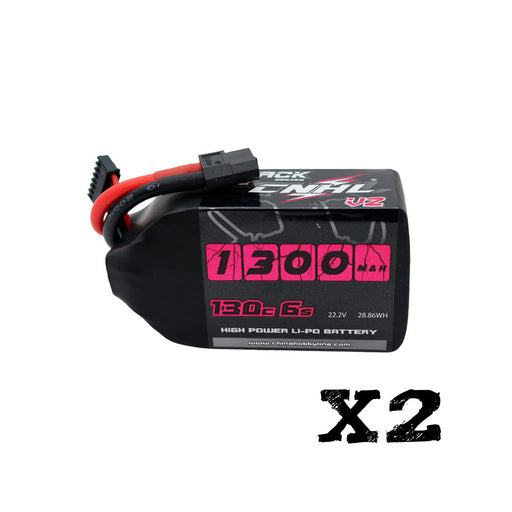
Pemeriksaan Kesesuaian Cepat 2 Packs CNHL Black Series V2.0 1300mAh 22.2V 6S 130C LiPo Battery dengan Colokan XT60 sangat cocok untuk pilot FPV yan...
Lihat detail lengkapSuku Cadang & Dukungan Jangka Panjang Kami memahami bahwa bagi pilot RC, dukungan suku cadang yang andal merupakan bagian penting untuk m...
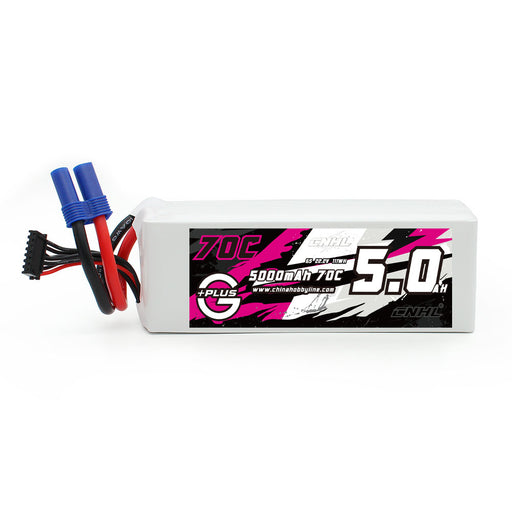
Lihat detail lengkapSpesifikasi: Nomor Stok: 500706EC5 Kapasitas: 5000mAh Voltase: 22.2V / 6-Sel / 6S1P Tingkat Discharge: 70C Kontinu / 140C Ledakan Tingkat Pengisi...
Lihat detail lengkap
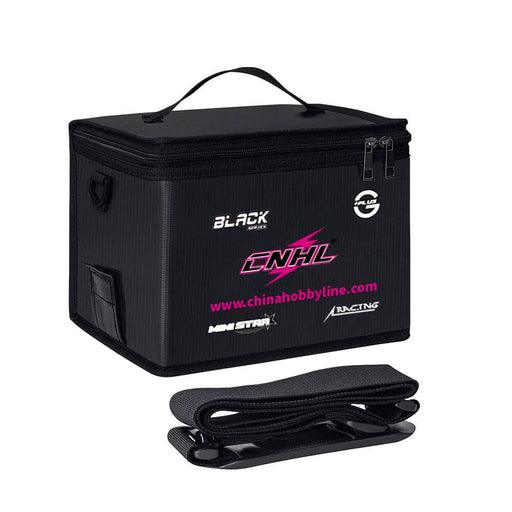
Tas Baterai LiPo CNHL dirancang untuk pengisian, transportasi, dan penyimpanan LiPo yang lebih aman di rumah atau di lapangan. Tas ini menambahkan ...
Lihat detail lengkapPemeriksaan Pemasangan Cepat 2 Paket CNHL Speedy Pizza Series Pro 1350mAh 6S 150C LiPo Battery dengan colokan XT60 dibuat untuk pilot FPV 5 inc...
Lihat detail lengkap

The CNHL Long Range Series BAK 65E 6350mAh 21700 Li-ion battery cell is built around one clear priority: maximum stored energy from a lightweight c...
Lihat detail lengkap

The CNHL Long Range Series BAK 50D 5000mAh 21700 Li-ion battery cell is designed for custom high-energy battery packs that need a strong balance be...
Lihat detail lengkap

The ISDT C4 EVO is a versatile smart battery charger built for AA, AAA and cylindrical rechargeable cells from compact 10440 batteries all the way ...
Lihat detail lengkap

The CNHL Long Range Series 6350mAh 21.6V 6S1P 21700 Li-ion battery combines six BAK 65E high-energy cells into a 137.16Wh pack designed for ultra-e...
Lihat detail lengkap

The CNHL Long Range Series 5000mAh 21.6V 6S1P 21700 Li-ion battery combines six BAK 50D cells into a compact 108Wh pack designed around long-range ...
Lihat detail lengkap




Tinggalkan komentar