
CNHL Baterai Lipo
CNHL bertujuan menyediakan baterai Li-Po berkualitas tinggi dan produk RC kepada semua penggemar hobi dengan layanan pelanggan yang luar biasa dan harga yang kompetitif
Short answer: the right RC battery connector is the one that matches your setup’s real current demand, fits your batteries and ESC cleanly, and makes sense across your fleet long term. XT60 is a strong default for many mainstream RC cars, FPV drones, and airplanes. XT90, EC5, and IC5 make more sense when current demand rises. TRX makes sense if you stay inside the Traxxas ecosystem. Micro FPV plug choices follow a different logic entirely.
Most hobbyists do not run into connector problems because they picked a completely absurd plug. They run into problems because they picked something that was only temporarily convenient. One battery came with XT60, one vehicle used TRX, one adapter solved the problem for now, and before long the whole fleet became a patchwork of standards that sort of worked but never felt clean.
That is why choosing the right RC battery connector is really about two questions at once. First: what connector can safely and efficiently handle this specific setup? Second: what connector standard do you actually want to live with over time?
This guide focuses on the decision itself. If you want the wider connector family overview first, start with Which RC Battery Connector Is Best for Your Car, Boat, or Plane? and RC Battery Connector Types Explained: XT30, XT60, XT90, EC3, EC5, IC3, IC5, TRX, QS8 and More. If your main issue is whether two existing plugs can work together, go to RC Battery Connector Compatibility Guide: What Fits, What Doesn’t, and When You Need an Adapter.

A connector is not just a plug shape. When you choose one, you are really choosing five things at once: current capacity, physical size, fit convenience, ecosystem compatibility, and future hassle. That is why connector choice feels small at first and then slowly becomes important once you have more than one vehicle or battery standard in play.
| What you are choosing | Why it matters |
|---|---|
| Current handling | Undersized connectors can create heat, voltage drop, and power loss |
| Physical size | A connector that is too bulky may be awkward on small models |
| Ease of use | Some connectors are easier to standardize across batteries and vehicles |
| Compatibility path | The wrong choice may trap you in adapter-heavy mixed-fleet use |
| Long-term fleet logic | One connector standard across multiple models often saves time and frustration |
The wrong connector is not always dangerous right away. More often, it just becomes annoying, inefficient, or messy enough that you eventually wish you had chosen differently at the start.
Many hobbyists start by asking which connector is “best,” but the better starting point is simpler: how demanding is the setup? Connector choice should follow power class first, then ecosystem preference second.
A small 1S micro FPV quad does not need the same connector logic as a 1/8 basher. A mild trail truck does not need the same connector logic as a speed-run platform. This is why the same connector can feel perfect in one part of the hobby and completely wrong in another.
| Setup type | Typical connector logic | Why |
|---|---|---|
| Micro FPV / ultra-light 1S | PH2.0, BT2.0, A30 branch | Tiny systems have their own plug families |
| Small to medium mainstream RC | XT60 often makes sense | Good balance of size, current, and availability |
| Higher-power mainstream setups | XT90, EC5, IC5 begin making more sense | More headroom, stronger current path |
| Traxxas-specific fleet | TRX if staying in ecosystem | Convenient if you commit to that system |
| Very high-power large-scale / speed-run / big boat | EC5 / IC5 / QS8 class | High current makes connector choice more serious |
Because connector choice is tied directly to voltage and load, it also helps to keep the bigger battery picture in mind. If you want that layer too, review LiPo Battery Voltage Guide: 1S to 8S Explained for RC Models.
XT60 is the connector many hobbyists end up standardizing around because it lands in a very practical middle ground. It is compact enough for a huge range of mainstream RC use, strong enough for many common cars, FPV quads, and airplanes, and widely available across batteries, ESCs, adapters, and chargers.
That does not make XT60 the universal best answer. It makes it the easiest default answer for a lot of hobbyists who want one standard across moderate-power setups without dragging the whole fleet into oversized connector territory.

If your question is specifically how XT30, XT60, and XT90 compare, continue into XT30 vs XT60 vs XT90: Pick the LiPo Plug.
The moment the setup gets more serious, connector logic changes. Heavier vehicles, stronger bursts, sustained current demand, and bigger battery classes all push the system toward connectors with more headroom and a more robust power path.
This is where hobbyists often get stuck between convenience and correctness. XT60 might still “work,” but that is not always the same thing as being the connector you actually want long term. If the setup is living near the upper end of mainstream power demand, stepping up to XT90, EC5, or IC5 often makes more sense.
For a direct side-by-side in this range, use XT60 vs XT90 vs EC5 Connector Comparison and EC5 vs IC5 vs XT90: Which Connector Makes Sense for High-Power RC Setups.

TRX is not a bad connector. The real question is whether you actually want to stay in the Traxxas ecosystem. If most of your vehicles, chargers, and batteries are already Traxxas-oriented, staying in TRX may be the simplest answer. If you are already mixing brands heavily, TRX often becomes the connector that forces adapters into your life more than any other mainstream standard.
That is why TRX is usually less about raw connector quality and more about ecosystem commitment. If you are staying inside that system, it makes sense. If you are not, it may stop making sense surprisingly fast.

That full branch is covered in TRX Connector Guide: Should You Stay in the Traxxas Ecosystem or Use an Adapter?.
Deans still exists in many fleets for one reason: older gear does not magically disappear just because newer connector families became more popular. If your older models already run Deans and they are not especially demanding, keeping that standard may still be perfectly practical.
But if you are starting fresh, or if you are already annoyed by adapter use, Deans is usually less attractive as a future-facing standard than XT60 or stronger modern families. This is less about nostalgia and more about how much long-term friction you want in the fleet.
That exact decision is covered in Deans / T-Plug Connector Guide: Is It Still Good Enough for Modern RC Setups?.
One of the easiest mistakes is assuming all battery plug decisions work the same way. They do not. Micro FPV 1S setups live in a different connector world where PH2.0, BT2.0, and A30 have their own logic tied to tiny builds, small current paths, and weight-sensitive performance.
If that is your actual use case, do not force mainstream RC connector logic onto it. Go directly to PH2.0, BT2.0, or A30? Choosing the Right Battery Plug for Your Micro FPV Drone.
This is the most important long-term idea on the page. If you only optimize for the battery in front of you today, you often create adapter problems for tomorrow. If you choose the connector standard based on the kind of fleet you want to maintain, things usually get cleaner over time.
That means asking practical questions like these:
Connector decisions feel much easier once you stop treating them as isolated purchases and start treating them as part of fleet architecture.
| If this sounds like you... | Your connector logic is usually... |
|---|---|
| I want one flexible mainstream standard | XT60 is often the easiest starting point |
| I run heavier or higher-power systems regularly | XT90 / EC5 / IC5 deserve more attention |
| Most of my fleet is Traxxas already | TRX may be worth staying with |
| I am keeping one older model alive | Adapter or legacy connector may be fine |
| I only care about tiny whoops and 1S micro FPV | Micro plug family decision matters more than mainstream connector logic |
Adapters are not shameful. They are a normal part of the hobby. But they should ideally be a bridge, not your permanent lifestyle. If every new battery purchase starts with “which adapter do I need this time?”, the fleet is usually telling you that your connector strategy is no longer clean.
Temporary adapter use is normal. Permanent adapter dependence is usually a sign that it is time to standardize.
If your real problem is no longer connector choice but connector heat, loose fit, or adapter-related resistance, the next page is Why RC Battery Connectors Get Hot: Resistance, Loose Fit, Adapters, and Common Mistakes.
If you want a simple way to choose, use this order:
This is a more useful framework than trying to memorize one “best connector” for the entire hobby, because the whole point is that there is no single best connector once use case, power class, and ecosystem all diverge.

| RC category | What often makes sense | What to avoid |
|---|---|---|
| 1/10 mainstream RC cars | XT60 often works well as a practical standard | Overcomplicating the fleet with too many plug families |
| FPV freestyle mainstream builds | XT60 is common and practical | Choosing by label hype instead of proven fit and routine use |
| 1/8 and larger high-demand cars | XT90 / EC5 / IC5 deserve stronger consideration | Assuming XT60 is always enough just because it is familiar |
| Traxxas-only fleet | TRX can stay logical | Mixing standards casually without deciding ecosystem direction |
| Micro FPV 1S | Choose within PH2.0 / BT2.0 / A30 logic | Applying normal RC connector logic to tiny whoop systems |
What is the best RC battery connector overall?
There is no universal best one. XT60 is one of the most practical defaults for many mainstream setups, but higher-power or ecosystem-specific systems may be better served by XT90, EC5, IC5, TRX, or a dedicated micro plug family.
Should I choose my connector based on one vehicle or my whole fleet?
If you have more than one model, it is usually smarter to think about the whole fleet. Connector decisions become much cleaner when they reduce future adapter use instead of solving only one purchase.
Is XT60 enough for most RC setups?
For many mainstream cars, FPV quads, and airplanes, yes. But once the setup becomes more demanding, higher-current connector families may make more sense.
When should I move up from XT60 to XT90 or EC5?
Usually when current demand rises enough that the setup is clearly leaving mainstream territory or when you are building around larger, heavier, or more power-hungry systems.
Should I stay with TRX if I own Traxxas vehicles?
That depends on whether you are staying mostly inside the Traxxas ecosystem. If yes, TRX can remain logical. If not, broader connector standards may reduce long-term friction.
Are adapters okay?
Yes, often. They are fine as temporary or mixed-fleet tools. They become less attractive when they start defining your whole setup.
What is the best beginner page before making this decision?
Start with A Beginner's Guide to LiPo Battery Connectors if you want the simplest connector basics first.
The right RC battery connector is usually not the most exotic one and not always the biggest one. It is the one that honestly fits the setup, keeps the power path clean, and makes the rest of the fleet easier instead of messier. That is why connector choice is less about chasing one “best plug” and more about making a sensible long-term decision.
If you want the compatibility branch next, continue into RC Battery Connector Compatibility Guide: What Fits, What Doesn’t, and When You Need an Adapter. If you want the full connector family map, go to RC Battery Connector Types Explained: XT30, XT60, XT90, EC3, EC5, IC3, IC5, TRX, QS8 and More.
CNHL bertujuan menyediakan baterai Li-Po berkualitas tinggi dan produk RC kepada semua penggemar hobi dengan layanan pelanggan yang luar biasa dan harga yang kompetitif

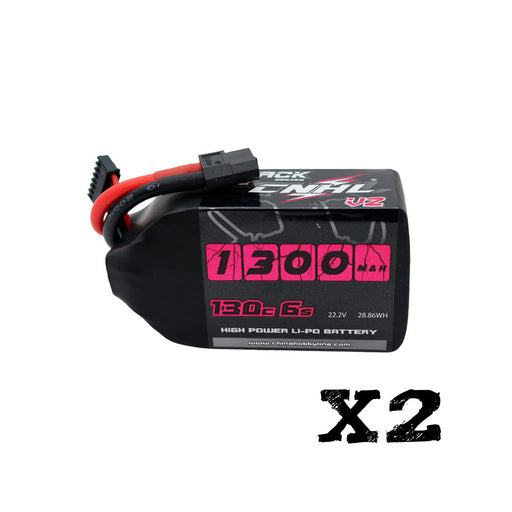
Pemeriksaan Kesesuaian Cepat 2 Packs CNHL Black Series V2.0 1300mAh 22.2V 6S 130C LiPo Battery dengan Colokan XT60 sangat cocok untuk pilot FPV yan...
Lihat detail lengkapSuku Cadang & Dukungan Jangka Panjang Kami memahami bahwa bagi pilot RC, dukungan suku cadang yang andal merupakan bagian penting untuk m...
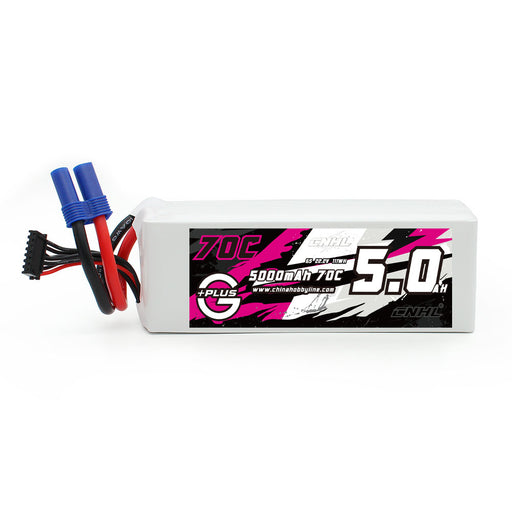
Lihat detail lengkapSpesifikasi: Nomor Stok: 500706EC5 Kapasitas: 5000mAh Voltase: 22.2V / 6-Sel / 6S1P Tingkat Discharge: 70C Kontinu / 140C Ledakan Tingkat Pengisi...
Lihat detail lengkap
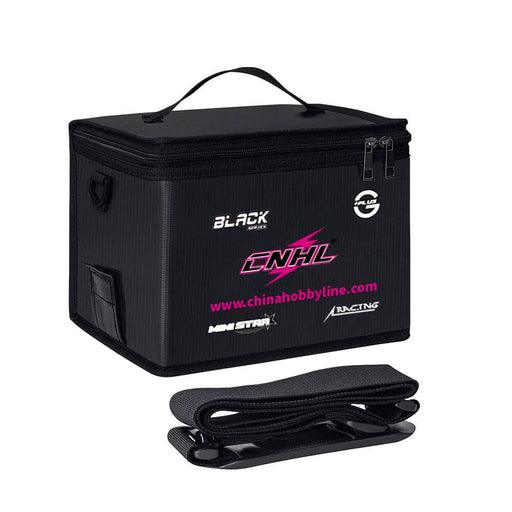
Tas Baterai LiPo CNHL dirancang untuk pengisian, transportasi, dan penyimpanan LiPo yang lebih aman di rumah atau di lapangan. Tas ini menambahkan ...
Lihat detail lengkap

Pemeriksaan Pemasangan Cepat 2 Paket CNHL Speedy Pizza Series Pro 1350mAh 6S 150C LiPo Battery dengan colokan XT60 dibuat untuk pilot FPV 5 inc...
Lihat detail lengkap

Quick Fit Check The CNHL Speedy Pizza Series 2200mAh 22.2V 6S 120C LiPo Battery with XT60 Plug combines the familiar 2200mAh 6S format with a ligh...
Lihat detail lengkap

Quick Fit Check The CNHL Speedy Pizza Series 2200mAh 14.8V 4S 120C LiPo Battery with XT60 Plug combines a widely used 2200mAh 4S format with a sli...
Lihat detail lengkap

Quick Fit Check The CNHL Speedy Pizza Series 2200mAh 11.1V 3S 120C LiPo Battery with XT60 Plug takes the familiar 3S 2200mAh aircraft battery form...
Lihat detail lengkapThe CNHL Long Range Series BAK 65E 6350mAh 21700 Li-ion battery cell is built around one clear priority: maximum stored energy from a lightweight c...
Lihat detail lengkap

The CNHL Long Range Series BAK 50D 5000mAh 21700 Li-ion battery cell is designed for custom high-energy battery packs that need a strong balance be...
Lihat detail lengkap




Tinggalkan komentar