
CNHL Baterai Lipo
CNHL bertujuan menyediakan baterai Li-Po berkualitas tinggi dan produk RC kepada semua penggemar hobi dengan layanan pelanggan yang luar biasa dan harga yang kompetitif

Short answer: XT60 is usually the easiest choice for mainstream RC setups, XT90 makes more sense once the setup moves into a higher-power class, and EC5 belongs in the same higher-power conversation but usually makes the most sense when the equipment already leans toward the Horizon or Spektrum connector ecosystem. The right connector is not just about which one sounds bigger. It is about how much current the setup really asks for and what standard you want across the rest of your fleet.
XT60, XT90, and EC5 are three of the most common names hobbyists compare once battery connectors stop feeling like a minor detail and start affecting real setup decisions. That usually happens when a pilot or driver starts moving from ordinary 3S and 4S use into bigger cars, larger airplanes, EDF jets, heavier boats, or generally more demanding power systems.
This guide is here to answer the practical version of the question: when is XT60 enough, when is XT90 the better answer, and when should EC5 be part of the decision? If you want the broader connector picture first, start with Which RC Battery Connector Is Best for Your Car, Boat, or Plane?. If you want the full connector family map, continue into RC Battery Connector Types Explained: XT30, XT60, XT90, EC3, EC5, IC3, IC5, TRX, QS8 and More.
XT60 is one of the most widely used general-purpose RC battery connectors. It appears across RC cars, FPV drones, sport airplanes, and many mid-power setups because it gives a very good balance between size, availability, and current handling. XT90 is the larger sibling in the same family, built for higher current demand and a more serious power path. EC5 belongs to a different connector family but sits in the same higher-power part of the hobby as XT90.
That is why XT60, XT90, and EC5 show up in the same comparison so often. XT60 is the mainstream baseline. XT90 and EC5 are the common “step up” options once the setup gets heavier, faster, or more demanding.
| Connector | General role | Typical context |
|---|---|---|
| XT60 | Mainstream general-purpose connector | RC cars, FPV drones, airplanes, mixed fleets |
| XT90 | Higher-power XT-family connector | Larger cars, boats, airplanes, EDF setups |
| EC5 | High-power EC-family connector | Horizon-style larger RC systems, bigger vehicles and aircraft |

For a lot of RC users, XT60 is enough for much longer than they first assume. That is one reason it became so dominant. It is compact, common, easy to source, and practical across a huge range of mainstream RC setups. Many 1/10 cars, FPV quads, sport planes, and ordinary 3S to 4S systems never really force the conversation beyond XT60.
The question changes once the setup stops being ordinary. If the system is pulling harder, running hotter, carrying more battery, or moving into a class where the whole power path needs more headroom, then XT90 starts looking less like “oversized” and more like the honest next step.
So the real XT60 vs XT90 question is not “is bigger better?” It is “has the setup reached the point where XT60 no longer feels like the right long-term standard?”
XT90 and EC5 are compared so often because they live in the same practical power neighborhood. Once a setup is clearly above the easy XT60 zone, these are two of the most common places people land. They are both high-power answers, but they do not belong to the same connector family.
That means the decision between them is usually about ecosystem and workflow more than simple power bragging rights. XT90 often feels like the cleaner answer in mixed-brand fleets because XT-family connectors are everywhere. EC5 often feels more natural when the setup already belongs to the Horizon or Spektrum direction, or when batteries and equipment are already coming that way from the start.
If you want the deeper high-power family breakdown after this page, continue into EC5 vs IC5 vs XT90: Which Connector Makes Sense for High-Power RC Setups.
Connector decisions are not only about current handling. They are also about physical size, wire gauge, and how neatly the connector fits the model. XT60 is popular partly because it is compact enough for a wide range of setups without feeling tiny or fragile. XT90 and EC5 belong to a bigger, heavier, more serious branch of the connector conversation.
That matters because a connector should not only survive the electrical demand. It should also make sense for the model physically. On a moderate setup, an oversized connector can feel unnecessary. On a genuinely demanding setup, a connector that was fine one class lower can start feeling like the wrong compromise.
| Connector | General size feel | Typical wire range | Best fit |
|---|---|---|---|
| XT60 | Compact to medium | Commonly 12–14 AWG | Mainstream RC use |
| XT90 | Larger and more serious | Commonly 10–12 AWG | Higher-power RC setups |
| EC5 | Larger and high-current oriented | Commonly 10 AWG | High-power cars, airplanes, boats |
For RC cars, XT60 usually makes the most sense when the vehicle is still in a mainstream power class and the overall setup is not especially extreme. Once the platform moves into larger 1/8-class use, bigger bashers, or stronger 6S-style thinking, XT90 and EC5 become much more normal answers.
That is why you see XT60 on a lot of everyday RC batteries, but XT90 and EC5 show up more often when the batteries get larger and the platforms get more demanding. The connector usually follows the seriousness of the whole system.
In airplanes, EDF jets, and boats, the same logic applies. XT60 is perfectly reasonable for many normal sport setups and smaller aircraft. But once the battery class moves up, the airframe gets bigger, or the sustained load becomes more demanding, XT90 and EC5 become much more believable choices.
Boats and EDF jets especially can push connector choice higher because the whole system starts living in a more demanding electrical neighborhood. That is one reason XT90 and EC5 often feel more natural there than XT60, even if XT60 still dominates in lighter and more general RC categories.

No. XT60, XT90, and EC5 are different connector standards. They do not directly plug into each other.
That means:
If the battery and ESC use different standards, the answer is normally either an adapter or a connector change. This page is about deciding which standard makes the most sense. It is not claiming that these connectors are cross-family direct-fit solutions.
If your main question is specifically about fit, mismatch, and adapter logic, the next step is RC Battery Connector Compatibility Guide: What Fits, What Doesn’t, and When You Need an Adapter.
An adapter makes sense when the mismatch is occasional or temporary. For example, if you already have several XT90 batteries and one EC5 vehicle, an adapter may be the practical short-term answer. The same logic works if your fleet mostly runs XT60 and one older airplane or car uses something else.
Adapters are usually reasonable when:
But if the same adapter ends up living on the model full-time, it is often a sign that the real answer should be a connector standard change instead.
This is where a lot of connector decisions become clearer. XT60, XT90, and EC5 are not just plugs. They are also signs of how the fleet is organized. If your whole bench already runs XT60, there should be a good reason to leave it. If one part of the fleet has clearly moved beyond XT60, there should also be a good reason to pretend it has not.
That is why the best connector is often not the one with the biggest label. It is the one that honestly matches the power class of the setup while still keeping the fleet manageable.
If you want the fuller decision framework behind that, continue into How to Choose the Right RC Battery Connector for Your Setup.
| Your situation | Usually the best answer |
|---|---|
| Mainstream RC setup, moderate power class | XT60 usually makes the most sense |
| Higher-power setup, mixed-brand fleet | XT90 often becomes the cleaner step up |
| Higher-power setup, Horizon/Spektrum direction | EC5 often feels more native |
| One odd mismatch in the fleet | Adapter first |
| The same mismatch every session | Connector change or standardization usually makes more sense |
XT60 is the mainstream baseline. XT90 and EC5 are the common next-step answers once the setup clearly moves into a higher-power class. So the real comparison is not only about connector size or current label. It is about where the setup sits honestly and how much ecosystem friction you want to live with afterward.
That is the useful way to compare XT60 vs XT90 vs EC5. Not as a popularity contest, but as a connector decision that follows the real job.
If you want the main connector hub first, continue into Which RC Battery Connector Is Best for Your Car, Boat, or Plane?. If you want the bigger family map, read RC Battery Connector Types Explained: XT30, XT60, XT90, EC3, EC5, IC3, IC5, TRX, QS8 and More. If your next question is specifically about larger high-power connector families, go to EC5 vs IC5 vs XT90: Which Connector Makes Sense for High-Power RC Setups. If your real issue is fit and adapter logic, continue into RC Battery Connector Compatibility Guide: What Fits, What Doesn’t, and When You Need an Adapter.
Is XT60 enough for most RC setups?
Yes, for many mainstream setups it is. XT60 remains one of the most practical general-purpose connectors in RC.
When should I move from XT60 to XT90?
Usually when the setup has clearly moved into a higher-power class and XT60 no longer feels like the honest long-term standard for the batteries and vehicles involved.
Is EC5 better than XT90?
Not universally. EC5 often makes more sense inside the Horizon or Spektrum direction, while XT90 often makes more sense in mixed-brand high-power fleets.
Can XT60 plug into XT90?
No. They are different connector sizes and different standards, so they do not directly fit.
Can XT90 plug into EC5?
No. XT90 and EC5 are different connector families and do not directly fit each other.
Should I use an adapter or change the connector?
If the mismatch is occasional, an adapter is usually fine. If it is permanent and repeated, changing the connector or standardizing the branch of the fleet often makes more sense.
CNHL bertujuan menyediakan baterai Li-Po berkualitas tinggi dan produk RC kepada semua penggemar hobi dengan layanan pelanggan yang luar biasa dan harga yang kompetitif

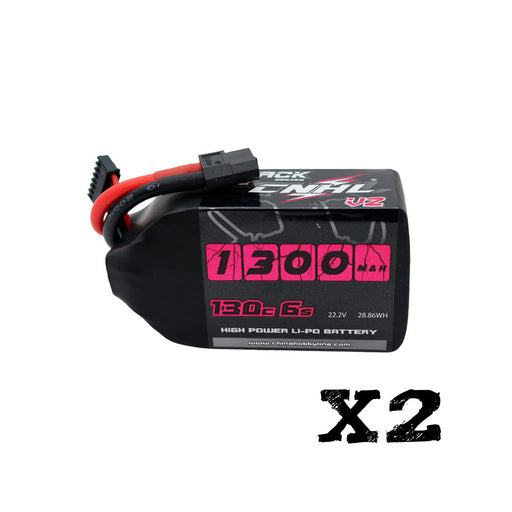
Pemeriksaan Kesesuaian Cepat 2 Packs CNHL Black Series V2.0 1300mAh 22.2V 6S 130C LiPo Battery dengan Colokan XT60 sangat cocok untuk pilot FPV yan...
Lihat detail lengkapSuku Cadang & Dukungan Jangka Panjang Kami memahami bahwa bagi pilot RC, dukungan suku cadang yang andal merupakan bagian penting untuk m...
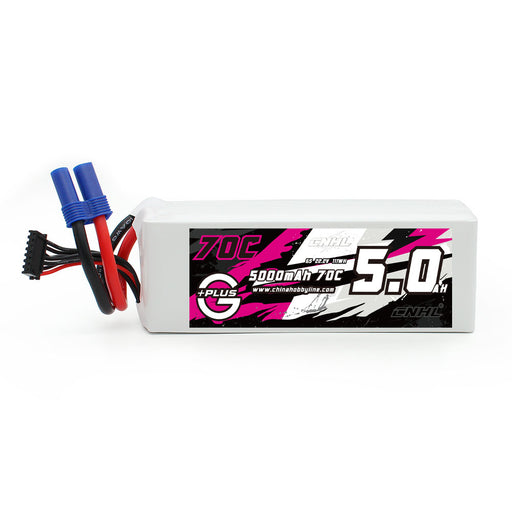
Lihat detail lengkapSpesifikasi: Nomor Stok: 500706EC5 Kapasitas: 5000mAh Voltase: 22.2V / 6-Sel / 6S1P Tingkat Discharge: 70C Kontinu / 140C Ledakan Tingkat Pengisi...
Lihat detail lengkap
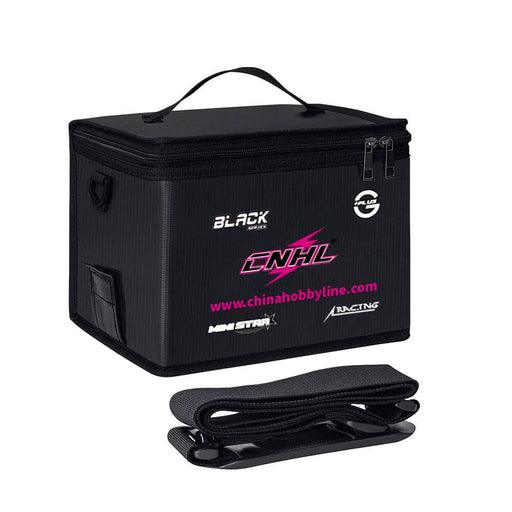
Tas Baterai LiPo CNHL dirancang untuk pengisian, transportasi, dan penyimpanan LiPo yang lebih aman di rumah atau di lapangan. Tas ini menambahkan ...
Lihat detail lengkap

Pemeriksaan Pemasangan Cepat 2 Paket CNHL Speedy Pizza Series Pro 1350mAh 6S 150C LiPo Battery dengan colokan XT60 dibuat untuk pilot FPV 5 inc...
Lihat detail lengkap

Quick Fit Check The CNHL Speedy Pizza Series 2200mAh 22.2V 6S 120C LiPo Battery with XT60 Plug combines the familiar 2200mAh 6S format with a ligh...
Lihat detail lengkap

Quick Fit Check The CNHL Speedy Pizza Series 2200mAh 14.8V 4S 120C LiPo Battery with XT60 Plug combines a widely used 2200mAh 4S format with a sli...
Lihat detail lengkap

Quick Fit Check The CNHL Speedy Pizza Series 2200mAh 11.1V 3S 120C LiPo Battery with XT60 Plug takes the familiar 3S 2200mAh aircraft battery form...
Lihat detail lengkapThe CNHL Long Range Series BAK 65E 6350mAh 21700 Li-ion battery cell is built around one clear priority: maximum stored energy from a lightweight c...
Lihat detail lengkap

The CNHL Long Range Series BAK 50D 5000mAh 21700 Li-ion battery cell is designed for custom high-energy battery packs that need a strong balance be...
Lihat detail lengkap




Tinggalkan komentar