
CNHL Baterai Lipo
CNHL bertujuan menyediakan baterai Li-Po berkualitas tinggi dan produk RC kepada semua penggemar hobi dengan layanan pelanggan yang luar biasa dan harga yang kompetitif
Short answer: RC battery connector compatibility is not just about whether two plugs look similar or carry similar current. Some connector pairs fit directly, some only work with an adapter, and some are commonly misunderstood because they may be electrically similar but not physically interchangeable in normal use. The safest rule is simple: direct fit first, adapter second, forced assumptions never.
Connector confusion usually starts when hobbyists run mixed fleets. One battery uses XT60, another ESC uses EC5, a Traxxas vehicle still has TRX, and suddenly the easy question becomes messy: what actually fits, what only works with an adapter, and when does the adapter itself become part of the problem?
This page is the compatibility-focused core guide inside the connector cluster. It does not try to explain every connector from zero. Instead, it focuses on the real-world question people actually have in the garage or at the bench: can I connect this battery to that ESC safely and sensibly?
If you want the broader connector family overview first, start with Which RC Battery Connector Is Best for Your Car, Boat, or Plane? and RC Battery Connector Types Explained: XT30, XT60, XT90, EC3, EC5, IC3, IC5, TRX, QS8 and More. If your bigger question is not fit but standardization, continue into How to Choose the Right RC Battery Connector for Your Setup.

In RC, “compatible” can mean three different things, and most confusion comes from mixing them together.
| Compatibility type | What it really means | Why it matters |
|---|---|---|
| Direct physical fit | The two connectors plug together normally | This is the cleanest and lowest-resistance outcome |
| Adapter compatibility | They do not fit directly, but can be joined with a proper adapter | Useful in mixed fleets, but adds another connection point |
| Electrical similarity | They may live in the same current class or use a related design logic | This does not guarantee safe direct fit |
The mistake many hobbyists make is hearing something like “EC5 and IC5 are compatible” or “this is basically the same class as XT90” and assuming that means they can just plug anything into anything. That is exactly where bad fits, hot adapters, and avoidable resistance problems begin.
If you just need the practical answer first, this table covers the most common cases.
| Battery side | ESC / device side | Direct fit? | Normal answer |
|---|---|---|---|
| XT60 | XT60 | Yes | Direct connection |
| XT90 | XT90 | Yes | Direct connection |
| EC5 | EC5 | Yes | Direct connection |
| IC5 | IC5 | Yes | Direct connection |
| EC5 | IC5 | Often yes in hobby use | Commonly treated as cross-usable, but check actual fit quality |
| XT60 | EC5 / IC5 | No | Use adapter or re-terminate |
| XT90 | EC5 / IC5 | No | Use adapter or standardize connector |
| TRX | XT60 / EC5 / XT90 | No | Use adapter unless converting ecosystem |
| Deans / T-Plug | XT60 / XT90 / EC5 | No | Use adapter or change connector |
| PH2.0 | BT2.0 / A30 | No | Different micro plug families |
The cleanest connector setup is always one standard from battery to ESC with no extra bridge in the middle. That means fewer resistance points, fewer mechanical weak spots, and less chance of heat or looseness showing up later.
Direct fit matters more as power rises. On a mild setup, a decent adapter may work fine. On a high-current basher, speed-run car, big boat, or large EDF, the same adapter becomes much less innocent. The power path is no longer forgiving, so connector quality starts showing up as heat, sag, or inconsistent feel.
This is why many hobbyists eventually stop asking “can I make this work?” and start asking “what standard do I want to live with long-term?” That bigger decision belongs to How to Choose the Right RC Battery Connector for Your Setup, but it starts here with one simple principle: direct fit first if you can get it.
Adapters are normal in RC. They are not automatically bad. In fact, they are often the most practical short-term answer when you are testing a new battery line, running a mixed fleet, or keeping one legacy vehicle alive without reworking everything else.
But adapters are still a compromise. They add one more set of contacts, one more physical joint, one more possible loose fit, and one more place for heat to build if the current gets serious enough.
| Situation | Adapter usually acceptable? | Cleaner long-term solution |
|---|---|---|
| Testing one battery in a mixed fleet | Yes | Adapter is fine at first |
| One older vehicle kept in rotation | Usually yes | Adapter often practical |
| Daily use across many packs | Less ideal | Standardize connector family |
| High-current 1/8 or larger setups | Only with care | Direct connector match is better |
| Speed-run / very high-load setup | Usually not ideal | Re-terminate or standardize properly |
If connector heat, soft throttle feel, or suspicious adapter warmth is already part of the story, the next page should be Why RC Battery Connectors Get Hot: Resistance, Loose Fit, Adapters, and Common Mistakes.

Most connector mistakes are not dramatic soldering disasters. They are quieter than that. Usually they start as a casual assumption that two plug families are “basically the same” when they are actually different in one important way.
These three often get grouped together because they all appear in mainstream or higher-power RC use. But grouping them is not the same thing as direct compatibility. XT60 does not directly fit XT90. XT90 does not directly fit EC5. XT60 does not directly fit EC5. If the system changes between those families, an adapter or connector change is required.
If this is your exact comparison, use XT60 vs XT90 vs EC5 Connector Comparison.
This is one of the most common hobby-side confusion points because people mix physical fit, brand naming, and current class all at once. The safe answer is that these are not interchangeable just because they live in a similar medium-power zone. Some systems may be made to work with adapters, but that is not the same as ordinary direct compatibility.
If this is the exact problem on your bench, go straight to EC3 vs IC3 vs XT60: What Actually Fits and What Doesn’t.
EC5 and IC5 are commonly treated as cross-usable in the hobby, and this is much closer to a real compatibility case than most other mixed-family comparisons. But even here, the smart habit is not blind assumption. Check physical fit, insertion feel, contact condition, and real-world heat in your actual setup.
If you are choosing a long-term high-power standard rather than asking a one-time fit question, continue into EC5 vs IC5 vs XT90: Which Connector Makes Sense for High-Power RC Setups.
Traxxas TRX is one of the clearest examples of a connector family that causes mixed-fleet friction. It works well if you stay inside the Traxxas ecosystem. The moment you start mixing XT60, EC5, XT90, or other battery lines, adapters enter the picture almost immediately.
This does not make TRX wrong. It just means TRX compatibility is mostly ecosystem compatibility, not hobby-wide plug compatibility. That full branch is covered in TRX Connector Guide: Should You Stay in the Traxxas Ecosystem or Use an Adapter?.
Micro FPV beginners often assume all tiny 1S plugs belong to one family. They do not. PH2.0, BT2.0, and A30 each belong to their own path, and that is why tiny-whoop compatibility gets confusing so fast. These are not just “small versions” of normal RC battery plugs. They are their own sub-cluster.
That exact branch is handled here: PH2.0, BT2.0, or A30? Choosing the Right Battery Plug for Your Micro FPV Drone.
This is usually the real decision. The answer depends less on internet purity and more on how you actually use the model.
That is why compatibility and connector choice overlap so much. This page helps answer “can it work?” The next page answers “what standard should I actually commit to?” If that is your next step, go to How to Choose the Right RC Battery Connector for Your Setup.
| Your situation | Best answer | Why |
|---|---|---|
| One XT60 battery, one EC5 vehicle, testing only | Use a good short adapter | Fastest practical answer without rebuilding the system |
| Many packs, one daily vehicle, mixed standards causing annoyance | Standardize connector type | Less clutter, less resistance, less friction |
| Traxxas vehicle in a mixed non-Traxxas fleet | Adapter first, then decide whether to stay in TRX | Practical transition path |
| High-power 1/8 or larger build | Prefer direct-fit high-current connector family | High load exposes adapter and fit compromises faster |
| Micro FPV 1S build | Choose the correct micro plug family directly | PH2.0, BT2.0, and A30 are not casual substitutes |

Can I use any RC battery connector if the voltage is correct?
No. Correct voltage does not solve connector fit. The battery still needs a direct-fit connector or a proper adapter solution.
Are XT60 and XT90 compatible with each other?
No. They are part of the same broader XT family logic, but they do not directly fit each other.
Can I use an adapter instead of changing the connector?
Yes, often. For temporary or mixed-fleet use, a good adapter is common. For daily high-current use, standardizing the connector is usually cleaner.
Are EC5 and IC5 the same thing?
They are closely related and are often treated as cross-usable in hobby practice, but they should still be judged by actual fit quality and real-world behavior in the setup.
Can I plug XT60 directly into EC5?
No. That requires an adapter or a connector change.
Do adapters reduce performance?
They can. A good short adapter may be fine in many setups, but every extra connection adds some resistance and another possible heat point.
What if my connector gets hot when using an adapter?
That is a warning sign. The next page to read is Why RC Battery Connectors Get Hot: Resistance, Loose Fit, Adapters, and Common Mistakes.
What is the best beginner page before this one?
Start with A Beginner's Guide to LiPo Battery Connectors if you want the simplest explanation of main power plugs and balance leads first.
RC battery connector compatibility sounds simple until a mixed fleet forces the issue. That is when hobbyists discover that “same current class,” “same family,” and “physically fits” are not the same thing. The best habit is to separate those ideas early, choose direct fit whenever possible, and treat adapters as tools rather than invisible magic.
If your next question is still “what types exist?”, go to RC Battery Connector Types Explained: XT30, XT60, XT90, EC3, EC5, IC3, IC5, TRX, QS8 and More. If your next question is “what should my own fleet standard actually be?”, continue into How to Choose the Right RC Battery Connector for Your Setup.
CNHL bertujuan menyediakan baterai Li-Po berkualitas tinggi dan produk RC kepada semua penggemar hobi dengan layanan pelanggan yang luar biasa dan harga yang kompetitif

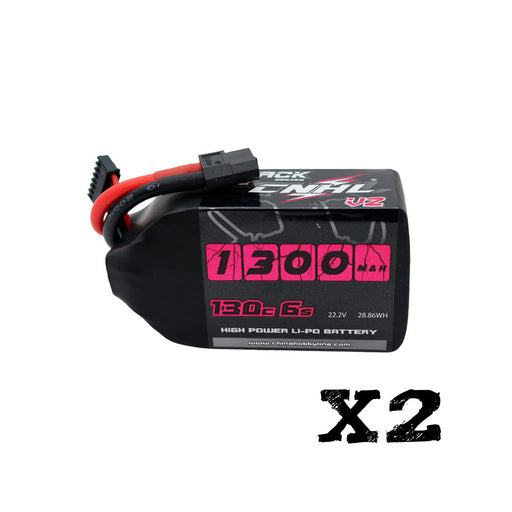
Pemeriksaan Kesesuaian Cepat 2 Packs CNHL Black Series V2.0 1300mAh 22.2V 6S 130C LiPo Battery dengan Colokan XT60 sangat cocok untuk pilot FPV yan...
Lihat detail lengkapSuku Cadang & Dukungan Jangka Panjang Kami memahami bahwa bagi pilot RC, dukungan suku cadang yang andal merupakan bagian penting untuk m...
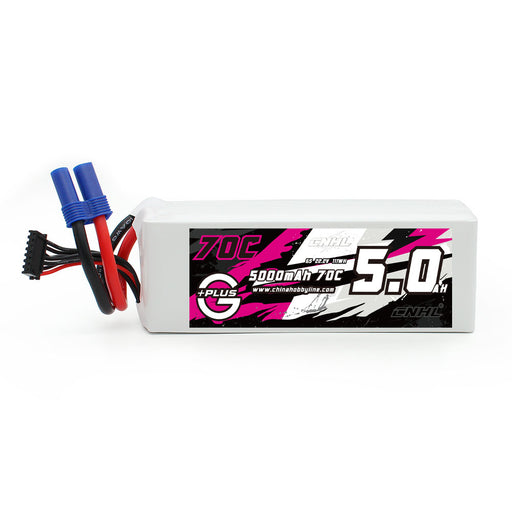
Lihat detail lengkapSpesifikasi: Nomor Stok: 500706EC5 Kapasitas: 5000mAh Voltase: 22.2V / 6-Sel / 6S1P Tingkat Discharge: 70C Kontinu / 140C Ledakan Tingkat Pengisi...
Lihat detail lengkap
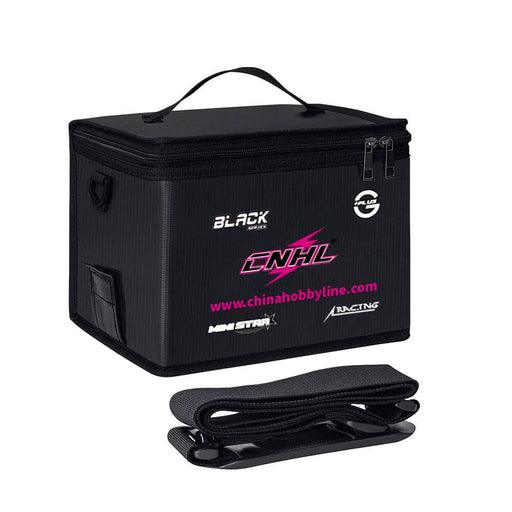
Tas Baterai LiPo CNHL dirancang untuk pengisian, transportasi, dan penyimpanan LiPo yang lebih aman di rumah atau di lapangan. Tas ini menambahkan ...
Lihat detail lengkap

Pemeriksaan Pemasangan Cepat 2 Paket CNHL Speedy Pizza Series Pro 1350mAh 6S 150C LiPo Battery dengan colokan XT60 dibuat untuk pilot FPV 5 inc...
Lihat detail lengkap

Quick Fit Check The CNHL Speedy Pizza Series 2200mAh 22.2V 6S 120C LiPo Battery with XT60 Plug combines the familiar 2200mAh 6S format with a ligh...
Lihat detail lengkap

Quick Fit Check The CNHL Speedy Pizza Series 2200mAh 14.8V 4S 120C LiPo Battery with XT60 Plug combines a widely used 2200mAh 4S format with a sli...
Lihat detail lengkap

Quick Fit Check The CNHL Speedy Pizza Series 2200mAh 11.1V 3S 120C LiPo Battery with XT60 Plug takes the familiar 3S 2200mAh aircraft battery form...
Lihat detail lengkapThe CNHL Long Range Series BAK 65E 6350mAh 21700 Li-ion battery cell is built around one clear priority: maximum stored energy from a lightweight c...
Lihat detail lengkap

The CNHL Long Range Series BAK 50D 5000mAh 21700 Li-ion battery cell is designed for custom high-energy battery packs that need a strong balance be...
Lihat detail lengkap




Tinggalkan komentar