El Hobbywing Platinum 80A V5 es un ESC de motor sin escobillas compacto para aeronaves, diseñado para helicópteros eléctricos de tamaño 450 y de clase de palas de 325–420 mm que utilizan sistemas de alimentación LiPo de 3–8S. Con una corriente continua de 80 A, una corriente de pico de 120 A, un SBEC de modo conmutado integrado y ajustable de 5–12 V, control mediante procesador de 32 bits, compatibilidad con telemetría, optimización de la eficiencia DEO y un cuerpo ligero de ESC de 77,5 g, este modelo está diseñado para pilotos que desean las funciones de helicóptero de Platinum V5 en un sistema de alimentación más pequeño y ordenado.
En comparación con los modelos más grandes Platinum 120A V5 y 150A V5.1, el Platinum 80A V5 está mejor orientado a configuraciones compactas de helicópteros en las que importan el peso, el espacio en el chasis, la flexibilidad del BEC y el flujo de aire de refrigeración. No es un ESC HV de 12S ni de 14S; su rango de entrada previsto es de 3–8S LiPo, lo que lo convierte en una opción específica para helicópteros de tamaño 450, configuraciones de clase 325–420 y aeronaves de ala fija ligeras compatibles.
La plataforma Platinum V5 incluye una estructura hueca de disipación térmica de doble cara, BEC de modo conmutado programable de 5–12 V, algoritmo de precisión de RPM, sensibilidad de velocidad constante ajustable, compatibilidad con la telemetría Mikado VBar / Futaba S.BUS2, optimización de la eficiencia de accionamiento DEO, compatibilidad con programación mediante LCD / OTA, compatibilidad con actualizaciones de firmware y múltiples funciones de protección.
Comprobación rápida de compatibilidad
-
Ideal para: Helicópteros eléctricos de tamaño 450, helicópteros de clase de palas de 325–420 mm y aeronaves de ala fija ligeras compatibles.
-
Rango de aplicación oficial: Helicópteros eléctricos de clase 325–420, con palas principales de 325–420 mm, o aeronaves de ala fija.
-
Plataforma de batería: LiPo de 3–8S.
-
Corriente nominal: 80 A continuos / 120 A de pico.
-
Tipo de BEC: SBEC de modo conmutado integrado, ajustable de 5–12 V, 8 A continuos / 20 A de pico.
-
Refrigeración: Diseño compacto de disipador de doble cara con estructura de flujo de aire mediante ventanas laterales.
-
Clase de peso: Cuerpo ligero del ESC de 77,5 g, incluidos los cables.
-
Programación: Compatible con la caja de programación LCD y el programador OTA, que se venden por separado.
-
Importante: Compruebe la corriente del motor, el voltaje de la batería, el flujo de aire de refrigeración, la elección de conectores, el voltaje del BEC, la carga de los servos, los requisitos del sistema flybarless y el manual del helicóptero antes de usarlo.
Especificaciones del producto
| Marca |
Hobbywing |
| Serie |
Platinum V5 |
| Modelo |
PLATINUM 80A V5 |
| Corriente continua / de pico |
80A / 120A |
| Voltaje de entrada |
Batería LiPo de 3–8S |
| BEC |
BEC de modo conmutado; salida ajustable de 5–12 V en pasos de 0,1 V; 8 A continuos / 20 A de pico |
| Diseño de refrigeración |
Estructura de disipador hueca de doble cara con diseño de flujo de aire mediante ventanas laterales |
| Cables de entrada/salida |
1 cable de entrada de silicona negro y 1 rojo de 12AWG / 3 cables de motor de silicona negros de 14AWG |
| Interfaz de programación independiente |
Se conecta a una caja de programación LCD o a un módulo OTA; también puede alimentar una configuración de ventilador de refrigeración compatible |
| Caja de programación LCD / programador OTA |
Compatible, se vende por separado |
| Función de telemetría |
Mikado VBar, Futaba S.BUS2 y otros protocolos de retorno de datos compatibles |
| Actualización del firmware |
Compatible |
| Indicador LED |
Muestra el estado del ESC y las alertas de fallos |
| Tamaño (L × W × H) |
60,5 × 33 × 17,6mm |
| Peso aproximado |
77,5g con cables |
| Aplicación |
Helicóptero eléctrico de clase 325–420, pala principal de 325–420mm o aeronave de ala fija |
| Número de stock |
30203201 |
Diseñado específicamente para configuraciones de helicópteros 450
El Platinum 80A V5 es especialmente adecuado para configuraciones compactas de helicópteros 450 en las que el ESC debe ser ligero, pequeño, rápido en su respuesta y fácil de instalar dentro de una estructura estrecha. Muchos helicópteros 450 se encuentran dentro de la clase de palas de 325–420mm o cerca de ella, por lo que el 80A V5 ofrece una clase de corriente práctica cuando el motor, la transmisión, el voltaje de la batería LiPo y el estilo de vuelo son adecuados para la configuración.
Este modelo se sitúa por debajo del Platinum 120A V5 y del 150A V5.1. No está diseñado para sustituir a esos ESC de mayor corriente en helicópteros más grandes de clase 500, 520 o 550. En su lugar, ofrece a los pilotos de helicópteros 450 y compactos acceso a la plataforma de funciones Platinum V5 —control de 32 bits, SBEC ajustable, compatibilidad con telemetría, optimización de la eficiencia DEO y flujo de aire mediante un disipador compacto— en un paquete más pequeño de 80A.
Nota de configuración: «Helicóptero 450» puede referirse a distintos tamaños de pala según la marca y la generación. Compara siempre el manual de tu helicóptero, la longitud de la pala principal, el KV del motor, la relación de transmisión, el voltaje de la batería, el consumo de corriente previsto y el espacio físico de montaje antes de elegir un ESC de 80A.
Diseño compacto del disipador para estructuras ligeras
El Platinum 80A V5 utiliza una estructura compacta de disipación térmica hueca de doble cara con un diseño de flujo de aire mediante ventanas laterales. Esto ayuda a que el aire de refrigeración atraviese el cuerpo del ESC y evacue el calor de la placa de circuito interna.
En los helicópteros de tamaño 450, el rendimiento de refrigeración no depende únicamente del diseño del ESC. La instalación también es importante. Mantén el ESC alejado de zonas con el flujo de aire obstruido, evita cubrir las rejillas de ventilación laterales, deja espacio alrededor del disipador y comprueba la temperatura del ESC durante los primeros vuelos de prueba antes de realizar vuelos 3D intensivos o volar a altas revoluciones del rotor.
BEC de conmutación integrado ajustable de 5–12V
El BEC de conmutación integrado ofrece al Platinum 80A V5 una ruta de alimentación flexible en el lado del receptor para los componentes electrónicos compactos de helicópteros. El voltaje de salida se puede ajustar de 5V a 12V en pasos de 0,1V, lo que permite a los pilotos adaptar el ESC a receptores, servos, sistemas flybarless y dispositivos electrónicos a bordo compatibles.
La especificación oficial indica una salida BEC de 8 A continuos y 20 A de pico. Esto es elevado para un ESC de aeronave de 80 A, pero nunca se debe dar por sentada la demanda de voltaje y corriente. Confirma siempre que tus servos, receptor y sistema flybarless puedan aceptar de forma segura el voltaje BEC seleccionado, especialmente cuando utilices servos HV en un helicóptero de tamaño 450.
Procesador de 32 bits y algoritmo de precisión de RPM
El Platinum 80A V5 utiliza un procesador de 32 bits combinado con un algoritmo de precisión de RPM para mejorar el rendimiento de velocidad constante. Para los pilotos de helicópteros, esto ayuda al ESC a ofrecer una respuesta del gobernador más uniforme ante los cambios en la carga del rotor.
La sensibilidad ajustable del control de velocidad constante permite a los pilotos ajustar la respuesta según la configuración del motor, la carga del rotor, el estilo de vuelo y la curva del acelerador. En un helicóptero de tamaño 450, un control preciso de la velocidad del rotor puede afectar considerablemente a las sensaciones de vuelo, la estabilidad, la respuesta del colectivo y la confianza general.
Compatibilidad con protocolos de telemetría y comprobación remota de datos
El Platinum 80A V5 es compatible con protocolos de retorno de datos como Mikado VBar y Futaba S.BUS2. Con equipos compatibles, los pilotos pueden comprobar el estado de funcionamiento del ESC y ajustar los parámetros compatibles mediante sistemas de radio o flybarless compatibles.
En los helicópteros de tamaño 450, la telemetría puede ser útil durante la configuración, ya que ayuda a los pilotos a supervisar el voltaje, la corriente, la temperatura, las RPM y otros datos relacionados con el ESC, según el sistema conectado. El funcionamiento real de la telemetría depende del transmisor, el receptor, el sistema flybarless, el firmware, el adaptador y el método de conexión utilizados en el helicóptero.
Rectificación síncrona y optimización de la eficiencia DEO
El Platinum 80A V5 incluye optimización de la eficiencia de accionamiento mediante rectificación síncrona, también conocida como DEO. Esta tecnología está diseñada para mejorar la respuesta del acelerador, la eficiencia de accionamiento, la estabilidad de vuelo, la duración de la batería y el comportamiento de la temperatura del ESC en condiciones de funcionamiento compatibles.
En los helicópteros compactos, un control eficiente del acelerador es importante porque el ESC suele funcionar en una estructura pequeña con cambios de carga repetidos. Una mayor eficiencia y un menor aumento de temperatura ayudan a mejorar la fiabilidad cuando el motor, la transmisión, la carga del rotor, la batería, el conector y la configuración de refrigeración están correctamente ajustados.
Siete funciones de protección
El Platinum 80A V5 incluye varias funciones de protección para uso en aeronaves, como protección durante el arranque, protección contra sobrecorriente, protección contra sobretemperatura, protección contra sobrecarga, protección contra la pérdida de señal del acelerador, protección contra la temperatura de los condensadores y protección contra anomalías en el voltaje de entrada.
Las funciones de protección ayudan a reducir los riesgos, pero no hacen que el ESC sea inmune a una configuración incorrecta. Una carga excesiva del rotor, un flujo de aire deficiente, conectores débiles, un voltaje incorrecto de la batería, una salida del BEC sobrecargada, una soldadura deficiente o una relación de transmisión agresiva aún pueden dañar el sistema de potencia.
Planificación de la batería para helicópteros de tamaño 450
El Platinum 80A V5 admite sistemas de alimentación LiPo de 3–8S, pero la configuración correcta de la batería depende del modelo de helicóptero, los KV del motor, la relación de transmisión, la longitud de las palas, las RPM objetivo del rotor, la capacidad nominal del conector y el estilo de vuelo. Muchos helicópteros modernos de tamaño 450 utilizan sistemas de alimentación de tipo 6S, mientras que algunas configuraciones compactas de alto rendimiento pueden utilizar distintas configuraciones de voltaje según el motor y el diseño del bastidor.
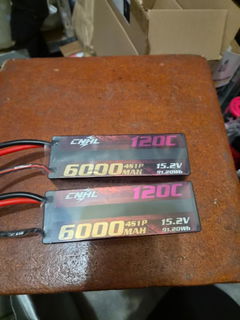
Para planificar la batería de un helicóptero, consulta Baterías para helicópteros CNHL. Para las configuraciones de voltaje habituales en aeronaves, compara Baterías LiPo 6S y Baterías LiPo 8S. Confirma siempre el tamaño de la batería, el conector, la clasificación C y el consumo de corriente previsto antes de realizar vuelos agresivos.
No se debe seleccionar un ESC de 80 A basándose únicamente en el voltaje de la batería. La compatibilidad real depende de todo el sistema de potencia: la corriente del motor, la carga del rotor, la refrigeración, la relación de transmisión, la carga del BEC, la capacidad de descarga de la batería y el rango de ESC recomendado por el fabricante del helicóptero.
Manual oficial
Descarga aquí el manual oficial: Manual de usuario del Hobbywing Platinum 80A V5.
Rutas de colecciones recomendadas
Preguntas frecuentes: Hobbywing Platinum 80A V5
¿Para qué se utiliza el Hobbywing Platinum 80A V5?
Es un ESC de aeronave sin escobillas para helicópteros eléctricos de tamaño 450 y de clase 325–420, así como para aeronaves de ala fija ligeras compatibles que utilicen sistemas de alimentación LiPo de 3–8S.
¿El Platinum 80A V5 es adecuado para un helicóptero 450?
Puede considerarse para configuraciones de helicópteros de tamaño 450 y de clase de palas de 325–420 mm cuando la corriente del motor, el voltaje de la batería, la carga del BEC, la refrigeración, la elección de conectores y el espacio de montaje sean compatibles. Consulta siempre el manual del helicóptero antes de usarlo.
¿El Platinum 80A V5 incluye BEC?
Sí. Incluye un BEC de modo conmutado con salida ajustable de 5–12 V, corriente continua de 8 A y corriente máxima de 20 A para dispositivos electrónicos compatibles del lado del receptor.
¿Es el Platinum 80A V5 un ESC de alto voltaje 14S?
No. Este modelo admite LiPo de 3–8S. Para configuraciones de aeronaves de 12S o 14S, elige un ESC HV adecuado.
¿Cuál es la diferencia entre el 80A V5 y el 120A V5?
El Platinum 80A V5 es un ESC 3–8S más pequeño y ligero para helicópteros de clase 325–420. El Platinum 120A V5 ofrece mayor margen de corriente para configuraciones de helicópteros de clase 420–520 más grandes, aunque comparte muchos de los mismos conceptos de funciones del Platinum V5.
¿Este ESC admite telemetría?
Sí. Es compatible con protocolos de retorno de datos, como Mikado VBar y Futaba S.BUS2, según la electrónica de la aeronave, el firmware y el método de conexión.
¿Este ESC admite programación?
Sí. Es compatible con la caja de programación LCD y la configuración mediante programador OTA, que se venden por separado. No admite la programación mediante el transmisor ni la tarjeta de programación LED.
¿Puedo usar este ESC en un coche o barco RC?
No. Este es un ESC Platinum enfocado en aeronaves, para helicópteros y aeronaves de ala fija. Para coches RC, compara los ESC QuicRun, EzRun o XeRun. Para barcos RC, compara los ESC SeaKing o los ESC marinos refrigerados por agua.