
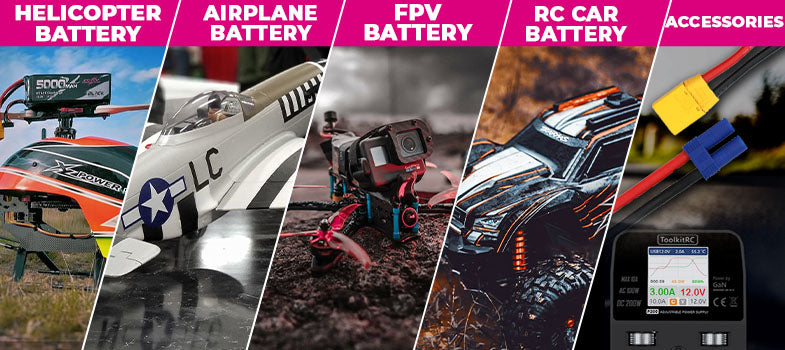
סוללות CNHL ליפו
CNHL שואפת לספק סוללות Li-Po באיכות גבוהה ומוצרי RC לכל חובבי התחביב עם שירות לקוחות מצוין ומחירים תחרותיים
The Team Associated RIVAL MT10 has been around long enough that most RC fans have heard the reputation: durable, easy to drive, and surprisingly capable on 3S. What keeps it interesting is that the praise does not come from spec sheets. It comes from real use—park bashing, rough grass, damp dirt, small ramps, and the kind of everyday driving that exposes whether a truck feels predictable or chaotic.
This article focuses on practical ownership notes: how the MT10 actually drives, what changes between AE MT10 V1 and V2, how real-world battery fit tends to work in the tray, and which small setup details make the biggest difference for control and long-term enjoyment.

For most buyers, the practical question is simple: is the MT10 V2 a new platform, or the same truck with a refreshed look? In real-world comparisons, the MT10 V2 is widely treated as the same core truck as the original MT10. The most noticeable updates are cosmetic—body design and visual details—while the underlying layout and overall proportions remain consistent enough that driving feel and battery-fit discussions generally carry across both versions.
That matters because it removes confusion when searching advice. Owners who learned the MT10 on V1 tend to approach the V2 with the same baseline expectations: it should be stable for a monster truck, tough in typical bashing, and happiest in the 2S to 3S range that the platform was built around.

Monster trucks can be tricky at speed: tall ride height, big tires, and abrupt weight transfer can turn a fun run into a constant fight for control. The MT10’s standout trait is that it does not feel random. On 3S, owners frequently describe a “point it and it goes there” character, especially on mixed surfaces like gravel-to-grass transitions and uneven dirt.
There are a few reasons the platform tends to feel composed. First, the stock setup is built around bashing stability rather than race-car sharpness. Second, the truck comes with front and rear sway bars, which help reduce the classic “monster truck wobble” that can lead to traction rolling. Third, the stock tire behavior is often described as controlled rather than wildly ballooning, which supports straighter acceleration and more consistent steering at speed.
In practical use, this translates into confidence: quick bursts on 3S, wheelies when the throttle is asked to deliver, and surprisingly manageable jump attitude on small ramps. The MT10 still behaves like a monster truck, but it often feels more cooperative than expected for the category.

The MT10 is designed to run 2S or 3S, and both voltages can make sense depending on the driver and the space. The difference is not whether the truck “can” run them, but how the truck behaves.
On 2S, the MT10 tends to feel calmer and easier to place precisely. Throttle application is less dramatic, braking mistakes are more forgiving, and the truck is easier to keep tidy in smaller areas. Many owners consider 2S the best way to enjoy the MT10 without feeling like the truck is always trying to turn every run into a stunt session.
On 3S, the full monster truck personality shows up: stronger punch, more frequent wheelies, and more effortless backflips off a small ramp when the launch is clean. For open spaces and drivers who want “the MT10 experience,” 3S is often the favorite. The key point is that both options are valid. A lot of experienced owners keep both setups, using 2S when they want smooth control and 3S when they want the full basher energy.

Team Associated does not typically publish battery tray dimensions in a way that makes shopping simple. In practice, MT10 battery selection has become easier because owner fitment patterns are consistent. Standard 1/10 hardcase LiPo packs are the most common choice for bashing durability, and 3S packs in the 5000–6200mAh class are frequently used in real runs.
One practical data point repeated by owners is that common 3S 6200mAh hardcase packs fit with a small amount of spare room when seated correctly. The important detail is that “6200mAh” does not guarantee identical case size across brands. Case height, wire exit direction, and lead stiffness can all affect how cleanly the pack sits and how easily the strap secures it.
If there is one reliable approach, it is this: treat the battery’s physical dimensions and connector type as the primary fitment checklist. Capacity and C rating matter, but they do not help if the pack does not sit flat and secure.
When MT10 owners compare videos or first runs, a surprisingly common comment is that one truck looks slower than another even with similar battery voltage. One frequent cause is not gearing or electronics, but radio calibration—especially after swapping transmitter/receiver gear.
If throttle end points (EPA) are not set correctly, the ESC may never see full throttle command. The result is a truck that feels “fine” but never quite delivers the speed expected for 3S. The fix is straightforward: confirm throttle travel, confirm brake travel, and verify that the ESC sees full signal range. This is also the moment to adjust brake strength. Some drivers prefer dialing back brakes to reduce nose-dives on hard stops and to make the truck more controllable during quick direction changes.
In other words, the MT10 often rewards basic setup discipline. It is one of the easiest ways to improve performance without changing a single part.
MT10 is popular partly because it is enjoyable stock, but it also responds well to small tuning. One owner approach is to adjust diff oils—especially in the center differential—to refine power delivery. Higher-viscosity center diff setups are sometimes used to help reduce excessive ballooning and to make acceleration feel more connected on loose surfaces. The goal is not to turn the truck into something it is not, but to make the stock platform behave more consistently for the driver’s terrain and style.
Gearing is another area where small changes can matter. A modest pinion change can help shift the feel toward more speed, but it should always be paired with temperature checks and realistic expectations. MT10’s platform is widely loved as a 3S basher. While some drivers talk about 4S ideas, real-world discussion also highlights the risk side: higher load and harsher impacts can stress plastic drivetrain components in ways the platform was not originally built to absorb long-term.
For most owners, the sweet spot is simpler: keep the truck reliable, make it easier to control, and tune just enough to match the driving environment.
The MT10’s durability reputation is not based on being “unbreakable,” but on being resistant to typical bashing failures. Owners often report long sessions on street and dirt without major breakage, especially when jumps are reasonable and landings are not constantly harsh. That said, a few small items show up repeatedly as “expected” quirks rather than true platform flaws.
Decorative wheel nut covers (hub caps) are one example. They look good, but some owners report they can come off during the first hard run, especially if the truck is flipped or the wheels take side impacts. Another example is small push-fit hardware around sway bar link points that may loosen over time. These are minor maintenance checks, not dealbreakers, but they are worth knowing before assuming every missing piece is a serious failure.
| Voltage | Common capacity range | Fit confidence | Driving character | Best for | Practical notes |
|---|---|---|---|---|---|
| 2S LiPo | 4000–6600mAh | High (standard 1/10 hardcase formats are commonly used) | Smoother throttle, easier control, less wheelie-prone | Beginners, smaller spaces, relaxed bashing | If 3S feels too lively, 2S is the simplest way to make the truck calmer without changing hardware. |
| 3S LiPo | 5000–5200mAh (common) / up to 6600mAh (depends on case size) | High for common 6200-class hardcase packs; confirm dimensions for oversized packs | Stronger punch, wheelies on demand, easier backflips off small ramps | Most bashers, open areas, drivers seeking full MT10 character | Owners often describe 3S 6200 hardcase as a balanced choice for runtime and performance when the pack seats flat and straps securely. |
| Radio setup check | — | Must verify | Direct impact on top speed and control | Everyone | After changing radio gear, confirm throttle end points (EPA) and brake strength. Poor calibration can make the truck feel slower than expected. |
| Diff oil tuning | — | Optional | Can refine power delivery and reduce unwanted tire behavior | Owners who want a more tailored feel | Higher-viscosity center diff setups are sometimes used to improve connected acceleration and help reduce excessive ballooning in certain conditions. |
The MT10 is a strong choice for drivers who want a 3S monster truck that does not constantly punish small mistakes. It suits people who value stability, durability, and ease of maintenance over extreme top speed. It is also a logical “first adult RC” because it feels approachable without feeling like a toy.
On the other hand, if the primary goal is high-speed straight-line runs, repeated skatepark-sized launches, or a direct path into higher-voltage platforms, MT10 may not be the most efficient starting point. The platform’s strength is balance: enough power to keep it exciting, and enough control to keep it fun.

For readers who want to translate these driving observations into a battery choice, the most important step is matching the pack to the intended feel: 2S for smoother control, 3S for the full basher character, and a secure hardcase fit for durability. A practical starting point is to choose a pack that seats flat, straps firmly, and matches the ESC connector strategy so the installation stays clean and reliable.
For the full battery selection built specifically around the MT10 platform, use this collection page: LiPo Batteries for Team Associated RIVAL MT10.
Q: Is the MT10 V2 different enough to change battery fit advice?
A: Battery fit and driving feel guidance is generally treated as shared across V1 and V2. Updates are primarily visual, while the platform character remains consistent.
Q: Should MT10 be started on 2S or 3S?
A: Both work well. Many owners start on 2S for smoother control and move to 3S when they want the full monster truck punch, wheelies, and easier stunt behavior.
Q: Will a 3S 5200mAh hardcase pack fit the tray?
A: Standard 1/10 hardcase packs in the 5200-class are commonly used by owners and are generally reported as a reliable fit. Because case sizes vary by brand, confirm physical dimensions and ensure the pack seats flat with the strap secured.
Q: Why does the truck sometimes feel slower than expected?
A: After swapping radio gear, incorrect throttle end points (EPA) can limit the ESC’s signal range. Confirm calibration and brake strength before assuming a gearing or power issue.
Q: What is one low-cost setup change that can improve feel?
A: Basic radio tuning (brake strength and end points) is often the first big win. Some owners also tune diff oils to refine power delivery and tire behavior for their terrain.
CNHL שואפת לספק סוללות Li-Po באיכות גבוהה ומוצרי RC לכל חובבי התחביב עם שירות לקוחות מצוין ומחירים תחרותיים
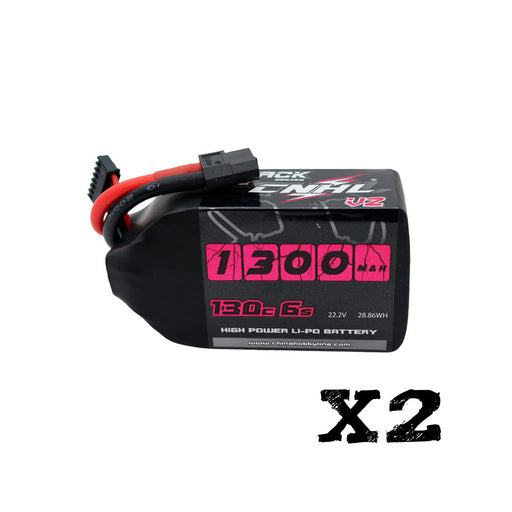
בדיקת התאמה מהירה ה2 Packs CNHL Black Series V2.0 1300mAh 22.2V 6S 130C LiPo Battery with XT60 Plug מתאים היטב למטיסי FPV שרוצים סוללת 6S 1300mAh X...
הצג פרטים מלאיםחלקי חילוף ותמיכה לטווח ארוך אנו יודעים שעבור טייסי RC, תמיכה אמינה בחלקי חילוף היא חלק חשוב בשמירה על מטוס כשיר לטיסה במשך שנים. לכן CNHL מת...
הצג פרטים מלאים
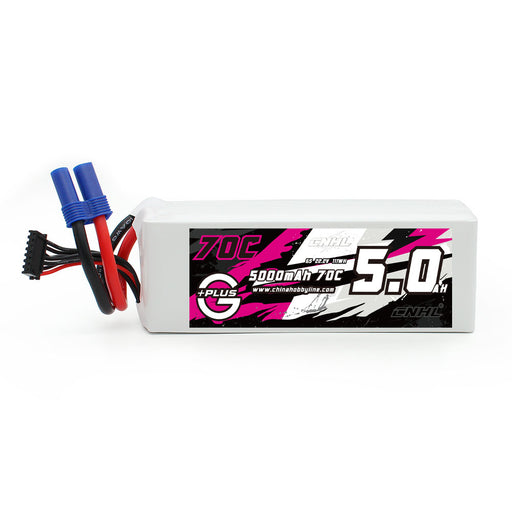
מפרטים: מספר מלאי: 500706EC5 קיבולת: 5000mAh מתח: 22.2V / 6 תאים / 6S1P קצב פריקה: 70C רציף / 140C פיצוץ קצב טעינה: 5C מקסימום גודל (הבדל של 1-5 ...
הצג פרטים מלאים
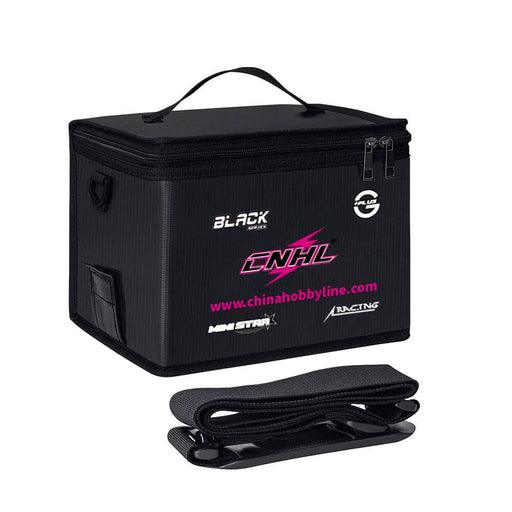
תיק סוללות LiPo של CNHL מיועד לטעינה, הובלה ואחסון בטוחים יותר של סוללות LiPo בבית או בשדה. הוא מוסיף שכבת הגנה פרקטית על ידי סיוע במניעת התפשטות ח...
הצג פרטים מלאים

בדיקת התאמה מהירה חבילת 2 CNHL Speedy Pizza Series Pro 1350mAh 6S 150C LiPo עם תקע XT60 מיועדת לטייסי FPV בגודל 5 אינץ' שרוצים מערכת 6S חופשית ...
הצג פרטים מלאים

Quick Fit Check The CNHL Speedy Pizza Series 2200mAh 22.2V 6S 120C LiPo Battery with XT60 Plug combines the familiar 2200mAh 6S format with a ligh...
הצג פרטים מלאים

Quick Fit Check The CNHL Speedy Pizza Series 2200mAh 14.8V 4S 120C LiPo Battery with XT60 Plug combines a widely used 2200mAh 4S format with a sli...
הצג פרטים מלאים

Quick Fit Check The CNHL Speedy Pizza Series 2200mAh 11.1V 3S 120C LiPo Battery with XT60 Plug takes the familiar 3S 2200mAh aircraft battery form...
הצג פרטים מלאים

The CNHL Long Range Series BAK 65E 6350mAh 21700 Li-ion battery cell is built around one clear priority: maximum stored energy from a lightweight c...
הצג פרטים מלאים

The CNHL Long Range Series BAK 50D 5000mAh 21700 Li-ion battery cell is designed for custom high-energy battery packs that need a strong balance be...
הצג פרטים מלאים


Leave a comment