
CNHL Baterai Lipo
CNHL bertujuan menyediakan baterai Li-Po berkualitas tinggi dan produk RC kepada semua penggemar hobi dengan layanan pelanggan yang luar biasa dan harga yang kompetitif
The ARRMA MOJAVE 6S V3 brings one of ARRMA's best-known 1/7 desert trucks back with a more substantial update than the new paint schemes initially suggest. The core formula remains familiar — long wheelbase, wide stance, 6S brushless power and high-speed desert-truck handling — but the V3 adds a completely revised clipless body structure, more chassis protection, strengthened wheel hardware, updated steering and drivetrain details, and an EXB RTR version for drivers who want the premium hardware straight out of the box.
What has not changed is arguably just as important. This is still not a short-wheelbase stunt truck designed primarily around standing backflips and skate-park launches. The MOJAVE is at its best when it has room to stretch its legs over dirt, gravel, sand, grass and uneven open terrain. Multiple real-world tests of the new truck point to the same conclusion: there is already enormous power on 6S, and the soft desert-focused suspension works best when the surface gets rough.
The bigger question is whether the V3 meaningfully improves the previous MOJAVE 6S, whether the new clipless body is really better, and whether the EXB is worth choosing over the already heavily upgraded standard RTR. Those are the questions this review focuses on.

The MOJAVE 6S V3 is best understood as a major refinement of an already proven truck rather than a completely different MOJAVE. ARRMA has kept the dimensions, long-wheelbase layout and familiar 6S character, but updated many of the details that owners interact with every run.
The biggest visible change is the new clipless body system. Underneath that body, however, the standard RTR has also moved surprisingly close to EXB territory. Both versions share a 7075 T6 aluminum chassis, the same general 4S/6S Spektrum power system, the same vehicle dimensions, the same new body architecture and many of the same V3 updates.
The EXB still adds meaningful premium hardware, particularly around the bulkheads, shock towers, braces and other structural areas, but it is no longer a case of choosing between a basic RTR and a completely different heavy-duty platform.
The easiest mistake to make with the new MOJAVE is to focus only on the body colors. The Blue, Beige and limited Yellow schemes attract attention immediately, while the EXB gets its familiar darker black, gray and red treatment, but the more meaningful updates are underneath.
The previous MOJAVE used conventional body posts and clips. V3 moves to a side-release clipless system related to the design used on smaller ARRMA platforms. Push the release on each side and the complete body can be lifted away without searching for loose body clips.
The body is no longer just a thin shell sitting on top of the chassis. ARRMA has integrated a substantial internal cage, front and rear support structures, inner arches and side protection into the body assembly. The result is better coverage around the chassis and much less room for large amounts of grass, dirt and debris to enter from around the wheels.
The new wheels include metal reinforcement around the wheel hex interface. That matters on a large 6S truck because repeated acceleration and braking loads can eventually damage a purely plastic hex interface. This is one of those updates that is easy to miss in a product photo but makes much more sense once the truck is being driven hard.
The standard MOJAVE is no longer a stripped-down alternative to the EXB. It gets a 7075 T6 chassis, upgraded emulsion-style shock hardware, reinforced steering components, improved outdrives, updated hubs, larger battery retention and several structural revisions that bring it much closer to the premium model than older RTR-versus-EXB comparisons might suggest.

The V3 clipless body is more than a convenience upgrade. ARRMA has effectively turned the body into part of the truck's protection system, combining the shell, inner cage, side structures and debris guards into one large assembly. The result is quicker access to the chassis, better coverage around the wheels and noticeably less room for grass, dirt and loose debris to collect inside.
That integrated design also helps explain why the new MOJAVE can take hard hits without immediately exposing suspension and drivetrain parts. In many crashes, the body becomes the first structure to absorb the impact rather than leaving the chassis and arms to take the full load.
The trade-off is that the body now does much more work than before. Because the release mechanism is built into the same structure that can flex, twist and collect debris, a very hard impact can temporarily change the alignment of the catches, while fine sand around the side buttons can make the release less smooth. These are not guaranteed problems during normal use, but they are realistic consequences of moving from simple body posts and clips to a more complex integrated mounting system.
For most owners, the gain is still meaningful: the body is faster to remove, the chassis stays cleaner, and the truck gets more external protection. Hard bashers should simply understand that the clipless system is now part of the impact structure, not an isolated latch mechanism. If the body takes a major hit, checking that the side catches and lower mounting areas are still aligned should become part of the normal post-run inspection.
ARRMA's 60+ MPH claim is realistic on 6S, but outright top speed only tells part of the story. In suitable conditions, the stock V3 has shown that it can reach roughly 60 MPH and even edge into the low-60s on pavement, while still carrying speeds in the low-50s across grass and other off-road surfaces.
What matters more is how much performance is already available before the trigger ever reaches full throttle. The 4074 2050Kv motor and 150A 6S system give the MOJAVE enough torque to lift the front end, break the rear tires loose and accelerate hard even on surfaces that cannot make full use of the available power.
That means the practical speed limit is often set by the terrain rather than the electronics. On pavement, the truck has enough grip and stability to use much more of its top-end speed. Move onto loose dirt, grass or rough ground and throttle control becomes more important, because the soft suspension, body movement and reduced traction can make a full-power run much harder to manage.
This is also why chasing more power is not the obvious next step for the MOJAVE 6S V3. In stock form, the truck already has more performance than most surfaces can consistently absorb. A healthy 6S battery that maintains voltage under load, combined with good throttle control and the right terrain, matters more than simply increasing C-rating or looking for even more motor power.

The MOJAVE 6S V3 is intentionally tuned with more suspension movement than a typical high-speed road-oriented basher. That softer setup allows the wheels to follow broken terrain instead of forcing the whole truck to skip across it, which is exactly what a long-wheelbase desert truck needs when speed is carried through dirt, gravel, grass and uneven ground.
The trade-off is visible as soon as the surface becomes smooth and grip increases. The chassis leans more through corners, the rear can move around under throttle, and hard landings use a large amount of suspension travel. Drivers coming from a stiffer monster truck or truggy may initially interpret that movement as a lack of control, but much of it is simply the suspension doing the job it was designed to do.
Once the terrain gets rough, the logic becomes much clearer. The long wheelbase keeps the truck settled while the suspension absorbs repeated bumps underneath it, helping the tires stay in contact with the ground and allowing the MOJAVE to carry speed where a stiffer setup would become nervous or start bouncing.
This also explains why big-air jumping is something the MOJAVE can do rather than what defines it. Its long wheelbase and relatively modest tire diameter give it less rotational authority in the air than a short-wheelbase stunt truck, while the suspension is better suited to absorbing a sequence of rough impacts than repeatedly launching and rotating the chassis.
In other words, body roll and suspension movement are not accidental weaknesses of the V3. They are part of the same setup that gives the MOJAVE its strongest trait: the ability to stay fast and composed when the ground stops being smooth.
The V3 body is doing far more work than the shell on the previous MOJAVE. The integrated cage, inner fenders, side structures and clipless mounting hardware improve protection and help keep debris away from the chassis, but they also add a meaningful amount of mass above the chassis line. The complete body assembly has been measured at roughly 3.3 lb, so this is not a small change in how weight is distributed around the truck.
That extra mass does not make the MOJAVE V3 unstable, but it does slightly change its character. Compared with the previous generation, the truck carries more weight higher up, so there is more inertia working against it when the chassis changes direction quickly. The result is a little more body movement, a stronger tendency for the rear to rotate under power, and less margin before the truck tips onto its side when grip suddenly builds on rough or uneven ground.
This is the price of the V3's more protective body architecture. The older truck benefited from a lighter shell and slightly lower effective center of gravity, while the new version gains better chassis coverage and impact shielding. Neither approach is automatically better; they prioritize different things.
For the way the MOJAVE is intended to be driven, the compromise is reasonable. On loose dirt, sand and open terrain, the tires can slide before the chassis loads up enough to traction-roll, and the long wheelbase still gives the truck a stable, predictable feel at speed. The higher center of gravity becomes more noticeable when aggressive steering, high grip and heavy throttle are combined at the same time.
So the V3 is not simply “more top-heavy” than the old MOJAVE. A better way to describe it is that ARRMA traded a small amount of low-center-of-gravity agility for a body system that provides substantially more protection, debris control and structural support.
| Area | Previous MOJAVE 6S | MOJAVE 6S V3 |
| Body Mounting | Traditional body posts and clips | Side-release clipless body |
| Debris Protection | More open around body sides | Integrated inner arches and side guards |
| Wheel Hex | Plastic wheel interface | Metal-reinforced wheel interface |
| Battery Retention | Earlier strap system | Heavier-duty reinforced strap |
| Body Weight / CG | Lighter shell structure | More structure and protection higher on vehicle |
| Character | Classic MOJAVE handling | Same core formula with more protection and updated hardware |
If you already own a well-sorted previous MOJAVE 6S, V3 is not an entirely new driving experience. The wheelbase, general dimensions and overall desert-truck character remain familiar.

The reason to upgrade is more about convenience, protection and revised hardware than a dramatic increase in straight-line performance. Owners who are happy with their existing truck should not expect V3 to suddenly transform what a MOJAVE is. New buyers, however, are getting a more thoroughly developed platform from the start.
This is arguably the most interesting question surrounding the V3 because the standard RTR now shares so much with the EXB.
| Component / Feature | MOJAVE 6S RTR | MOJAVE 6S EXB RTR |
| Power System | 4S / 6S Spektrum brushless | 4S / 6S Spektrum brushless |
| Motor | Firma 4074 2050Kv | Firma 4074 2050Kv |
| 7075 T6 Chassis | Yes | Yes |
| Body Architecture | Same V3 clipless design | Same V3 clipless design |
| Shock Towers | Stamped aluminum | Machined 7075 aluminum |
| Bulkheads | Composite | Anodized aluminum |
| Structural Bracing | Composite / aluminum mix | More aluminum reinforcement |
| Best For | Most drivers and general bashing | Harder use and drivers who want premium hardware |
The EXB is objectively the higher-spec truck. Its machined 7075 shock towers, aluminum bulkheads, upgraded braces, aluminum servo mount and other premium structural components are real improvements.
But the standard RTR is arguably the more interesting value proposition because so many traditionally premium features have moved downstream. One detailed comparison measured less than a one-percent total weight difference between the two trucks, and because their dimensions, body design and power systems are effectively the same, their basic driving behavior is also extremely similar.
If you are planning heavy repeated impacts, substantial power upgrades or simply want the highest-spec factory build, the EXB makes sense.
If you want the MOJAVE experience on stock 6S power and do not specifically need every aluminum upgrade, the standard RTR is much harder to dismiss than previous generations.

The most revealing V3 durability tests were not the clean jumps. They were the bad landings.
The truck has been landed nose-first, tail-first and under throttle, and in several tests the chassis, suspension and drivetrain remained intact. The full-width body works almost like external armor because many impacts reach the shell before they reach the suspension arms and drivetrain components.
That protection matters because both versions are heavy 1/7 vehicles carrying substantial speed. The 7075 chassis also held flat through repeated impact testing.
The body itself is more likely to become the sacrificial component. That is not necessarily a design failure — absorbing damage before it reaches expensive drivetrain parts is often desirable — but owners doing extreme skate-park-style bashing should expect the body mounting structure to be one of the areas that eventually receives stress.
The MOJAVE 6S V3 does not need an unusually large or extreme battery to feel fast. Its stock 4074 2050Kv motor and 150A 4S/6S system already deliver more performance than the chassis can fully use on many loose surfaces, so battery selection is better treated as a balance of fit, runtime, voltage stability and installed weight rather than a search for the highest capacity or C-rating.
For full 6S performance, there are two equally valid ways to build the 22.2V system: one 6S pack or two matching 3S packs connected in series. A single 6S keeps the installation simple and reduces the amount of wiring and charging management. Dual 3S makes more sense for drivers who already use 3S packs in other vehicles and want more flexibility from the same batteries.
The first limit is physical fit. ARRMA publishes maximum battery dimensions of 158 × 48 × 70mm, so voltage or capacity alone is not enough to determine compatibility. Pack construction can vary significantly even between batteries with similar capacities, making actual dimensions, wire exit position, connector clearance and strap engagement more useful than simply reading the mAh number on the label.
Yes — high capacity does not automatically mean the battery is too large for the MOJAVE. A CNHL 10000mAh 6S pack has been physically installed in the V3 battery area and secured using the truck's battery retention system, providing a useful real-world example of how much usable battery space this platform offers.

That does not make 10000mAh the automatic choice for every driver. Its advantage is straightforward: substantially more stored energy for drivers who prioritize longer sessions between charges. The trade-off is additional battery mass, which increases the total weight the suspension must control and adds inertia during acceleration, braking and direction changes.
This gives MOJAVE owners a wider range of useful battery strategies than capacity numbers alone might suggest. A 5000–6200mAh-class 6S setup remains attractive when lower installed weight and responsive handling matter most, while a physically proven high-capacity option such as a 10000mAh 6S pack can make more sense when extended runtime is the priority.
C-rating should be viewed the same way. The goal is not to buy the largest number printed on the label; it is to use a healthy pack that can supply the stock 6S system without excessive voltage sag. Once that requirement is met, battery condition, internal resistance, capacity, installed weight and physical fit become more meaningful than chasing progressively higher discharge ratings.
For drivers comparing standard-capacity, high-capacity and dual-3S formats, the ARRMA MOJAVE 6S Battery Collection brings together options selected around the current 1/7 MOJAVE platform.
The MOJAVE uses an IC5 main power connection, while many CNHL packs use EC5. EC5 and IC5 can be considered together for the main power connection when physical fit, polarity and wire clearance are correct, but a standard EC5 battery does not provide Spektrum Smart battery communication or Smart data.
V3 is a better starting point for a new owner, but previous-generation owners do not suddenly have an obsolete truck.
Yes. The current refreshed 1/7 MOJAVE 6S release is commonly identified as the MOJAVE 6S V3, making “ARRMA MOJAVE 6S V3” a useful way to distinguish it from previous versions.
ARRMA advertises 60+ MPH capability on 6S. Independent testing of the new truck has produced results from the mid-50s to low-60s mph, including a recorded 63 MPH road run under favorable conditions.
The included SR315 receiver does not provide AVC stability control. The truck remains highly controllable, but drivers must manage the substantial 6S power themselves.
No meaningful stock speed advantage should be expected simply from choosing the EXB. Both use the same general 6S power architecture and 2050Kv motor. The EXB's main advantages are upgraded structural and durability components.
It can jump and has demonstrated strong durability during hard landings, but jumping is not its main specialty. The long wheelbase and relatively small wheels provide less mid-air rotational control than a short-wheelbase stunt truck. High-speed rough-terrain running is where the MOJAVE feels most natural.
It is much more convenient during normal use and provides excellent integrated debris protection. However, sand around the side buttons or severe deformation of the body can make the system harder to release, so it is not without trade-offs.
The truck can run one 6S LiPo or two matched 3S LiPo batteries in series for full 6S performance. ARRMA publishes maximum battery dimensions of 158 × 48 × 70mm.
The ARRMA MOJAVE 6S V3 succeeds because ARRMA did not try to turn it into something it was never meant to be. It is still a big, fast, long-wheelbase desert truck that becomes more impressive as the surface becomes rougher.
The new body system adds convenience and much better chassis coverage, although it also introduces additional weight and a few new durability considerations. The standard RTR now includes enough EXB-derived hardware that it is arguably the smarter choice for many drivers, while the EXB remains the version for owners who want the premium aluminum hardware from day one.
Most importantly, the stock 6S power system does not feel underpowered. Real-world tests reaching approximately 60 MPH and beyond confirm that the challenge is not finding more power — it is learning how to use the power the truck already has.
If your idea of a good RC session is covering a huge amount of rough ground quickly, throwing dirt from all four tires and letting a long-travel chassis work underneath you, the MOJAVE 6S V3 remains one of the most distinctive large-scale bash trucks in ARRMA's lineup.
For model-specific battery options, visit the ARRMA MOJAVE 6S Battery Collection. You can also explore LiPo Batteries for ARRMA Cars or browse the complete RC Car LiPo Battery Collection.
CNHL bertujuan menyediakan baterai Li-Po berkualitas tinggi dan produk RC kepada semua penggemar hobi dengan layanan pelanggan yang luar biasa dan harga yang kompetitif
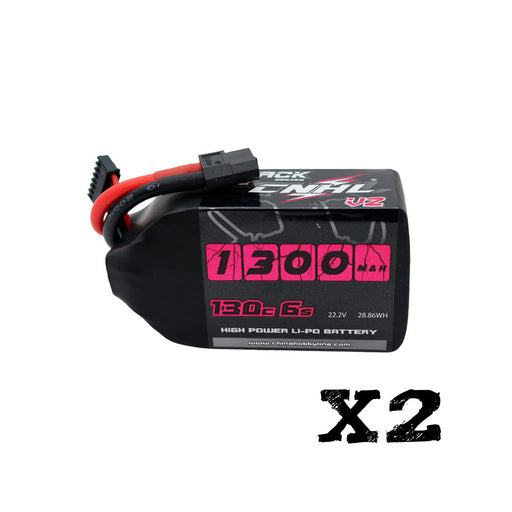
Pemeriksaan Kesesuaian Cepat 2 Packs CNHL Black Series V2.0 1300mAh 22.2V 6S 130C LiPo Battery dengan Colokan XT60 sangat cocok untuk pilot FPV yan...
Lihat detail lengkapSuku Cadang & Dukungan Jangka Panjang Kami memahami bahwa bagi pilot RC, dukungan suku cadang yang andal merupakan bagian penting untuk m...
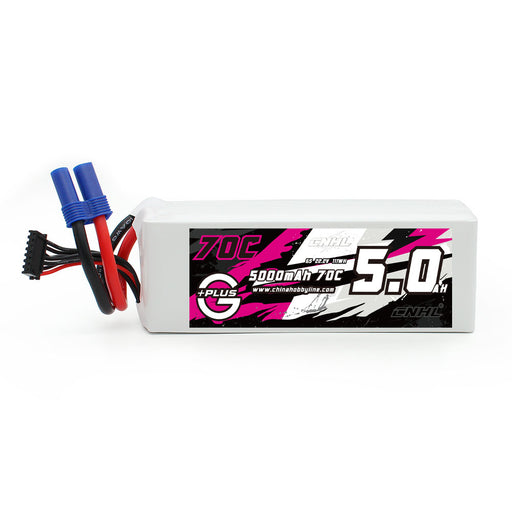
Lihat detail lengkapSpesifikasi: Nomor Stok: 500706EC5 Kapasitas: 5000mAh Voltase: 22.2V / 6-Sel / 6S1P Tingkat Discharge: 70C Kontinu / 140C Ledakan Tingkat Pengisi...
Lihat detail lengkap
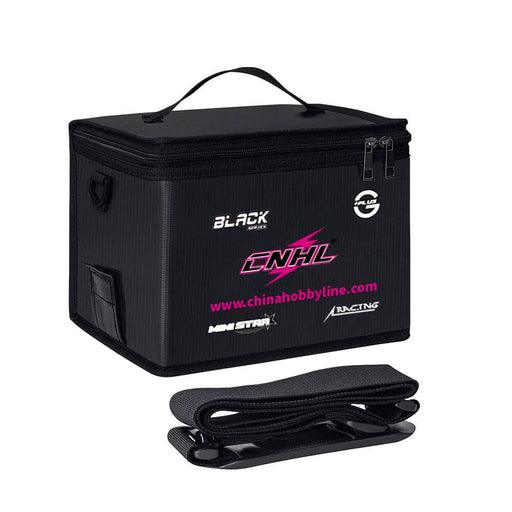
Tas Baterai LiPo CNHL dirancang untuk pengisian, transportasi, dan penyimpanan LiPo yang lebih aman di rumah atau di lapangan. Tas ini menambahkan ...
Lihat detail lengkapPemeriksaan Pemasangan Cepat 2 Paket CNHL Speedy Pizza Series Pro 1350mAh 6S 150C LiPo Battery dengan colokan XT60 dibuat untuk pilot FPV 5 inc...
Lihat detail lengkap

The CNHL Long Range Series BAK 65E 6350mAh 21700 Li-ion battery cell is built around one clear priority: maximum stored energy from a lightweight c...
Lihat detail lengkap

The CNHL Long Range Series BAK 50D 5000mAh 21700 Li-ion battery cell is designed for custom high-energy battery packs that need a strong balance be...
Lihat detail lengkap

The ISDT C4 EVO is a versatile smart battery charger built for AA, AAA and cylindrical rechargeable cells from compact 10440 batteries all the way ...
Lihat detail lengkap

The CNHL Long Range Series 6350mAh 21.6V 6S1P 21700 Li-ion battery combines six BAK 65E high-energy cells into a 137.16Wh pack designed for ultra-e...
Lihat detail lengkap

The CNHL Long Range Series 5000mAh 21.6V 6S1P 21700 Li-ion battery combines six BAK 50D cells into a compact 108Wh pack designed around long-range ...
Lihat detail lengkap




Komentar
Tinggalkan komentar