
CNHL Baterai Lipo
CNHL bertujuan menyediakan baterai Li-Po berkualitas tinggi dan produk RC kepada semua penggemar hobi dengan layanan pelanggan yang luar biasa dan harga yang kompetitif
The Hobby Plus DKR4 Fortis is one of those RC trucks that makes much more sense once you stop trying to fit it into a familiar category. It looks like a desert rally truck, carries the mechanical DNA of Hobby Plus small-scale trail platforms, and adds enough brushless power to move across loose terrain at a genuinely entertaining pace.
That combination also explains why the Fortis has already produced very different first impressions. Driven like a low-slung basher, it can feel tall and easy to roll. Treated like a crawler, its stiff tires and rally-focused setup feel out of place. Put it on dirt, gravel, sand or a flowing trail and drive it with some respect for its weight transfer, however, and the idea starts to come together.
The more useful question is therefore not simply whether the Hobby Plus DKR4 Fortis is good or bad. It is whether its unusual mix of scale design, two-speed transmission, locked portal axles and brushless power matches the way you actually want to drive.

| Feature | DKR4 Fortis Brushless |
|---|---|
| Scale | 1/18 |
| Drivetrain | 4WD |
| Motor | 2435-size 3500KV 4-pole brushless inrunner |
| ESC | Hobbywing Mini24 Brushless ESC |
| Included Battery Direction | 1100mAh 7.4V 2S LiPo |
| Power Connector | XT30 |
| Transmission | Remote 2-speed with Neutral |
| Axles | Front and rear locked portal axles |
| Suspension | Long-travel oil-filled shocks with front and rear sway bars |
| Other Features | Working front winch, gullwing panels, full interior, extensive LED lighting and two functional spare tires |
The Fortis is visually inspired by the huge rally raid trucks that compete across open desert terrain. That immediately creates expectations of speed, suspension travel and dramatic dust-filled running rather than slow rock crawling.
Underneath, however, it retains several characteristics familiar from small trail and crawler platforms: portal axles, locked differentials, a tall chassis layout and a two-speed transmission with useful low-speed control.
That sounds contradictory until the intended use is considered. A desert rally truck does not need to corner like an on-road touring car. It needs to maintain traction across loose surfaces, absorb irregular terrain, climb through soft sections and continue carrying speed where a lower vehicle may simply run out of clearance.
The Fortis therefore occupies an interesting middle ground. It is capable of moving slowly when the trail tightens, but low gear does not make it a dedicated crawler. It can also move quickly in high gear, but high speed does not turn it into a conventional basher.
Think rally trail truck, and many of its engineering choices start making more sense.

It would be difficult to discuss the DKR4 without starting with the body. The tall cab, rear equipment area, two spare tires and rally graphics give it a silhouette that looks completely different from the usual 1/18 crawler or pickup.
The hard body is backed up by a proper interior, molded exterior details, folding mirrors, a roof light bar, front auxiliary lighting, rear lights and rock lights underneath the chassis.
Then there are the four gullwing-style side panels. Open them and the truck exposes the electronics and rear equipment area rather than requiring the entire body to be removed. A small tool is stored between the spare tires to operate the latches, which is one of those details that feels unnecessarily elaborate until you realize how well it fits the rally-service-truck theme.
The two rear spare tires are also functional rather than purely decorative.
All of that realism comes with a trade-off: the Fortis carries a significant amount of material above the chassis. The hard body, interior, rear structure and spare tires all contribute to the vehicle's relatively high center of gravity.

The Brushless Fortis uses a compact Hobbywing-based system built around a 2435-size 3500KV 4-pole brushless inrunner and a Hobbywing Mini24 ESC.
This is one of the most important differences between simply looking at the truck and actually driving it. High gear has enough wheel speed to make the rally concept come alive, while the brushless system retains useful throttle control when the truck needs to slow down through rougher sections.
The Mini24 ESC itself is rated for 2S–3S operation, but the RTR is supplied around a 2S LiPo setup. For most owners, 2S is already the logical place to start because the truck has enough power to expose its handling characteristics without needing additional voltage.
More voltage is not automatically better on a tall vehicle. Speed increases quickly, while the physical limits of tire grip, body roll, suspension movement and drivetrain loading remain.

Two-speed transmissions appear on plenty of RC crawlers, but owners do not always have a compelling reason to keep switching gears. The Fortis is one of the more convincing applications.
Low gear is useful when moving through rough trails, technical terrain and slower sections where throttle precision matters. It also makes the truck much easier to control when climbing over uneven ground.
High gear is where the DKR4 develops its rally personality. Open dirt, gravel and wider trail sections allow the brushless motor to carry significantly more speed.
The transmission also has a Neutral position. From a practical standpoint, it is not the feature that defines the truck, but it adds another layer to an already unusually feature-rich drivetrain.
The key point is that the two ratios support two genuinely different parts of the Fortis experience rather than existing only to add another line to the specification list.
This is the most important limitation to understand before buying one.
The Fortis is tall. Its ABS body carries substantial weight above the chassis, the twin spare tires add even more mass at the rear, and the portal axles place the chassis higher than a straight-axle configuration would.
If the truck is thrown abruptly into a high-grip corner, that mass wants to continue moving sideways. The suspension loads, the outside tires bite, and a traction roll can happen quickly.
That does not mean the DKR4 cannot be driven fast. It means that corner entry matters.
Once driven this way, the truck becomes much more predictable. It is less about changing the vehicle into something it is not and more about allowing its long-travel suspension and rally proportions to work as intended.
This is probably the most interesting technical debate surrounding the Fortis.
One argument is straightforward: locked front and rear axles resist speed differentiation between the inside and outside wheels during a corner. On a surface with enough grip, this can encourage the truck to push, bind or lift rather than rotate cleanly. Combined with the high center of gravity, that can contribute to traction roll.
From that perspective, an open front differential—or even straight axles—could create more conventional high-speed steering behavior.
But there is another side to the argument.
Loose dirt and sand do not provide the consistent grip of pavement or packed clay. With an open differential, power can escape through the wheel with the least resistance just when the truck needs to keep digging forward. Locked axles ensure that both wheels continue driving through soft or broken terrain.
This means the stock configuration should not automatically be treated as a mistake. It is a compromise.
| Setup | Potential Advantage | Potential Trade-Off |
|---|---|---|
| Locked Diffs | Consistent drive through loose dirt, sand and uneven terrain | Can resist clean rotation during higher-grip cornering |
| Open Diff | Potentially smoother turning on higher-grip surfaces | Can give away traction when one wheel becomes unloaded |
For a truck intended to spend much of its time on loose off-road surfaces, there is a logical reason for Hobby Plus to favor traction. Owners who build the Fortis toward a faster, flatter rally course may eventually prefer a different solution.

The standard 1.3-inch tires look right on the truck, but their compound is notably firm.
That firmness is not entirely negative. A tall truck running at speed does not necessarily benefit from an extremely soft tire that folds underneath itself during every steering input.
At the same time, very firm tires conform less readily to loose sand, soft soil and irregular trail surfaces. That can reduce predictability and mechanical grip.
A softer compound has already attracted interest because it can improve the way the tread follows softer terrain, particularly in sand. The important point is that tire selection should follow the terrain rather than the usual assumption that softer is always automatically better.
For hard, fast surfaces, too much grip may actually increase the DKR4's willingness to traction-roll. For loose surfaces, additional conformity can help the truck find forward bite.
The Fortis uses oil-filled shocks with a relatively firm factory setup, together with front and rear sway bars.
That stiffness can feel unusual if the truck is evaluated like a crawler. There is less soft articulation and less of the slow, fluid axle movement many rock-crawling owners expect.
But under faster impacts, the reasoning becomes easier to understand. The suspension needs to support a heavy hard body, resist excessive roll and absorb jumps without immediately collapsing through its available travel.
Optional springs are included for owners who want to experiment with the setup.
One maintenance point is worth adding to the pre-run checklist: inspect the sway-bar links after harder sessions. Loose or disconnected sway-bar links have appeared during aggressive use, and a quick inspection takes very little time.

Both versions preserve the core Fortis concept, but the Brushless version is the one that makes the strongest case for the rally-truck idea.
The reason is not simply top speed. A two-speed transmission only becomes genuinely interesting when high gear provides enough additional pace to create a different driving experience.
The 3500KV brushless setup gives high gear that character while retaining useful low-speed control in first gear.
The brushed version may appeal to someone who prefers a slower and more relaxed truck, and lower speed will naturally reduce how often the chassis reaches the limits of its cornering stability. But if the goal is to experience the Fortis as a compact desert rally truck, the Brushless version is the more natural match.
The Brushless Fortis is supplied around a 7.4V 2S LiPo battery with an XT30 connection.
That makes compact 2S packs the most straightforward battery direction for owners looking for additional batteries without changing the basic power setup.
CNHL currently has two MiniStar 2S 70C XT30U options selected for the DKR4 Fortis collection:
| CNHL Battery | Voltage | Discharge Rate | Connector | Direction |
|---|---|---|---|---|
| MiniStar 650mAh | 7.4V / 2S | 70C | XT30U | Lighter battery choice |
| MiniStar 850mAh | 7.4V / 2S | 70C | XT30U | Higher-capacity CNHL option |
The 650mAh option is the simpler choice when minimizing battery weight is the priority. The 850mAh increases nominal capacity by approximately 31% and makes more sense when longer intervals between battery changes are more important.
Both products are sold as two-pack sets, which also suits rally-style running where swapping to a second charged pack is often more convenient than waiting for a recharge.
See both options in the CNHL Hobby Plus DKR4 Fortis Battery collection.
Early running suggests the Fortis is capable of taking the kind of use its appearance encourages: dirt, repeated rough-terrain passes, jumps and the inevitable rollovers that come with learning the chassis.
The drivetrain also places metal components in several important load-bearing areas, including the center driveshafts and drivetrain gears.
That does not make it indestructible. Composite links, sway-bar connections and the large hard body still deserve routine inspection, particularly after heavy impacts.
A sensible Fortis maintenance routine would include checking:
The aim is not to treat the truck as fragile. It is simply good practice on a vehicle that invites rough-surface running and carries more mechanical features than the typical 1/18 RTR.
One of the clearest reactions to the DKR4 has little to do with the existing 1/18 truck: people keep imagining the same idea at a larger scale.
That reaction makes sense. Dakar-style rally trucks remain relatively uncommon in RC compared with crawlers, monster trucks, short-course trucks and buggies. The Fortis fills a visual and driving niche that many enthusiasts did not realize they were missing until they saw one.
A 1/10 or 1/8 platform could theoretically offer a lower relative center of gravity, larger suspension components and a more dramatic high-speed presence, although it would also increase cost and mechanical loads considerably.
For now, the 1/18 Fortis benefits from being compact enough to run in a backyard rally stage, local dirt area or trail without needing the space required by a large-scale desert truck.
The Fortis makes the most sense for someone who likes scale trucks but wants more movement and speed than a conventional crawler provides.
It is particularly easy to recommend if your available terrain includes:
It makes less sense if your main goal is technical rock crawling, skate-park-style bashing or high-grip cornering at maximum throttle.
The Fortis does its best work in the space between those categories.
No. It has some crawler and trail-truck mechanical characteristics, but its overall setup is much better suited to rally-style driving across dirt, gravel, sand and rough trails.
Not in the conventional sense. It has enough brushless power to run quickly and handle rough terrain, but its tall body means it should not be cornered like a low-slung buggy or short-course truck.
The tall hard body, rear spare tires, portal-axle layout and overall scale proportions place more mass above the chassis. Abrupt steering on a surface with good grip can therefore produce rapid weight transfer and traction roll.
Yes. The front and rear portal axles are locked. This helps maintain drive through loose terrain, although it can make high-grip cornering less free than an open-differential setup.
The Brushless version uses a 2435-size 3500KV 4-pole brushless inrunner paired with a Hobbywing Mini24 ESC.
The Brushless DKR4 uses a 7.4V 2S LiPo battery setup with an XT30 power connection.
The Brushless version better matches the rally-truck concept because high gear has enough speed to make the two-speed transmission meaningful. The Brushed version may suit owners who deliberately prefer a slower driving experience.
The Hobby Plus DKR4 Fortis is interesting precisely because it is not another familiar RC formula scaled down to 1/18.
It is tall, detailed, mechanically busy and sometimes demanding to drive. The same features that create its strongest scale presence also contribute to its biggest handling compromise. There is no hiding the high center of gravity, and owners expecting buggy-style cornering will discover that quickly.
But that is only half the story.
Give the Fortis a loose dirt trail, use low gear when the terrain tightens, shift into high where the route opens up, brake before the corner and let the long-travel suspension work. Suddenly the truck feels much more coherent.
The working winch, two-speed transmission, extensive lighting, gullwing access panels, twin spare tires and Hobbywing brushless system are not isolated gimmicks. Together they create a small-scale rally truck with a personality that is genuinely different from most 1/18 RC vehicles.
It is not the ideal crawler. It is not the ideal basher. And that may be exactly why the DKR4 Fortis is one of the more interesting small-scale releases of the year.
For additional 2S battery options, visit the Hobby Plus DKR4 Fortis Battery collection, browse more CNHL 2S LiPo Batteries, or explore the full CNHL RC Car Battery range.
CNHL bertujuan menyediakan baterai Li-Po berkualitas tinggi dan produk RC kepada semua penggemar hobi dengan layanan pelanggan yang luar biasa dan harga yang kompetitif

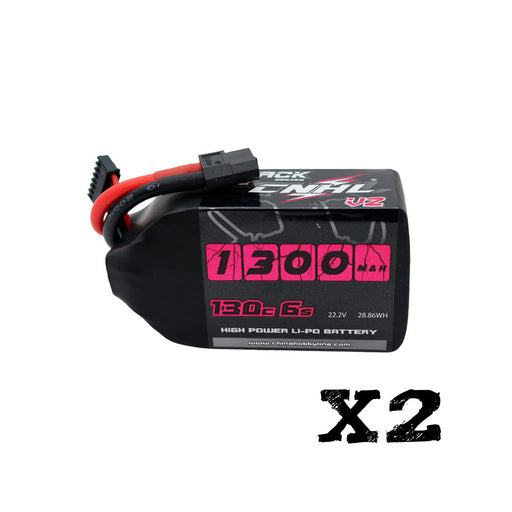
Pemeriksaan Kesesuaian Cepat 2 Packs CNHL Black Series V2.0 1300mAh 22.2V 6S 130C LiPo Battery dengan Colokan XT60 sangat cocok untuk pilot FPV yan...
Lihat detail lengkapSuku Cadang & Dukungan Jangka Panjang Kami memahami bahwa bagi pilot RC, dukungan suku cadang yang andal merupakan bagian penting untuk m...
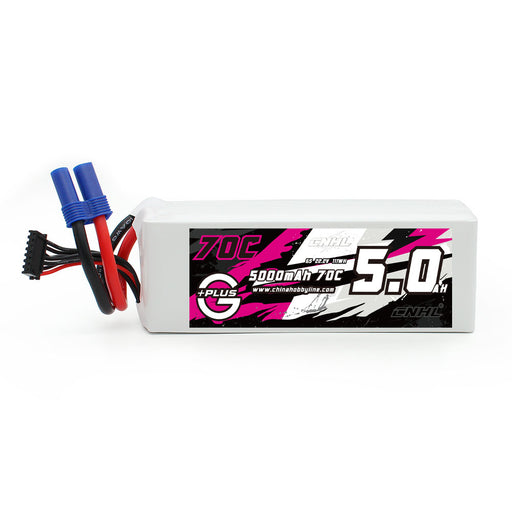
Lihat detail lengkapSpesifikasi: Nomor Stok: 500706EC5 Kapasitas: 5000mAh Voltase: 22.2V / 6-Sel / 6S1P Tingkat Discharge: 70C Kontinu / 140C Ledakan Tingkat Pengisi...
Lihat detail lengkap
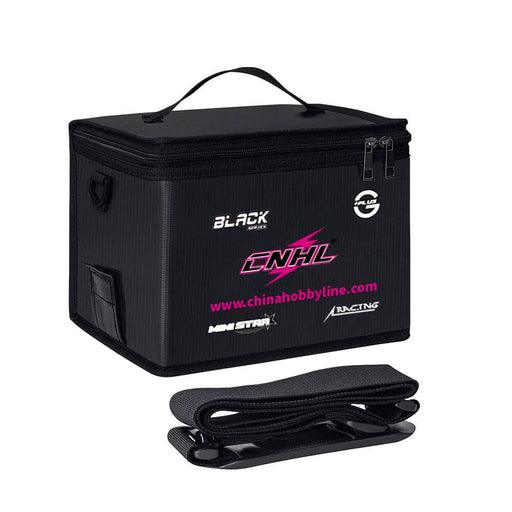
Tas Baterai LiPo CNHL dirancang untuk pengisian, transportasi, dan penyimpanan LiPo yang lebih aman di rumah atau di lapangan. Tas ini menambahkan ...
Lihat detail lengkap

Pemeriksaan Pemasangan Cepat 2 Paket CNHL Speedy Pizza Series Pro 1350mAh 6S 150C LiPo Battery dengan colokan XT60 dibuat untuk pilot FPV 5 inc...
Lihat detail lengkap

Quick Fit Check The CNHL Speedy Pizza Series 2200mAh 22.2V 6S 120C LiPo Battery with XT60 Plug combines the familiar 2200mAh 6S format with a ligh...
Lihat detail lengkap

Quick Fit Check The CNHL Speedy Pizza Series 2200mAh 14.8V 4S 120C LiPo Battery with XT60 Plug combines a widely used 2200mAh 4S format with a sli...
Lihat detail lengkap

Quick Fit Check The CNHL Speedy Pizza Series 2200mAh 11.1V 3S 120C LiPo Battery with XT60 Plug takes the familiar 3S 2200mAh aircraft battery form...
Lihat detail lengkap

The CNHL Long Range Series BAK 50D 5000mAh 21700 Li-ion battery cell is designed for custom high-energy battery packs that need a strong balance be...
Lihat detail lengkap

The ISDT C4 EVO is a versatile smart battery charger built for AA, AAA and cylindrical rechargeable cells from compact 10440 batteries all the way ...
Lihat detail lengkap


Tinggalkan komentar