
CNHL Baterai Lipo
CNHL bertujuan menyediakan baterai Li-Po berkualitas tinggi dan produk RC kepada semua penggemar hobi dengan layanan pelanggan yang luar biasa dan harga yang kompetitif
The iFlight Nazgul Evoque F7 O4 6S HD is best understood as a 7-inch long-range FPV drone built for DJI O4 Pro footage, larger 6S battery setups, and real outdoor flying conditions. It is not simply a bigger 5-inch freestyle quad. The F7 makes the most sense for experienced pilots who want cleaner forward footage, longer flight time, more carrying ability, and a more weather-ready platform for mountain lines, open fields, coastal cruising, or winter flying.

That distinction matters. Many FPV drones look impressive on a spec sheet, but the Nazgul Evoque F7 O4 6S HD is interesting because the whole layout points in one direction: long-range confidence. The deadcat frame keeps propellers out of the camera view, the DJI O4 Air Unit Pro gives it modern digital image quality, the side panels help protect the electronics, the GPS system adds a recovery layer, and the frame has enough room to carry much larger batteries than a normal 5-inch setup.
This is the kind of FPV drone where battery choice genuinely changes the aircraft. A small 6S freestyle pack may power it, but it will not show what the platform was built to do. A larger 6S LiPo or endurance-style setup turns the F7 into the smooth, long-legged FPV cruiser it wants to be.
The F7 sits in a different category from the smaller Nazgul Evoque 5-inch models. The familiar Evoque idea is still there: protected electronics, clean styling, bright LED presence, and a polished ready-built feel. But the F7 stretches that idea into a larger, slower-burning platform. It is more comfortable carrying bigger packs, holding smooth lines, and staying in the air long enough to make a flight feel worth setting up.
The 321mm wheelbase, 7.5-inch HQ tri-blade propellers, XING2 2809 1250KV motors, and 6S power system all point toward long-range FPV rather than quick backyard freestyle. It can still be thrown around, but that is not where it feels most natural. With a larger battery on top, the drone becomes more about controlled cruising, wide turns, stable forward motion, and cinematic passes.
This is also why comparing it directly with a 5-inch freestyle quad is not very helpful. A 5-inch machine is usually sharper, lighter, cheaper to repair, and easier to toss around. The F7 answers a different question: what if the pilot wants a larger FPV platform with DJI O4 Pro image quality, no prop intrusion, larger battery capacity, and more confidence when flying farther away?
The DJI O4 Air Unit Pro is one of the main reasons this drone attracts attention. With a 1/1.3-inch sensor, 155-degree field of view, D-Log M color mode, RockSteady 3.0+, and 4K-capable onboard recording, it gives the F7 a much stronger image platform than older digital FPV builds.
On a 7-inch drone, that matters even more. A larger FPV aircraft often flies in places where the scenery is the point: ridgelines, open snowfields, lakes, coastlines, empty roads, cliffs, and long valleys. The O4 Pro system gives the F7 the kind of image quality that suits those environments, while the deadcat frame helps keep the props out of the shot.

The deadcat layout is not just a visual design choice. For cinematic FPV, clean forward footage is a real advantage. When the pilot is flying a mountain line or making a low, smooth pass across an open field, propellers in the frame can ruin the shot. The F7’s geometry helps solve that before the footage ever reaches editing software.
One of the strongest selling points of the Nazgul Evoque F7 O4 6S HD is its weather-ready design. This is not about pretending the drone is made for underwater flying. The value is more practical: snow on landing, wet grass, light rain, muddy launch areas, and mountain weather that changes faster than expected.
For long-range FPV pilots, that kind of protection can matter. A normal open-frame quad can collect moisture and debris around exposed electronics. Once snow melts or water reaches the wrong place, the risk of short circuits becomes real. The F7’s sealed design, protective panels, and optional waterproof-style coating give it more margin in the kinds of conditions where many pilots would hesitate to fly an ordinary build.
Still, weather-resistant does not mean careless. The camera, O4 unit, connectors, battery leads, adapter, and balance plug should still be treated with respect. After wet flying or snow landing, the battery should be disconnected safely, the connector area should be checked, and the aircraft should be allowed to dry properly before storage or charging.
This point is especially important because the battery is not waterproof just because the drone has weather protection. A LiPo pack remains a high-current component. Snow, standing water, wet grass, and loose adapters can all create problems if ignored.
The F7 feels most convincing when it is allowed to fly like a 7-inch aircraft. It can move fast, and a 7-inch FPV drone can reach serious speed quickly, but the real appeal is not just top speed. The better experience is the way it settles into long, smooth lines.
With a larger 6S battery installed, the drone has a heavier, more planted feel. That can be good for cinematic flying because it helps reduce the twitchy feeling common on smaller quads. The tradeoff is that heavy packs affect center of gravity and make aggressive freestyle less natural. Rolls, power loops, and sharp direction changes are possible, but they are not the reason to buy this platform.
In practice, the F7 suits pilots who like to fly with a purpose. It wants open space, a clear route, and enough battery to make the flight more than a quick loop around the field. It also rewards smooth throttle control. The large props can cruise slowly, but the aircraft still has enough power to climb, recover, and pull through wind when the battery can support it.
The battery setup is one of the most important parts of this drone. The Nazgul Evoque F7 O4 6S HD uses a 6S power system with an XT60 battery connection. On paper, that sounds simple. In real use, the capacity and weight of the battery make a major difference.
A small 6S pack may be useful for short testing, setup checks, or a lighter local flight, but it does not fully match the long-range purpose of this drone. The F7 was designed to carry larger batteries. That is where it begins to make sense as a serious 7-inch platform.
For pilots choosing a practical setup, CNHL’s dedicated collection for the best battery for iFlight Nazgul Evoque F7 O4 6S HD is the better place to compare suitable 6S LiPo directions. Broader FPV battery options can also be compared through the 6S LiPo for FPV collection and the main FPV drone batteries page.
| Battery Direction | How It Feels on the F7 | Best Use Case |
|---|---|---|
| 6S 2200mAh to 3000mAh LiPo | Lighter and more responsive, but short flight time | Setup checks, short local flights, lighter test flights |
| 6S 4000mAh LiPo | A balanced starting point for a larger 7-inch drone | Medium-distance cruising, cold-weather flying, general O4 recording |
| 6S 5000mAh to 6000mAh LiPo | More endurance while keeping stronger LiPo throttle response | Longer cinematic flights, open-area cruising, heavier camera use |
| 6S 8000mAh to 10000mAh Li-ion | Maximum endurance, heavier feel, softer punch than LiPo | True long-range endurance flying where flight time matters most |
The key is not to chase capacity blindly. Bigger batteries can increase flight time, but they also add weight and change how the drone handles. A 7-inch FPV drone with a heavy battery is much happier cruising smoothly than being forced into tight freestyle moves.
Li-ion packs are popular in long-range FPV because they can offer very long flight time when the current draw is modest and the flying style is smooth. For a drone like the F7, that can make sense when the goal is endurance above everything else.
LiPo batteries remain attractive because they provide stronger voltage response and better punch. This matters when the aircraft needs to climb, recover, push into wind, or carry a camera. For pilots who want long-range capability without making the drone feel too soft under throttle, a larger 6S LiPo is often the more enjoyable choice.
That is why the F7 battery conversation should not be reduced to one answer. A pilot flying calm endurance routes may prefer a large Li-ion pack. A pilot who wants stronger throttle feel, more confidence in wind, and a more familiar FPV response may prefer a larger 6S LiPo.
GPS Rescue is an important feature on a 7-inch long-range drone. If the control link is lost or the pilot becomes disoriented, a properly configured rescue function can help bring the aircraft back toward the home point. That is a meaningful safety layer on a platform designed to fly farther than a small park quad.
But GPS Rescue should not be treated as a perfect automatic landing system. Snow, tall grass, uneven ground, trees, or obstacles can make the final descent unpredictable. The pilot should understand the Betaflight setup, test rescue behavior in a safe open area, and keep the radio in hand during any real recovery situation.
This is one of the reasons the F7 is not a casual beginner drone. The hardware may be polished, but the pilot still needs to understand FPV safety, radio setup, GPS behavior, failsafe logic, and battery management.
The optional ELRS dual-band diversity setup is another part of the F7’s long-range identity. A dual-band receiver using 2.4GHz and 900MHz gives the control link more flexibility in difficult environments. Trees, terrain, and distance all make signal stability more important than on a simple local freestyle flight.
This does not mean pilots should ignore antenna placement or safe range limits. It simply means the F7 can be configured with a control system that better matches the purpose of the aircraft. A larger 7-inch FPV drone carrying a bigger battery and DJI O4 Pro camera deserves a reliable control link.
Even though the Nazgul Evoque F7 O4 6S HD is sold as a polished ready-built platform, it should still be checked carefully before flight. Props and antennas may need installation, receiver antennas should be secured correctly, GPS position should be confirmed, and the battery strap setup should be tested with the actual pack being used.
One detail worth checking is the video transmitter switch setup. On some FPV builds, the video feed may be assigned to a switch instead of staying on all the time. This can reduce heat while the aircraft sits on the ground waiting for GPS lock. Before the first serious flight, confirm how the O4 system, radio switches, modes, GPS Rescue, and failsafe behavior are configured.

The battery connection also deserves attention. The F7 uses XT60. If a battery uses XT90, a proper XT90-to-XT60 adapter may be needed. That adapter should be well made, tightly fitted, and checked for heat. A weak connector is not something to ignore on a long-range drone.
This drone makes sense for experienced FPV pilots who already understand the basics and want to move into a larger, more capable long-range platform. It suits pilots who care about DJI O4 Pro footage, clean forward framing, larger battery capacity, and outdoor durability.
It is also a strong option for pilots who want a finished 7-inch build instead of starting from a pile of parts. The side panels, LED styling, protected electronics, deadcat frame, GPS setup, and clean assembly make it feel more like a complete product than a rough custom build.
It is less suitable for pilots who want a cheap practice drone, a first FPV aircraft, or a small freestyle machine. The F7 is big, fast, expensive, powerful, and heavy enough that mistakes can be serious. A beginner may be attracted by the stable footage and polished design, but that does not make it beginner-friendly.
Pilots comparing 7-inch FPV drones often look at platforms such as the iFlight Chimera 7 Pro, CineLR-style builds, and the Nazgul Evoque F7 O4. The overlap is obvious: all of them appeal to pilots who want more range, more stability, and more carrying ability than a normal 5-inch quad.
The Nazgul Evoque F7 O4 feels most convincing when the priority is a polished ready-built experience with DJI O4 Pro, deadcat framing, weather-resistant protection, large battery support, and strong visual design. It is not trying to be the lightest possible custom long-range rig. It is more about giving experienced pilots a complete 7-inch platform that feels finished out of the box.
For mountain surfing, long dives, and wide open scenic routes, that combination makes sense. The real decision comes down to flying style. If the pilot wants a refined, camera-first, weather-aware 7-inch drone, the F7 belongs on the shortlist.
The iFlight Nazgul Evoque F7 O4 6S HD is one of the more interesting 7-inch FPV drones because it does not rely on one headline feature. The appeal comes from the complete package: DJI O4 Pro image quality, deadcat geometry, large battery support, protected electronics, GPS Rescue, optional ELRS diversity, and a frame that feels built for serious outdoor flying.
It is not the best first FPV drone. It is not the best choice for pilots who only want aggressive freestyle. It is also not a drone that should be treated casually just because it has weather-resistant protection. But for experienced FPV pilots who want a larger cinematic cruiser with real long-range potential, the F7 makes a strong case for itself.
The battery choice should match that purpose. A small 6S pack can get it into the air, but a larger 6S LiPo is what helps the aircraft feel like a proper 7-inch long-range FPV platform. For pilots comparing suitable pack options, start with the CNHL collection for the best battery for iFlight Nazgul Evoque F7 O4 6S HD.
No. The F7 is a large, powerful, expensive 7-inch FPV drone intended for experienced pilots. New pilots should start with a smaller and more forgiving FPV platform before moving into this class.
It uses a 6S battery system with an XT60 connector. Smaller 6S packs can be used for short flights, but the drone makes more sense with larger 6S batteries for long-range cruising and DJI O4 recording.
Those packs may power the drone for a short flight, but they are not the best match. They are more typical for 5-inch freestyle quads. The F7 is a larger 7-inch aircraft and benefits from more capacity.
It is better described as weather-resistant rather than fully waterproof. The protected design and optional coating help with snow, light rain, wet grass, and damp flying conditions, but it should not be flown underwater or soaked intentionally.
No. The battery, XT60 connector, balance lead, adapter, and wiring should still be kept as dry as possible. Never charge a wet battery, and always inspect the connector area after landing in snow or damp conditions.
GPS Rescue is a useful recovery aid, but it is not a full autopilot. It should be tested in a safe open area, and the pilot should understand the Betaflight setup before relying on it during long-range flights.
It is much better suited to long-range cruising, cinematic flying, and larger battery use. It can perform freestyle moves, but a large 7-inch drone with a heavy battery is not as natural for aggressive freestyle as a smaller 5-inch quad.
No. Blitz F7 and Beast F7 usually refer to iFlight flight controllers, AIO boards, or FPV electronics. The Nazgul Evoque F7 O4 6S HD is a complete 7-inch FPV drone, so its battery needs should be judged by the full aircraft, not just the F7 electronics name.
CNHL bertujuan menyediakan baterai Li-Po berkualitas tinggi dan produk RC kepada semua penggemar hobi dengan layanan pelanggan yang luar biasa dan harga yang kompetitif
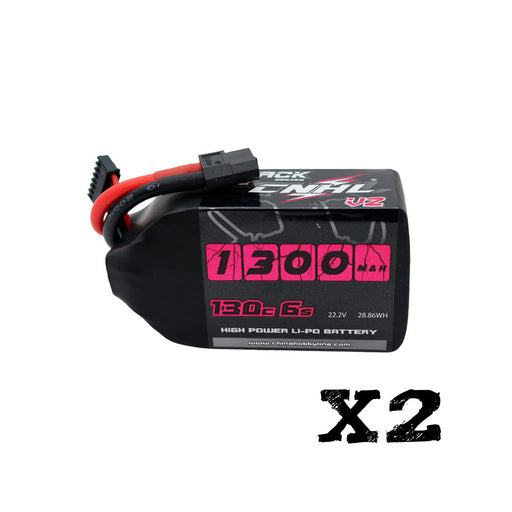
Pemeriksaan Kesesuaian Cepat 2 Packs CNHL Black Series V2.0 1300mAh 22.2V 6S 130C LiPo Battery dengan Colokan XT60 sangat cocok untuk pilot FPV yan...
Lihat detail lengkapSuku Cadang & Dukungan Jangka Panjang Kami memahami bahwa bagi pilot RC, dukungan suku cadang yang andal merupakan bagian penting untuk m...
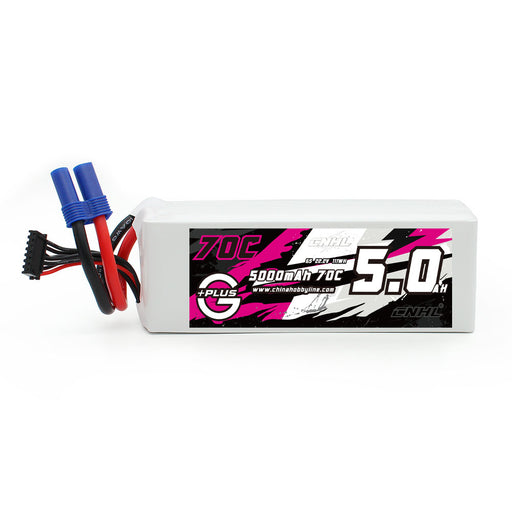
Lihat detail lengkapSpesifikasi: Nomor Stok: 500706EC5 Kapasitas: 5000mAh Voltase: 22.2V / 6-Sel / 6S1P Tingkat Discharge: 70C Kontinu / 140C Ledakan Tingkat Pengisi...
Lihat detail lengkap
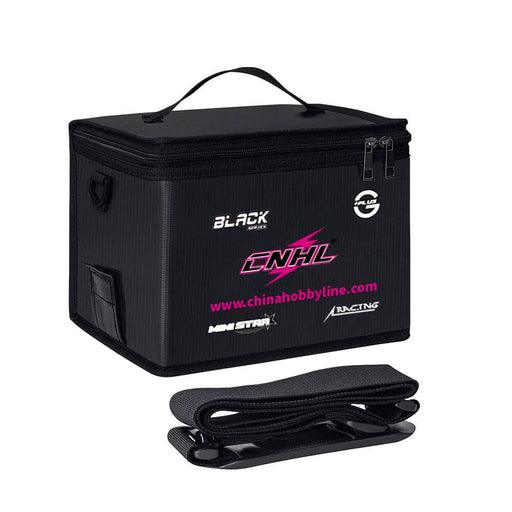
Tas Baterai LiPo CNHL dirancang untuk pengisian, transportasi, dan penyimpanan LiPo yang lebih aman di rumah atau di lapangan. Tas ini menambahkan ...
Lihat detail lengkapPemeriksaan Pemasangan Cepat 2 Paket CNHL Speedy Pizza Series Pro 1350mAh 6S 150C LiPo Battery dengan colokan XT60 dibuat untuk pilot FPV 5 inc...
Lihat detail lengkap

The CNHL Long Range Series BAK 65E 6350mAh 21700 Li-ion battery cell is built around one clear priority: maximum stored energy from a lightweight c...
Lihat detail lengkap

The CNHL Long Range Series BAK 50D 5000mAh 21700 Li-ion battery cell is designed for custom high-energy battery packs that need a strong balance be...
Lihat detail lengkap

The ISDT C4 EVO is a versatile smart battery charger built for AA, AAA and cylindrical rechargeable cells from compact 10440 batteries all the way ...
Lihat detail lengkap

The CNHL Long Range Series 6350mAh 21.6V 6S1P 21700 Li-ion battery combines six BAK 65E high-energy cells into a 137.16Wh pack designed for ultra-e...
Lihat detail lengkap

The CNHL Long Range Series 5000mAh 21.6V 6S1P 21700 Li-ion battery combines six BAK 50D cells into a compact 108Wh pack designed around long-range ...
Lihat detail lengkap




Tinggalkan komentar