
Applies to hobby-grade LiPo packs only. Attempt at your own risk and monitor continuously.

Before You Start: Read These Safety Rules
- Work on a non-flammable surface, in a ventilated area, away from combustible materials. Keep a CNHL LiPo Safe Bag or sand nearby.
- Do not attempt revival if: any cell is at 0.00V, the pack is severely swollen/puffed, smells of solvent, feels hot, or shows visible damage.
- Never leave the battery unattended during recovery. Continuously monitor temperature and voltage.
- Use a reliable hobby-grade charger like those from our LiPo Charger Collection. Avoid toy-grade USB chargers.
How Low Voltage Damages a LiPo (Why This Is Risky)

When a LiPo cell falls below 3.00V, internal copper ions may migrate and cause permanent chemical imbalance. This leads to higher resistance, lower capacity, and in severe cases—swelling or venting. The goal of recovery is to gently lift the voltage above ~3.40V per cell so it can safely resume normal charging.
Checklist: Tools You’ll Need
- Hobby-grade charger that supports LiPo and NiMH/NiCd modes.
- Standalone cell checker or charger with live cell readout.
- LiPo-safe charging enclosure such as a Bat-Safe Charging Box.
- Temperature monitor and a fireproof workspace.
Method 1 — Use a LiPo Charge Cycle at C/10 Until 3.40V/Cell
Use this method only if your charger allows LiPo charging below 3.00V/cell. Some chargers will refuse to start that low—if so, see Method 2.
- Connect the main leads and balance tap. Verify correct cell count.
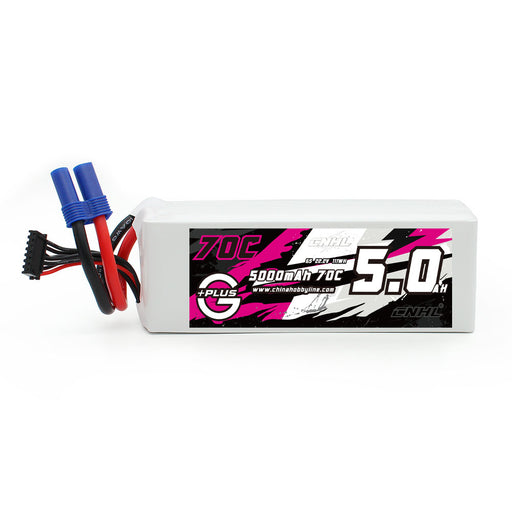
- Set charge rate to C/10: capacity (Ah) ÷ 10. For a 5000mAh pack, charge at 0.5A.
- Start charging in LiPo balance mode. Monitor voltage and temperature closely.
- Once every cell reaches at least 3.40V, stop this stage.
- Switch to a normal LiPo balance charge at 1C until full.
Tip: Cheap cells often show instability below 3V. Always invest in quality packs like CNHL LiPo Batteries—their build consistency and after-sales support make recovery less risky and performance more reliable.
Method 2 — Use NiMH/NiCd Mode to “Wake” the Pack

If your charger refuses to begin a LiPo charge due to low voltage, you can use NiMH/NiCd mode to lift the pack gently until cells reach 3.40V each.
- Do not connect the balance tap to the charger during this phase—main leads only.
- Select NiMH/NiCd mode and approximate the total voltage (e.g., 4S LiPo ≈ 10–12 NiMH cells).
- Set charge rate to C/10 and begin, while watching for swelling or heat.
- Monitor individual cells with a cell checker through the balance tap.
- Once all cells exceed 3.40V, stop the NiMH cycle, reconnect the balance tap, and resume a 1C LiPo balance charge.
Reminder: This process requires patience and close monitoring. Always use safe charging gear like the Bat-Safe Box or a CNHL LiPo Safe Bag to contain any potential reaction.
When Not to Attempt Revival
- Any cell reads 0.00V or an entire pack measures under 0.5V total.
- Severe puffing, odor, hissing, or warmth while idle.
- Broken case, puncture, or burned wires.
- Recovered cells drop below 3.0V again after resting several hours.
In these cases, retire the pack safely and choose a fresh, high-quality replacement from CNHL LiPo Batteries instead of risking unstable low-grade cells.
Aftercare and Prevention
- Perform 2–3 gentle break-in cycles at ≤1C after revival.
- Store at 3.75–3.85V per cell, never full or empty.
- Set your ESC cutoff around 3.5V/cell to prevent over-discharge.
- Inspect before each use; if puffing or imbalance reappears, retire the pack.
Recommended CNHL Accessories for Safe Charging
- LiPo Battery Chargers – precise voltage control and balance functions.
- Bat-Safe Charging Safe Box – fire-resistant enclosure for indoor use.
- CNHL LiPo Safe Bag – ideal for field charging and storage.
Expert Insight: Professional Recovery Techniques (For Knowledge Only)

In laboratory or factory environments, experienced technicians sometimes use a regulated laboratory power supply to bring a deeply discharged LiPo pack up to a detectable voltage before switching to a normal balance charge. This method allows precise voltage and current control under constant supervision.
However, this is not a consumer procedure. It requires professional equipment with true current limiting, continuous temperature monitoring, and a fireproof enclosure such as a Bat-Safe Charging Box . Attempting this at home without the proper tools can lead to serious injury or fire.
At CNHL, we strongly recommend using only the two safe recovery methods described above and never attempting manual pre-charging unless under professional supervision. The best way to avoid deep discharge issues is by choosing reliable, high-quality packs like CNHL LiPo Batteries , which maintain voltage stability and cell balance even after long storage.
FAQs
Will these methods work if my cells are at 0.00V?
No. Cells at true 0.00V are considered dead and unsafe to recover. Recycle the pack properly.
Can I use a USB charger or cheap wall plug?
Absolutely not. These devices lack voltage monitoring and can cause a fire. Use only certified chargers from the CNHL LiPo Charger Collection.
What if the pack gets warm or swollen during revival?
Stop immediately, move it to a safe fireproof location, and dispose of it safely. Do not retry.
Why are quality batteries like CNHL’s easier to recover?
Because CNHL LiPo Batteries use consistent high-grade cells, they maintain voltage balance and IR stability better. Low-cost packs often degrade unevenly, making safe revival almost impossible.
Should I always store LiPos in a safe enclosure?
Yes. Always charge or store in a Bat-Safe Box or CNHL LiPo Safe Bag to contain any reaction.






Leave a comment