


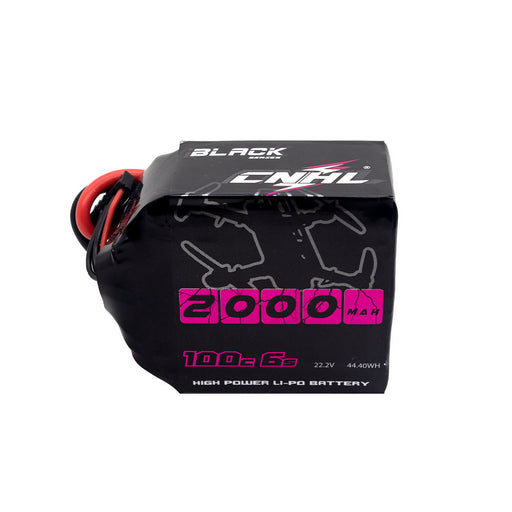


Recommended Voltage & Capacity for Racing FPV Drone Batteries
| Frame Size | Voltage | Capacity (mAh) | Connector | Notes |
|---|---|---|---|---|
| 3–4" | 4S | 850–1050 | XT30 | Lightweight race or indoor track |
| 5" | 4S / 6S | 1000–1300 | XT60 | Standard FPV race setup |
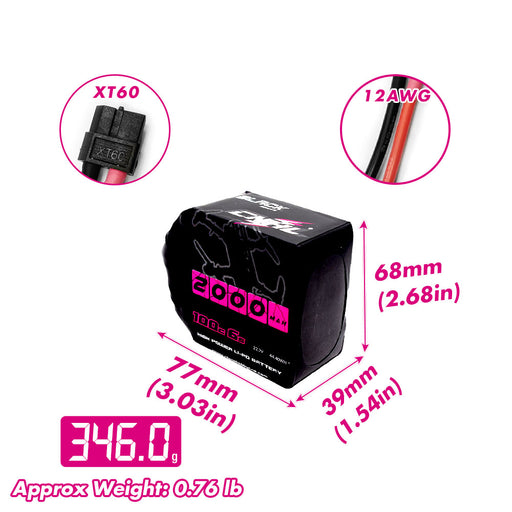
| 6–7" | 6S | 1300–1500 | XT60 / XT90 | Heavyweight, endurance race |
How to Choose a Racing FPV Battery
- Pick the highest C-rating your ESC and motor setup can handle – 100C+ preferred for competition.
- Weight balance affects agility: lighter packs improve corner response; heavier ones stabilize throttle.
- Use LiHV versions for extra punch off the line and more consistent throttle response.
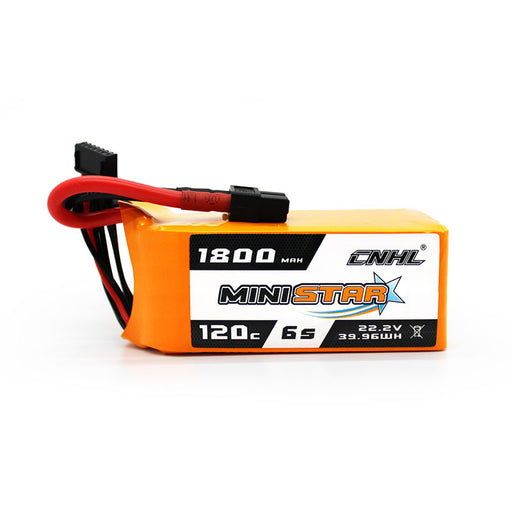
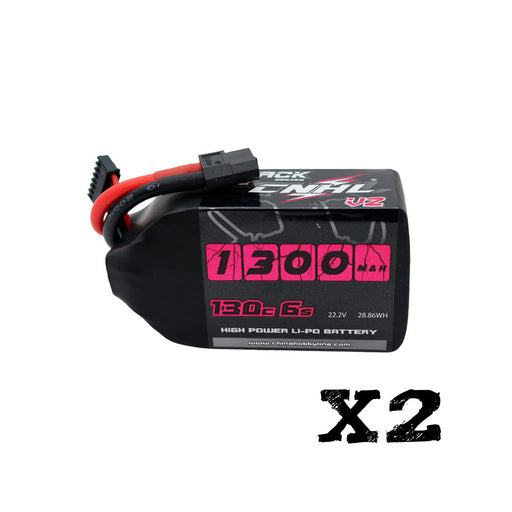
- Keep voltage sag minimal – CNHL’s Racing Series is optimized for low IR and burst consistency.
Battery Management Tips for FPV Racing
- Charge just before a race to keep internal temperature optimal (30–40°C).
- Use balance charge mode every cycle to maintain even cell health.
- After each heat, let batteries cool below 40°C before recharging.
- Store partially charged (3.8V per cell) to extend overall lifespan.
Explore Related FPV Battery Collections
- 4S FPV Batteries
- 6S FPV Batteries
- Freestyle FPV Batteries
- FPV Drone Batteries (Main Category)
- FPV Drone Battery Guide
Racing FPV Battery FAQ
What’s the best racing battery for a 5-inch quad?
Most pilots use 4S 1300mAh 100C or 6S 1100mAh 120C batteries for reliable bursts and smooth throttle recovery.
Does higher C-rating always mean better?
Higher C improves voltage stability but may add weight and cost; pick based on motor current draw and race style.
What causes voltage sag?
Low-quality cells, high internal resistance, or flying at low temperatures can cause voltage drop under load.
How many cycles can a race battery last?
With proper storage and cooling, 100–150 cycles are typical before noticeable degradation.