
CNHL Lipo akut
CNHL pyrkii tarjoamaan korkealaatuisia Li-Po-akkuja ja RC-tuotteita kaikille harrastajille erinomaisella asiakaspalvelulla ja kilpailukykyisillä hinnoilla

Answer first: the E-flite Super Decathlon 1.2m is best understood as a high-wing aerobatic plane with a broader flight envelope and a more serious landing personality than its shape first suggests. It can be flown smoothly and honestly, but it is not a Cub-style floater and it is not the obvious first-plane recommendation. On 3S, it feels calmer and more traditional. On 4S, it feels much closer to the airplane many buyers were hoping for from the start: stronger climb, more convincing vertical, and a livelier aerobatic rhythm. If you are trying to choose a battery first, our most direct recommendation is to start with the Eflite Super Decathlon 1.2m battery collection, where the 2200mAh 4S EC3 option stands out as the best all-around starting point.
The easiest way to misread this airplane is to see the high wing, the general aviation look, and the 1.2 meter size and assume it belongs in the same mental box as a friendly, low-pressure trainer. That is not really what this airplane is doing.
The full-scale Eflite Super Decathlon has always carried a different identity from a basic utility taildragger. It is an aerobatic trainer with a real performance backbone, and the RC version keeps that spirit intact more than many people expect. HH’s own product positioning makes that clear too: the airplane is built around a 3S and 4S compatible power system, a 45A Spektrum Avian Smart Lite ESC, and a recommended 2200–3200mAh LiPo range with EC3 or IC3 connector logic. The PNP version is also explicitly described as Skill Level 3 – Experience Required, and not as a first-ever RC aircraft.
That last part matters. There is a big difference between “not scary in the air” and “ideal beginner plane.” The Eflite Super Decathlon can be well-mannered in many parts of the envelope, but it still belongs to the second category of model ownership, where the airplane starts to teach judgment rather than simply protect you from mistakes.
One of the main talking points around this airplane is obvious: some pilots see it as a return of a proven platform with a more classic Eflite Super Decathlon presentation, while others immediately ask why it was not a completely new airframe. That tension is real, and it is probably the fairest way to understand this release.
This version carries forward the core strengths of the earlier E-flite Decathlon RJG 1.2m while switching to a more iconic red, white, and black starburst trim scheme and retaining the same general “friendly handling” airfoil and wing concept. The model also includes scale details such as landing and navigation lights, improved digital metal-geared servos, and a 3S / 4S-compatible power system.
That means the best way to judge this release is not to ask whether it reinvented the category. It did not. The better question is whether it kept the part that people already respected and repackaged it in a more widely appealing identity. In our view, that answer is yes. This version feels less like a specialty tribute and more like a model that naturally belongs in a broader fixed-wing hangar.
What makes the Eflite Super Decathlon 1.2m genuinely interesting is that it does not flatten itself into one personality. It is capable of smooth and tidy flying, but it also carries enough energy and authority that the airplane never feels trapped in “just cruise around” mode.
The first thing many pilots notice is that the airplane has more presence in the air than expected. It is not vague. It is not soft in the wrong way. It tracks with enough intent that it feels like it has a real center to its behavior. That matters because a lot of scale-looking foam airplanes win the bench test and lose the air test. This one usually does not.

It also helps that the model keeps a respectable equipment package for the size. Official specs list a 47.71-inch wingspan, a 3536-1030Kv brushless motor, a 45A brushless ESC, LED navigation and landing lights, and a recommended battery range of 3S or 4S 2200–3200mAh. With a recommended flight battery installed, official all-up weight is listed around 46.77 oz / 1326 g.
All of that supports the same conclusion: this is not a dummy airframe that only looks the part. It has enough real performance to justify the design identity.

This is the most important practical point in the whole article. The Eflite Super Decathlon 1.2m is a high-wing airplane, but it should not be mentally filed next to the most forgiving Cub-like trainers. Its wing position may look familiar, but its energy management and flying tone are different.
That difference becomes obvious on approach and landing. This airplane does not naturally fall into a very floaty, low-consequence landing style. It does not have flaps, and it does not automatically shrink the runway requirement just because the silhouette looks old-fashioned. It can be slowed down, but it rewards a pilot who understands speed control, approach shape, and what the airplane is doing rather than one who simply expects it to sort itself out.
This is also one reason battery choice matters more here than it does on many other 1.2m airplanes. On some aircraft, moving across the published battery range mostly changes duration. On this one, it can change the whole emotional tone of the landing.

Horizon explicitly states that the airplane is designed around both 3S and 4S packs in the 2200–3200mAh range. That is not unusual on paper, but on this airplane it matters more than usual in practice.
On 3S, the Eflite Super Decathlon feels more measured. It becomes easier to imagine it as a tidy sport model with aerobatic capability rather than an aerobatic model that just happens to have a high wing. The throttle rhythm calms down, the whole airplane feels a little less urgent, and the model becomes easier to enjoy in a straight, uncomplicated way.
On 4S, it starts to feel more like a true Eflite Super Decathlon interpretation. Climb becomes more convincing. The airplane carries itself with more confidence when the line goes vertical. Aerobatics feel less like something the airplane can technically do and more like something the airplane naturally wants to do. This is where the platform starts to explain itself.
That is why our recommendation hierarchy is simple: if you already know you want the more complete and more revealing version of this airplane, choose 4S. If you want to soften the whole tone and keep the airplane more relaxed, choose 3S.
This is where buyers often get pulled in the wrong direction. The published battery range goes up to 3200mAh, which naturally makes some people assume that the largest option is the premium option. We do not think that is the right way to approach this airframe.
2200mAh is the cleaner starting point. It keeps the airplane feeling lighter in spirit, more natural in response, and less burdened on approach. If you want to understand the model before you start tuning the personality with weight, 2200mAh is where the airplane makes the most sense.
3200mAh is not wrong, but it should be treated as a setup choice with a purpose. It can make the airplane feel more planted, fuller in the nose, and more settled in some phases of flight. At the same time, it can push the model toward a more committed, heavier-feeling landing personality. That is useful for some pilots and less appealing for others.
So the right question is not “Can it run 3200?” It clearly can. The better question is “Do I actually want a more planted and heavier-feeling version of this airplane?” If the answer is yes, 3200mAh makes sense. If not, 2200mAh remains the stronger choice.
| Battery setup | Best fit use case |
| 2200mAh 3S EC3 | Smoother and calmer sport-flying setup |
| 2200mAh 4S EC3 | Best all-around setup for stronger climb and a more complete aerobatic feel |
| 3200mAh 3S XT60 + EC3 adapter | More settled 3S option for pilots who want a fuller-feeling setup |
| 3200mAh 4S XT60 + EC3 adapter | More planted 4S setup with extra weight and a heavier landing feel |
| LiHV XT60 options + adapter | Sharper-feeling upgrade path for pilots who intentionally want more punch |
If we were helping someone buy for this airplane today, the first battery we would point to is the CNHL G+Plus 2200mAh 14.8V 4S 70C with EC3 plug. It gives the Eflite Super Decathlon the stronger and more complete version of its personality without forcing the whole setup into the heavier 3200mAh lane.
If the goal is a calmer setup, the direct alternative is the CNHL Black Series 2200mAh 3S 11.1V 30C with EC3 plug. This is not the “lesser” option in the wrong sense. It is simply the cleaner answer for pilots who want the airplane to relax rather than come alive.
For pilots who already run XT60 packs or want to explore 3200mAh options, the correct bridge is the XT60 to EC3 adapter. From there, the most useful expanded choices are the Black Series 3200mAh 3S XT60, Lightning LiHV 3200mAh 3S XT60, Black Series 3200mAh 4S XT60, and Lightning LiHV 3200mAh 4S XT60.
The Eflite Super Decathlon 1.2m makes the most sense for the pilot who already knows the basics and now wants an airplane with more shape to its personality. It suits the pilot who likes scale-flavored fixed-wing models, likes taildraggers, and does not mind flying something that expects a little more attention during landing.
It is also a strong fit for the pilot who is bored by one-note airplanes. This model can sport fly cleanly, it can do meaningful aerobatics, and it gives the pilot something to refine instead of immediately flattening into predictability. That is a big part of its appeal.
What it does not suit especially well is the buyer who wants the easiest possible first airplane. Horizon’s own PNP positioning reflects that, and we think that is the correct way to frame it.
This depends on what you expect from a release. If you only get excited by a completely different mold and a fully new concept, then no, this airplane will not scratch that itch. But if you already respected the core Decathlon platform and simply wanted it in a more classic, more broadly appealing Eflite Super Decathlon presentation, then this release makes far more sense than the “just a repaint” line suggests.
That is also reflected in how Horizon describes the airplane: it intentionally carries forward the same strong handling traits of the earlier model while shifting the visual identity into a more iconic full-scale scheme.
In other words, the right way to judge this airplane is not by asking whether it changed everything. The right question is whether it kept what already worked and made the whole ownership experience more broadly desirable. We think it did.
The E-flite Super Decathlon 1.2m is a much better airplane than a quick first impression might suggest. It is not just a pretty general aviation foam model. It is not just a trainer with better trim. It is a genuinely interesting middle-ground airplane that can fly smoothly, pull proper aerobatic lines, and still ask the pilot to stay mentally involved.
That is why battery choice matters so much here. Choose the right pack, and the airplane feels coherent. Choose blindly, and it can feel either flatter than it should or heavier than it needs to be. If you want the cleanest answer, start with the batteries in our E-flite Super Decathlon 1.2m battery collection, especially the 2200mAh 4S EC3 option. That setup does the best job of showing why this model has kept so much interest around it.
Is the E-flite Super Decathlon 1.2m a beginner plane?
Not in the true first-plane sense. It is more honest and more manageable than some aerobatic models, but Horizon positions the PNP version as Skill Level 3 and not as a first-ever RC aircraft.
Is 3S or 4S better for the Eflite Super Decathlon 1.2m?
3S is better if you want a smoother and calmer sport-flying tone. 4S is better if you want stronger climb, more vertical, and a more complete aerobatic feel.
Should I buy 2200mAh or 3200mAh first?
For most pilots, 2200mAh is the better first choice. It keeps the airplane cleaner and more natural in feel. 3200mAh makes sense only if you deliberately want a more planted and heavier-feeling setup.
What is the best battery for the E-flite Super Decathlon 1.2m PNP?
Our first recommendation is a 2200mAh 4S EC3 battery, especially the CNHL G+Plus 2200mAh 4S 70C with EC3 plug.
Can I use XT60 batteries on this airplane?
Yes. The clean way is to use the XT60 to EC3 adapter, then choose the correct 3S or 4S XT60 pack within the recommended range.
Does this airplane really support both 3S and 4S?
Yes. Horizon officially lists the Eflite Super Decathlon 1.2m as compatible with 3S and 4S 2200–3200mAh LiPo batteries.
Is this basically the same idea as the earlier RJG-based version?
At its core, yes, the platform remains closely related in spirit. The bigger difference is the more classic Eflite Super Decathlon identity and the way this version feels as an ownership proposition.
CNHL pyrkii tarjoamaan korkealaatuisia Li-Po-akkuja ja RC-tuotteita kaikille harrastajille erinomaisella asiakaspalvelulla ja kilpailukykyisillä hinnoilla
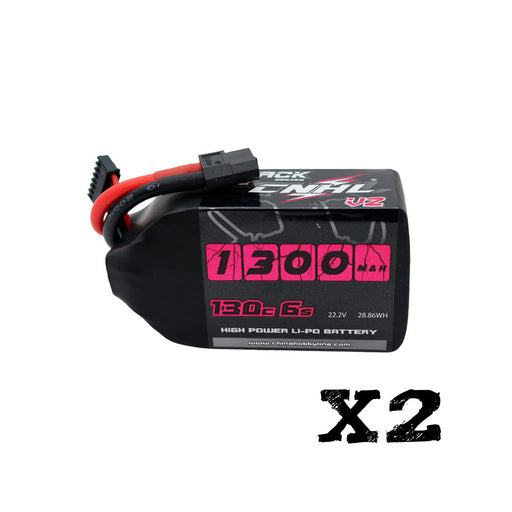
Nopea sovitustarkistus 2 Packs CNHL Black Series V2.0 1300mAh 22.2V 6S 130C LiPo-akku XT60-liittimellä sopii erinomaisesti FPV-lentäjille, jotka ha...
Näytä täydet tiedotVaraosat ja pitkäaikainen tuki Tiedämme, että RC-piloteille luotettava varaosatuki on tärkeä osa sitä, että lentokone pysyy lentokunnossa vuo...
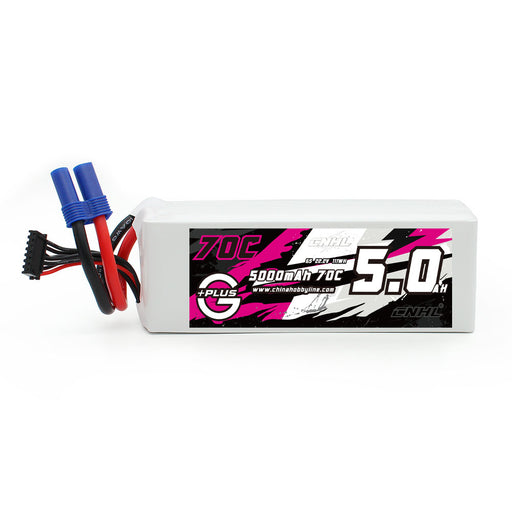
Näytä täydet tiedotTekniset tiedot: Varastonumero: 500706EC5 Kapasiteetti: 5000mAh Jännite: 22,2V / 6-kennoa / 6S1P Purkunopeus: 70C jatkuva / 140C hetkellinen Lata...
Näytä täydet tiedot
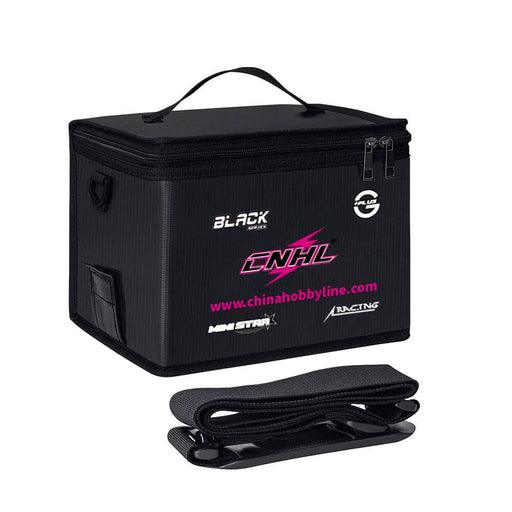
CNHL LiPo Battery Bag on suunniteltu turvallisempaan LiPo-lataukseen, kuljetukseen ja säilytykseen kotona tai kentällä. Se lisää käytännöllisen suo...
Näytä täydet tiedot

Nopea sovitustarkistus 2 paketin CNHL Speedy Pizza Series Pro 1350mAh 6S 150C LiPo -akku XT60-liittimellä on suunniteltu 5-tuuman FPV-piloteill...
Näytä täydet tiedot

Quick Fit Check The CNHL Speedy Pizza Series 2200mAh 22.2V 6S 120C LiPo Battery with XT60 Plug combines the familiar 2200mAh 6S format with a ligh...
Näytä täydet tiedot

Quick Fit Check The CNHL Speedy Pizza Series 2200mAh 14.8V 4S 120C LiPo Battery with XT60 Plug combines a widely used 2200mAh 4S format with a sli...
Näytä täydet tiedot

Quick Fit Check The CNHL Speedy Pizza Series 2200mAh 11.1V 3S 120C LiPo Battery with XT60 Plug takes the familiar 3S 2200mAh aircraft battery form...
Näytä täydet tiedot

The CNHL Long Range Series BAK 50D 5000mAh 21700 Li-ion battery cell is designed for custom high-energy battery packs that need a strong balance be...
Näytä täydet tiedot

The ISDT C4 EVO is a versatile smart battery charger built for AA, AAA and cylindrical rechargeable cells from compact 10440 batteries all the way ...
Näytä täydet tiedot


Jätä kommentti