
CNHL Lipo akut
CNHL pyrkii tarjoamaan korkealaatuisia Li-Po-akkuja ja RC-tuotteita kaikille harrastajille erinomaisella asiakaspalvelulla ja kilpailukykyisillä hinnoilla
The Team Associated Pro2 SC10SW RTR feels like one of those releases that makes immediate sense once you look past the usual “new RTR” surface layer. This is not a truck trying to win attention by being oversized, overloaded, or cartoonishly fast on paper. What makes it interesting is that it brings back a kind of 2WD short course feel many RC drivers still enjoy, but in a format that fits modern 1/10-scale tracks and casual dirt running better than some of the older full-size short course layouts did.
That is the real reason this truck has landed well so quickly. It taps into a familiar short course mood, but it does not feel trapped in the past. The body style, the 2WD layout, the compact short wheelbase stance, and the race-derived chassis thinking all give it a very specific personality. It looks nostalgic at first glance, but once the details are unpacked, it becomes clear that this truck is really about making short course more usable again for today’s mix of track driving, club-level fun, and park-style bashing.

For drivers trying to understand where it fits, the simple answer is this: the Pro2 SC10SW RTR is a race-bred 2WD short course truck that still works as a genuinely fun basher. That balance is what makes it more interesting than a lot of releases that are easy to describe but hard to care about after the first week.
One thing that stands out right away is how emotional the reaction has been. The response has not just been about speed, electronics, or whether it is “better” than something else in a straight line. A lot of the early excitement has come from a much simpler feeling: this truck reminds people why short course was such a big deal in the first place.
Many long-time RC drivers still have a soft spot for 2WD short course. There is something about the full body, the planted-but-loose attitude, and the way these trucks move through a corner that feels different from both buggies and monster trucks. The Pro2 SC10SW RTR clearly hits that nerve. Some owners see the body and immediately think of earlier short course years. Others are just happy that rear-wheel-drive short course is still being treated like a format worth keeping alive instead of a forgotten category that only lives in old forum photos.
That reaction matters because it tells you this release is doing more than filling shelf space. It is reconnecting with a part of the hobby that still means something to a lot of drivers. At the same time, it is not simply a museum piece or a tribute truck. The layout and scale choices show that this was built to work now, not just to trigger memories.
It would be easy to read “SC10SW” as just another variation in a long product family, but the short wheelbase part is actually central to why this truck feels relevant. Older short course trucks had a presence that many people loved, but on modern 1/10 off-road tracks that bigger feel could start to work against them. Tracks evolved. Driving styles changed. The way many people use RC cars also changed. Space is tighter, layouts are more technical, and not every short course truck needs to feel oversized to be satisfying.
The Pro2 SC10SW RTR leans into that reality. It is shorter, a bit tighter in concept, and easier to understand as a true 1/10-scale short course truck rather than a larger-feeling holdover from an earlier era. That alone changes how it is perceived. It immediately looks more at home on today’s smaller dirt tracks, more manageable in tighter sections, and less like a platform that needs a giant open area before it starts making sense.

That is also why the “it’s just another old platform with a new shell” criticism does not fully land. The body is part of the appeal, yes, but the packaging and proportions are doing real work here. This truck feels like Team Associated trying to make short course fit current RC reality instead of only celebrating past short course success.
What makes the Pro2 SC10SW RTR more interesting than a generic ready-to-run truck is the chassis thinking underneath it. This is not a machine designed only to survive parking-lot abuse and then be forgotten. It carries race-platform DNA into the RTR space, and that changes the whole feel of the product.
The low center-of-gravity chassis, aluminum shocks, adjustable suspension geometry, steel turnbuckles, rear motor layout, and the rest of the platform details all point in the same direction. This is a truck that expects the driver to notice how it corners, how it transfers weight, and how it reacts under power. It is not pretending to be a full competition kit, but it also does not behave like a throwaway basher with a short course body clipped over the top.

That middle ground is exactly why it works. Some RTR vehicles are easy to recommend but not very memorable. Some race platforms are rewarding but too demanding for the average buyer. The Pro2 SC10SW RTR sits in a useful place between those two. It gives people a proper short course flavor with enough real chassis substance to stay interesting after the novelty fades.
| Aspect | What it means on the Pro2 SC10SW RTR |
|---|---|
| Drivetrain | 2WD layout that keeps the truck lively, hands-on, and more involving to drive |
| Chassis character | Race-minded rather than toy-like, with setup details drivers can actually feel |
| Body and size | Compact short course look that feels more at home on modern 1/10 tracks |
| Use case | Works for both track-style fun and general dirt bashing without feeling confused |
| Battery personality | 2S keeps it balanced; 3S makes it sharper and more aggressive |
This is probably the easiest thing to miss if someone only looks at spec lists. A 2WD short course truck is not exciting because it is the most efficient way to go fast. It is exciting because it asks more of the driver and gives more back when the rhythm starts to click.
Four-wheel-drive bashers can be brutally effective. They put power down easily, recover quickly, and often make average drivers look smoother than they really are. A 2WD short course truck is different. It rotates differently, it moves around more under throttle, and it makes rear traction feel like an active part of the experience rather than a given. That can sound like a disadvantage if the only goal is easy speed, but for many drivers it is exactly the appeal.
That is why rear-wheel-drive short course still has loyal fans. It feels more alive. It makes you think about exit lines, about how early you get back on power, about how the truck behaves if the surface is dusty or rough. When a 2WD truck is sorted and the driver is in sync with it, the experience feels more personal than with many heavier, more planted 4WD bash platforms.
The Pro2 SC10SW RTR leans into that feeling instead of apologizing for it. It is not trying to hide what it is. That honesty is part of why it feels right.
There are plenty of RC releases that get stuck in an awkward middle zone. They are not refined enough to satisfy race-minded users, but they are also not simple enough to become true carefree bashers. The Pro2 SC10SW RTR does a better job than most of living comfortably in both worlds.
On one side, the platform makes sense because it carries real race influence. The chassis layout, adjustability, and overall design language give it credibility with drivers who care how a truck actually handles. On the other side, short course as a format has always had a practical bashing advantage: the body protects a lot of the vehicle, the stance feels fun on loose dirt, and the truck naturally looks good while it is getting driven hard.
That blend is a big part of the attraction here. It is easy to imagine this truck running practice laps on a compact off-road track, then spending the next weekend being launched around a rough dirt area with no one worrying too much about perfect race lines. Some platforms feel like they are trying to serve everyone and end up with no clear identity. This one feels more natural than that. It behaves like a race-influenced truck that also happens to be easy to enjoy outside the race environment.

One reason the Pro2 SC10SW RTR feels more interesting than a routine RTR release is that people are already talking about it like a platform, not just a finished product. The discussion is moving quickly past the usual first-wave reactions and into more specific questions: what is actually new here, why Team Associated stayed with this general layout, and whether this truck could eventually lead to other versions that serve different parts of the short course crowd.
That kind of reaction is easy to understand. The truck clearly lands in a part of RC that still has loyal fans, and once people see a platform like this return, they immediately start imagining what else could grow from it. Some want a builder’s kit. Some want a 4WD version. Others would rather see a more race-specific direction, a stadium truck spin-off, or even a different powertrain altogether. Whether any of that happens is a separate question, but the important part is that the truck has already made people think beyond the RTR itself.
That is usually a good sign. Disposable releases rarely create this kind of response. People may buy them, run them, and move on, but they do not usually trigger bigger questions about platform direction. The Pro2 SC10SW RTR does, and that says a lot about how naturally it fits into a category that many drivers still care about.
It also helps explain why the truck has been received with more warmth than a purely spec-driven release. This is not a model trying to win by sounding more extreme than everything else around it. It is trying to revive a style of RC driving that still feels fun, still feels distinctive, and still makes sense when packaged the right way. That is a more grounded idea, and probably the main reason the truck is connecting with people so quickly.
If there is one setup choice that will change how the Pro2 SC10SW RTR feels more than most people expect, it is battery choice. This truck supports both 2S and 3S LiPo setups, and the difference between them is not just top speed. It affects the whole attitude of the truck.
On 2S, the truck usually makes the strongest first impression for drivers who actually enjoy 2WD handling. Throttle feels smoother, the rear end is easier to read, and the truck stays closer to that clean short course balance that makes repeated laps satisfying. It still has enough life to be fun, but it does not constantly feel like it is trying to outrun the surface underneath it.
On 3S, the truck wakes up in a different way. The acceleration has more urgency, the straight-line punch is stronger, and the whole platform starts to feel more aggressive. That can be a lot of fun in open dirt, on rougher surfaces, or whenever the goal is simply to enjoy a more forceful short course truck. But it also means throttle control matters more, especially on a 2WD vehicle where rear grip is never something you can take for granted.
| Battery Setup | How the Truck Feels | Best Use Case |
|---|---|---|
| 2S LiPo | Smoother, more settled, easier to place and rotate cleanly | Track-style driving, tighter layouts, mixed-grip surfaces, everyday running |
| 3S LiPo | More punch, more urgency, more drama under throttle | Open dirt, aggressive bashing, drivers who want stronger acceleration |
For that reason, a lot of owners will probably find that 2S is the setup that makes the truck feel “right” most often, while 3S is the setup that makes the truck feel more exciting when conditions and driving style suit it. If you want to explore the battery side more closely, the full collection page for this platform is here: Best LiPo Batteries for Team Associated Pro2 SC10SW RTR.
Even though this truck can work with a broader range of suitable packs, the cleanest way to think about battery choice is to separate it into two paths. The first is the balanced path, where the goal is to preserve what makes a compact 2WD short course truck enjoyable. The second is the aggressive path, where the goal is to make the truck hit harder and feel more animated.
For the balanced path, the CNHL Racing Series 5600mAh 7.4V 2S 120C Hard Case LiPo Battery with T Plug is one of the most natural choices. It matches the truck’s 2WD short course character well and makes a lot of sense for drivers who want good runtime, usable punch, and smoother control instead of pure aggression.
For the more forceful setup, the CNHL Racing Series 5600mAh 11.1V 3S 120C Hard Case LiPo Battery with T Plug is one of the strongest ways to bring more energy into the platform. This is the route for drivers who want stronger throttle response and a truck that feels more alive in open sections, especially when clean race-like balance is not the only thing they care about.
Beyond those two, there is room to choose from a broader compatible range depending on power preference and driving style, which is why the full RC car battery collection is worth browsing if you want more setup flexibility.
The Pro2 SC10SW RTR will make the most sense to a few very specific types of RC drivers.
First, it fits people who already know they like short course and do not want that style to disappear. For them, this truck is easy to understand. It keeps the format visible, usable, and fun without pretending that everything old has to be discarded to stay relevant.
Second, it fits drivers who are a little tired of every fun RC recommendation turning into a 4WD answer. Not everyone wants the easiest possible traction or the most planted chassis all the time. Some drivers enjoy a vehicle that asks a bit more and rewards smoother inputs. A well-sorted 2WD short course truck scratches that itch better than most categories.
Third, it works for people who like the idea of a race-flavored platform but do not necessarily want to go straight to a full kit build. That is one of the strongest things about this release. It offers a much clearer driving identity than many casual RTR trucks without demanding the commitment of a more serious dedicated race package from day one.
And finally, it fits drivers who enjoy platforms with future possibility. Even if someone buys the truck because the body looks right and the nostalgia hits hard, there is enough real structure underneath that the truck still feels worth keeping, tuning, and talking about.
The Team Associated Pro2 SC10SW RTR works because it understands something a lot of RC releases miss: being modern does not always mean being bigger, faster, or more extreme. Sometimes being modern means packaging an old-school kind of fun in a way that actually fits how people drive today.
This truck brings back the shape, mood, and rear-wheel-drive short course attitude that many drivers still enjoy, but it does so with a more compact, more usable, more current-feeling format. It is not trying to be everything. It is trying to be a good 2WD short course truck that still matters in 2026, and on that level it makes a very strong case for itself.
If short course has ever made sense to you, this truck will probably make sense almost immediately. And if it did not before, this may be one of the better modern examples of why the format still has life left in it.
What makes the Team Associated Pro2 SC10SW RTR different from older SC10-style trucks?
The biggest difference is that this version feels more compact and more aligned with modern 1/10-scale use. The short wheelbase concept helps it feel more at home on today’s tighter tracks and mixed-use dirt areas, rather than just repeating the older larger-feeling short course formula.
Is the Pro2 SC10SW RTR more of a race truck or a basher?
It sits in the middle in a good way. The chassis thinking is race-minded, but the full short course body, RTR format, and overall attitude also make it easy to enjoy as a basher.
Why are so many drivers excited to see a 2WD short course truck in 2026?
Because 2WD short course still offers a driving feel that many RC users enjoy and miss. It is more involving than many easy-traction 4WD platforms, and it carries a lot of old-school short course identity that still resonates with long-time drivers.
Is 2S or 3S better for the Pro2 SC10SW RTR?
For most drivers, 2S is the more balanced everyday setup. It keeps the truck smoother and easier to control. 3S is better for drivers who want more punch and a more aggressive response, especially in open dirt areas.
Why does a 2WD short course truck feel more demanding in the air and on throttle?
Because rear-wheel-drive platforms do not hide weight transfer or traction changes as much as 4WD vehicles do. Throttle timing, rear grip, and jump attitude are more noticeable, which is part of what makes them rewarding to drive well.
Where can I find compatible battery options for this platform?
You can browse the dedicated collection here: Best LiPo Batteries for Team Associated Pro2 SC10SW RTR.
CNHL pyrkii tarjoamaan korkealaatuisia Li-Po-akkuja ja RC-tuotteita kaikille harrastajille erinomaisella asiakaspalvelulla ja kilpailukykyisillä hinnoilla
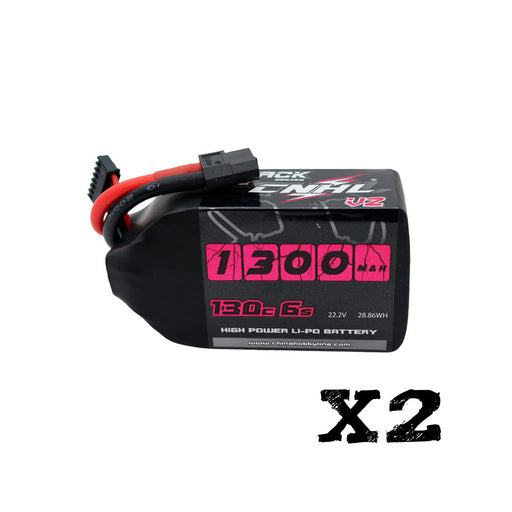
Nopea sovitustarkistus 2 Packs CNHL Black Series V2.0 1300mAh 22.2V 6S 130C LiPo-akku XT60-liittimellä sopii erinomaisesti FPV-lentäjille, jotka ha...
Näytä täydet tiedotVaraosat ja pitkäaikainen tuki Tiedämme, että RC-piloteille luotettava varaosatuki on tärkeä osa sitä, että lentokone pysyy lentokunnossa vuo...
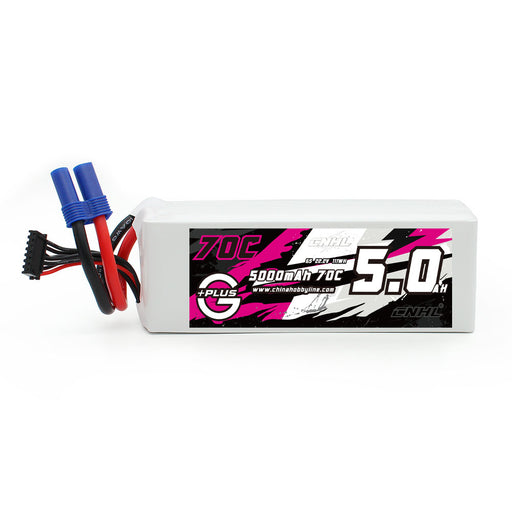
Näytä täydet tiedotTekniset tiedot: Varastonumero: 500706EC5 Kapasiteetti: 5000mAh Jännite: 22,2V / 6-kennoa / 6S1P Purkunopeus: 70C jatkuva / 140C hetkellinen Lata...
Näytä täydet tiedot
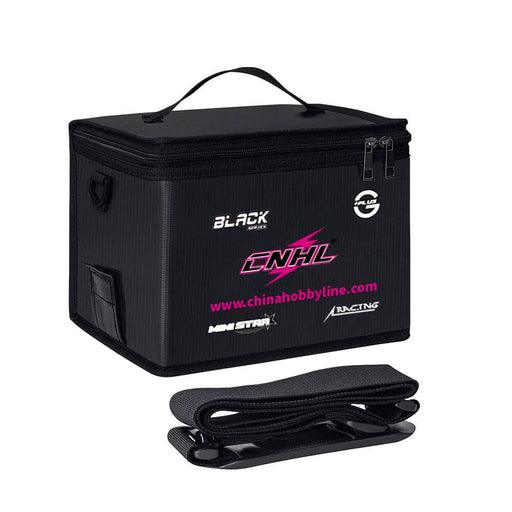
CNHL LiPo Battery Bag on suunniteltu turvallisempaan LiPo-lataukseen, kuljetukseen ja säilytykseen kotona tai kentällä. Se lisää käytännöllisen suo...
Näytä täydet tiedotNopea sovitustarkistus 2 paketin CNHL Speedy Pizza Series Pro 1350mAh 6S 150C LiPo -akku XT60-liittimellä on suunniteltu 5-tuuman FPV-piloteill...
Näytä täydet tiedot

The CNHL Long Range Series BAK 65E 6350mAh 21700 Li-ion battery cell is built around one clear priority: maximum stored energy from a lightweight c...
Näytä täydet tiedot

The CNHL Long Range Series BAK 50D 5000mAh 21700 Li-ion battery cell is designed for custom high-energy battery packs that need a strong balance be...
Näytä täydet tiedot

The ISDT C4 EVO is a versatile smart battery charger built for AA, AAA and cylindrical rechargeable cells from compact 10440 batteries all the way ...
Näytä täydet tiedot

The CNHL Long Range Series 6350mAh 21.6V 6S1P 21700 Li-ion battery combines six BAK 65E high-energy cells into a 137.16Wh pack designed for ultra-e...
Näytä täydet tiedot

The CNHL Long Range Series 5000mAh 21.6V 6S1P 21700 Li-ion battery combines six BAK 50D cells into a compact 108Wh pack designed around long-range ...
Näytä täydet tiedot




Jätä kommentti