
סוללות CNHL ליפו
CNHL שואפת לספק סוללות Li-Po באיכות גבוהה ומוצרי RC לכל חובבי התחביב עם שירות לקוחות מצוין ומחירים תחרותיים
When a new FPV drone launches with a major transmission upgrade, it’s easy to assume the story begins and ends with the camera system. But with the GEPRC Cinebot25 V2 O4 Pro, that assumption would miss the point. This is not simply a 2.5-inch cinewhoop with a new digital link — it’s a platform built around a modular idea that changes how you think about ownership, upgrades, and daily flying.

From the very first hands-on impressions, Cinebot25 V2 feels less like a traditional incremental refresh and more like GEPRC testing a future direction. The most important changes are not about chasing top speed or acrobatic aggression, but about stability, consistency, and long-term value — especially for pilots focused on indoor fly-throughs, real estate work, and controlled cinematic lines.
The biggest headline feature is, of course, the DJI O4 Air Unit Pro. But what makes Cinebot25 V2 interesting is how the system is integrated. Instead of rigidly mounting the camera and VTX to the frame, GEPRC houses the entire O4 Pro system inside a vibration-damped, suspended module.

In practical terms, this means jello-free footage without relying heavily on post-processing stabilization. Micro-vibrations that usually creep into small cinewhoops are physically absorbed before they ever reach the camera sensor. For indoor flying, where prop wash, wall proximity, and throttle modulation constantly introduce small disturbances, this mechanical damping makes a noticeable difference.
More importantly, the camera and transmission system are treated as a removable core. The entire nose section can be detached as a single unit, carrying the O4 camera, VTX, and wiring together. GEPRC has openly stated that future frames will support this same module, allowing pilots to move one expensive digital system between multiple airframes.
Considering that a digital transmission system can easily represent a $250–300 investment, this modular approach fundamentally changes the cost equation for cinewhoop pilots.
| Specification | Details |
|---|---|
| Wheelbase | 123 mm |
| Motors | SPEEDX2 1404 4600KV |
| Flight Controller (FC) | TAKER F722 AIO (STM32F722) |
| ESC | 35A 32-bit AIO ESC |
| Video Transmission | DJI O4 Air Unit Pro |
| Receiver Options | PNP / ELRS 2.4G |
| Weight (without battery) | Approx. 219 g |
| Recommended Battery | 4S LiHV 750–1100mAh (XT30) |
Out of the box, Cinebot25 V2 does not feel like a high-strung freestyle quad. That is intentional. GEPRC has clearly tuned this platform with beginner-friendly stability and smooth response in mind. Stick inputs feel damped rather than twitchy, which helps pilots transitioning from DJI-style drones adapt to FPV flight without immediately diving into PID tuning.

This tuning philosophy becomes especially apparent in angle mode and slow acro cruising. Small stick movements translate into predictable motion, making it easier to maintain consistent framing during indoor fly-throughs. For pilots working in confined spaces — hallways, staircases, or furnished rooms — this kind of control matters far more than raw power.
That said, Cinebot25 V2 is not trying to replace freestyle-oriented quads. If your primary goal is power loops, split-S maneuvers, or aggressive outdoor acrobatics, larger platforms will still feel more appropriate. Cinebot25 V2 is designed to fly close to objects, not through the sky at full throttle.
One of the most telling demonstrations of Cinebot25 V2’s design focus comes from real-world indoor flights. Even in cluttered environments, the quad maintains composure when brushing walls or lightly tapping obstacles — thanks in part to full prop guards and conservative tuning.

For real estate fly-throughs, this combination of stability, protected props, and clean video output makes Cinebot25 V2 a practical tool rather than a fragile toy. Pilots can concentrate on framing and movement instead of constantly correcting oscillations or worrying about damaging the airframe.
Outdoor flying is where expectations should be set correctly. Cinebot25 V2 includes GPS support and features like GPS rescue, which adds an extra layer of confidence during light outdoor cruising. However, its strength remains controlled, deliberate movement rather than speed or range.
Battery life, flight time, and overall handling on Cinebot25 V2 are shaped less by raw capacity numbers and more by battery weight and voltage stability. Although Cinebot25 V2 is marketed as being under 250 grams without a battery, real-world setups quickly approach or exceed that threshold once a practical power pack is installed. This is where expectations must be realistic.
Most pilots will find that flight time, stability, and voltage consistency matter more than chasing a regulatory number. In practice, Cinebot25 V2 is commonly flown on 4S LiHV packs in the 750–1100mAh range using an XT30 connector. Smaller packs reduce weight but limit flight time, while larger packs provide smoother throttle response and longer cruising sessions.
For pilots dialing in real-world flight time and balance, battery selection becomes one of the easiest ways to fine-tune how Cinebot25 V2 behaves in the air. Different weights and form factors can noticeably affect stability and throttle response. A curated overview of commonly used packs for this setup can be found here: LiPo batteries for GEPRC Cinebot25 V2 O4 Pro (2.5 inch cinewhoop) . This reference is especially helpful when comparing lighter packs for indoor flying versus higher-capacity options for smoother cruising.
The airframe supports both front-to-back and sideways battery mounting, which is especially useful when working with different battery shapes. Adjusting mounting orientation can significantly improve balance and reduce stress on the power lead without changing any tuning.
Cold weather flying highlights another practical consideration: voltage sag. In low temperatures, even high-quality packs will show reduced performance. Keeping batteries warm before flight and avoiding aggressive throttle near the end of a pack can make a noticeable difference in consistency.
As soon as Cinebot25 V2 was announced, comparisons naturally emerged. Many pilots began referencing familiar 2.5-inch cinewhoops as points of comparison, while others questioned how it stacks up against slightly larger platforms such as Cinelog30 or Darkstar-style builds.

From a power and battery perspective, many of these quads operate within a similar voltage range. Where Cinebot25 V2 differentiates itself is not raw output, but its modular camera system and a clear emphasis on smooth, repeatable flight behavior. This design choice favors controlled indoor work and consistency over all-purpose versatility.
When discussing where Cinebot25 V2 sits within the 2.5-inch cinewhoop category, pilots often reference the Bee25 from NewBeeDrone as a familiar benchmark. This comparison is typically based on size and intended use, rather than a direct one-to-one equivalence.
From a battery and weight perspective, the two platforms tend to feel different in the air. Bee25-style setups are commonly flown with lighter 4S packs, prioritizing agility and quick response in tight indoor spaces. This usually results in shorter flight times, but a more reactive and playful flight feel.
Cinebot25 V2, by contrast, is more frequently paired with slightly higher-capacity 4S LiHV batteries. The added weight shifts the flight character toward smoother throttle transitions and longer usable flight time, trading some agility for stability and consistency—traits that matter when repeatable results are the goal.
Ultimately, the distinction between these platforms is less about frame dimensions and more about intent. Battery selection and weight tuning have a greater impact on how each quad behaves than size alone, and pilots moving between them will notice this difference immediately.
Cinebot25 V2 O4 Pro makes the most sense for pilots who prioritize stability, cinematic control, and long-term flexibility. Beginners transitioning from DJI drones, real estate shooters experimenting with FPV, and experienced pilots looking for a reliable indoor platform will all find something to like here.

Its biggest strength is not raw performance, but the confidence it provides during slow, deliberate flights. The modular O4 Pro system hints at a future where pilots invest once in digital hardware and reuse it across multiple frames, reducing costs over time.
The trade-off is weight and specialization. Cinebot25 V2 is not trying to be everything at once, and that clarity of purpose is arguably its greatest advantage.
Viewed as a whole, Cinebot25 V2 O4 Pro is less about pushing limits and more about removing friction from everyday cinematic FPV flying.
GEPRC Cinebot25 V2 O4 Pro represents a thoughtful step forward in the cinewhoop category. By focusing on vibration control, modular design, and beginner-friendly handling, GEPRC has created a platform that feels purposeful rather than over-marketed.
If your flying revolves around smooth indoor motion, controlled proximity shots, and consistent footage, Cinebot25 V2 is more than just another 2.5-inch drone — it’s a glimpse of where FPV platforms may be heading next.
For pilots dialing in their setup, battery choice remains one of the easiest ways to fine-tune how Cinebot25 V2 feels in the air. If you want a model-specific reference point when choosing packs, this collection focuses on battery setups that match the real-world flying characteristics discussed above.
This is one of the most common misconceptions. While Cinebot25 V2 can be under 250g without a battery, real-world flying requires a battery that provides usable flight time and stable performance. In practice, many pilots prioritize smooth handling and consistency over hitting a specific weight number.
Battery choice has a much greater impact on how the quad flies than the number on the scale. For indoor or cinematic work, predictable throttle response and reliable voltage matter more than staying strictly below 250 grams.
At the moment, the quick-release nose module is designed specifically for GEPRC’s ecosystem. While many pilots are asking about cross-brand compatibility, there’s no official confirmation that it works with SpeedyBee or other frames. The idea appears to be long-term modularity within GEPRC’s own lineup.
In terms of tuning and flight feel, yes. The default setup is noticeably more damped and forgiving than many freestyle-oriented FPV quads. That said, basic FPV skills are still required. It’s beginner-friendly in control response, not a replacement for practice or simulator time.
Like most cinewhoops with prop guards, it is noticeably loud indoors. The guards increase safety and stability, but they also amplify noise, especially in small rooms or hallways.
The main difference is intent. Cinebot25 V2 is optimized for tight spaces, indoor fly-throughs, and controlled proximity work. Larger platforms can offer more power and payload capacity, but they require more space and tend to feel less forgiving indoors.
Yes. Cold temperatures reduce battery efficiency and increase voltage sag. In winter conditions, pilots often see shorter flight times and earlier low-voltage warnings. Keeping batteries warm before flight and flying conservatively helps mitigate this.
CNHL שואפת לספק סוללות Li-Po באיכות גבוהה ומוצרי RC לכל חובבי התחביב עם שירות לקוחות מצוין ומחירים תחרותיים

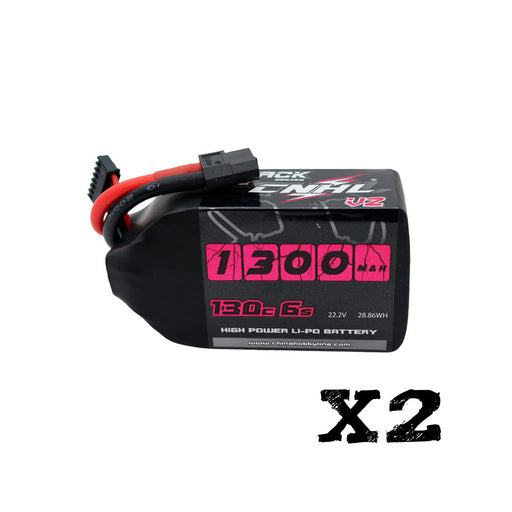
בדיקת התאמה מהירה ה2 Packs CNHL Black Series V2.0 1300mAh 22.2V 6S 130C LiPo Battery with XT60 Plug מתאים היטב למטיסי FPV שרוצים סוללת 6S 1300mAh X...
הצג פרטים מלאים

חלקי חילוף ותמיכה לטווח ארוך אנו יודעים שעבור טייסי RC, תמיכה אמינה בחלקי חילוף היא חלק חשוב בשמירה על מטוס כשיר לטיסה במשך שנים. לכן CNHL מת...
הצג פרטים מלאים
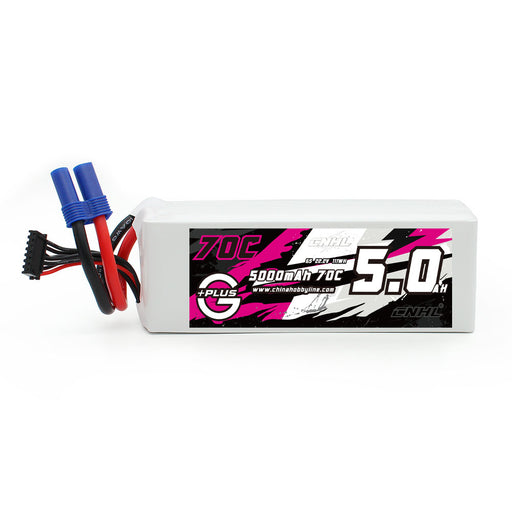
מפרטים: מספר מלאי: 500706EC5 קיבולת: 5000mAh מתח: 22.2V / 6 תאים / 6S1P קצב פריקה: 70C רציף / 140C פיצוץ קצב טעינה: 5C מקסימום גודל (הבדל של 1-5 ...
הצג פרטים מלאים
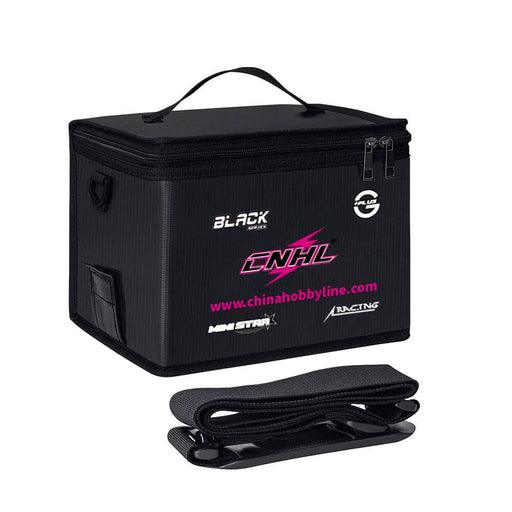
תיק סוללות LiPo של CNHL מיועד לטעינה, הובלה ואחסון בטוחים יותר של סוללות LiPo בבית או בשדה. הוא מוסיף שכבת הגנה פרקטית על ידי סיוע במניעת התפשטות ח...
הצג פרטים מלאיםבדיקת התאמה מהירה חבילת 2 CNHL Speedy Pizza Series Pro 1350mAh 6S 150C LiPo עם תקע XT60 מיועדת לטייסי FPV בגודל 5 אינץ' שרוצים מערכת 6S חופשית ...
הצג פרטים מלאים

The CNHL 75mm EDF pilot figure is designed for 80–90mm RC jet airplanes that need a more realistic cockpit appearance without adding excessive weig...
הצג פרטים מלאים

The WNF Mitsubishi Lancer Evolution IX is an officially licensed Mitsubishi Motors 1:64 RC drift car that combines detailed Evo IX styling with rea...
הצג פרטים מלאים

The ISDT K4 is a high-power 8S LiPo smart dual charger built for demanding RC battery setups. It combines two independently controlled charging cha...
הצג פרטים מלאים

The ISDT PC-4860S is a compact four-port XT60 parallel charging board designed for experienced RC and FPV users who want to connect multiple co...
הצג פרטים מלאים

Quick Take: This officially licensed WNF 1:43 Land Rover Defender 110 Pick-Up RC crawler combines the proportions and detailing of the 1993 ...
הצג פרטים מלאים

Leave a comment