
סוללות CNHL ליפו
CNHL שואפת לספק סוללות Li-Po באיכות גבוהה ומוצרי RC לכל חובבי התחביב עם שירות לקוחות מצוין ומחירים תחרותיים

Short answer: stay with the TRX connector if you are fully inside the Traxxas ecosystem and value plug-and-play simplicity. Use an adapter if you run mixed brands, already own XT60 or EC5 batteries, or want more flexibility without rewiring everything. The right answer is not about brand loyalty. It is about fit, current demand, charging routine, and how standardized you want your battery setup to be.
The Traxxas connector works well for what it was designed to do: keep Traxxas vehicles, Traxxas batteries, and the Traxxas charging ecosystem easy for beginners to use. But once hobbyists start running mixed fleets, higher-performance packs, or batteries from outside the Traxxas lineup, the TRX plug quickly becomes a connector decision rather than just a stock part.
This page is the practical guide to that decision. It explains what the TRX connector is, why some users stay with it, why others move toward adapters, and what actually matters when comparing TRX with XT60, EC5, XT90, and similar plug standards. If you want the main overview first, start with Which RC Battery Connector Is Best for Your Car, Boat, or Plane?.
The TRX connector is the battery plug standard used by Traxxas vehicles and Traxxas batteries. It is designed as part of the Traxxas ecosystem, which means the connector is not just about carrying current. It also fits into Traxxas’s larger approach to easy battery pairing and simplified charging.

In practical RC terms, a TRX connector is the plug you will see on many Traxxas-ready vehicles, especially if the model is still running the factory wiring layout. For users who stay entirely inside the Traxxas system, that can be convenient. For users who also run Arrma, Team Associated, Losi, FMS, Horizon, or FPV gear, it often creates a compatibility fork fairly quickly.

For many owners, staying with TRX is not a mistake at all. It is the simplest route when the whole setup is already based around Traxxas vehicles, Traxxas batteries, and Traxxas chargers. That is especially true for beginners who do not want to think about adapters, connector standards, or rewiring.
There are a few very practical reasons people stay with TRX:
If your fleet is almost entirely Traxxas and you are satisfied with the batteries you already use, staying with the stock connector can be the most sensible answer.
The moment you start mixing battery brands, connector standards, or vehicle brands, the TRX connector becomes less convenient. That is where adapters start making sense. Not because TRX is bad, but because the rest of the RC hobby does not revolve around it.
Many users end up using an adapter for one of these reasons:
In that situation, a short, well-made adapter is often the most practical middle ground. It lets you keep the stock Traxxas side where needed while opening the door to a wider battery market.
If your bigger question is not just TRX, but what physically fits what across brands, the next step is RC Battery Connector Compatibility Guide: What Fits, What Doesn’t, and When You Need an Adapter.
In real use, the biggest difference is usually not “does the vehicle run?” It is how standardized, flexible, and efficient the setup feels over time.
| Connector | Best fit | Main strength | Main tradeoff |
|---|---|---|---|
| TRX | Traxxas-only or mostly Traxxas fleets | Simple stock compatibility | Less universal outside Traxxas |
| XT60 | Medium-power general RC use | Very common and easy to standardize | Not the best fit for bigger high-current setups |
| EC5 / IC5 | Higher-power surface vehicles | Strong high-current fit | Larger plug, less universal than XT60 in smaller setups |
For many Traxxas owners, the real decision is not “Is TRX good?” It is “Do I want to stay closed inside one connector ecosystem, or do I want my batteries to work across more than one brand?”
If you want the full broader connector family view, continue into RC Battery Connector Types Explained: XT30, XT60, XT90, EC3, EC5, IC3, IC5, TRX, QS8 and More.

Staying with TRX usually makes the most sense when all or most of these are true:
In that situation, staying stock is often cleaner than forcing a conversion just because other hobbyists use different connectors. A connector change only makes sense when it solves a real problem.
Many users assume there are only two choices: stay stock forever or resolder everything. In practice, adapters exist because there is a third path. If your battery choice has widened but your vehicle still has a TRX lead, a short adapter often solves the problem without forcing a full connector conversion.
An adapter is often the smarter choice when:
That said, adapters are most useful when they are short, well-made, and used intentionally. They are practical, but they are not free. Every extra connection point adds one more place for resistance, heat, looseness, or wear to show up over time.
If you need actual conversion options, you can browse Traxxas battery connector adapters and the wider RC battery adapter collection.
If you keep needing the same adapter on the same high-current setup, that usually means the adapter solved a short-term problem but not the long-term one. In that case, rewiring to your real standard may be cleaner.
Rewiring starts making more sense when:
For many mixed-fleet users, the real pattern is simple: adapters are great for transition, but direct wiring is cleaner once the connector decision is already settled.
The biggest mistakes are usually not dramatic. They are practical. A long sloppy adapter, a loose fit, a poor solder joint, or a connector choice that is too small for the load can all create heat and voltage loss long before anything visibly fails.
Watch for these common mistakes:
If this is your real problem, the best next read is Why RC Battery Connectors Get Hot: Resistance, Loose Fit, Adapters, and Common Mistakes.

| Question | Stay with TRX if... | Use an adapter if... |
|---|---|---|
| Fleet type | Mostly Traxxas | Mixed brands or mixed battery inventory |
| Battery ownership | You already have Traxxas batteries | You already own XT60, EC5, or XT90 packs |
| Priority | Simplicity and stock compatibility | Flexibility and wider battery choice |
| Long-term plan | Stay stock | Test before deciding whether to rewire |
Stay with TRX when the stock system already matches the way you actually use your vehicles. Use an adapter when connector compatibility has become the real bottleneck, especially if your battery shelf is already moving toward XT60, EC5, or another broader standard.
The cleanest answer is this: do not change connectors because the internet says one standard is cooler. Change them only when the current setup has become impractical. For some Traxxas users, staying in the ecosystem is still the best answer. For others, an adapter is the first sensible step toward a more flexible battery setup.
If you want the broader connector overview, continue into Which RC Battery Connector Is Best for Your Car, Boat, or Plane?. If your main question is connector families, read RC Battery Connector Types Explained: XT30, XT60, XT90, EC3, EC5, IC3, IC5, TRX, QS8 and More. If your issue is what fits what, continue into RC Battery Connector Compatibility Guide: What Fits, What Doesn’t, and When You Need an Adapter. If your concern is connector heat or power loss, the next stop is Why RC Battery Connectors Get Hot: Resistance, Loose Fit, Adapters, and Common Mistakes.
What is a TRX connector?
A TRX connector is the proprietary battery plug standard commonly used on Traxxas vehicles and Traxxas batteries.
Should I stay with the Traxxas battery connector?
Yes, if your fleet is mostly Traxxas and you value simple stock compatibility. That is often the cleanest route for beginners and single-brand users.
Are TRX adapters safe?
Yes, when they are short, well-made, and matched to the load. Poor adapters, loose fits, or unnecessary adapter chains are where problems start.
Can I use XT60 or EC5 batteries in a Traxxas vehicle?
Yes, many hobbyists do that with a suitable adapter, as long as voltage, battery size, and current demand all make sense for the setup.
Is it better to use an adapter or rewire to another connector?
An adapter is often better for transition or occasional use. Rewiring usually makes more sense when you already know the new connector standard you want long term.
Why do some hobbyists leave the Traxxas ecosystem?
Usually for wider battery choice, easier fleet standardization, and better cross-brand compatibility rather than because the TRX connector itself is unusable.
CNHL שואפת לספק סוללות Li-Po באיכות גבוהה ומוצרי RC לכל חובבי התחביב עם שירות לקוחות מצוין ומחירים תחרותיים

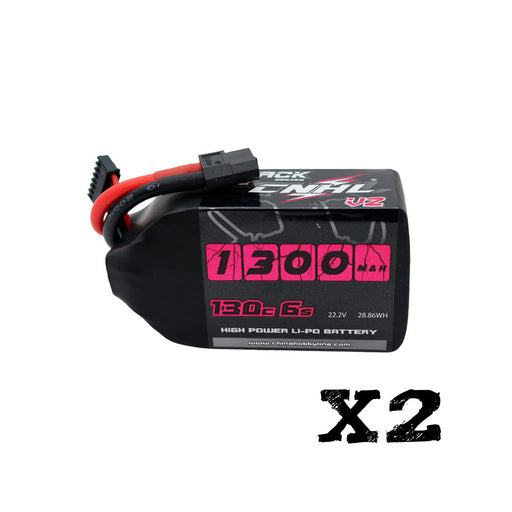
בדיקת התאמה מהירה ה2 Packs CNHL Black Series V2.0 1300mAh 22.2V 6S 130C LiPo Battery with XT60 Plug מתאים היטב למטיסי FPV שרוצים סוללת 6S 1300mAh X...
הצג פרטים מלאיםחלקי חילוף ותמיכה לטווח ארוך אנו יודעים שעבור טייסי RC, תמיכה אמינה בחלקי חילוף היא חלק חשוב בשמירה על מטוס כשיר לטיסה במשך שנים. לכן CNHL מת...
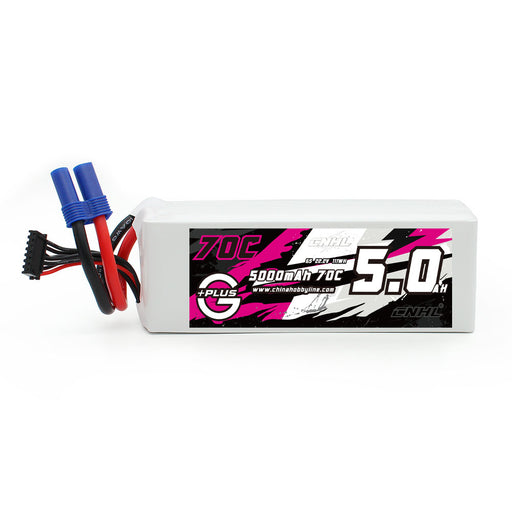
הצג פרטים מלאיםמפרטים: מספר מלאי: 500706EC5 קיבולת: 5000mAh מתח: 22.2V / 6 תאים / 6S1P קצב פריקה: 70C רציף / 140C פיצוץ קצב טעינה: 5C מקסימום גודל (הבדל של 1-5 ...
הצג פרטים מלאים
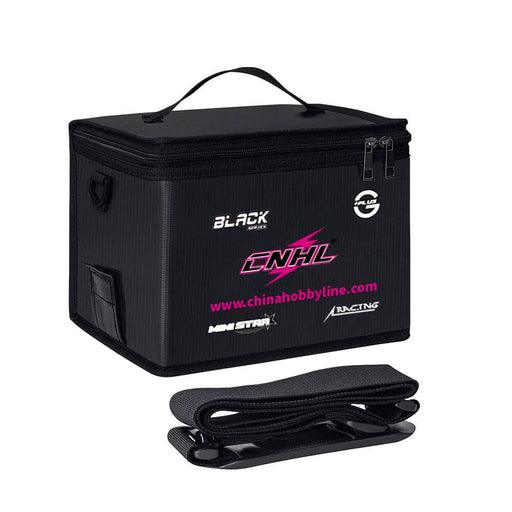
תיק סוללות LiPo של CNHL מיועד לטעינה, הובלה ואחסון בטוחים יותר של סוללות LiPo בבית או בשדה. הוא מוסיף שכבת הגנה פרקטית על ידי סיוע במניעת התפשטות ח...
הצג פרטים מלאים

בדיקת התאמה מהירה חבילת 2 CNHL Speedy Pizza Series Pro 1350mAh 6S 150C LiPo עם תקע XT60 מיועדת לטייסי FPV בגודל 5 אינץ' שרוצים מערכת 6S חופשית ...
הצג פרטים מלאים

Quick Fit Check The CNHL Speedy Pizza Series 2200mAh 22.2V 6S 120C LiPo Battery with XT60 Plug combines the familiar 2200mAh 6S format with a ligh...
הצג פרטים מלאים

Quick Fit Check The CNHL Speedy Pizza Series 2200mAh 14.8V 4S 120C LiPo Battery with XT60 Plug combines a widely used 2200mAh 4S format with a sli...
הצג פרטים מלאים

Quick Fit Check The CNHL Speedy Pizza Series 2200mAh 11.1V 3S 120C LiPo Battery with XT60 Plug takes the familiar 3S 2200mAh aircraft battery form...
הצג פרטים מלאיםThe CNHL Long Range Series BAK 65E 6350mAh 21700 Li-ion battery cell is built around one clear priority: maximum stored energy from a lightweight c...
הצג פרטים מלאים

The CNHL Long Range Series BAK 50D 5000mAh 21700 Li-ion battery cell is designed for custom high-energy battery packs that need a strong balance be...
הצג פרטים מלאים




Leave a comment