

CNHL Lipo Batteries
CNHL aim at providing high-quality Li-Po batteries and RC products to all hobby enthusiasts with excellent customer services and competitive prices

Short answer: RC battery connectors usually get hot because too much resistance has built up somewhere in the power path. That resistance often comes from a loose plug fit, worn contacts, poor soldering, undersized connectors, adapter chains, damaged wire, or a setup that is simply asking more current than the connector path is handling comfortably. Mild warmth can be normal. Noticeable heat is usually a warning that something in the connector system is wasting power instead of delivering it cleanly.
Most hobbyists first notice connector heat in a very practical way. The run felt normal, but when unplugging the battery, the connector felt surprisingly warm. Or one side felt hotter than the wire. Or the adapter was hotter than the pack itself. These are not random details. They usually tell you exactly where the power path is struggling.
This page is the problem-solving branch of the connector hub. If your main question is not “what connector is this?” but “why is this connector running hot and what should I do about it?”, you are in the right place.
For the broader connector overview first, start with Which RC Battery Connector Is Best for Your Car, Boat, or Plane?. If your bigger issue is what fits what, continue into RC Battery Connector Compatibility Guide: What Fits, What Doesn’t, and When You Need an Adapter. If you are still deciding which connector standard should have been used in the first place, read How to Choose the Right RC Battery Connector for Your Setup.

Connector heat is usually wasted energy. The battery is trying to push current through the power path, but some part of that path is resisting the flow more than it should. That resistance turns part of the energy into heat. So when a connector gets hot, the problem is rarely just “temperature.” The deeper issue is that power is being lost where it should have been passing through cleanly.
This is why connector heat matters even before anything melts, fails, or smells strange. It is often an early signal that the system is less efficient than it should be and more stressed than it looks from the outside.
| What you notice | What it often means |
|---|---|
| Connector is slightly warm after a hard run | May be normal depending on load and setup |
| Connector is hotter than the wire | Resistance is concentrated at the plug or contact point |
| Adapter is hottest part of the system | Adapter path is likely adding too much resistance |
| One side is hotter than the other | Fit, solder, or contact quality may be uneven |
| Heat appears suddenly when it did not before | Wear, looseness, damage, or rising load demand may have changed something |
The root issue behind most hot RC battery connectors is simple: resistance. Every connector has some resistance, but a healthy connector path keeps it low enough that heat stays under control. Once the resistance rises, current flow starts wasting more energy as heat.
That rise can happen because the connector is too small for the load, because the plug fit has loosened over time, because an adapter added extra contact points, because the solder joint is poor, or because the connector was already marginal and the setup finally pushed it far enough to expose the weakness.
In other words, heat is usually not the first problem. It is the visible symptom of an electrical bottleneck.
A connector that no longer fits tightly is one of the easiest ways to create heat. A loose connection reduces the quality of the electrical contact surface. That means current is being forced through a worse path than intended, which raises resistance and makes heat show up faster.
This is one reason older connectors that used to feel fine can suddenly start running warm. The plug family itself may not be the real problem. Wear may be the real problem. A connector that feels sloppy during insertion or removal is often telling you something before it fails more obviously.

A connector can look acceptable from the outside and still hide a poor solder joint inside. Cold solder, weak wetting, too little solder, damaged wire strands, or strain near the joint can all increase resistance. The result is predictable: the current path becomes less efficient, and heat begins building at the joint or nearby connector body.
This is why connector heat should never be blamed on the plug standard alone without checking the actual build quality. A correctly chosen XT60 with a bad solder joint can behave worse than a heavier-loaded connector that was assembled properly.
Adapters are useful. They solve compatibility problems quickly. But they also add extra contact points, extra joints, and extra resistance opportunities into the power path. That does not make adapters automatically bad. It just means they should be treated as compromises, not as electrically invisible objects.
In many hobby-grade setups, one short, well-made adapter is fine. But when the setup is already current-hungry, or when multiple adapters are stacked, or when the adapter itself is cheaply made, connector heat often appears there first because the adapter becomes the weakest part of the path.
If your bigger question is whether a plug combination physically fits or when an adapter is justified at all, use RC Battery Connector Compatibility Guide: What Fits, What Doesn’t, and When You Need an Adapter.
Sometimes the connector is simply too small for what the setup is doing. This is especially common when a connector that feels “probably fine” on paper gets pushed harder in real use than expected. Higher current, repeated hard bursts, heavier vehicles, hotter weather, aggressive gearing, or stronger batteries can all expose a connector choice that was already close to the limit.
This is why connector heat is often not just about the connector itself. It is about connector choice relative to setup demand. A plug that feels acceptable on a mild setup may start feeling wrong the moment the system becomes more demanding.
| Setup change | Why connector heat may appear |
|---|---|
| Heavier vehicle or airframe | Current demand rises under the same connector path |
| More aggressive gearing or prop load | System asks more from battery and connector at full load |
| Higher-performance battery | Weak connector path becomes easier to expose |
| Longer hard pulls or repeated bursts | Heat has more time to build in the weak point |
| Warm ambient conditions | Less thermal margin hides fewer connector weaknesses |
If the real problem is that the wrong connector standard was chosen in the first place, the next read is How to Choose the Right RC Battery Connector for Your Setup.
When only one side of the connector gets much hotter, that often points to something uneven. One solder joint may be worse than the other. One contact may be looser. One wire may be damaged or stressed near the connector. One housing may not be seating properly. Heat imbalance is often a clue that the problem is localized, not general.
This matters because it helps narrow the diagnosis. If both sides are equally warm, load class may be the main story. If one side is clearly worse, build quality or wear is often the more likely story.
Not every warm connector is a crisis. A connector that is slightly warm after a high-load run may still be operating normally, especially on demanding systems. The key question is not whether it warmed up at all. The key question is whether the heat level feels proportional and repeatable, or whether it feels excessive, sudden, or concentrated in the wrong place.
Useful warning signs include connectors that are too hot to hold comfortably, adapters that run hotter than everything else, heat that appears suddenly where it never used to, visible discoloration, softening plastic, electrical smell, or a plug fit that is obviously getting worse.

In RC cars, hot connectors often show up after repeated hard acceleration, tall gearing, heavy vehicles, or long full-throttle pulls. In FPV, the symptom may appear after repeated punch-outs or aggressive throttle recovery where current spikes keep exposing a weak link in the path. In airplanes and EDF jets, sustained load can make connector heat easier to trigger because the current path stays stressed for longer rather than in short bursts only.
So while the symptom looks the same across the hobby, the reason it appears can be shaped by how the model actually uses current. That is why a connector that seems fine on one vehicle can feel marginal on another.
| Use case | How hot connector issues often show up |
|---|---|
| High-performance RC car | Heat after repeated launches or long hard pulls |
| FPV freestyle / racing | Warm plugs after repeated punch-outs and high current bursts |
| Airplane / EDF jet | Heat after sustained power use rather than brief spikes only |
| Mixed-fleet adapter use | Adapter becomes the warmest point in the whole chain |
If a connector is running hot, the goal is to locate the weak point rather than guessing blindly. A practical check sequence usually looks like this:
This method usually reveals whether the issue is wear, build quality, adapter resistance, or simple connector mismatch.
The fix depends on the cause, but the general direction is always the same: reduce resistance and clean up the power path.
If your issue points toward a deeper standard choice rather than one bad connector, go back to How to Choose the Right RC Battery Connector for Your Setup.
Most hot connector problems come from a small set of repeat mistakes:
| Mistake | Why it causes trouble |
|---|---|
| Keeping a worn connector in service too long | Loose fit raises resistance |
| Using adapters as a permanent solution everywhere | Extra joints create more heat opportunities |
| Poor soldering hidden under heat shrink | Weak joint becomes the bottleneck |
| Assuming “it plugs in” means “it is fine” | Fit and electrical quality are not the same thing |
| Using a connector family that is marginal for the setup | Real load exposes the limitation |
If you want the main connector overview first, start with Which RC Battery Connector Is Best for Your Car, Boat, or Plane?. If your issue is choosing a connector standard more intelligently, continue into How to Choose the Right RC Battery Connector for Your Setup. If the real confusion is about fit and adapter logic, use RC Battery Connector Compatibility Guide: What Fits, What Doesn’t, and When You Need an Adapter. For specific connector families, continue into XT60 vs XT90 vs EC5 Connector Comparison, TRX Connector Guide, or Deans / T-Plug Connector Guide.
Is it normal for an RC battery connector to get warm?
Slight warmth can be normal in demanding setups. The real concern starts when the connector becomes noticeably hot, hotter than nearby wire, or worse than it used to be.
Why is my adapter hotter than the battery connector?
Because the adapter may be adding too much resistance through extra contact points, poor construction, or a weaker connector path than the rest of the system.
Can a loose connector really cause that much heat?
Yes. Loose fit reduces contact quality and can raise resistance enough to create significant heating under current load.
Does a hot connector always mean the connector type is wrong?
No. It can also be caused by wear, poor soldering, damaged wire, or bad adapters. But connector mismatch is still one possible cause.
Should I replace a connector that suddenly started getting hotter?
You should at least inspect it immediately. Sudden change often means wear, looseness, damage, or a setup change has exposed a weakness.
Can bad soldering cause connector heat even if the plug looks fine?
Yes. A poor solder joint can hide under the heat shrink and still be the main source of heat in the system.
What is the best next step if I keep getting hot connectors?
First isolate whether the problem is fit, soldering, adapter use, or connector size. Then either repair that weak point or move to a more suitable connector standard.
Hot RC battery connectors are usually not random. They are the system telling you that part of the power path is wasting energy as heat instead of delivering it cleanly to the model. Sometimes the fix is simple, like replacing a loose plug or redoing a bad solder joint. Sometimes the fix is more structural, like reducing adapter dependence or choosing a more appropriate connector family for the setup.
The useful habit is not to ignore connector heat just because the model still runs. Heat is often the warning that shows up before bigger electrical problems do. If you want the full connector decision framework next, continue into How to Choose the Right RC Battery Connector for Your Setup.
CNHL aim at providing high-quality Li-Po batteries and RC products to all hobby enthusiasts with excellent customer services and competitive prices

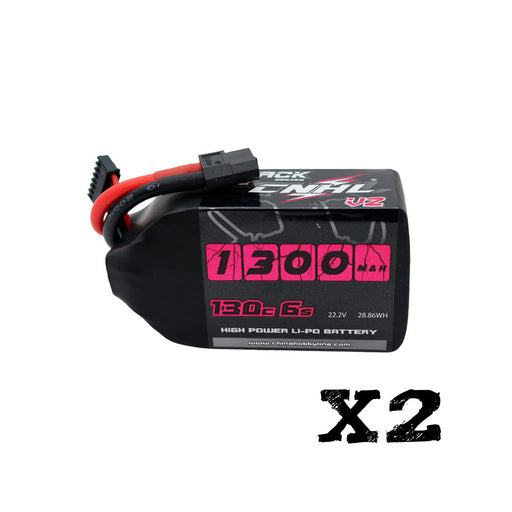
Quick Fit Check The 2 Packs CNHL Black Series V2.0 1300mAh 22.2V 6S 130C LiPo Battery with XT60 Plug is a strong fit for FPV pilots who want a prov...
View full detailsSpare Parts & Long-Term Support We know that for RC pilots, reliable spare parts support is an important part of keeping an aircraft fl...
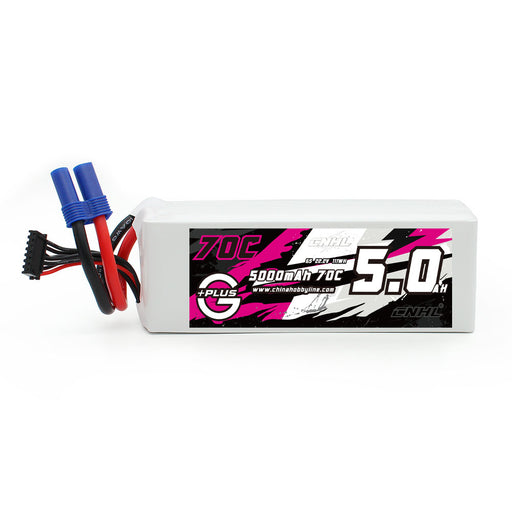
View full detailsSpecifications: Stock Number: 500706EC5 Capacity: 5000mAh Voltage: 22.2V / 6-Cell / 6S1P Discharge Rate: 70C Continual / 140C Burst Charge Rate: ...
View full details
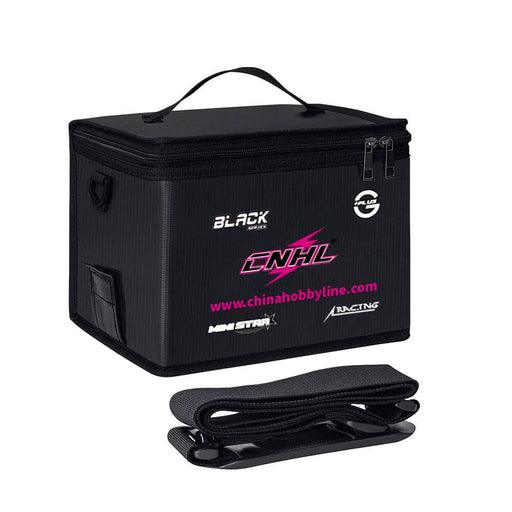
The CNHL LiPo Battery Bag is designed for safer LiPo charging, transport, and storage at home or at the field. It adds a practical layer of protect...
View full details

Quick Fit Check The 2 Packs CNHL Speedy Pizza Series Pro 1350mAh 6S 150C LiPo Battery with XT60 Plug is built for 5-inch FPV pilots who want a ...
View full details

Quick Fit Check The CNHL Speedy Pizza Series 2200mAh 22.2V 6S 120C LiPo Battery with XT60 Plug combines the familiar 2200mAh 6S format with a ligh...
View full details

Quick Fit Check The CNHL Speedy Pizza Series 2200mAh 14.8V 4S 120C LiPo Battery with XT60 Plug combines a widely used 2200mAh 4S format with a sli...
View full details

Quick Fit Check The CNHL Speedy Pizza Series 2200mAh 11.1V 3S 120C LiPo Battery with XT60 Plug takes the familiar 3S 2200mAh aircraft battery form...
View full detailsThe CNHL Long Range Series BAK 65E 6350mAh 21700 Li-ion battery cell is built around one clear priority: maximum stored energy from a lightweight c...
View full details

The CNHL Long Range Series BAK 50D 5000mAh 21700 Li-ion battery cell is designed for custom high-energy battery packs that need a strong balance be...
View full details




Leave a comment