
CNHL Baterai Lipo
CNHL bertujuan menyediakan baterai Li-Po berkualitas tinggi dan produk RC kepada semua penggemar hobi dengan layanan pelanggan yang luar biasa dan harga yang kompetitif
The Avios Albatross V2 is one of the more unusual RC airplanes in the current scale market. It is a 1620mm twin-engine flying boat with working flaps, reversing ESCs, a functional water rudder and enough power to be flown as either a relaxed scale model or a surprisingly capable sport-scale aircraft.
The latest grey-and-yellow USAF Search & Rescue version gives the Albatross a very different character from the familiar US Coast Guard release, but the underlying aircraft remains the established V2. That is important because the battery setup, CG guidance, motors, ESCs and basic flying characteristics remain closely tied to the V2 platform rather than representing a completely new generation.
Quick verdict: The Avios Albatross V2 is at its best when flown like a large scale twin rather than treated as a high-throttle sport model. A 4S 3300–4000mAh battery gives plenty of usable power, 3S works well for slower scale flying, and careful attention to CG and water technique makes a bigger difference than chasing extreme battery specifications.

The USAF Search & Rescue scheme gives the familiar Albatross V2 a much more military appearance.
The current USAF Search & Rescue release is still best understood as an Avios Albatross V2. The airframe keeps the same basic specification, motors, reversing ESCs and setup used by the US Coast Guard V2, with the major visible change being the new USAF color scheme.
You may still see the name Avios Albatross V3 used in videos, listings or discussions. That naming has created some unnecessary confusion, especially for owners looking for batteries or setup information. In practical terms, the current USAF model belongs with the V2 platform.
That means existing V2 information about battery voltage, CG, reversing ESC operation and general setup remains useful for the new scheme.
The original move from V1 to V2 involved more than a change of paint. Avios reduced unnecessary weight, simplified some of the internal wiring and improved several visual details while keeping the familiar twin-motor layout.
| V2 Update | What Changed |
|---|---|
| Reduced airframe weight | Less unnecessary paint and material helped the aircraft feel better at slower speeds. |
| Cleaner internal wiring | Excess wire was reduced, leaving a neater installation and slightly less unnecessary weight. |
| Clear cockpit | The cockpit became a better starting point for pilot figures and extra scale detail. |
| Clear water rudder | Less visually intrusive than the darker rudder used on the earlier aircraft. |
| Same basic power-system concept | Twin motors, handed propellers and reversing ESCs remained central to the design. |
The lighter V2 airframe also changed the way battery position and CG should be approached. That is why older V1 battery-position photos are not the best reference for setting up a V2.
The Albatross uses twin brushless motors with handed three-blade propellers. The props rotate inward at the top, giving the aircraft the balanced look and feel expected from a properly arranged twin-engine scale model.

The handed three-blade propellers rotate inward at the top.
On 4S there is plenty of power available. Normal scale flying does not require constant high throttle, and the aircraft is comfortable cruising at much lower power settings once established in the air.
That matters when choosing a battery. The Albatross does not need an extreme high-C racing pack. A sensible battery that matches the correct voltage, capacity, connector and balance requirement is more useful than simply choosing the highest discharge rating available.
The normal battery range for the Avios Albatross V2 RC plane is 4S 3000–4000mAh with an XT60 connector. A 3300mAh 4S pack is a particularly familiar setup for this aircraft, while 4000mAh has also proven to be a practical choice.
For the current CNHL lineup, the 3700mAh and 3300mAh 4S options sit naturally inside that range, while the 4200mAh 3S pack provides a separate scale-flying alternative.
| CNHL Battery | Voltage | Capacity | C Rating | Connector | Best For |
|---|---|---|---|---|---|
| CNHL 3700mAh 4S 40C | 14.8V | 3700mAh | 40C | XT60 | Best overall |
| CNHL 3300mAh 4S 40C | 14.8V | 3300mAh | 40C | XT60 | Closest to the familiar 3300mAh V2 setup |
| 2 Packs CNHL 4200mAh 3S 30C | 11.1V | 4200mAh | 30C | XT60 | Relaxed scale flying |
You can compare the selected packs in the Avios Albatross V2 battery collection.
Battery fit note: Capacity alone does not determine the correct installation position. Always secure the pack properly and set the aircraft to the recommended CG after changing battery size or weight.
4S is the normal choice. It gives the aircraft a comfortable power reserve for water takeoffs, climbing and the occasional loop or roll without making high throttle necessary during normal scale flying.
3S changes the character rather than simply reducing performance. The Albatross becomes more relaxed and naturally encourages slower throttle use, which suits pilots who prefer scale passes and gentle cruising.
| Setup | Flying Feel | Best Use |
|---|---|---|
| 4S 3300–3700mAh | More reserve power and stronger acceleration | General flying, water takeoff and sport-scale use |
| 3S 4200mAh | Softer throttle response and more relaxed flying | Scale cruising and slower passes |
The CNHL 4200mAh 3S product is sold as a two-pack, but the Albatross uses one main flight battery at a time. The second pack is simply ready for the next flight.
The recommended V2 center of gravity is 65–70mm behind the wing leading edge at the center section. This number matters more than copying the exact battery position from another Albatross.
A lighter battery may need to sit farther forward, while a heavier pack may balance correctly closer to the middle of the battery area. The large top hatch gives enough access to make these adjustments without turning the installation into a difficult job.
Good setup habit: Balance the aircraft with each battery, mark the correct position inside the bay, and use that mark only for that specific pack.
CG deserves particular attention on this model because it affects low-speed feel, stall behavior and how comfortable the aircraft feels during approach and landing.

Reverse thrust gives the Albatross much more control when maneuvering on the surface.
The reversing ESCs are one of the features that make the Albatross especially enjoyable on water. Being able to back away from the shoreline or correct an awkward taxi position is much more useful than it might sound on paper.
The functional water rudder adds strong directional control at low speed. It can be left active with reduced sensitivity around center stick, or it can be combined with a more advanced radio setup using differential thrust.
Differential thrust is optional rather than essential. It adds another layer of maneuverability, but it also uses additional receiver channels and makes the radio setup more complex.

Smooth throttle application and keeping the wing level are the keys to a clean water takeoff.
The Albatross does not need to be launched from the water with a sudden burst of full throttle. A smoother technique works better.
Start by adding power progressively and allow the hull to accelerate onto the step. Keep the wings level with small aileron corrections as speed builds. Once the aircraft is riding cleanly on the hull, ease the nose up and let it leave the water rather than forcing it into the air.
The wingtip floats need some attention during this phase. If one digs into the water while the aircraft is moving quickly, the sudden drag can pull the airplane sharply to one side.
Simple sequence: add throttle gradually → let the hull come onto the step → keep both wingtip floats clear → hold the wing level → ease into the climb.
One of the strongest features of the Avios Albatross is that owning one does not require permanent access to a lake. The hull shape and lower protection allow the aircraft to take off and land from suitable grass as well.
Snow and ice also suit the broad flying-boat hull surprisingly well, which gives the Albatross an unusual all-season character compared with many conventional RC planes.
Water is still where the model feels most distinctive. Taxiing, reversing, getting onto the step and watching the hull settle onto the surface are a large part of the appeal, but grass operation makes the aircraft far easier to enjoy regularly.
The Albatross feels happiest at moderate speeds with coordinated inputs. It is not a model that needs to be flown aggressively to be enjoyable. Low passes, gentle climbs and wide turns suit the shape of the aircraft particularly well.
Rudder is useful in turns. Treating it like a conventional bank-and-yank sport model leaves some of the aircraft's character unused. Coordinated rudder and aileron input produces cleaner, more natural-looking turns.
The V2 can still loop, roll and fly inverted when there is enough room, so the airframe is not restricted to scale circuits. The difference is that it looks and feels better when those maneuvers are used occasionally rather than making them the entire flight.
Before the first flight, check how much the ailerons move up compared with down. More up travel than down is a sensible starting point on this type of airframe because excessive down aileron can make adverse yaw more noticeable.
There is no need to modify a working aircraft simply because another model was adjusted, but control geometry is worth inspecting rather than assuming everything is correct straight out of the box.
The safest way to approach the stall is not to assume it will always be perfectly straight or perfectly gentle. CG, control setup, flap position and airframe alignment all influence how the aircraft behaves near minimum speed.
After the maiden trim is complete, climb to a safe altitude and establish the stall characteristics of your own aircraft before spending much time flying slowly near the water.

The large wing and center section are designed to remain practical for transport and setup.
Basic assembly is straightforward. The major sections bolt together, most of the electronics are already installed, and the wiring is clearly organized around the center section.
That does not mean every builder will leave the model completely stock. The Albatross attracts the kind of owner who enjoys refining scale details, tidying wiring, improving connectors or adjusting control geometry.
A useful layout is to keep the receiver close to the wing center section, which helps keep the wiring concentrated in one area and makes the large airframe easier to manage during assembly.
The US Coast Guard V2 is bright, highly visible and instantly recognizable. The newer USAF Search & Rescue scheme takes the same aircraft in a completely different direction with its military grey finish and yellow SAR bands.
Neither scheme changes the essential flying experience. Choosing between them is mainly a matter of which version of the Grumman HU-16 Albatross appeals more strongly to you.
For owners interested in scale presence, the new USAF scheme is particularly effective because it looks noticeably different in the air without requiring a new setup or new battery strategy.
The Avios Albatross V2 works because it offers more than one kind of flying. It can be a relaxed scale twin, a water-based flying boat, a grass-field model or a mildly aerobatic sport-scale aircraft depending on how it is set up and flown.
The reversing ESCs and water rudder genuinely improve the ownership experience, while the lighter V2 airframe makes the model more comfortable at the slower speeds that suit its appearance.
Its main demands are not excessive power or exotic equipment. The important things are a sensible battery, the correct CG, coordinated controls and smooth throttle use on the water.
For most pilots, a 4S 3300–3700mAh XT60 LiPo is the most straightforward starting point. Pilots who want slower scale flying can also consider the 3S option.
Need a battery for your Avios Albatross V2?
Compare the selected CNHL LiPo batteries for the Avios Albatross V2, including 4S 3300mAh, 4S 3700mAh and a 3S scale-flying option.
The current USAF Search & Rescue aircraft remains based on the established V2 platform. Some online references call it V3, but the motors, ESCs and basic setup remain tied to the V2.
The standard battery direction is 4S 3000–4000mAh with an XT60 connector.
Yes. A 3300mAh 4S pack is a well-established size for the V2 and sits comfortably inside the normal recommended range.
Yes. A 3S setup gives the aircraft a more relaxed scale-flying character, while 4S remains the standard choice.
The stock main battery connector is XT60.
The recommended V2 CG is 65–70mm behind the wing leading edge at the center section.
No. The aircraft uses one main flight battery to power the twin-motor system.
Yes. The Albatross can operate from suitable grass as well as water, and the broad hull also makes snow and ice practical surfaces in the right conditions.
No. Differential thrust is optional. The functional water rudder already provides useful low-speed directional control, while differential thrust can be added by pilots who want a more advanced radio setup.
For other twin-engine and scale aircraft, browse LiPo Batteries for Scale & Multi-engine Planes.
For broader RC airplane battery options, visit the CNHL Airplane Batteries collection.
CNHL bertujuan menyediakan baterai Li-Po berkualitas tinggi dan produk RC kepada semua penggemar hobi dengan layanan pelanggan yang luar biasa dan harga yang kompetitif

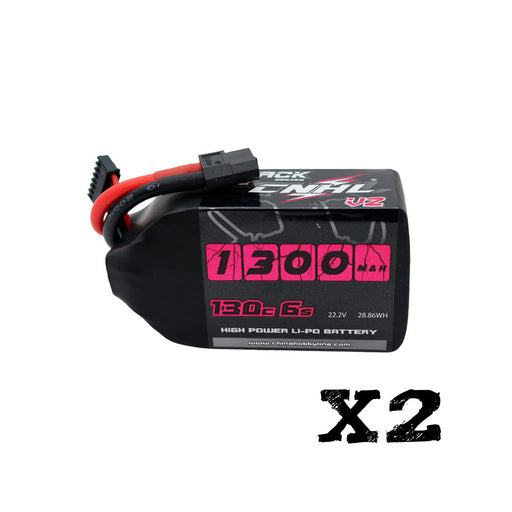
Pemeriksaan Kesesuaian Cepat 2 Packs CNHL Black Series V2.0 1300mAh 22.2V 6S 130C LiPo Battery dengan Colokan XT60 sangat cocok untuk pilot FPV yan...
Lihat detail lengkapSuku Cadang & Dukungan Jangka Panjang Kami memahami bahwa bagi pilot RC, dukungan suku cadang yang andal merupakan bagian penting untuk m...
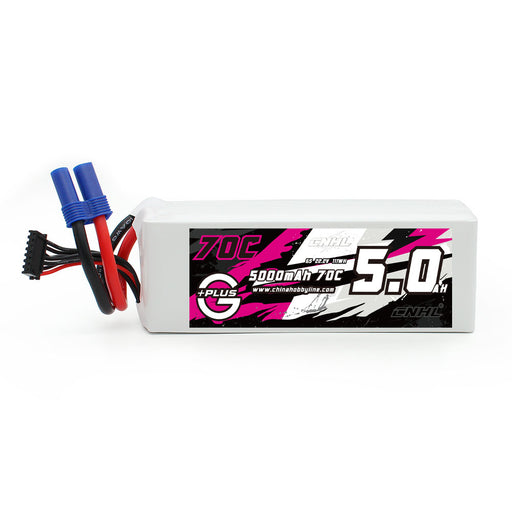
Lihat detail lengkapSpesifikasi: Nomor Stok: 500706EC5 Kapasitas: 5000mAh Voltase: 22.2V / 6-Sel / 6S1P Tingkat Discharge: 70C Kontinu / 140C Ledakan Tingkat Pengisi...
Lihat detail lengkap
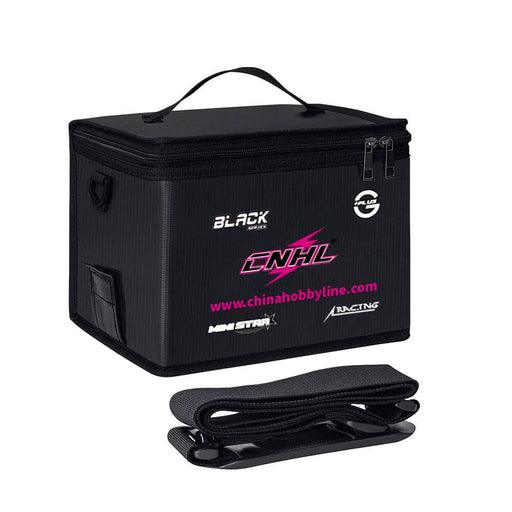
Tas Baterai LiPo CNHL dirancang untuk pengisian, transportasi, dan penyimpanan LiPo yang lebih aman di rumah atau di lapangan. Tas ini menambahkan ...
Lihat detail lengkap

Pemeriksaan Pemasangan Cepat 2 Paket CNHL Speedy Pizza Series Pro 1350mAh 6S 150C LiPo Battery dengan colokan XT60 dibuat untuk pilot FPV 5 inc...
Lihat detail lengkap

Quick Fit Check The CNHL Speedy Pizza Series 2200mAh 22.2V 6S 120C LiPo Battery with XT60 Plug combines the familiar 2200mAh 6S format with a ligh...
Lihat detail lengkap

Quick Fit Check The CNHL Speedy Pizza Series 2200mAh 14.8V 4S 120C LiPo Battery with XT60 Plug combines a widely used 2200mAh 4S format with a sli...
Lihat detail lengkap

Quick Fit Check The CNHL Speedy Pizza Series 2200mAh 11.1V 3S 120C LiPo Battery with XT60 Plug takes the familiar 3S 2200mAh aircraft battery form...
Lihat detail lengkap

The CNHL Long Range Series BAK 50D 5000mAh 21700 Li-ion battery cell is designed for custom high-energy battery packs that need a strong balance be...
Lihat detail lengkap

The ISDT C4 EVO is a versatile smart battery charger built for AA, AAA and cylindrical rechargeable cells from compact 10440 batteries all the way ...
Lihat detail lengkap


Tinggalkan komentar