
CNHL Baterai Lipo
CNHL bertujuan menyediakan baterai Li-Po berkualitas tinggi dan produk RC kepada semua penggemar hobi dengan layanan pelanggan yang luar biasa dan harga yang kompetitif
A LiPo battery can charge quickly for most of the cycle and then appear to stall near the end because Balance Charge becomes limited by individual cell behavior rather than the charger’s main output power. Once one cell reaches the upper voltage limit, the charger must reduce current and wait for the lower cells to catch up.
Quick answer: A slow final balance stage can be normal when the pack begins slightly imbalanced or the charger has modest balance current. It becomes a warning sign when charging repeatedly takes hours, the same cell consistently lags behind, the voltage difference grows over time, or the charger reports balance-connection errors.
Do not solve a repeatedly slow balance charge by simply selecting Fast Charge or increasing the main charging current. First check the individual cell voltages, battery temperature, balance lead, charger settings and whether one cell is developing higher internal resistance.

| Normal Reason | Current naturally tapers near full voltage and the charger may need extra time to correct small cell differences. |
| Common Charger Limit | Balance current is often much lower than the main charging current. |
| Common Battery Cause | One aging or higher-resistance cell reaches full voltage earlier or remains lower than the others. |
| Common Connection Cause | A damaged balance wire, dirty contact, loose plug or poor balance-board connection can create unstable readings. |
| When to Investigate | The same cell repeatedly differs, the spread increases, the pack heats, or the charger never finishes normally. |
| What Not to Do | Do not keep increasing current, ignore warnings or use Fast Charge to hide the symptom. |
A standard LiPo charging cycle normally includes two main stages:
The charger attempts to deliver the selected current while the battery voltage rises. A 5000mAh battery charged at approximately 1C may receive close to 5A during much of this stage when the charger has enough power.
As the highest cell approaches approximately 4.20V in a standard LiPo, the charger must reduce current to prevent that cell from exceeding its intended limit.
If the other cells remain lower, the charger may:
This final stage can take longer than expected even though only a small amount of capacity remains to be added.

Consider a 4S LiPo near the end of charging:
The charger cannot continue sending the original bulk current because Cells 1 and 2 are already near the upper voltage limit. It must reduce current while Cell 3 catches up.
The larger the difference, the longer the final stage may take.
| Example Cell Readings | General Interpretation | Likely Effect |
|---|---|---|
| 4.20 / 4.19 / 4.20 / 4.19V | Closely matched | Short final balance stage |
| 4.20 / 4.18 / 4.20 / 4.19V | Small difference | Some additional balancing time |
| 4.20 / 4.13 / 4.20 / 4.19V | Noticeable outlier | Long balance stage and further investigation recommended |
| One cell repeatedly falls farther behind | Possible weak or higher-resistance cell | Charging may become increasingly slow over time |
These examples are general illustrations rather than universal pass-or-fail limits. Charger accuracy, temperature and measurement conditions can affect displayed values.
A charger may provide 5A, 10A or more of main charging current but only a fraction of an amp of balance current.
These are separate specifications:
This means a high-wattage charger can still balance slowly when its balance circuit is modest.
For example, a charger may bulk charge a 6S battery at 5A but only balance at a few hundred milliamps per cell group. If one cell requires substantial correction, the final stage can take much longer than the main charge.
Increasing the selected charging current does not automatically increase the balance current.
A battery may begin the charge with uneven cell voltages because of:
If the battery starts with one cell substantially lower, Balance Charge has more correction work to do near the end.
Before charging, check the individual cell voltages. A large difference should not be treated as a normal inconvenience. It may indicate that the battery needs closer inspection.
As a LiPo ages, its cells may no longer behave identically. One cell can develop higher internal resistance than the others.
A higher-resistance cell may:
This creates a repeated pattern where the charger spends longer correcting the same physical cell.
A single slow balance session does not prove the battery is failing. A repeated pattern across several cycles is more meaningful.
A battery that has been discharged too far may have one cell that fell lower than the others. During the next charge, that cell can require substantially more correction.
Deep discharge may also increase the chance of:
Do not assume a long Balance Charge will repair a deeply discharged battery. If a cell is unusually low, stop and assess the pack rather than repeatedly attempting automatic charging.
The charger depends on the balance connector to measure individual cells. Added resistance or an intermittent contact can create unstable or inaccurate readings.
Possible connection problems include:
Symptoms may include:
Stop charging before touching or reseating connectors. Do not manipulate the balance plug while the charger is actively delivering current.
Two chargers with similar headline charging watts may finish the same battery at very different times because their balancing systems differ.
Compare:
A charger with strong main output but limited balance current may fill the battery quickly and then spend a long time at the end.
When selecting a charger, do not look only at:
Balance performance matters for users who regularly manage large, aging or high-cell-count batteries.
Low charger wattage normally slows the main charging stage rather than only the final balancing stage. However, it can make the complete cycle take longer.
For example:
A 50W charger can still charge these batteries, but it cannot maintain 5A as voltage rises.
At full voltage:
This reduces charging speed before balancing even becomes the main limitation.
For the full calculation, read How Many Watts Does My LiPo Charger Need?.
A charger cannot provide more output than its input source supports.
Common input limitations include:
A charger advertised for high output may reduce power when connected to:
Check actual input voltage, output watts and whether the charger display shows power limitation or input protection.
Incorrect settings can create a slow, incomplete or unsafe charging cycle.
Check:
Examples:
For the correct setup sequence, read How to Balance Charge a LiPo Battery.
Battery temperature affects internal resistance and voltage behavior.
A cold battery may:
An unusually hot battery may indicate:
Allow a battery to return to a suitable resting temperature after use before charging. Do not charge a battery that remains unusually hot or swollen.
When several batteries are connected in parallel, the charger sees combined corresponding cell groups. One abnormal battery can affect the complete group.
Possible causes of slow parallel balancing include:
If a parallel group balances unusually slowly, stop and inspect the batteries individually rather than assuming the group is healthy.
Read How to Parallel Charge LiPo Batteries Safely before using a parallel board.
It can be normal for the charger to remain near its displayed completion estimate while current tapers and the final cells balance.
The percentage display may be based on:
It does not necessarily mean the charger has only one percent of the original charging work remaining. The final balancing stage can take disproportionately long.
Check:
If the cells are gradually converging and the pack remains normal, additional time may be expected. If the readings are not improving, troubleshoot further.
At approximately 1C, theoretical capacity replacement is about one hour, but a complete Balance Charge often takes longer because of:
A healthy, closely balanced pack that begins partially discharged may finish in roughly the expected range. A significantly imbalanced pack can take much longer.
There is no universal time limit that proves a battery is good or bad. The more useful questions are:
Fast Charge may finish sooner by shortening the final constant-voltage or balancing stage, depending on the charger. It does not correct the underlying cause of repeated slow balancing.
Do not use Fast Charge as a workaround when:
Fast Charge may be reasonable for a healthy, already well-balanced pack when the charger manual explains the mode and slightly reduced final capacity or balancing is acceptable.
For the full comparison, read Balance Charging vs Fast Charging.
Increasing the main charging current may shorten the constant-current stage when charger watts were the limitation. It does not necessarily shorten the balancing stage.
If the charger is already reducing current because one cell reached 4.20V, selecting a higher starting current will not make that lower cell catch up faster.
Higher current should only be used when:
For current calculations, read LiPo Charging Rates Explained.
Stop charging if the pack is swelling, unusually hot, leaking, smoking, hissing or producing an abnormal smell.
Write down the readings rather than relying on memory. Identify whether the same cell is repeatedly high or low.
Confirm:
Look for damaged wires, loose terminals, bent pins and partially seated plugs.
Where safely possible, test with the shortest correct connection path to eliminate a faulty balance extension or board.
Confirm that the charger is not reducing output because of wattage, AC-mode, input-voltage or power-supply limits.
If another similar pack finishes normally on the same charger and connections, the original battery becomes the more likely cause.
A repeated problem with the same cell is more significant than one isolated slow cycle.
Consider removing the battery from normal use when:
Balance Charge can correct limited voltage differences. It cannot repair internal chemical degradation, mechanical damage or permanently increased cell resistance.
A charger with higher balance current and better cell monitoring may complete the final stage more efficiently. It cannot turn a failing battery into a healthy one.
A charger upgrade may help when the current charger has:
Before replacing the charger, compare the same battery and connection with another known-good charger where appropriate. This helps separate a charger limitation from a battery problem.
For users who regularly charge multi-cell LiPo batteries, check:
Browse the CNHL LiPo battery charger collection for balance chargers, dual-channel chargers and multi-channel systems.
For ToolkitRC chargers and compatible power equipment, visit the ToolkitRC collection.
The charger enters the constant-voltage and balancing stages near full voltage. It reduces current to prevent the highest cell from exceeding its intended limit while lower cells catch up.
One cell may be significantly different, the charger balance current may be limited, or the balance connection may be unstable. Check whether the cell spread is narrowing over time.
Yes. One hour is only the theoretical capacity-replacement time at approximately 1C. Constant-voltage tapering and balancing can extend the complete cycle.
The final portion of the cycle may involve low current and cell correction. The percentage display does not necessarily reflect the time remaining accurately.
Not necessarily. Higher current may shorten the bulk stage, but the final balance stage is often limited by balance current and battery condition.
Not until the cause is understood. Fast Charge may shorten the final stage but can reduce balancing and hide a repeated weak-cell problem.
Not always. One slow cycle may result from starting imbalance, low charger balance current or temperature. Repeated slow charging with the same abnormal cell is more concerning.
The cell may have higher internal resistance, reduced capacity, previous damage or a balance-connection issue. Track whether the pattern repeats and worsens.
No. It can correct limited voltage differences during charging but cannot repair internal degradation or physical damage.
It affects the bulk charging stage. The final balance time also depends on the charger’s separate balance-current capability.
Yes. Added resistance, a loose pin or intermittent wire can create unstable cell readings and delay or interrupt balancing.
If other comparable batteries finish normally using the same charger and leads, the slow battery is more likely to have a cell-balance or internal-resistance problem.
Remain present and monitor progress. If cell voltages are not converging, the battery heats, or the charger repeatedly fails to finish, stop and investigate rather than waiting indefinitely.
Yes. One mismatched or weak pack can affect the combined group, and high combined capacity may require more charger power. Inspect every battery separately.
A long Balance Charge is not automatically a charger failure or a bad battery. The final stage is naturally slower because current tapers and individual cells must be corrected. The important distinction is whether the pack is steadily converging or repeatedly showing the same abnormal cell.
When slow balancing becomes a pattern, investigate the battery, balance connection, charger balance current and input-power system before changing modes or increasing current.
For the correct charging procedure, read How to Balance Charge a LiPo Battery. For the complete Charger / Charging topic cluster, visit the CNHL LiPo Battery Charging Guide.
CNHL bertujuan menyediakan baterai Li-Po berkualitas tinggi dan produk RC kepada semua penggemar hobi dengan layanan pelanggan yang luar biasa dan harga yang kompetitif
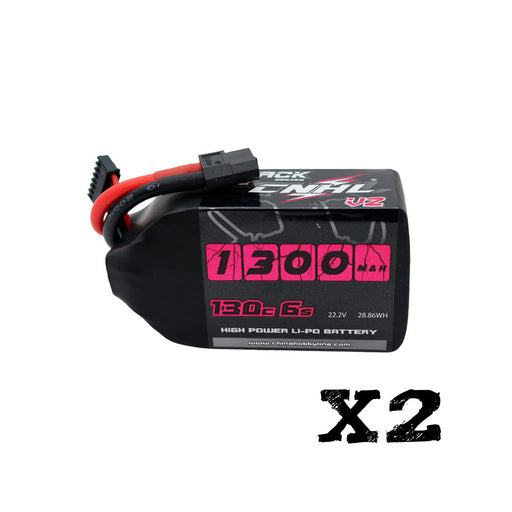
Pemeriksaan Kesesuaian Cepat 2 Packs CNHL Black Series V2.0 1300mAh 22.2V 6S 130C LiPo Battery dengan Colokan XT60 sangat cocok untuk pilot FPV yan...
Lihat detail lengkapSuku Cadang & Dukungan Jangka Panjang Kami memahami bahwa bagi pilot RC, dukungan suku cadang yang andal merupakan bagian penting untuk m...
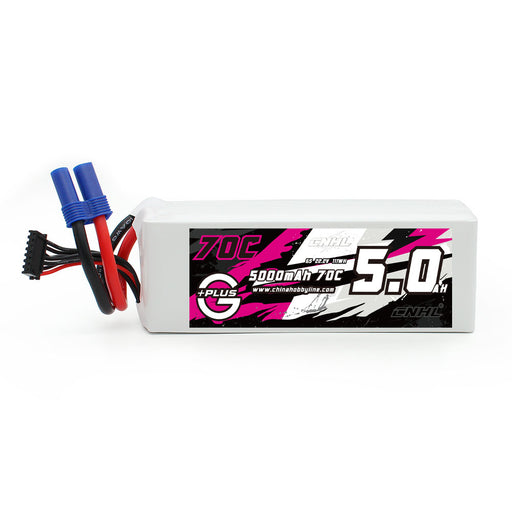
Lihat detail lengkapSpesifikasi: Nomor Stok: 500706EC5 Kapasitas: 5000mAh Voltase: 22.2V / 6-Sel / 6S1P Tingkat Discharge: 70C Kontinu / 140C Ledakan Tingkat Pengisi...
Lihat detail lengkap
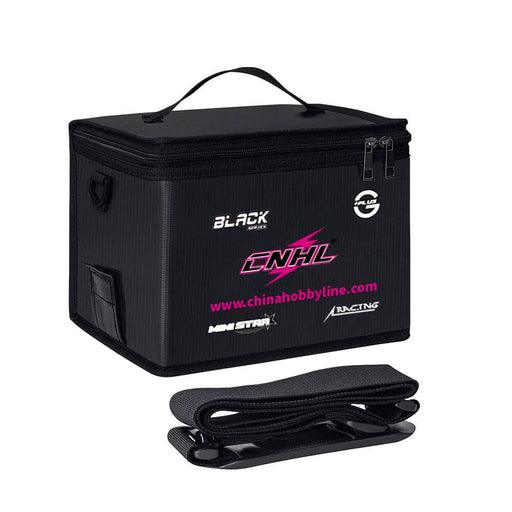
Tas Baterai LiPo CNHL dirancang untuk pengisian, transportasi, dan penyimpanan LiPo yang lebih aman di rumah atau di lapangan. Tas ini menambahkan ...
Lihat detail lengkapPemeriksaan Pemasangan Cepat 2 Paket CNHL Speedy Pizza Series Pro 1350mAh 6S 150C LiPo Battery dengan colokan XT60 dibuat untuk pilot FPV 5 inc...
Lihat detail lengkap

The CNHL Long Range Series BAK 65E 6350mAh 21700 Li-ion battery cell is built around one clear priority: maximum stored energy from a lightweight c...
Lihat detail lengkap

The CNHL Long Range Series BAK 50D 5000mAh 21700 Li-ion battery cell is designed for custom high-energy battery packs that need a strong balance be...
Lihat detail lengkap

The ISDT C4 EVO is a versatile smart battery charger built for AA, AAA and cylindrical rechargeable cells from compact 10440 batteries all the way ...
Lihat detail lengkap

The CNHL Long Range Series 6350mAh 21.6V 6S1P 21700 Li-ion battery combines six BAK 65E high-energy cells into a 137.16Wh pack designed for ultra-e...
Lihat detail lengkap

The CNHL Long Range Series 5000mAh 21.6V 6S1P 21700 Li-ion battery combines six BAK 50D cells into a compact 108Wh pack designed around long-range ...
Lihat detail lengkap




Tinggalkan komentar