

CNHL Lipo Batteries
CNHL aim at providing high-quality Li-Po batteries and RC products to all hobby enthusiasts with excellent customer services and competitive prices
Parallel charging allows several compatible LiPo batteries to be charged through one charger channel at the same time. When the packs are connected in parallel, their voltage remains the same while their capacities are added together. Four 3S 1500mAh batteries, for example, are presented to the charger as one 3S group with 6000mAh of combined capacity.
Quick answer: Only parallel charge packs that use the same battery chemistry and series cell count, are in suitable physical condition, and already have closely matched pack and individual-cell voltages before connection. Add their capacities together to calculate the total charging current, use a correctly rated parallel board, and run an appropriate Balance Charge program.
Parallel charging is an advanced charging method. The batteries become electrically connected as soon as they are plugged into the board, before the charger begins. A large voltage difference can therefore produce immediate equalization current between packs. Do not connect mismatched batteries and expect the parallel board to bring them safely into balance.

| Battery Chemistry | All packs in one parallel group must use the same chemistry and charging voltage profile. |
| Series Cell Count | All packs must have the same S count. Never combine 3S and 4S batteries on one parallel board. |
| Starting Voltage | Pack and individual-cell voltages must already be closely matched before connection. |
| Battery Condition | Do not include swollen, damaged, unusually hot or abnormally imbalanced batteries. |
| Combined Capacity | Add the capacities of all connected packs when calculating the total charge current. |
| Charger Program | Use the correct lithium chemistry and normally select Balance Charge for conventional multi-cell packs. |
| Hardware | The board, balance connections, main leads, fuses and connectors must be correctly wired and rated. |
| Supervision | Remain present and monitor the charger, packs, board, cables and connectors throughout charging. |
Parallel charging connects the positive terminals of several batteries together and connects their negative terminals together. Their corresponding balance connections are also joined through the parallel balance board.
From the charger’s perspective, the group behaves like one larger battery with:
Consider four identical 4S 1500mAh LiPo batteries:
Series cell count: 4S
Combined capacity: 1500mAh × 4 = 6000mAh
Approximate 1C group current: 6A
Standard LiPo full voltage: 16.8V
The group remains 4S. Parallel charging does not turn four 4S batteries into a 16S battery.
Important: The charger’s total current does not necessarily divide perfectly and equally between every battery at all times. Actual branch current is influenced by pack voltage, internal resistance, temperature, wiring resistance, connector condition and battery age. Closely matched batteries are therefore easier to manage.

Parallel Charging is an electrical connection method, not a battery chemistry program. After the compatible packs have been connected through the board, the charger normally runs an ordinary lithium program such as LiPo Balance Charge.
These settings still need to be confirmed:
The distinction matters because selecting a menu item cannot make an incompatible group safe. Pack inspection, voltage matching and current calculation must be completed before the charger starts.
For a wider explanation of Balance, Fast, Storage and Discharge programs, read LiPo Charger Modes Explained.
A safe parallel group begins with compatible batteries. The fact that several connectors fit the same board is not enough.
Do not combine standard LiPo, LiHV, LiFe or Li-ion packs in one group. These chemistries can use different final voltages and charging profiles.
Even when a LiHV battery is sometimes charged under a lower-voltage standard LiPo program, mixing different battery types on one parallel board creates unnecessary ambiguity. Keep one chemistry per charging group.
All packs must use the same S count:
Never connect a 3S and 4S battery in parallel. Their pack voltages and balance-pin arrangements are not compatible.
Measure every battery before connection. The packs should already be at closely matched total voltages, and their corresponding individual cells should also be close.
There is no single voltage-difference number that should be presented as universal for every parallel board and battery system. Follow the board or charger manufacturer’s specified limit. Where no clear limit is supplied, do not guess or use the board as a tool for equalizing packs with an obvious voltage difference.
The closer the voltages are before connection, the lower the equalization current is likely to be.
Similar total pack voltage can conceal an individual-cell problem. For example, two 4S packs might show similar total voltage even though one contains a high cell and a low cell.
Connect each pack to a cell checker or charger separately and review every cell before building the parallel group.

Exclude any pack that is:
A questionable pack should be assessed separately. Do not place it in a parallel group where its behavior becomes harder to isolate.
For beginners, the easiest group to manage contains batteries with the same:
These characteristics are not all absolute electrical requirements, but closely matched packs are more likely to behave similarly. Mixing a new low-resistance battery with a heavily used pack increases the chance of uneven branch current and abnormal behavior.
Batteries with different capacities can be connected in parallel in some properly controlled systems because the parallel group retains one common voltage while total capacity is added. However, this does not make mixed-capacity charging the best choice for every user.
Before combining different capacities, you must still confirm:
Branch current will not necessarily divide in proportion to the capacity labels. Internal resistance and pack condition also influence current distribution.
For beginners, using closely matched packs of the same capacity and model is the more conservative and easier-to-audit approach.
When two batteries at different voltages are joined in parallel, the higher-voltage pack immediately pushes current toward the lower-voltage pack. This happens independently of the charger.
A large voltage difference can cause:
Do not connect mismatched packs and leave them on the board to “settle.” The voltage should be checked and accepted before the main connectors or balance leads are joined.
The voltage lineup below demonstrates why batteries sharing the same 4S label may still need to be separated into different charging groups.

Do not use the visual grouping in an old example as a universal voltage threshold. Check each pack and follow the requirements specified for the parallel board being used.
Add the capacity of every connected battery, then calculate the intended C rate from the combined capacity.
Total capacity = Battery 1 + Battery 2 + Battery 3 + …
Approximate 1C current in amps = Total capacity in mAh ÷ 1000
The second setup requires approximately:
16.8V × 15A = approximately 252W of ideal battery-side output
The charger and input source need additional headroom for conversion losses and operating conditions. A charger that can be set to 15A may still reduce current if it cannot supply the required wattage.
For detailed C-rate and wattage calculations, read LiPo Charging Rates Explained and How Many Watts Does My LiPo Charger Need?
The charging current for the group must remain within the permitted charge rate of every connected battery. A battery that supports only 1C limits the practical group setting, even when the other packs permit more.
For a beginner parallel-charging setup, approximately 1C based on combined capacity is a conservative starting point when every pack permits that rate.
Do not increase the setting merely because the charger has unused current capacity. Before using a higher rate, confirm:
A higher charging rate increases total current through the parallel board’s main input connection. The board’s combined input cable can therefore become the limiting component even when each individual battery branch carries less current.
A parallel charging board should match:

A fused board can add branch protection when the correct fuse design and rating are used. However, a fuse is not permission to connect mismatched batteries. It is a secondary protective element, not a substitute for voltage checks and correct polarity.
An unfused board may have fewer components but offers less branch-level protection. Users must understand the board’s rating and accept the additional consequences of a wiring or battery mismatch.
Do not assume a board is fused merely because it has a protective enclosure. Confirm the product specifications or inspect the documented circuit design.
The balance connector must be inserted into the correct position and orientation. Do not force a plug or offset it by one pin. Reversed or misaligned balance connections can short cells through the board.
For help identifying the battery’s main connector, visit the RC Battery Connector Guide.
Connection procedures can vary between boards. Follow the parallel-board and charger manufacturer’s instructions where they specify an exact sequence.
Connect the charger to an approved AC or DC source. Select the intended channel and confirm that the charger supports the combined cell count, current and wattage requirement.
Connect the board’s main input lead to the charger output and connect its balance lead or balance-board cable to the correct charger balance port.

Before connecting any pack to the board, verify:
Arrange the accepted batteries in one group. Keep rejected or questionable packs physically separate to reduce the chance of connecting them by mistake.
Many systems specify connecting the battery’s main power lead before its balance lead. Other equipment may provide a different documented sequence. Use the procedure specified for the actual board rather than assuming that one order applies universally.
Connect one battery at a time. Pause after each connection and watch for:
Stop if any abnormal behavior occurs.
Match the plug with the correct cell-count position. Confirm the keyed side, wire orientation and pin alignment before applying pressure.

Do not pull or push on the small balance wires. Grip the insulated connector housing.
After all compatible batteries are connected, confirm the charging task:
Parallel charging pre-start checklist
Automatic detection is useful but should not replace manual verification. Compare the display with the labels on every connected battery before pressing Start.
Remain present throughout the charge. Check the complete system rather than watching only the charger screen.
Monitor:
Stop the process if:
A hot main connector can indicate excessive total current, undersized wiring, loose contacts or a poor solder joint. Read Why RC Battery Connectors Get Hot for further diagnosis.
Wait until the charger has stopped and confirmed that the charging task is complete. Review the final individual cell voltages before removing the batteries.
Follow the disconnection sequence specified by the board manufacturer. Where the documented process uses the reverse of the connection sequence, disconnect the balance leads and main leads in that prescribed order.
General precautions include:
After disconnection, the batteries are no longer electrically tied together and can once again be checked separately.
A dual-channel charger contains two independently controlled charging outputs. A parallel board combines several batteries into one charging task.
| Comparison | Parallel Board | Independent Channels |
|---|---|---|
| S count | Must be the same for every pack | Can differ between channels where supported |
| Starting voltage | Must be closely matched | Each channel manages its own pack |
| Charge current | Based on combined capacity | Set separately for each channel |
| Battery monitoring | Packs appear as one combined group | Each battery remains an independent task |
| Setup complexity | Higher matching and calculation requirements | Usually easier to configure |
| Best suited to | Several closely matched packs | Mixed batteries or users prioritizing independent control |
The ToolkitRC M6D dual-channel charger provides two independent DC-powered channels. For users managing more batteries separately, the ToolkitRC Q6AC quad-channel charger offers four charging tasks without combining all packs on one board.
Read Dual-Channel Charger vs Parallel Charging Board for the full comparison.
Parallel charging may not be the right choice when:
Independent channels are generally more forgiving because each battery remains separately configured and monitored.
New users should first become comfortable with charging one LiPo battery safely.
Browse the CNHL LiPo battery charger collection for balance chargers, dual-channel models and multi-channel charging systems.
For ToolkitRC chargers and compatible power equipment, visit the ToolkitRC collection.
When selecting a charger for parallel charging, check:
It can be performed successfully when the batteries, board, charger and settings are compatible. It carries additional connection and matching risks compared with charging one pack on one independent channel.
Yes. Every battery in one parallel charging group must use the same series cell count. Never mix 3S and 4S batteries.
Their total and individual-cell voltages should already be closely matched before connection. Follow the voltage-difference limit specified by the parallel board or charger manufacturer.
Current flows immediately from the higher-voltage battery toward the lower-voltage battery. A large difference can cause sparks, heat, blown fuses or damage before the charger starts.
Do not connect packs with a significant voltage difference and leave them to equalize through the board. Verify that their voltages are already sufficiently close before connection.
It is possible in some properly controlled setups because capacities add in parallel, but all compatibility and condition requirements still apply. Closely matched packs of the same capacity are easier and more conservative for beginners.
Brand alone is not the primary electrical requirement. Chemistry, S count, voltage, charge rating, health and connection compatibility matter more. However, matching the same model and age makes battery behavior easier to compare.
Add the capacity of every connected battery, convert the total from mAh to Ah, and multiply by the selected C rate. Four 1500mAh batteries have 6000mAh combined capacity, so approximately 1C equals 6A.
Not necessarily. Pack voltage, internal resistance, temperature, wiring and connector resistance influence current distribution between branches.
Balance Charge is normally used for conventional multi-cell LiPo groups because the parallel balance board connects corresponding cell groups to the charger. Confirm the requirements of the actual charger and board.
No. Keep different chemistries and voltage profiles in separate charging tasks.
A correctly designed fused board adds branch protection, but it does not eliminate the need to match voltage, cell count, chemistry and polarity before connection.
Yes, when the charger and each channel support the intended setup. Each channel remains electrically independent, so one channel could operate a compatible parallel group while the other handles a separate battery task within the charger’s total power limits.
Independent channels are generally easier to configure because the batteries do not need to be electrically joined. Each pack can use its own current, S count and monitoring data.
Parallel charging saves time by treating several compatible batteries as one larger-capacity charging group. Its efficiency depends on completing the difficult work before Start is pressed: inspecting each pack, matching chemistry and S count, confirming close voltage, calculating combined current and checking the complete power path.
For the wider charging system—including charger selection, safe single-pack charging, charging rates and charger modes—visit the CNHL LiPo Battery Charging Guide.
CNHL aim at providing high-quality Li-Po batteries and RC products to all hobby enthusiasts with excellent customer services and competitive prices
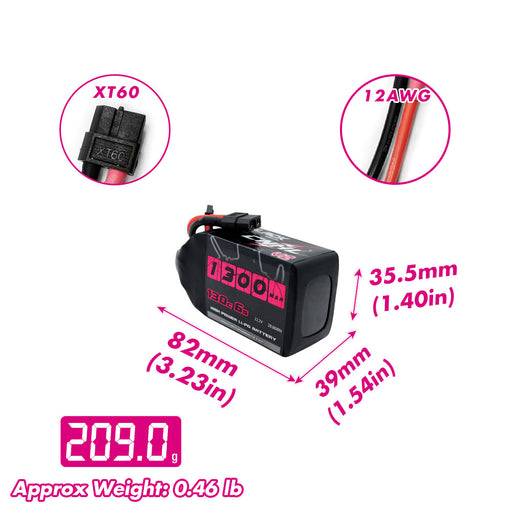
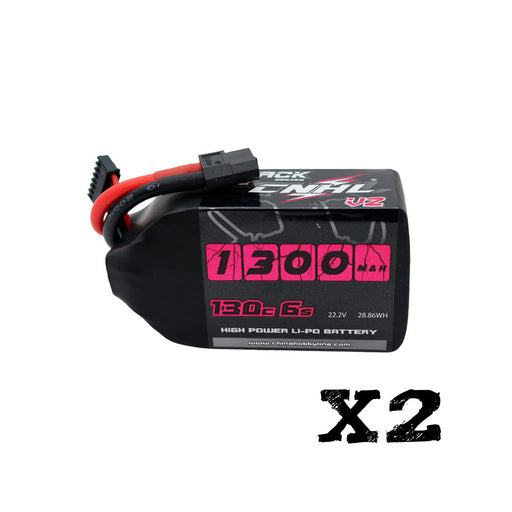
Quick Fit Check The 2 Packs CNHL Black Series V2.0 1300mAh 22.2V 6S 130C LiPo Battery with XT60 Plug is a strong fit for FPV pilots who want a prov...
View full detailsHstar D43-01Q 911 Style is a mini 1/43 alloy drift RC car designed for indoor tabletop fun and realistic drifting. It features full proportional ...
View full details

Spare Parts & Long-Term Support We know that for RC pilots, reliable spare parts support is an important part of keeping an aircraft fl...
View full details
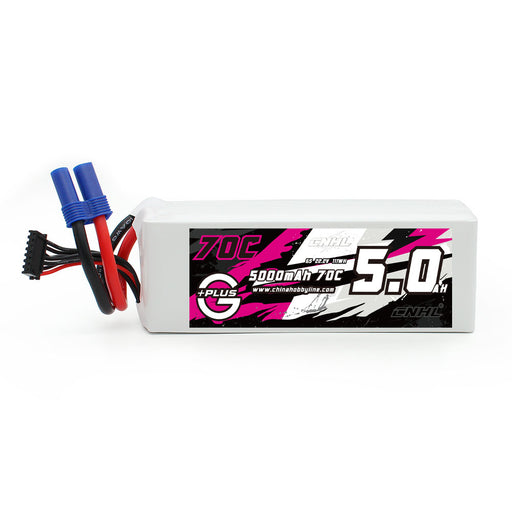
Specifications: Stock Number: 500706EC5 Capacity: 5000mAh Voltage: 22.2V / 6-Cell / 6S1P Discharge Rate: 70C Continual / 140C Burst Charge Rate: ...
View full details
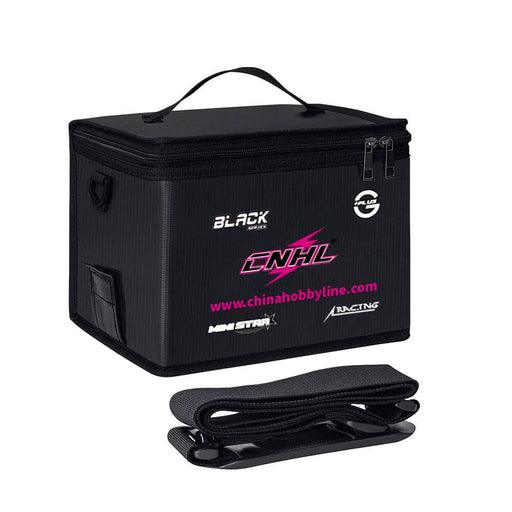
The CNHL LiPo Battery Bag is designed for safer LiPo charging, transport, and storage at home or at the field. It adds a practical layer of protect...
View full details

The Hobbywing EZRUN MAX4 HV is a high-voltage, high-current brushless ESC built for 1/5-scale off-road vehicles and heavy-load RC trucks. With sup...
View full details

The Hobbywing QUICRUN Fusion Pro 2300KV combines a brushless crawler motor and electronic speed controller inside one compact 540-spec power unit. ...
View full details

Quick Fit Check The CNHL Racing Series 6000mAh 15.2V 4S2P 130C LiHV Shorty Hardcase LiPo Battery with 5mm Bullet Sockets is a true 4S shorty LiPo b...
View full details

The CNHL 2 Pairs 5mm Heatsink Bullet Plug Grips with Bullet Connectors are designed for RC racers who need a clean, secure and easy-to-handle conne...
View full details

The Hobbywing Multifunction LCD Program Box PRO G3 is an advanced ESC programming device for compatible Hobbywing brushless ESCs. Compared with a...
View full details

Comments
Leave a comment