
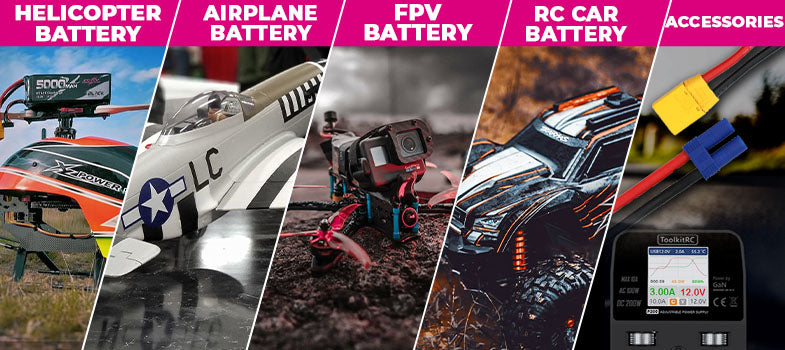
CNHL Lipo Batteries
CNHL aim at providing high-quality Li-Po batteries and RC products to all hobby enthusiasts with excellent customer services and competitive prices
Choosing the right LiPo battery charger is not simply a matter of buying the model with the highest amp rating. A charger must support your battery chemistry and cell count, provide enough output power for the capacity you use, offer the right number of independent channels, and connect safely to both the main battery lead and balance plug.
For most RC users, the best all-round choice is a programmable balance charger that supports every cell count in the current battery fleet, has enough wattage to charge the largest pack at approximately 1C, and leaves enough power and channel capacity for future batteries. AC/DC models are convenient at home, while DC chargers usually offer more performance when paired with a suitable external power supply.
Quick answer: Choose the charger by checking battery chemistry, supported S count, required watts, number of channels, AC or DC input, balance capability and connector compatibility. Do not select a charger from its maximum amp rating alone.

| Battery Chemistry | Confirm support for LiPo, LiHV, LiFe, Li-ion or any other chemistry you intend to charge. |
| Supported Cell Count | The charger must support both the minimum and maximum S count in your battery collection. |
| Output Power | Watts determine whether the charger can maintain your selected current as pack voltage rises. |
| Channels | Independent channels allow different packs to be charged with separate settings. |
| AC or DC Input | AC is convenient; DC often unlocks higher output but requires a suitable external power supply. |
| Balance Capability | Multi-cell LiPo packs should be charged through a charger that monitors and balances individual cells. |
| Connectors | Check the charger output, battery connector, balance plug and any required charge lead or adapter. |
The first requirement is compatibility with the battery itself. A standard LiPo charger mode normally terminates at 4.20V per cell, while a LiHV mode may charge a compatible high-voltage pack to a higher specified limit. LiFe, Li-ion and other chemistries also use different voltage profiles. Selecting the wrong battery program can overcharge the pack or prevent it from reaching the intended state of charge.
Next, check the supported cell-count range. A charger advertised as a 1–6S model can generally cover the common 2S, 3S, 4S and 6S packs used in RC cars, airplanes, boats and FPV drones. However, never assume that a charger supporting a high maximum cell count also supports every lower configuration. Some compact chargers have a narrower minimum range or require a separate port for 1S batteries.
The maximum S count should also leave room for the direction of your hobby. A charger that only supports 4S may be adequate today, but it can become a limitation when moving to a 6S EDF jet, helicopter, FPV setup or high-power RC vehicle.
For a practical breakdown by battery voltage, see how to choose the right charger for 2S, 3S, 4S and 6S LiPo batteries.
The maximum current printed on a charger does not tell the full story. Charging power is limited by both current and voltage:
Required charging power ≈ charging voltage × charging current
A 5000mAh battery charged at 1C requires approximately 5A. But the wattage changes with cell count:
| Example Pack | Approx. Full Voltage | 1C Current | Approx. Power |
|---|---|---|---|
| 2S 5000mAh | 8.4V | 5A | 42W |
| 3S 5000mAh | 12.6V | 5A | 63W |
| 4S 5000mAh | 16.8V | 5A | 84W |
| 6S 5000mAh | 25.2V | 5A | 126W |
These figures are idealized output requirements. Conversion losses, thermal limits, balancing and power-sharing between channels mean that some headroom is sensible. A charger with only 100W of usable output cannot maintain 5A through the full charge of a 6S 5000mAh pack, even if its menu allows a 5A setting.
This becomes even more important when charging two packs at once. Two 6S 5000mAh packs at approximately 1C require roughly twice the output power. Check whether the advertised wattage applies to each channel or represents the total shared by the charger.
For the full calculation method, read how many watts a LiPo charger needs. The relationship between 1C, 2C, amps, watts and actual charging time is explained in our LiPo charging rates guide.
A single-channel charger is sufficient when you normally charge one pack at a time. It is often smaller, less expensive and easier to carry. The trade-off is waiting for each pack to finish before starting the next one.
A dual-channel charger can charge two batteries independently. This is useful because each channel can normally use its own chemistry, cell count, current and mode. For example, one channel could storage-charge a 4S car battery while the other balance-charges a 6S airplane pack, provided both packs and the charger remain within their specifications.
A four-channel charger becomes valuable for pilots, racers and families managing several packs in one session. Independent channels reduce the need to group batteries by matching cell count, voltage and condition as required for parallel charging.
| Charger Type | Best For | Main Limitation |
|---|---|---|
| Single Channel | One-pack users and compact field kits | Sequential charging takes longer |
| Dual Channel | Most RC users with several packs | Power may be shared between channels |
| Four Channel | Race days, flight sessions and mixed battery fleets | Higher cost and greater total power demand |
| Parallel Board | Matched packs charged together on one channel | Requires stricter pack matching and current calculations |
Parallel charging can be efficient, but it is not the same as having multiple independent channels. Packs placed on a parallel board must meet specific compatibility and voltage conditions. Compare the two approaches in dual-channel chargers vs parallel charging boards.
An AC charger connects directly to household power. It is convenient for a home workbench because no separate power supply is required. The main limitation is that the built-in AC power supply may deliver less output than the charger electronics can provide from a suitable DC source.
A DC charger is generally smaller and can offer strong output for its size, but it requires a compatible DC supply. The power supply must provide the correct input voltage, enough current and sufficient wattage. A 500W charger connected to a 200W power supply does not become a 500W charging system; the input source remains the limiting factor.
An AC/DC charger combines both options. It can plug into the wall for convenient everyday use and connect to a higher-power DC source when more output is needed. This is often the most flexible solution for hobbyists who charge at home and at a race track, flying field or workshop.

Read the dedicated AC vs DC LiPo charger comparison before choosing an external-power setup.
A multi-cell LiPo pack has a main power connector and a balance lead. The main lead carries most of the charging current, while the balance connection allows the charger to monitor individual cell voltages and correct differences between them.
A useful balance charger should show individual cell readings clearly and stop the process when the pack or a cell reaches an unsafe condition. Balance current also matters. A charger with very low balance current may take longer to correct a pack with noticeable cell drift, especially near the end of charging.

Balance charging should be the normal choice for multi-cell LiPo packs. A regular Charge or Fast Charge mode may behave differently depending on the charger and may not provide the same final balancing result. See Balance Charging vs Fast Charging and our step-by-step guide to balance charging a LiPo battery.
A modern smart charger may include many programs, but several are especially useful for RC batteries:
The charger must also offer the correct chemistry mode. Do not use a LiHV program on a standard LiPo battery, and do not assume that one lithium program is interchangeable with another.
Our LiPo charger modes guide explains Balance Charge, Fast Charge, Storage, Discharge and Parallel Charging in more detail.
Most programmable chargers use a removable output lead or a built-in XT60-style output. Your battery may use XT60, XT90, EC3, EC5, IC3, IC5, Deans/T-Plug, TRX or another connector. A charger does not need to have every battery connector built into its case, but you need a correctly wired charge lead or suitable adapter rated for the intended current.
Also confirm the balance connection. Many multi-cell RC LiPo batteries use a JST-XH balance plug, but charger layouts and balance boards vary. Do not force a balance connector into the wrong port or reverse its orientation.
Adapters are reasonable for charging when they are correctly wired, properly rated and kept in good condition. Long adapter chains, loose contacts and undersized wires create additional resistance and more possible failure points.
For physical connector compatibility, adapter use and plug selection, visit our RC battery connector guide.
Micro FPV and small RC packs may need dedicated ports, special charge boards or a charger designed specifically for small batteries. A general 1–6S charger can be useful for the wider battery collection, but it may not replace a convenient multi-port 1S charger.
Read Is There an All-in-One Charger for 1S to 4S LiPo Batteries? for the practical limits of one-device charging setups.
A moderate-power balance charger is usually enough for a single 2S or 3S pack. Users with several batteries should consider a dual-channel model so packs can be handled independently without relying on a parallel board.
Capacity becomes as important as cell count. A 4S 6000mAh battery charged at 1C needs about 6A and roughly 100W near full voltage. Two packs charged together require substantially more total output.
A 6S FPV pack may have a relatively small capacity, so its wattage requirement can remain moderate despite the higher voltage. The charger still needs 6S support, suitable balance ports and appropriate charge leads.
Large 6S packs expose the limits of low-power chargers. A 6S 5000mAh battery requires about 126W at the top of a 1C charge, while a 6S 7000mAh pack approaches 176W before allowing for losses or additional channels. This is where output wattage and input power become more important than the charger’s headline amp figure.
| Charging Need | Suitable Type | CNHL Example |
|---|---|---|
| Compact two-pack field setup | Dual-channel DC charger | ToolkitRC M6D Dual Smart Charger |
| Home convenience plus high-power DC option | Dual-channel AC/DC charger | ToolkitRC M6DAC Pro |
| Four independent batteries | Quad-channel AC/DC charger | ToolkitRC Q6AC Quad-Channel Charger |
| Portable moderate-power DC system | DC charger plus compact AC-to-DC supply | ToolkitRC ADP200 200W Power Supply |
| High-power charging bench or multiple devices | High-output multi-port DC supply | ToolkitRC ADP750 750W Power Supply |
Important: A product’s maximum output depends on its input source, thermal conditions, active channels and operating mode. Confirm the charger manual and battery charge specification before selecting the current.
Inspect the battery, main connector and balance lead before connecting them. Charge on a suitable non-flammable surface, keep the area ventilated, confirm chemistry and cell count on the charger screen, and remain present while the pack is charging.
For the complete setup procedure, use our guide to charging a LiPo battery safely. If several compatible packs need to be charged together, review how to parallel charge LiPo batteries safely before connecting a parallel board.
Browse the full CNHL LiPo battery charger collection for AC/DC, dual-channel and multi-channel charging options.
For brand-specific chargers, accessories and external power supplies, explore the ToolkitRC charger and power supply collection.
At 1C, a 5000mAh battery requires approximately 5A. The required wattage then depends on cell count: about 42W for 2S, 63W for 3S, 84W for 4S and 126W for 6S near full voltage. Add headroom for conversion losses and any additional active channels.
Many chargers rated for 1–6S can charge those lower cell counts, but the maximum S rating alone is not enough. Confirm the specified minimum cell count, supported chemistry and required balance connection.
A dual-channel charger is usually more efficient for users with several batteries because it can manage two packs independently. A single-channel charger remains a sensible choice when compact size, lower cost or one-pack charging is the priority.
Choose AC for plug-in convenience, DC for compact high-output charging with a separate power supply, or AC/DC when you need both. Always compare the charger’s AC output with its DC output because they may be very different.
Only if the charger accepts the supply’s voltage and connector, but the system will remain limited by the available input power. A 200W supply cannot continuously provide 500W of charging output.
Balance Charge should normally be used for multi-cell LiPo packs because it allows the charger to monitor individual cell voltages. A single-cell pack does not require cell-to-cell balancing, although it still needs the correct charging mode and voltage limit.
Only when the charger supports the correct LiHV program and the battery is specifically designed for the selected final voltage. Never charge a standard LiPo battery using a higher-voltage LiHV setting.
Charging current normally tapers as the battery approaches its voltage limit. Cell balancing can extend the final stage further when individual cell voltages are uneven. Persistent or unusually long balancing may indicate cell drift, low balance current or an aging pack. See why a LiPo battery may take so long to balance charge.
The right LiPo charger is the one that fits the complete charging system rather than a single battery. Start with chemistry and cell count, calculate the wattage required by the largest pack, decide how many independent channels you need, and then choose AC, DC or AC/DC input. Finally, confirm balance capability, charge leads, external power requirements and room for future battery sizes.
A modest charger with the correct specifications is safer and more useful than a high-amp model that lacks adequate wattage, input power or connector compatibility. For a wider overview of charger setup, charging rates and charging modes, visit the CNHL LiPo Battery Charging Guide.
CNHL aim at providing high-quality Li-Po batteries and RC products to all hobby enthusiasts with excellent customer services and competitive prices
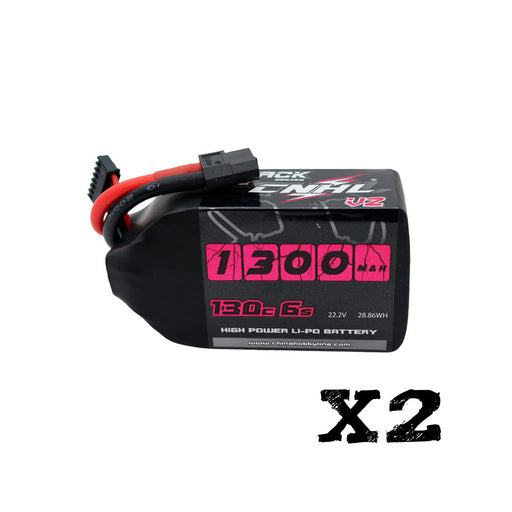
Quick Fit Check The 2 Packs CNHL Black Series V2.0 1300mAh 22.2V 6S 130C LiPo Battery with XT60 Plug is a strong fit for FPV pilots who want a prov...
View full details

Spare Parts & Long-Term Support We know that for RC pilots, reliable spare parts support is an important part of keeping an aircraft fl...
View full details
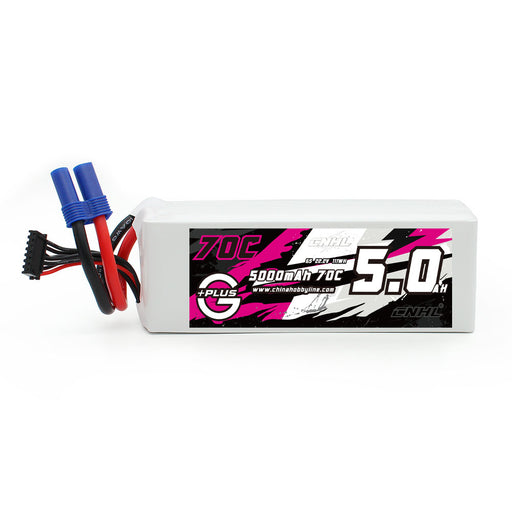
Specifications: Stock Number: 500706EC5 Capacity: 5000mAh Voltage: 22.2V / 6-Cell / 6S1P Discharge Rate: 70C Continual / 140C Burst Charge Rate: ...
View full details
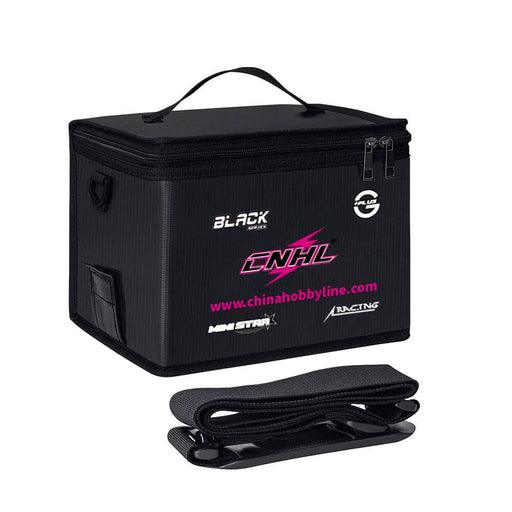
The CNHL LiPo Battery Bag is designed for safer LiPo charging, transport, and storage at home or at the field. It adds a practical layer of protect...
View full detailsQuick Fit Check The 2 Packs CNHL Speedy Pizza Series Pro 1350mAh 6S 150C LiPo Battery with XT60 Plug is built for 5-inch FPV pilots who want a ...
View full details

The WNF Mitsubishi Lancer Evolution IX is an officially licensed Mitsubishi Motors 1:64 RC drift car that combines detailed Evo IX styling with rea...
View full details

The ISDT K4 is a high-power 8S LiPo smart dual charger built for demanding RC battery setups. It combines two independently controlled charging cha...
View full details

The ISDT PC-4860S is a compact four-port XT60 parallel charging board designed for experienced RC and FPV users who want to connect multiple co...
View full details

Quick Take: This officially licensed WNF 1:43 Land Rover Defender 110 Pick-Up RC crawler combines the proportions and detailing of the 1993 ...
View full details

Quick Fit Check Continuous / Peak Current: 20A / 30A peak Battery: 3-4S LiPo BEC: No Motor Connectors: 3.5mm gold female ...
View full details


Leave a comment