What Is a Lithium Ion Battery?
A lithium ion battery is a rechargeable battery that stores and releases electrical energy through reversible movement of lithium ions inside the cell. Li-ion batteries are available in several physical formats, including cylindrical 18650 and 21700 cells that can be used individually or assembled into larger multi-cell battery packs.
For RC aircraft, FPV drones and UAVs, lithium ion batteries are especially interesting when energy density, total watt-hours and endurance are important. Many cylindrical Li-ion cells are optimized around a different balance of energy and power than high-C RC LiPo batteries, so the two battery types should not be treated as interchangeable simply because they share the same S count.
A suitable Li-ion setup depends on the actual cell model, battery configuration and propulsion load. Capacity alone does not tell you whether a pack can safely support an aircraft's required current.
Rechargeable Lithium Ion Cells and Battery Packs
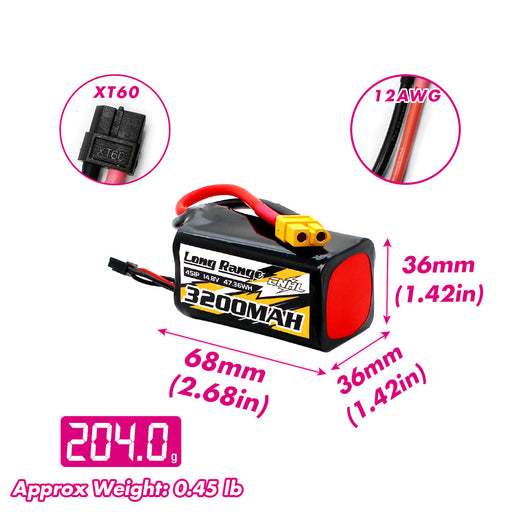
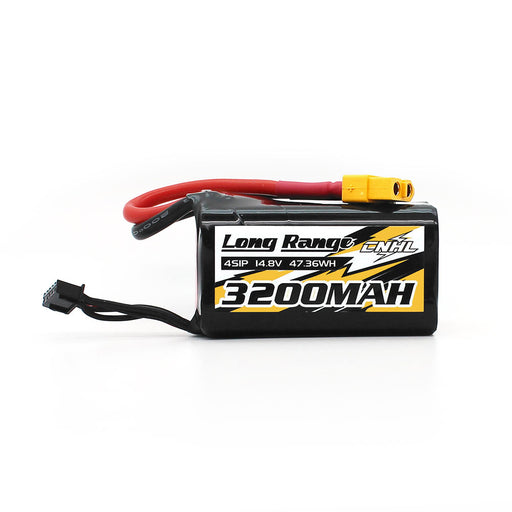
A rechargeable lithium ion battery may be sold as an individual cell or assembled into a complete battery pack. CNHL's Li-ion platform includes cylindrical lithium ion cells as well as finished packs that combine multiple cells in series and, where required, in parallel.
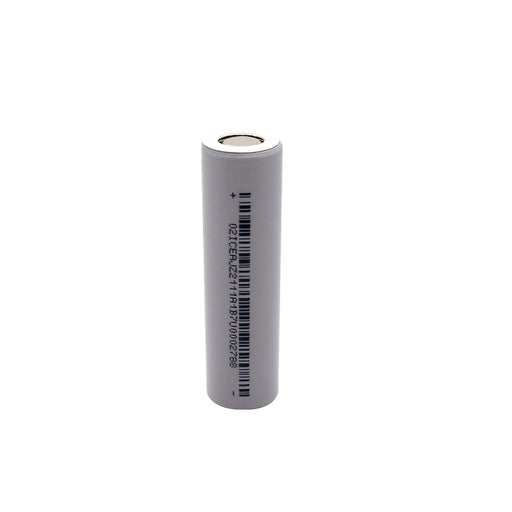
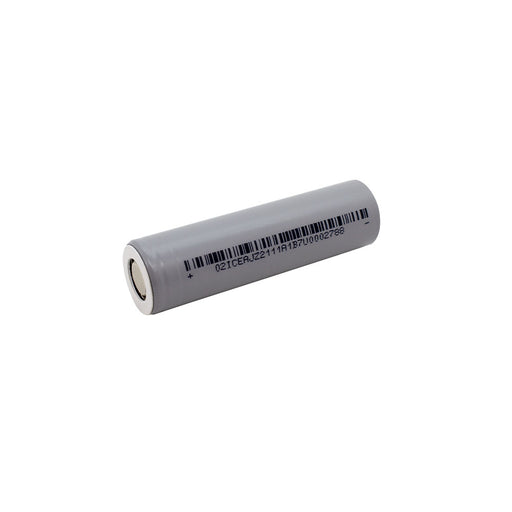
Individual 18650 and 21700 lithium ion cells are the building blocks of these packs. Connecting cell groups in series increases the pack voltage, while using multiple cells in parallel increases total capacity and allows the electrical load to be shared between more than one cell.
When comparing a lithium ion battery pack, look beyond mAh alone. Watt-hours indicate total stored energy more directly, while cell model, pack weight, S/P configuration, continuous current capability and thermal limits help determine how that energy can actually be used.
For builders and users who need individual cylindrical cells rather than an assembled pack, explore our 21700 Li-ion battery cells and compare cell capacity, weight and electrical characteristics before designing a battery system.
18650 vs 21700 Li-ion Batteries
18650 and 21700 are cylindrical lithium ion cell formats. Their names mainly describe the physical size class of the individual cell rather than a fixed capacity, discharge rating or performance level.
| Cell Format | Role in the CNHL Li-ion Range |
| 18650 | Compact cylindrical format already used in CNHL long-range FPV battery packs. |
| 21700 | Larger cylindrical format used in newer CNHL high-capacity and high-energy Li-ion cells and battery packs. |
A larger cylindrical format does not automatically mean a higher discharge capability. Different 21700 cells can be optimized for very different combinations of capacity, current output, internal resistance, temperature and cycle life. The specification of the actual cell matters more than the format name alone.
CNHL's existing cylindrical-cell products can be explored through our 18650 long-range Li-ion batteries, while the newer 21700 Li-ion battery range expands the platform into additional cell capacities, pack sizes and endurance-focused configurations.
CNHL Long Range Li-ion Battery Series
CNHL's Long Range Series brings together cylindrical-cell battery solutions developed around efficient energy use and extended operating time. Rather than chasing the very high marketing C-ratings common in performance LiPo batteries, the Li-ion range focuses more heavily on cell capacity, watt-hours, pack weight and usable current capability.
The series includes both established 18650 packs and newer 21700 cells and battery packs. Different cell models may prioritize different balances of power and energy, so a long-range battery should still be selected according to the actual electrical demands of the aircraft rather than the series name alone.
Browse the complete CNHL Long Range Series to compare Li-ion battery options across different cell formats, capacities and aircraft applications.
Why Choose Li-ion for Long-Range FPV?
Long-range FPV flying often rewards efficient cruise performance and total stored energy more than short bursts of maximum power. An appropriately matched Li-ion FPV battery can therefore be a strong choice when the motors, propellers and aircraft weight allow the system to operate within the pack's current and thermal limits.
This is especially relevant to efficient long-range multirotors, FPV wings and cinematic cruising platforms. Compact 1P batteries can help limit pack weight, while larger parallel configurations provide additional capacity when the airframe can efficiently carry the extra mass.
XT60 is particularly common across the long-range FPV ecosystem, although connector type alone does not determine whether a battery is suitable for a drone. The cell's actual discharge capability and the current demand of the complete propulsion system remain the more important limits.
For endurance-oriented multirotors and FPV wings across cylindrical cell formats, explore our Li-ion long-range FPV batteries.
Pilots specifically interested in the newer cylindrical platform can compare our 21700 long-range FPV batteries for different S counts, capacities and pack configurations.
Li-ion Batteries for RC Airplanes and Fixed-Wing Aircraft
Fixed-wing aircraft can also benefit from Li-ion power when the propulsion system is designed around efficient cruise rather than repeated maximum-current operation. FPV wings, gliders, sailplanes, endurance-focused scale aircraft and fixed-wing UAVs are all relevant applications.
A Li-ion battery should not be treated as a direct replacement for a LiPo simply because both batteries use the same S count and connector. Check the battery dimensions, installed weight, center of gravity, full-throttle current, normal cruise current, ESC voltage range, connector, wire clearance and cooling before changing battery type.
XT60 is widely used on efficient smaller fixed-wing aircraft and FPV platforms, while XT90 is common in larger RC airplane power systems. That makes connector choice useful when matching an existing installation, but an XT90 connector does not increase the electrical capability of the cells inside the battery.
Explore our Li-ion batteries for RC airplanes for endurance-focused fixed-wing battery options across different capacities and connector ecosystems.
Li-ion Batteries for UAVs and Endurance Platforms
Mapping, inspection, surveying and other long-duration UAV missions can place a strong emphasis on total stored energy and efficient operation. Larger Li-ion battery packs can therefore be considered for both multirotor and fixed-wing aircraft where mission endurance matters more than short-duration peak output.
For larger UAVs, capacity should never be evaluated by itself. Hover or cruise current, takeoff demand, payload, battery weight, total watt-hours, pack voltage, connector capability, thermal conditions and mission duration all affect whether a particular pack is appropriate.
Compare endurance-oriented options in our Li-ion UAV batteries collection, including higher-capacity battery configurations intended for aircraft that can efficiently carry the additional stored energy.
Understanding 1P, 2P and 3P Li-ion Battery Packs
A multi-cell Li-ion battery can use both series and parallel connections. Series count identifies how many cell groups are connected in series, while parallel count describes how many cells share each series position.
| Configuration | Main Effect | Typical Direction |
| 1P | Lower cell count and pack weight for a given S count | Weight-sensitive long-range FPV and efficient aircraft |
| 2P | Higher capacity and total energy with two cells sharing each series position | Extended-range FPV, fixed-wing and UAV systems |
| 3P | Still greater capacity and stored energy with three cells sharing each series position | Large endurance-focused UAV and fixed-wing systems |
Parallel cells can also increase pack-level current capability because the load can be shared across multiple cells. The safe capability of the finished battery still depends on the individual cell model, pack construction, wire gauge, connector and thermal conditions.
4S vs 6S 21700 Li-ion Battery Packs
The S count identifies how many cell groups are connected in series. This is often more useful than relying on one generic nominal-voltage label because different lithium ion cell models can use different nominal-voltage specifications.
4S 21700 Li-ion batteries are intended for power systems designed around a four-series-cell configuration, while 6S 21700 Li-ion batteries cover higher-voltage long-range FPV, fixed-wing and UAV applications. In either case, the ESC and complete power system must support the selected pack's actual voltage range.
Do not assume a 4S Li-ion pack is automatically interchangeable with every 4S LiPo battery or that a 6S Li-ion pack directly replaces every 6S LiPo. Cell capability, fully charged voltage, current demand, low-voltage behavior, battery weight and aircraft setup must all be considered.
Browse 4S 21700 Li-ion batteries or 6S 21700 Li-ion batteries according to the voltage platform used by your aircraft or drone.
XT60 vs XT90 on Li-ion Battery Packs
CNHL Li-ion battery packs may be offered with different main connectors so they can fit naturally into different RC and drone ecosystems. XT60 is particularly common across long-range FPV, FPV wings and many efficient aircraft, while XT90 is frequently used on larger fixed-wing aircraft and UAV power systems.
These are application tendencies rather than strict technical rules. Many fixed-wing aircraft also use XT60, and the appropriate connector depends on the actual aircraft wiring, current requirement and installation.
Most importantly, connector type should not be confused with cell performance. An XT90-equipped version of a battery does not automatically have more discharge capability than an XT60-equipped version built from the same cells and S/P configuration. Always compare the finished pack's electrical specification.
Li-ion vs LiPo: Which Battery Makes More Sense?
Li-ion and LiPo are both rechargeable lithium battery technologies, but they are commonly selected for different priorities in RC and drone applications.
| Priority | Li-ion | LiPo |
| Energy & Endurance | Strong direction for efficient, energy-focused systems | Depends on pack design, capacity and installed weight |
| Extreme Burst Power | Usually not the primary design goal | A common strength of high-C RC packs |
| Typical Applications | Long-range FPV, efficient fixed-wing and endurance UAVs | Freestyle, racing, EDF, helicopters and other high-load RC systems |
| Key Selection Metrics | Cell model, actual current capability, Wh, weight and S/P configuration | Voltage, capacity, C-rating, dimensions and weight |
Neither chemistry is universally better. Li-ion is especially attractive when the aircraft can convert higher stored energy into useful endurance, while a high-discharge LiPo may remain the more appropriate choice when repeated high-current output is the main requirement.
How to Choose a CNHL Li-ion Battery
Before choosing a Li-ion battery, compare the complete power-system requirements rather than selecting by capacity alone:
- Cell chemistry and model: compare the actual capacity, current capability and thermal specifications.
- 18650 or 21700: choose according to the required capacity, weight, dimensions and electrical performance.
- S count: match the battery's operating voltage range to the ESC and complete power system.
- Capacity and watt-hours: compare stored energy rather than relying only on the mAh number.
- Continuous current requirement: confirm that the finished battery pack can support the actual propulsion load.
- 1P, 2P or 3P configuration: consider the balance between weight, capacity and pack-level current capability.
- Dimensions and weight: confirm physical fit, installed mass and final center of gravity.
- Connector: choose the appropriate connector for the system and always verify polarity and wire clearance.
- Cooling: allow sufficient airflow and avoid trapping excessive heat around a heavily loaded battery.
For fixed-wing aircraft, also check full-throttle current, cruise current, takeoff weight, center of gravity and landing characteristics after changing battery type. For UAVs, evaluate hover or cruise current, takeoff demand, payload and mission duration as part of the complete battery-selection process.
Li-ion Battery Charging and Safety
Li-ion batteries are rechargeable, but the correct maximum charge voltage and charge current depend on the individual cell model and finished battery pack. Use a charger and charging mode appropriate for the specific Li-ion battery and follow the electrical limits listed for that product.
Do not assume every rechargeable lithium battery uses identical charging settings. Li-ion, LiPo, LiHV and LiFe systems can use different voltage requirements even when their battery packs use similar S-count descriptions.
Inspect the battery, wiring and connectors before charging or use. Do not operate or charge a pack that is physically damaged, excessively hot, electrically abnormal or otherwise compromised. Never exceed the voltage, current or temperature limits specified for the finished battery.
FAQ: Li-ion Batteries
What is a lithium ion battery?
A lithium ion battery is a rechargeable battery that stores and releases energy through reversible movement of lithium ions inside the cell. Li-ion batteries are available in several physical formats, including cylindrical 18650 and 21700 cells that can be assembled into larger battery packs.
Are Li-ion batteries rechargeable?
Yes. Li-ion batteries are rechargeable, but they must be charged within the voltage and current limits specified for the individual cell or finished battery pack. Use a suitable charger and charging mode for the specific battery.
What is a lithium ion battery pack?
A lithium ion battery pack combines multiple Li-ion cells electrically and mechanically into one battery. Cells may be connected in series to increase voltage and in parallel to increase capacity and share current load. The finished pack also includes the required wiring, main connector and, where applicable, balance connections.
Are 21700 batteries lithium ion batteries?
21700 describes a cylindrical cell size format rather than one exact chemistry or performance level. Rechargeable 21700 cells used in long-range RC and UAV battery packs are commonly lithium-ion cells, but capacity, voltage, current capability and thermal limits depend on the specific cell model.
What is the difference between 18650 and 21700 batteries?
The primary difference is the physical cell format. A 21700 cell is larger than an 18650 cell and can provide more room for active battery material, but that does not guarantee better performance in every metric. Capacity, weight, discharge capability, internal resistance and thermal behavior must still be compared at the individual cell level.
Are Li-ion batteries good for long-range FPV?
They can be an excellent option when the aircraft is efficient and its current demand stays within the battery's limits. Long-range cruising is a strong application for cylindrical Li-ion packs because total stored energy and endurance are often more important than extreme burst output.
Can I replace a 4S or 6S LiPo with a Li-ion battery?
Do not assume direct interchangeability based on S count alone. Compare the actual operating voltage range, current capability, dimensions, weight, connector, ESC setup, low-voltage behavior and complete propulsion requirements before changing battery chemistry.
Should I choose XT60 or XT90 for a Li-ion battery?
Choose the connector that suits the aircraft wiring and current requirements. XT60 is common across long-range FPV and many efficient aircraft, while XT90 is commonly used on larger fixed-wing and UAV systems. These are usage patterns rather than strict rules, and connector type does not increase the current capability of the Li-ion cells themselves.
Does a higher-capacity Li-ion battery always give longer flight time?
No. Higher capacity increases total stored energy, but it also normally increases battery weight. Actual flight time depends on propulsion efficiency, aircraft weight, payload, throttle use, wind and the additional energy required to carry the larger battery.