What Is a 21700 Li-ion Battery?
A 21700 battery uses a cylindrical cell format approximately 21mm in diameter and 70mm in length. The format is larger than an 18650 cell and gives battery manufacturers more internal volume to pursue different combinations of capacity, energy density, current capability and thermal performance.
The term 21700 lithium ion battery does not describe one fixed electrical specification. Different 21700 cells can be designed around very different priorities. Some emphasize maximum stored energy, while others provide a more balanced relationship between energy density and usable discharge capability.
That distinction matters in long-range FPV, fixed-wing and UAV applications. A battery should therefore be selected by the characteristics of the actual cell and finished pack rather than by the 21700 format or mAh number alone.
21700 Battery Cells vs 21700 Battery Packs
CNHL's 21700 range includes both individual cylindrical cells and assembled battery packs. An individual 21700 battery cell gives battery builders access to the underlying cell platform, while a complete pack combines multiple cells into a defined series and parallel configuration for RC, FPV or UAV use.
Finished 21700 battery packs combine the cells with the required electrical interconnections, power wiring, main connector and balance connection. Pack-level performance therefore depends on more than the cell alone: parallel count, construction, wire gauge, connector and thermal conditions all affect how the finished battery can be used.
If you need the cylindrical cells themselves rather than an assembled pack, browse our 21700 Li-ion battery cells to compare the available cell platforms.
5000mAh 50D vs 6350mAh 65E 21700 Cells
The CNHL 21700 battery family is built around two cell platforms with intentionally different performance priorities. Choosing between them is therefore more meaningful than simply comparing 5000mAh with 6350mAh.
| Cell Platform | Marked Capacity | Performance Direction | Primary Priority |
| 50D | 5000mAh | Power + Energy Balance | Stored energy with greater usable power headroom |
| 65E | 6350mAh | Energy First | Higher capacity and maximum-endurance direction |
The 50D 5000mAh platform is the stronger direction when an aircraft needs a balance between stored energy and usable current capability. This makes it especially relevant to long-range FPV, fixed-wing and UAV systems where efficiency matters but some additional power margin is still useful.
The 65E 6350mAh platform places more emphasis on stored energy and endurance. It is most attractive in efficient aircraft that can convert the additional capacity into useful operating time without exceeding the cell and finished pack's intended electrical and thermal limits.
21700 Battery Capacities from 5000mAh to 19000mAh
CNHL 21700 pack capacity is determined by the capacity of the individual cell platform and the number of cells connected in parallel at each series position.
| Configuration | 50D Platform | 65E Platform | Typical Direction |
| 1P | 5000mAh | 6350mAh | Compact, weight-sensitive endurance builds |
| 2P | 10000mAh | 12700mAh | Extended-range FPV, fixed-wing and UAV systems |
| 3P | 15000mAh | 19000mAh | Large endurance-oriented fixed-wing and UAV platforms |
Increasing capacity also increases cell count, pack size and weight. The highest-capacity pack is therefore not automatically the longest-flying option for every aircraft. Useful endurance depends on how efficiently the airframe can carry and use the additional stored energy.
1P vs 2P vs 3P 21700 Battery Packs
1P 21700 battery packs use one cell at each series position. They contain the fewest cells for a given S count and generally offer the lowest pack weight, making them particularly attractive for long-range FPV and efficient fixed-wing aircraft where installed mass is critical.
2P 21700 battery packs use two cells in parallel at each series position. This increases total capacity and stored energy while allowing the electrical load to be shared between two cells. The resulting 10000mAh and 12700mAh packs move naturally toward extended-range FPV, larger fixed-wing aircraft and UAV applications.
3P 21700 battery packs use three cells in parallel at each series position. CNHL's 15000mAh and 19000mAh 6S configurations prioritize large amounts of stored energy and are intended primarily for airframes capable of efficiently carrying the additional battery size and weight.
Parallel count also affects pack-level current capability because the propulsion load can be shared between multiple cells. Final safe current capability must still be based on the specific cell, pack construction, wiring, connector and thermal conditions.
4S 21700 Li-ion Batteries
The CNHL 4S 21700 range includes 5000mAh and 6350mAh 1P packs together with 10000mAh and 12700mAh 2P configurations. This gives the 4S platform options ranging from compact endurance-oriented batteries to substantially larger packs for aircraft designed around longer operating time.
Compact 4S1P packs are particularly relevant to long-range FPV, FPV wings and efficient fixed-wing aircraft. The larger 4S2P packs shift toward long-endurance wings, larger aircraft, mapping platforms and UAV systems capable of carrying more battery mass.
A 4S designation only describes the series configuration. It does not mean a 4S Li-ion pack is automatically interchangeable with every 4S LiPo battery. Check the actual voltage range, current requirement, pack dimensions, weight, ESC setup and aircraft balance before use.
Compare the complete 4S 21700 Li-ion battery range by cell platform, capacity, connector and intended application.
6S 21700 Li-ion Batteries
The 6S family offers the widest capacity range in the CNHL 21700 platform. It starts with 5000mAh and 6350mAh 1P packs, moves through 10000mAh and 12700mAh 2P options, and extends to 15000mAh and 19000mAh 3P configurations.
Compact 6S1P batteries are especially relevant to efficient long-range FPV, FPV wings and fixed-wing aircraft. The 2P range adds substantially more stored energy for larger cinematic, mapping and UAV platforms, while the 3P range moves into large endurance-focused aircraft where total mission energy is the primary requirement.
As with 4S, S count alone does not guarantee suitability. The selected aircraft must support the actual battery voltage range, current capability, connector, dimensions and installed weight.
Browse our 6S 21700 Li-ion batteries to compare 1P, 2P and 3P options across different capacities and applications.
21700 Batteries for Long-Range FPV
Long-range FPV is one of the strongest application areas for 21700 Li-ion battery packs. Efficient cruising allows an aircraft to benefit from high stored energy without relying on the repeated extreme burst output associated with racing or aggressive freestyle setups.
The 5000mAh 4S and 6S XT60 configurations represent an especially natural long-range FPV direction because they combine a compact 1P architecture with the 50D cell platform's balance of energy and usable power capability. The 6350mAh 65E 1P direction places greater emphasis on endurance where the propulsion system can operate efficiently within its current limits.
Larger 2P packs can extend available energy for bigger FPV wings, cinematic platforms and larger multirotors, but battery weight becomes progressively more important as capacity increases.
Explore our 21700 long-range FPV batteries for endurance-oriented multirotors, FPV wings and cruising platforms.
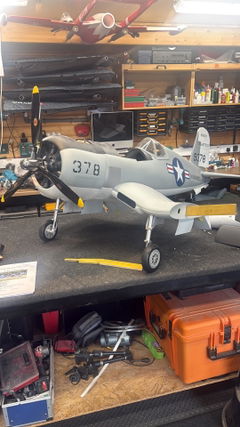
21700 Li-ion Batteries for RC Airplanes
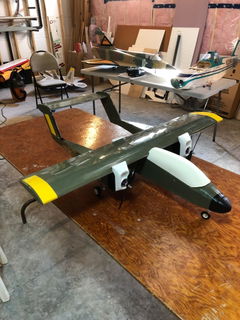
Efficient fixed-wing aircraft can turn the stored energy of a 21700 battery into useful flight endurance. FPV wings, gliders, sailplanes, utility aircraft and other endurance-focused fixed-wing platforms are therefore important applications for the CNHL 21700 range.
XT90-equipped configurations provide a natural option for larger RC airplanes and fixed-wing systems already standardized around XT90 wiring, while XT60 remains common across many efficient fixed-wing aircraft as well. Connector type should therefore be treated as part of the aircraft ecosystem rather than as a simple indicator of battery power.
When considering a Li-ion pack for an airplane, check the battery bay, pack dimensions, installed weight, center of gravity, normal cruise current, full-throttle current, ESC voltage range, wire routing and cooling. A similar capacity and connector do not make a Li-ion pack a universal substitute for a LiPo.
Browse our Li-ion batteries for RC airplanes for fixed-wing battery options selected around efficient and endurance-focused applications.
21700 Li-ion Batteries for UAVs
The larger CNHL 21700 configurations are particularly relevant to UAV platforms designed around endurance, surveying, mapping, inspection and efficient payload operation. In these applications, total watt-hours and usable mission energy often provide more useful information than mAh alone.
The 10000mAh and 12700mAh 2P packs provide a middle ground between capacity, current sharing and installed weight, while the 15000mAh and 19000mAh 6S3P packs move toward substantially larger aircraft where long mission duration can justify the additional battery mass.
For UAV use, compare hover or cruise current, takeoff demand, payload, battery weight, total watt-hours, pack voltage, connector capability, operating temperature and intended mission duration before choosing a battery.
Explore our Li-ion UAV batteries for endurance-oriented multirotor and fixed-wing power configurations.
XT60 vs XT90 21700 Battery Packs
CNHL 21700 Li-ion packs are offered with XT60 and XT90 connectors so customers can choose a battery that fits naturally into the wiring ecosystem of their aircraft or drone.
| Connector | Common Product Direction | Typical Application Ecosystem |
| XT60 | Compact and endurance-oriented power systems | Long-range FPV, FPV wings, efficient fixed-wing and selected UAVs |
| XT90 | Larger aircraft and systems already standardized around XT90 | RC airplanes, larger fixed-wing systems, UAVs, mapping and inspection platforms |
These are usage patterns rather than strict technical rules. Fixed-wing aircraft may use either connector, and the correct choice depends on the aircraft wiring, current requirements, installation and existing equipment.
An XT90 connector does not increase the discharge capability of the 21700 cells inside a battery. Two packs built from the same cells and S/P configuration retain the same fundamental cell-level performance limits even when they use different main connectors.
Why Watt-Hours and Wh/kg Matter for 21700 Batteries
Capacity in mAh is useful when comparing batteries at the same voltage, but watt-hours (Wh) provide a clearer picture of total stored energy when different S counts or cell platforms are involved.
For aircraft, stored energy should also be compared with pack weight. Wh/kg describes how much nominal energy a battery stores relative to its mass and can be especially useful when evaluating endurance-oriented packs where every additional gram must be carried throughout the flight.
The best endurance therefore does not necessarily come from the battery with the highest mAh. Capacity, watt-hours, actual pack weight, Wh/kg and the efficiency of the aircraft should be considered together.
How to Choose a 21700 Li-ion Battery
Before choosing a 21700 battery pack, check the complete power system rather than selecting by capacity alone:
- Cell platform: decide whether the application benefits more from the power-and-energy balance of the 50D or the endurance-focused direction of the 65E.
- 4S or 6S: match the battery's actual operating voltage range to the ESC and propulsion system.
- 1P, 2P or 3P: balance total capacity and pack-level capability against size and installed weight.
- Capacity and watt-hours: compare total stored energy rather than relying on mAh alone.
- Current capability: confirm the finished pack can support normal and peak propulsion loads.
- Battery dimensions: measure the usable battery compartment before purchase.
- Pack weight: evaluate aircraft CG, all-up weight and the additional energy required to carry the battery.
- Connector: choose XT60 or XT90 according to the existing power system and always verify polarity.
- Cooling: provide sufficient airflow for the expected electrical load and mission duration.
21700 Li-ion Battery Charging and Safety
Use a charger and charging mode appropriate for the specific Li-ion cell or finished battery pack. Maximum charge voltage and recommended charge current should follow the electrical specification of the actual product rather than a generic assumption based only on cell format or S count.
Do not assume that Li-ion, LiPo and LiHV batteries use identical charger settings simply because they share a 4S or 6S description. Always confirm the battery chemistry, maximum charging voltage and charger setup before charging.
Inspect the battery, wiring and connectors before charging or use. Do not operate or charge a pack that is damaged, electrically abnormal or excessively hot, and never exceed the finished battery's specified voltage, current or temperature limits.
FAQ: 21700 Li-ion Batteries
What is a 21700 battery?
A 21700 battery is based on a cylindrical cell format approximately 21mm in diameter and 70mm in length. The format is commonly used for rechargeable lithium-ion cells, but capacity, current capability and other electrical characteristics vary by cell model.
Are all 21700 batteries the same?
No. 21700 describes a physical cell format rather than one fixed electrical specification. Different cells can have significantly different capacity, discharge capability, internal resistance, thermal limits and cycle characteristics.
What capacities are available in CNHL 21700 battery packs?
The CNHL 21700 platform includes 5000mAh and 6350mAh 1P packs, 10000mAh and 12700mAh 2P packs, and 15000mAh and 19000mAh 3P packs in the 6S range. Available configurations vary by S count and connector.
What is the difference between 50D and 65E 21700 batteries?
The two cell platforms emphasize different performance priorities. The 5000mAh 50D direction balances stored energy with greater usable power capability, while the 6350mAh 65E direction places more emphasis on capacity and endurance. The final battery specification should always be checked against the current demand of the intended aircraft.
Are 21700 batteries good for long-range FPV?
They can be a strong option for efficient long-range FPV aircraft because modern 21700 cells can store substantial energy for their weight. The propulsion system and flight profile must still keep current and temperature within the limits of the finished battery pack.
Can a 21700 Li-ion battery be used in an RC airplane?
Yes, when the airplane's voltage, current demand, battery bay and weight requirements match the selected pack. Check dimensions, CG, cruise current, full-throttle current, ESC compatibility, connector and cooling before use.
Is XT90 better than XT60 for a 21700 battery?
Not automatically. XT60 is common across long-range FPV and many efficient aircraft, while XT90 is frequently used on larger fixed-wing and UAV systems. Choose the connector that matches the aircraft and electrical system; the connector itself does not increase the capability of the cells.
Does a 2P or 3P 21700 pack provide more current capability?
Parallel cells allow the electrical load to be shared, so pack-level current capability can increase as parallel count increases. Final safe capability still depends on the cell model, electrical interconnections, wiring, connector and thermal conditions.
Should I choose the highest-capacity 21700 battery?
Not necessarily. Higher capacity also increases battery size and weight. The best endurance usually comes from matching the pack's stored energy and weight to an aircraft that can efficiently carry it rather than simply choosing the largest available battery.