What Is a 6S 21700 Li-ion Battery?
A 6S 21700 Li-ion battery uses six series-connected cell groups built from cylindrical 21700 lithium ion cells. The 6S designation describes the series configuration of the battery rather than one universal nominal-voltage value, because the exact cell voltage specification depends on the 21700 cell platform used inside the pack.
CNHL's 6S 21700 family uses three parallel configurations. A 6S1P battery contains six cells, a 6S2P battery contains twelve cells, and a 6S3P battery contains eighteen cells. Increasing the parallel count increases total capacity and stored energy while also allowing current load to be shared across additional cells.
These configurations allow the same 6S platform to cover very different applications, from compact long-range FPV batteries to substantially larger fixed-wing and UAV power systems.
6S 21700 Battery Capacity Options
The CNHL 6S 21700 range combines two cell platforms with 1P, 2P and 3P architectures to create six capacity levels with different balances of energy, current sharing, size and installed weight.
| Capacity | Cell Platform | Configuration | Primary Direction |
| 5000mAh | 50D | 6S1P | Compact long-range power + energy balance |
| 6350mAh | 65E | 6S1P | Higher-energy 1P endurance |
| 10000mAh | 50D | 6S2P | Extended energy with greater current sharing |
| 12700mAh | 65E | 6S2P | High-energy extended endurance |
| 15000mAh | 50D | 6S3P | Large endurance systems with greater power headroom |
| 19000mAh | 65E | 6S3P | Maximum stored energy and endurance direction |
Capacity should always be evaluated together with watt-hours and installed battery weight. Adding more parallel cells increases stored energy, but the aircraft must also carry those additional cells throughout the entire flight or mission.
6S1P vs 6S2P vs 6S3P 21700 Batteries
6S1P 21700 batteries use six cells in total. They provide the lightest architecture in the CNHL 6S 21700 range and are particularly relevant when battery mass matters, including long-range FPV, FPV wings and efficient fixed-wing aircraft.
6S2P 21700 batteries use twelve cells, with two cells operating in parallel at each series position. The 10000mAh and 12700mAh configurations provide substantially more stored energy while allowing the propulsion load to be shared between two cells. They move naturally toward larger long-range platforms, cinematic aircraft, fixed-wing UAVs and mapping applications.
6S3P 21700 batteries contain eighteen cells. The resulting 15000mAh and 19000mAh packs are specialized high-energy configurations for substantially larger aircraft and UAV platforms where the airframe can efficiently carry the additional battery mass.
More parallel cells can also increase pack-level current capability through load sharing, but the finished battery must still remain within the limits of the individual cell platform, electrical interconnections, wiring, connector and thermal environment.
5000mAh 6S 21700 Battery – Long-Range FPV Core
The 5000mAh 6S 21700 battery uses six 50D cells in a compact 6S1P architecture. Within the CNHL 21700 family, this is the core long-range FPV direction because it combines relatively low cell count with the 50D platform's balance of stored energy and usable power capability.
The XT60 version is the primary long-range FPV configuration, particularly for efficient multirotors, FPV wings and cinematic platforms designed around a 6S power system. It is intended for cruising and endurance-oriented use rather than being positioned as a substitute for a high-C freestyle or racing LiPo.
The XT90 version uses the same six-cell 50D architecture but serves a different connection ecosystem. It is positioned more naturally toward efficient 6S fixed-wing RC airplanes and fixed-wing UAV systems already wired around XT90.
The XT90 connector does not increase the current capability of the 50D cells. The electrical limits of both versions remain determined primarily by the cell platform and finished pack construction.
6350mAh 6S 21700 Battery – Higher-Energy 1P Endurance
The 6350mAh 6S 21700 battery uses six 65E cells in a 6S1P configuration. It retains the relatively compact architecture of a single-parallel pack while moving further toward maximum stored energy and endurance.
With XT60, this configuration is positioned toward ultra-endurance FPV cruising, efficient FPV wings and other low-to-moderate-current long-range systems. Its higher marked capacity can provide an energy advantage where the propulsion system remains within the electrical and thermal limits of the 65E platform.
With XT90, the same energy-first architecture moves more naturally toward long-endurance fixed-wing aircraft, sailplanes and efficient UAV installations already using XT90.
Higher capacity should not be confused with higher power capability. The 6350mAh option is most attractive when efficiency and endurance matter more than greater current headroom.
10000mAh 6S 21700 Battery – Extended Range and Load Sharing
The 10000mAh 6S2P 21700 battery combines twelve 50D cells, doubling the parallel capacity of the 5000mAh 6S1P platform while allowing current to be shared between two cells at each series position.
With XT60, this pack moves toward larger long-range FPV platforms, cinematic multirotors and UAVs that can efficiently carry a twelve-cell battery. With XT90, it becomes a natural option for larger fixed-wing aircraft, fixed-wing UAVs, mapping platforms and payload-oriented systems.
The additional capacity can significantly increase stored energy, but useful endurance still depends on aircraft efficiency. Battery mass, all-up weight and normal operating current should therefore be evaluated alongside the 10000mAh capacity.
12700mAh 6S 21700 Battery – High-Energy 6S2P
The 12700mAh 6S2P 21700 battery uses twelve 6350mAh 65E cells and shifts the 6S2P architecture further toward energy storage and mission endurance.
The XT60 version can suit larger endurance-focused FPV and UAV platforms that already use XT60 and operate within the battery's current requirements. The XT90 version is positioned more heavily toward surveying, mapping, fixed-wing UAV and larger endurance aircraft.
This is an energy-first battery. It is most useful when the aircraft's cruise or mission profile allows the additional stored energy of the 65E platform to translate into useful operating time.
15000mAh 6S 21700 Battery – Large 6S3P Endurance Platform
The 15000mAh 6S3P 21700 battery combines eighteen 50D cells and represents a major step up in both stored energy and total battery mass. Three parallel cells share the load at each series position, giving the finished pack a different current and energy envelope from the smaller 1P and 2P versions.
The XT60 configuration is aimed at large long-range platforms and UAV systems already standardized around XT60, while the XT90 configuration is a more natural direction for larger UAVs, fixed-wing endurance aircraft, inspection platforms and payload-oriented systems.
A 15000mAh 6S battery should not be selected simply because maximum capacity sounds desirable. The aircraft must have sufficient size, payload capability and propulsion efficiency to benefit from an eighteen-cell battery.
19000mAh 6S 21700 Battery – Maximum-Endurance 65E Platform
The 19000mAh 6S3P 21700 battery is the highest-capacity configuration in the CNHL 21700 range. It uses eighteen 6350mAh 65E cells, with CNHL using a commercial pack designation of 19000mAh for this 3P platform.
Its role is deliberately specialized: maximum stored energy for large, efficient endurance-oriented aircraft and UAV systems. The XT60 version serves platforms already built around XT60, while the XT90 version is the flagship direction for larger fixed-wing UAV, surveying, inspection and other long-duration aircraft ecosystems.
This pack should not be interpreted as a high-burst 6S LiPo replacement. Its advantage lies in energy storage, and that advantage is useful only when current demand and thermal conditions remain appropriate for the 65E-based 6S3P system.
For very large battery systems, total pack weight, center of gravity or aircraft balance, payload margin and mission energy should all be calculated before selecting capacity.
6S 21700 Batteries for Long-Range FPV
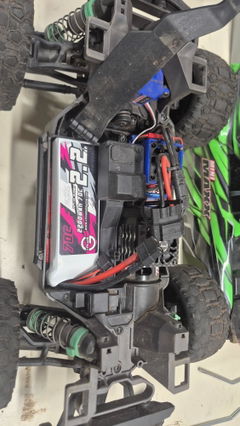
Long-range FPV is one of the clearest applications for the compact end of the 6S 21700 range. Efficient multirotors and FPV wings can take advantage of the energy stored in cylindrical Li-ion cells when the propulsion system remains within the pack's current and thermal limits.
The 5000mAh 6S XT60 is the core FPV-oriented battery in this family. Its 50D 6S1P structure keeps cell count relatively low while retaining more usable power headroom than the energy-first 65E direction. The 6350mAh 6S XT60 shifts the emphasis further toward maximum-energy cruising for efficient lower-current setups.
The 10000mAh and 12700mAh 6S2P packs become relevant as frame size and carrying capability increase. The 15000mAh and 19000mAh 3P configurations are considerably more specialized and should be treated as large-airframe battery systems rather than default FPV upgrades.
Compare endurance-oriented options in our 21700 long-range FPV batteries collection.
6S 21700 Li-ion Batteries for RC Airplanes
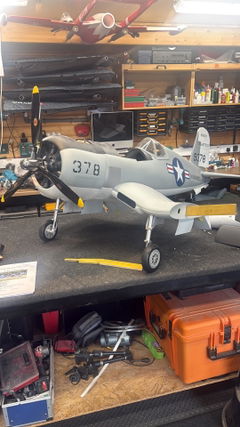
Efficient 6S fixed-wing aircraft are another important application for 21700 battery packs. FPV wings, gliders, sailplanes, utility aircraft and other endurance-focused fixed-wing systems can benefit where cruise efficiency allows the aircraft to convert additional stored energy into useful flight time.
The XT90 versions provide a natural path for fixed-wing aircraft already wired around XT90, beginning with the compact 5000mAh and 6350mAh 6S1P packs and extending into substantially larger 2P and 3P configurations. XT60 can also be entirely appropriate for fixed-wing systems, so connector choice should follow the aircraft rather than a rigid application rule.
Before changing from a conventional 6S LiPo to a cylindrical Li-ion pack, check battery-bay dimensions, installed weight, center of gravity, cruise current, full-throttle current, ESC operating range, connector, cooling and landing behavior. A shared 6S designation does not guarantee direct interchangeability.
Browse our Li-ion batteries for RC airplanes for fixed-wing options across the wider cylindrical Li-ion range.
6S 21700 Batteries for UAVs, Mapping and Inspection
UAV applications become progressively more important as the 6S 21700 pack moves from 1P into 2P and 3P. Mapping, inspection, surveying and long-duration fixed-wing missions can place a higher value on stored watt-hours and efficient cruise than on short-duration peak output.
The 10000mAh and 12700mAh 6S2P batteries provide a useful middle tier for larger aircraft, while the 15000mAh and 19000mAh 6S3P configurations move into large endurance platforms where mission energy and payload planning become central battery-selection factors.
For UAV use, compare cruise or hover current, takeoff demand, payload, installed battery weight, total watt-hours, connector, temperature, mission duration and reserve requirements. A larger battery only adds useful endurance when the aircraft can efficiently carry it.
Explore the wider Li-ion UAV battery range for endurance-focused multirotor and fixed-wing power configurations.
XT60 vs XT90 on 6S 21700 Batteries
CNHL offers separate XT60 and XT90 versions so customers can filter and choose a 6S 21700 battery according to the connector ecosystem already used by their aircraft.
| Connector | Primary Positioning | Also Relevant To |
| XT60 | Long-range FPV, FPV wings and endurance-oriented drone systems | Efficient fixed-wing aircraft and selected UAVs |
| XT90 | Fixed-wing RC aircraft and larger UAV ecosystems | Mapping, surveying, payload and inspection platforms |
These are positioning and ecosystem tendencies rather than technical rules. Fixed-wing aircraft commonly use both XT60 and XT90, and UAV connector selection varies considerably with system design.
An XT90 connector does not turn an otherwise identical 21700 battery into a higher-discharge pack. Cell platform, parallel count, pack construction and operating conditions remain the primary limits on usable current.
50D or 65E: Which 6S 21700 Battery Should You Choose?
| If Your Priority Is... | 50D Direction | 65E Direction |
| More Power Headroom | Stronger starting point | Not the primary design priority |
| Maximum Capacity | 5000 / 10000 / 15000mAh | 6350 / 12700 / 19000mAh |
| FPV Power + Energy Balance | Primary direction | Better suited to highly efficient endurance use |
| Maximum-Energy Endurance | Balanced alternative | Primary direction |
This table describes product positioning rather than replacing the finished battery specification. Actual current capability, voltage limits and thermal requirements must still be checked for the selected pack and aircraft.
Why Watt-Hours and Battery Weight Matter on 6S
When capacities range from 5000mAh to 19000mAh, mAh alone is not enough to compare endurance potential. Watt-hours (Wh) provide a clearer measure of nominal stored energy, while battery weight determines how much mass the aircraft must carry to access that energy.
Wh/kg can be particularly useful when comparing endurance-oriented battery systems because it relates stored energy to pack mass. A higher-capacity pack may store much more energy, but its benefit can diminish if the extra weight significantly increases the aircraft's power requirement.
The most useful 6S battery is therefore not automatically the one with the largest capacity. Pack energy, pack weight, aircraft efficiency, payload and mission profile should be considered together.
How to Choose a 6S 21700 Li-ion Battery
Before choosing a 6S 21700 pack, compare the complete aircraft and mission requirements:
- 50D or 65E: choose between greater power-and-energy balance or a stronger emphasis on maximum stored energy.
- 6S1P, 6S2P or 6S3P: balance capacity and load sharing against cell count, size and installed weight.
- Actual voltage range: confirm compatibility with the ESC and complete electrical system rather than relying only on the 6S label.
- Capacity and watt-hours: compare total nominal stored energy rather than mAh alone.
- Operating current: consider cruise, hover, climbing, takeoff and other higher-load conditions relevant to the aircraft.
- Dimensions: confirm physical fit and leave sufficient clearance for wires, connectors and airflow.
- Pack weight: calculate its effect on all-up weight, CG, payload and propulsion efficiency.
- XT60 or XT90: select the connector that matches the existing electrical installation and verify polarity.
- Thermal conditions: provide adequate cooling and remain within the finished battery's specified temperature limits.
To compare the full 21700 platform, including 4S packs and individual cells, browse the CNHL 21700 Li-ion battery range.
6S 21700 Li-ion Battery Charging and Safety
Use a charger and charging mode appropriate for the exact Li-ion battery. Maximum charging voltage and recommended charging current should follow the specification of the selected finished pack rather than a generic assumption based only on the 6S designation.
Do not assume a 6S Li-ion battery and a 6S LiPo or LiHV battery use identical voltage conventions or charger settings. Confirm battery chemistry and the correct maximum charge voltage before charging.
Inspect the battery, wiring and connectors before charging or operation. Do not use a pack that is damaged, excessively hot or electrically abnormal, and never exceed the voltage, current or temperature limits specified for the finished battery.
FAQ: 6S 21700 Li-ion Batteries
What capacities are available in CNHL 6S 21700 batteries?
The CNHL 6S 21700 range includes 5000mAh and 6350mAh 6S1P packs, 10000mAh and 12700mAh 6S2P packs, and 15000mAh and 19000mAh 6S3P packs. Each capacity is offered in separate XT60 and XT90 product configurations.
What is the difference between 6S1P, 6S2P and 6S3P?
A 6S1P battery uses six cells, 6S2P uses twelve cells, and 6S3P uses eighteen cells. Increasing parallel count raises total capacity and enables greater load sharing, but also increases battery dimensions and weight.
Which 6S 21700 battery is the main long-range FPV option?
The 5000mAh 50D 6S XT60 is the primary long-range FPV direction in the CNHL range. It combines a relatively compact 6S1P architecture with the more power-balanced 50D cell platform. The 6350mAh 65E XT60 moves further toward maximum-energy cruising for efficient systems with lower current demand.
Which 6S 21700 battery is better for fixed-wing aircraft?
There is no single best capacity for every airplane. XT90 versions are positioned more strongly toward fixed-wing systems already using XT90, while XT60 can also suit many efficient aircraft. Choose the capacity and cell platform according to battery-bay size, installed weight, CG, cruise current and full-throttle demand.
Which 6S 21700 batteries are intended for larger UAVs?
The 10000mAh and 12700mAh 6S2P packs form the main extended-endurance middle tier, while the 15000mAh and 19000mAh 6S3P configurations move toward substantially larger UAV and fixed-wing platforms. Final suitability depends on current demand, payload capability, battery weight and mission requirements.
Is the 19000mAh 6S battery always better than the 15000mAh version?
No. The 19000mAh 65E platform prioritizes greater stored energy, while the 15000mAh 50D platform follows a more power-and-energy-balanced direction. The correct choice depends on the electrical load, aircraft efficiency and mission profile.
Can a 6S 21700 Li-ion battery replace a 6S LiPo?
Do not assume direct interchangeability from the 6S designation alone. Compare actual voltage range, current capability, battery dimensions, weight, connector, ESC settings, low-voltage behavior and the complete propulsion requirements before changing battery chemistry.
Should I choose XT60 or XT90 on a 6S 21700 battery?
Choose the connector appropriate for the aircraft and its electrical installation. XT60 is particularly common in long-range FPV and many efficient aircraft systems, while XT90 is common in larger fixed-wing and UAV ecosystems. Connector choice does not increase the capability of the cells inside the battery.
Will a 6S2P or 6S3P battery automatically give longer flight time?
Not automatically. More parallel cells provide more stored energy but also add weight. Actual endurance depends on how efficiently the aircraft carries the battery, along with propulsion efficiency, payload, operating current, weather and flight profile.