

4S Shorty LiPo Battery Buying Guide
A 4S shorty LiPo battery is a compact four-cell battery intended to deliver 4S performance without requiring the length of a conventional full-size pack. It can be useful in RC cars with restricted battery compartments, lightweight performance builds, compact chassis layouts and vehicles that need more room for wiring, electronics or weight distribution.
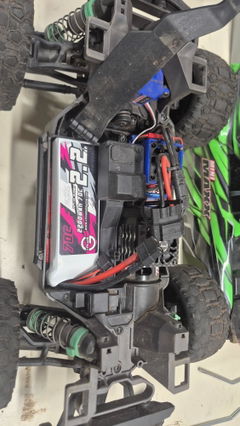
The correct battery is not determined by voltage and capacity alone. A suitable 4S shorty pack must also fit the available battery tray, remain within the vehicle’s practical weight range, use an appropriate case design and connect safely to the ESC. The table below provides a quick starting point.
| Quick Fit Check | Confirm the vehicle and ESC are rated for 4S operation. |
| Battery Dimensions | Measure usable tray length, width and height rather than relying only on the word “shorty.” |
| Battery Chemistry | Choose between standard 14.8V LiPo and 15.2V LiHV according to ESC and charger compatibility. |
| Case Type | Use a hardcase when chassis protection is important; use a softcase when lower weight and packaging flexibility are priorities. |
| Connector | Check the ESC connector, battery connector or bullet-port size before ordering. |
| Installed Weight | Confirm the battery will not create excessive rear weight, alter suspension balance or overload the chassis. |
What Is a 4S Shorty LiPo Battery?
A 4S battery contains four cells connected in series. A conventional 4S LiPo has a nominal voltage of 14.8V, while a 4S LiHV pack is normally rated at 15.2V. Both deliver substantially more voltage than a 2S or 3S pack, but a shorty design reduces the pack’s overall footprint compared with many full-length 4S batteries.
The term 4S LiPo shorty primarily describes the battery’s compact form rather than one universal set of dimensions. This distinction matters because 4S shorty packs can be produced as lightweight softcase batteries, reinforced hardcase packs, stacked cell configurations or higher-capacity parallel designs. Two products described as shorty can therefore have noticeably different lengths, heights and mounting requirements.
For that reason, the battery label should be treated as the beginning of the fitment process rather than the final answer. Always compare the listed battery dimensions with the usable space inside the vehicle.
Who Should Use a 4S LiPo Shorty Pack?
A compact 4S pack is most useful when a vehicle supports 4S power but has limited room for a conventional battery. It may also be selected when the driver wants more flexibility to position the battery and adjust front-to-rear weight distribution.
- Compact 4S RC cars: Useful when the battery tray cannot accept a long conventional 4S pack.
- Performance buggies and trucks: Suitable when the ESC and drivetrain are designed for 4S operation.
- Speed-run builds: A shorter pack may leave additional space for wiring, cooling fans, data loggers or chassis bracing.
- Custom conversions: Helpful when electronics have been repositioned and available battery space is irregular.
- Weight-sensitive builds: A lower-capacity shorty pack can reduce installed weight compared with a large full-length battery.
A short battery is not automatically the best option for every vehicle. If the chassis has enough room for a larger pack and requires maximum runtime, a conventional full-size 4S battery may still be the more practical choice.
14.8V LiPo vs 15.2V LiHV Shorty Batteries
This collection include both conventional 14.8V 4S LiPo batteries and 15.2V 4S LiHV shorty batteries. The physical format can be similar, but their maximum charging voltages are different.
| Battery Type | 4S LiPo | 4S LiHV |
| Nominal Voltage | 14.8V | 15.2V |
| Maximum Charge Voltage | 16.8V at 4.20V per cell | 17.4V at 4.35V per cell |
| Charger Requirement | Standard LiPo balance-charge mode | LiHV-compatible balance-charge mode for a full 4.35V-per-cell charge |
| Vehicle Check | Confirm normal 4S support | Confirm whether the ESC can accept a fully charged 17.4V pack |
Do not assume that every ESC described as “4S compatible” automatically supports a 4S LiHV battery charged to 17.4V. Some manufacturers define 4S compatibility around the 16.8V maximum of a conventional LiPo. When the vehicle manufacturer does not clearly approve the higher voltage, follow its specified maximum input voltage.
4S Shorty Battery Dimensions and Tray Fit
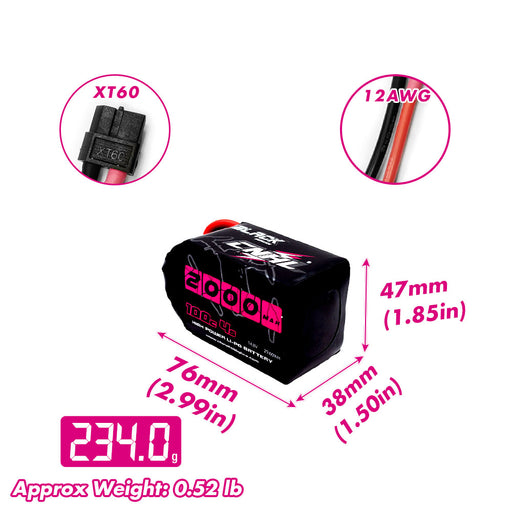
Physical fit is one of the most important parts of choosing a 4S shorty battery for an RC car. The word “shorty” suggests a reduced length, but it does not guarantee compatibility with a standard 2S shorty tray or a specific racing chassis.
Measure the actual usable battery compartment rather than only the exterior tray. Account for battery straps, foam blocks, side guards, centre driveshafts, body posts, ESC wiring and the position of the balance lead.
| Length | Confirm the battery clears tray walls, foam blocks and connector wiring. |
| Width | Check side clearance and allow space for hardcase edges or battery straps. |
| Height | Make sure the battery does not contact the body, upper deck or centre brace. |
| Wire Exit | Confirm that power and balance leads can exit without being sharply bent or pinched. |
| Retention | Check that straps or battery retainers can hold the shorter pack securely during impacts. |
A battery can be shorter than the tray and still work correctly when secured with suitable foam blocks and straps. However, it should not be able to slide, rotate or strike the chassis during acceleration, braking, jumps or crashes.
Hardcase vs Softcase 4S Shorty LiPo Batteries
The right case design depends on the vehicle, mounting system and expected driving conditions. Neither format is automatically better for every application.
4S Shorty Hardcase Batteries
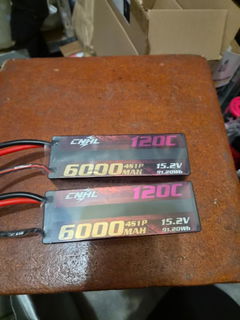
A hardcase battery adds a rigid outer shell around the cells. This is especially useful in RC cars where the pack may be exposed to stones, chassis debris, side impacts or movement inside an open battery tray. Hardcase designs can also use direct bullet ports, reducing the need for a permanently attached main power lead.
The trade-off is that a hardcase usually adds size and weight. High-capacity 4S2P shorty hardcase packs can also be taller than lightweight softcase alternatives, so height and vehicle balance must be checked carefully.
4S Shorty Softcase Batteries
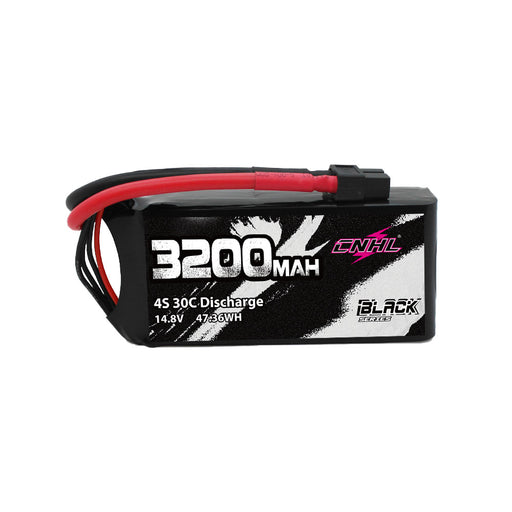
A softcase 4S shorty LiPo can provide a more compact and lightweight solution for vehicles or custom installations where the battery is well protected by the chassis. Attached power leads may also make installation easier in models that do not use direct bullet connections.
Softcase packs require secure support and should not be allowed to rub against sharp chassis edges, screws, gears or exposed drivetrain components.
Choosing the Correct Connector for a 4S Shorty Battery
Connector compatibility must be checked separately from voltage and dimensions. Depending on the battery design, a 4S shorty pack may use an XT60, XT90, EC5, IC5-compatible connection or direct bullet ports.
Drivers searching for a 4S LiPo shorty battery with XT90 should confirm that the product actually includes an XT90 connector rather than assuming that every high-current 4S pack uses one. If a hardcase battery has exposed bullet ports, the correct bullet diameter, polarity and cable assembly must be selected.
- XT60: Compact and widely used on lighter 4S packs and space-conscious installations.
- XT90: Common in higher-current systems that use a larger connector and heavier wiring.
- EC5 and IC5: EC5 and IC5 power connections are physically compatible, although an IC5 Smart data connection requires compatible Smart equipment.
- Direct bullet ports: Common on competition-style hardcase batteries and useful for custom-length power leads.
Adapters can be practical when changing between established connector systems, but the adapter, wiring and solder joints must all be suitable for the expected current. Keep connections secure and avoid allowing additional wiring to contact moving drivetrain parts.
Capacity, C-Rating and Weight
A larger capacity does not automatically make a 4S LiPo shorty pack the best choice. Capacity, discharge capability, dimensions and weight must be considered together.
Lower-Capacity Compact Packs
A smaller 4S shorty battery can reduce weight and occupy less space. This may improve chassis response, make installation easier and leave more room for electronics. Runtime will normally be shorter than with a larger-capacity pack, so this format is better suited to drivers who value compact packaging and lower mass.
High-Capacity Shorty Packs
A higher-capacity 4S LiPo shorty battery can provide longer runtime and may be better suited to heavy vehicles or sustained high-current use. However, increased capacity usually adds weight and may require a taller or wider cell arrangement. Confirm that the suspension, battery tray and vehicle balance remain appropriate.
Understanding C-Rating
The C-rating indicates the battery’s stated discharge capability relative to capacity. It should be considered alongside cell quality, internal resistance, connector type, wire gauge, cooling and the actual current demand of the vehicle. Selecting the largest printed C-rating without checking fit, weight and system requirements is not a complete battery-selection method.
How to Select the Best 4S Shorty LiPo for Your RC Car
Start with the vehicle rather than the battery specification. The following order helps prevent incompatible purchases:
- Confirm that the ESC and motor system support 4S operation.
- Check the manufacturer’s maximum input voltage.
- Measure the usable battery compartment.
- Choose a hardcase or softcase design appropriate for the chassis.
- Compare battery weight with the vehicle’s intended setup.
- Select a suitable capacity for the desired balance of runtime and handling.
- Confirm the main connector or direct bullet-port size.
- Check that the charger supports the selected LiPo or LiHV chemistry.
When two batteries both fit, the lighter pack will generally place less load on the chassis and may produce more responsive handling, while the larger pack may provide longer usable runtime. The better choice depends on the vehicle rather than capacity alone.
4S Shorty Batteries for Buggies, Trucks and Custom Builds
Although the strongest search demand comes from RC car users, a 4S shorty pack can also be used in other RC applications when voltage, dimensions, current capability, weight and connector requirements match.
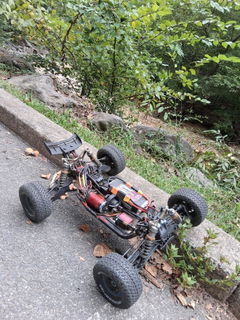
In buggies and performance cars, the shorter format can help centralize mass or create additional room for electronics. In trucks and heavier platforms, a higher-capacity shorty hardcase battery may provide a useful combination of runtime and physical protection. Custom builders may also use a compact pack where a conventional long battery conflicts with a brace, cooling system or modified electronics layout.
Battery compatibility must still be verified for each model. A recommendation based only on vehicle type is less reliable than a comparison based on actual tray dimensions, voltage limits and installed weight.
Charging a 4S Shorty LiPo or LiHV Battery
Use a balance charger that supports four-cell lithium batteries and the correct chemistry. Standard LiPo and LiHV batteries must not be treated as identical when selecting the final charge voltage.
- Use LiPo balance mode for a conventional 14.8V 4S LiPo battery.
- Use LiHV balance mode only for a battery specifically identified as LiHV.
- Confirm the charger’s cell-count detection before starting.
- Connect both the main power lead and balance lead as required by the charger.
- Use the battery manufacturer’s recommended charging current.
- Inspect the battery, wiring and connectors before and after use.
For more charging options, explore LiPo battery chargers. Drivers comparing other conventional four-cell formats can also browse the wider 14.8V 4S LiPo battery collection.
For a broader explanation of how vehicle performance changes between these voltages, read the 3S vs 4S LiPo battery guide.
Compare All CNHL Shorty LiPo Battery Options
Not sure whether 4S is the right voltage for your RC car? Visit the CNHL Shorty LiPo Battery Hub to compare compact 2S, 3S and 4S shorty packs by voltage, dimensions, case type, capacity, weight and connector.
Frequently Asked Questions About 4S Shorty LiPo Batteries
Is a 4S shorty LiPo the same size as a 2S shorty battery?
Not necessarily. Both may be described as shorty batteries, but a 4S pack contains twice as many series-connected cells as a 2S pack and may use a taller, wider or stacked construction. Always compare the listed dimensions rather than relying on the shorty label.
Can I use a 4S shorty battery in any RC car?
No. The vehicle’s ESC, motor, drivetrain and connector must support 4S operation, and the battery must physically fit the tray. Installing 4S in a vehicle designed only for 2S or 3S can damage the electronics or drivetrain.
Can a 15.2V 4S LiHV shorty battery be used with a normal 4S ESC?
Only when the ESC’s maximum input voltage permits it. A fully charged 4S LiHV battery reaches 17.4V, compared with 16.8V for a standard 4S LiPo. Check the ESC manufacturer’s specifications before charging the pack to the full LiHV voltage.
What is the maximum voltage of a 4S shorty battery?
A standard 4S LiPo reaches 16.8V when charged to 4.20V per cell. A 4S LiHV pack reaches 17.4V when charged to 4.35V per cell using the correct LiHV charging mode.
Is a hardcase 4S shorty battery better for RC cars?
A hardcase provides additional physical protection and is often preferred in exposed RC car battery trays. A softcase can be lighter and more compact. The better choice depends on the chassis, mounting method, available space and expected impact exposure.
How much capacity should a 4S LiPo shorty pack have?
Choose capacity according to tray space, vehicle weight and desired runtime. A lightweight lower-capacity pack may suit compact performance builds, while a larger-capacity battery may be better for longer sessions or heavier vehicles. Confirm fit and weight before choosing solely by mAh.
Can I use a connector adapter with a 4S shorty battery?
Yes, provided the adapter has the correct polarity, connector types, wire gauge and current capability. The additional connection should be secured so it cannot loosen or contact moving components.
Explore CNHL 4S Shorty LiPo Batteries
CNHL 4S shorty LiPo and LiHV batteries are designed for RC users who need four-cell power in a more compact package. Compare each product’s dimensions, capacity, weight, case construction, discharge rating and connector before selecting the best pack for your vehicle.
For the most reliable fit, measure the battery tray and verify the vehicle’s voltage limit before ordering. A properly selected 4S shorty battery should fit securely, connect without excessive cable strain and provide the required power without creating unnecessary chassis weight.
Battery Compatibility Notice
RC battery compatibility depends on voltage, fully charged voltage, dimensions, weight, connector, wire layout, case design and the vehicle manufacturer’s limits. Model names and general vehicle categories alone do not guarantee fit. Do not exceed the maximum voltage specified for the ESC, and do not charge a standard LiPo battery using a LiHV charge setting.