What Is a 6S LiPo Battery Charger?
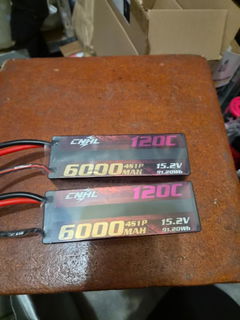
A 6S LiPo battery charger is a charger specifically rated to charge a six-cell lithium polymer battery. A standard 6S LiPo has six cells connected in series, giving it a nominal voltage of 22.2V and a maximum fully charged voltage of 25.2V.
The charger must support standard LiPo batteries through at least 6S. A charger rated for 1–8S standard LiPo also belongs in this category because 6S falls within its supported range. A charger does not need to have 6S as its maximum cell count to be a suitable 6S RC charger.
6S LiPo Voltage: 22.2V Nominal and 25.2V Fully Charged
| 6S LiPo Specification | Voltage |
|---|---|
| Cell count | 6 cells in series |
| Nominal voltage | 22.2V |
| Standard LiPo full-charge voltage | 25.2V |
| Maximum voltage per cell | 4.20V |
A standard 6S LiPo must be charged using the correct LiPo program. Never select a higher-voltage lithium program simply because the charger offers one.
How Much Power Does a 6S LiPo Charger Need?
Cell-count compatibility tells you whether a charger can charge a 6S battery. Wattage tells you how much charging current it can realistically maintain.
A useful approximation near full battery voltage is:
For example, charging a 6S battery at 5A requires roughly 126W at the battery near the top of the charge. Actual charger and input-power requirements are higher because no charging system is 100% efficient.
6S Charging Power by Battery Capacity at 1C
If a battery manufacturer permits a 1C charge rate, the charging current in amps is approximately equal to the battery capacity in amp-hours. The following table shows the approximate battery-side wattage required near 25.2V.
| 6S Capacity | Approx. 1C Current | Approx. Power Near Full Voltage |
|---|---|---|
| 3000mAh | 3A | 75.6W |
| 4000mAh | 4A | 100.8W |
| 5000mAh | 5A | 126W |
| 6000mAh | 6A | 151.2W |
| 8000mAh | 8A | 201.6W |
| 10000mAh | 10A | 252W |
These are theoretical battery-side figures based on 25.2V and the stated current. Allow additional headroom for charger conversion losses, input limitations and thermal conditions. Always use the battery manufacturer's permitted charge rate rather than assuming every battery can be charged at 1C or higher.
Is a 200W Charger Enough for a 6S LiPo?
For many 6S batteries, yes. A 200W charger has enough theoretical output to charge a 6S 5000mAh battery at approximately 1C, since that battery requires roughly 126W near full voltage at 5A.
A 6S 6000mAh pack at 6A requires roughly 151W, which can also fit within a genuine 200W output under suitable conditions. An 8000mAh pack at 8A approaches roughly 202W near full voltage, leaving essentially no headroom on a 200W charger.
The situation changes again when two 6S batteries are charged simultaneously. Two 5000mAh packs at 5A each require roughly 252W of battery-side power near full voltage, so channel count and total available wattage both become important.
Compare Current 6S RC Battery Chargers
The chargers in this collection all support standard 6S LiPo batteries, but their power systems, channel counts and maximum cell-count capabilities are very different.
| Charger | Input | Maximum Charging Capability | Channels | Standard LiPo Support |
|---|---|---|---|---|
| ISDT 608AC | AC / DC | AC 50W / DC 200W | 1 | 1–6S |
| ISDT D2 Mark II | AC | 200W total | 2 | 1–6S |
| ToolkitRC M6D | DC | 250W ×2 / up to 500W synchronous | 2 | 1–6S |
| ToolkitRC M6DAC V2 | AC / DC | Up to 400W ×2 on DC | 2 | 1–6S |
| ToolkitRC M6DAC Pro | AC / DC | Up to 400W ×2 on DC | 2 | 1–6S |
| ToolkitRC Q6AC | AC / DC | DC 250W ×4 / up to 1000W total | 4 | 1–6S |
| ISDT P20 | DC | 500W ×2 | 2 | 1–8S |
| ISDT K2 ZIP | AC / DC | AC 200W total / DC 500W ×2 | 2 | 1–8S |
| ISDT K4 | AC / DC | AC 400W total / DC 600W ×2 | 2 | 1–8S |
Maximum figures describe charger capability under suitable operating conditions. Actual charging output depends on input power, battery voltage, active channels, charger temperature and the battery manufacturer's permitted charge rate.
Should You Buy a 6S Charger or an 8S Charger?
If all of your current batteries are 6S or smaller and that is unlikely to change, a charger rated through 6S can be completely sufficient. There is no charging-quality advantage simply because another charger has an 8S maximum rating.
An 8S-capable model makes more sense when you expect to move into larger RC power systems later or when the higher-end charger also provides additional wattage, channels or other functions you actually need.
The important point is that 8S support includes 6S support when the charger specification lists standard LiPo from 1S through 8S. That is why 8S models such as the ISDT P20, K2 ZIP and K4 also appear in this 6S charger collection.
AC vs DC Charging for Large 6S Batteries
Both AC and DC chargers can charge 6S batteries when properly rated, but available wattage can differ significantly.
AC chargers are convenient because they can connect directly to compatible mains power. DC chargers require a suitable external power source but often offer higher charging output. Some AC/DC chargers provide both options and deliver substantially more power in DC mode.
For a 6S 3000mAh or 4000mAh pack, moderate wattage may be completely adequate. For 6000mAh, 8000mAh or larger packs—or for two 6S packs charging together—higher available power can make a much larger practical difference.
Single vs Dual vs Multi-Channel 6S Chargers
Channel count matters when more than one 6S battery needs to be prepared during the same charging session.
- Single-channel: practical if you normally charge one 6S pack at a time.
- Dual-channel: useful for two independent flight packs, RC car batteries or other battery tasks.
- Four-channel: useful for FPV, aircraft fleets or users managing several batteries during the same session.
Do not multiply the per-channel rating without checking total available power. Two channels capable of high current can still be limited by the charger's total AC power or by the external DC supply.
Do You Need Balance Charging for a 6S LiPo?
Balance charging is strongly recommended for multi-cell LiPo batteries. A 6S pack contains six individual cells, and the balance connection allows the charger to monitor their voltages separately rather than seeing only the total pack voltage.
The charger can then reduce cell-to-cell voltage differences as the battery approaches full charge. Always connect the balance lead according to the charger and battery instructions and confirm the detected cell count before starting the task.
6S LiPo vs 6S LiHV: Do Not Use the Wrong Charging Mode
A standard 6S LiPo and a 6S LiHV battery have different voltage specifications even though both contain six cells in series.
| Battery Type | Nominal Voltage | Maximum Per Cell | 6S Full Voltage |
|---|---|---|---|
| Standard LiPo | 22.2V | 4.20V | 25.2V |
| LiHV | Typically 22.8V | Up to 4.35V when specified by the battery | Up to 26.1V |
Only use LiHV mode when both the charger supports 6S LiHV and the connected battery is specifically designed for LiHV charging. A standard LiPo must never be charged to LiHV voltage.
Likewise, do not assume that a charger's maximum standard LiPo cell count applies to LiHV. Some high-end chargers support standard LiPo through 8S while limiting LiHV to a lower maximum cell count.
6S Chargers for RC Airplanes, EDF Jets, Helicopters, Cars, Boats and FPV
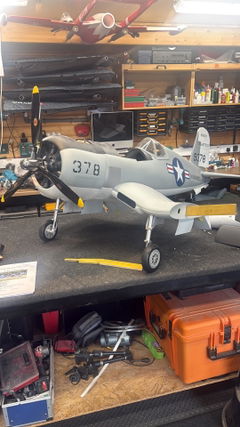
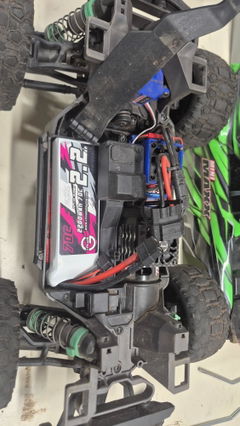
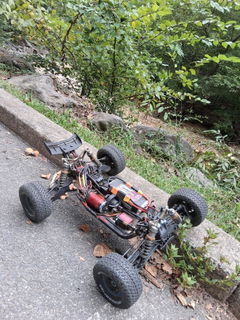
6S batteries are widely used across higher-performance RC platforms. Common applications include EDF aircraft, larger propeller airplanes, helicopters, FPV systems, performance RC cars and high-power boats.
The vehicle category does not determine the charger by itself. A 6S 2200mAh FPV battery and a 6S 8000mAh RC car or aircraft battery share the same cell count but have dramatically different charging-power requirements.
If you are also choosing batteries, browse our 22.2V 6S LiPo batteries for RC applications.
What to Check Before Buying a 6S LiPo Charger
- 6S LiPo support: confirm that standard LiPo operation explicitly includes six cells.
- Charging wattage: make sure enough power is available for your battery capacity and desired charging current.
- Maximum charging current: this works together with wattage and cannot be considered separately.
- AC or DC input: decide whether direct mains convenience, external DC power or both better fit your setup.
- Channel count: consider how many 6S packs you regularly need to charge during one session.
- Total power with multiple channels active: check whether charger power is shared.
- Balance connection: verify support for the battery's 6S balance lead.
- Battery chemistry: select the correct LiPo, LiHV, LiFe or Li-ion mode as applicable.
- Main connector: use an appropriate charging lead or correctly rated adapter where required.
- Battery charge-rate limit: charger capability never overrides the battery manufacturer's maximum permitted charging rate.
6S LiPo Charger FAQ
What voltage is a 6S LiPo battery?
A standard 6S LiPo is 22.2V nominal and reaches 25.2V when fully charged to 4.20V per cell.
Can a 6S charger charge smaller LiPo batteries?
Usually yes when the charger supports a range such as 1–6S. Supported 2S, 3S, 4S and 5S batteries can also be charged using the correct settings and connections.
Can an 8S LiPo charger charge a 6S battery?
Yes, when the charger specification states a standard LiPo range such as 1–8S. Six cells fall within that supported range, which is why suitable 8S chargers also appear in this 6S collection.
How many watts do I need to charge a 6S 5000mAh LiPo at 1C?
At 1C, a 5000mAh battery charges at approximately 5A. Near the standard 6S full-charge voltage of 25.2V, that represents roughly 126W of battery-side power. Choose a charging system with additional headroom for conversion losses and operating conditions.
Is a 100W charger enough for a 6S 5000mAh battery?
It can charge the battery if the charger supports 6S, but it cannot maintain a full 5A near the top of the charge because 5A at 25.2V requires approximately 126W before charger losses. The charger will need to reduce current as its wattage limit is reached.
Is a 200W charger enough for a 6S 5000mAh battery?
For a single 6S 5000mAh pack charged at around 5A, 200W provides considerably more useful headroom than a 100W charger. Actual charging performance still depends on the charger's input power and operating limits.
Can I charge two 6S LiPo batteries at the same time?
A dual or multi-channel charger can manage multiple supported packs simultaneously. Check total available power as well as the per-channel specification, particularly when charging high-capacity 6S batteries.
Should I balance charge a 6S LiPo?
Yes. Balance charging allows the charger to monitor all six individual cell voltages and helps keep the pack balanced as it charges.
Can I charge a 6S LiHV battery with a 6S LiPo charger?
Only use the higher LiHV charging voltage if the charger specifically supports 6S LiHV and the battery itself is designed for LiHV operation. Otherwise use standard LiPo voltage limits where appropriate for the battery.
Explore More LiPo Battery Chargers
A good 6S charger needs more than the correct cell-count rating. Battery capacity, charging wattage, input source, channel count and chemistry support all affect the final setup. Browse all LiPo battery chargers for RC to compare the complete charger range.