

CNHL Baterai Lipo
CNHL bertujuan menyediakan baterai Li-Po berkualitas tinggi dan produk RC kepada semua penggemar hobi dengan layanan pelanggan yang luar biasa dan harga yang kompetitif
A dual-channel charger and a parallel charging board can both reduce the time spent waiting for multiple LiPo batteries, but they work in fundamentally different ways. A dual-channel charger keeps each battery electrically independent. A parallel board combines several compatible packs so one charger channel sees them as one larger-capacity battery group.
Quick answer: Choose a dual-channel charger when you use batteries with different S counts, capacities, starting voltages or charging requirements, or when you want each pack monitored separately. Choose a parallel charging board only when you regularly charge several healthy, compatible packs with the same chemistry and S count and closely matched starting voltages.
A dual-channel charger is generally easier for beginners and mixed RC battery fleets. Parallel charging can be efficient for repeated batches of closely matched batteries, but it adds voltage-matching, combined-current and connection risks before the charger even starts.

| Comparison | Dual-Channel Charger | Parallel Charging Board |
|---|---|---|
| Electrical Structure | Two independent charging circuits | Several packs electrically combined on one channel |
| Battery Chemistry | Can differ between channels where supported | Must match across the complete group |
| Cell Count | Can differ between channels | Must be identical |
| Starting Voltage | Each channel manages its own battery | Packs must already be closely matched before connection |
| Charge Current | Set separately for each battery | Calculated from combined group capacity |
| Battery Monitoring | Each pack remains individually visible | The charger sees the combined cell groups |
| Setup Difficulty | Relatively straightforward | Requires additional inspection, matching and calculations |
| Best For | Mixed batteries and independent control | Several closely matched batteries used as a regular batch |
A dual-channel charger contains two separately controlled outputs. Each channel can normally operate as its own charging task within the charger’s supported chemistry, S-count, current and power limits.
For example, Channel 1 may charge a 2S 5000mAh RC car battery while Channel 2 charges a 4S 2200mAh airplane pack. Each channel can use a different:
The batteries are not electrically tied together. A voltage or condition problem on one channel does not cause immediate equalization current from the battery connected to the other channel.
A parallel charging board joins the positive terminals of several batteries together and joins their negative terminals together. It also connects corresponding balance-wire positions through a common balance interface.
The charger sees the group as:
For example, four 3S 1500mAh batteries connected in parallel become one 3S charging group with 6000mAh combined capacity.
4 × 1500mAh = 6000mAh combined capacity
Approximate 1C group current = 6A
The group remains 3S
Parallel charging is not an independent charger program. After the batteries have been matched and connected correctly, the charger normally runs LiPo Balance Charge for the combined group.
For the complete procedure, read How to Parallel Charge LiPo Batteries Safely.
With a dual-channel charger, every battery remains a separate electrical system. The charger can identify each pack’s total voltage, individual cells, added capacity and termination status independently.
With a parallel board, corresponding cells are electrically connected. The charger sees one combined set of cell groups rather than every physical battery as a separate task.

This difference affects:
Two independent channels may handle different batteries at the same time when each task falls within the charger’s specifications.
Possible combinations include:
Each battery still needs the correct main lead, balance connection and program.
Batteries in one parallel group must use:
Do not parallel charge a 3S and 4S battery, a standard LiPo and LiHV battery, or packs with a significant starting-voltage difference.
When batteries at different voltages are connected in parallel, current flows immediately from the higher-voltage battery toward the lower-voltage battery. This equalization begins before the charger is started.
A significant voltage difference can cause:
The board must not be used as a tool to bring mismatched packs into balance. Battery voltages need to be checked and accepted before connection.
With two independent channels, the charger manages the starting voltage of each battery separately. One battery can begin near storage voltage while the other starts at a lower state of charge, provided both remain suitable for charging.
Calculate each channel from the capacity of the battery connected to that channel.
Example:
The settings remain independent.
Add all connected capacities before calculating the group current.
Example: three 4S 5000mAh batteries:
The ideal battery-side output is:
16.8V × 15A = approximately 252W
The 15A setting is the current for the complete group. Actual current does not necessarily divide perfectly between physical batteries because branch resistance, battery condition and voltage influence current distribution.
Neither method automatically uses less energy. Charging the same number of batteries from similar starting states requires a similar total amount of battery-side energy.
The difference is how the power is delivered:
Independent channels:
Parallel board:
The energy requirement is similar, but the charger architecture is different. The dual-channel model needs enough total power across two outputs. The parallel setup needs one channel, board and main connection capable of carrying the full combined current.
For full power calculations, read How Many Watts Does My LiPo Charger Need?
A dual-channel charger does not always provide the headline power to both channels simultaneously. Product specifications may describe:
For example, a charger advertised as 400W total might provide:
Before purchasing, confirm:
In a parallel setup, the board’s main input connection carries the combined charging current. The board, main cable, connector and charger output must all support that current.
For example:
Even if each battery branch carries only part of the current, the board’s main charger connection carries the complete load.
Check:
A practical example is the ISDT PC-4860S parallel charging board. It provides four XT60 battery outputs, supports 1S–8S connections at the board level, and is rated for up to 40A input, 30A per output and 2A maximum balance current. Its 32-fuse design adds circuit protection, but these specifications are hardware limits rather than automatic charging targets. The charger, batteries, cables and connectors must still remain within their own safe operating limits.
A fused board can add branch protection, but it does not make mismatched batteries safe to connect.
Charging speed depends primarily on available power, selected charge rate, battery condition and balancing time—not simply whether the system uses two channels or a parallel board.
Parallel charging does not create extra charger watts. A weak 50W charger remains a 50W charger even when six batteries are connected to the board.
Each battery has its own:
If one battery becomes abnormal, it is easier to identify which physical pack caused the issue.
The charger sees the combined corresponding cell groups. A weak or high-resistance battery may be less obvious because the packs are electrically linked.
Individual battery inspection must therefore happen before and after charging. Do not rely on the group reading as the only assessment of every physical pack.
Yes, provided each channel supports its battery and the charger has enough total power.
Examples include:
| Channel 1 | Channel 2 | Possible? |
|---|---|---|
| 2S 5000mAh LiPo | 4S 2200mAh LiPo | Yes, with independent settings |
| 3S standard LiPo | 4S LiHV | Yes, when each channel supports the chemistry |
| 6S Balance Charge | 2S Storage mode | Yes, where modes are independently controlled |
| Large 6S pack | Large 6S pack | Yes, if total power is sufficient |
The same combinations could not be placed together on one parallel board unless every pack met the same chemistry, S-count and voltage requirements.
Yes. Each charger channel may operate its own compatible parallel group, provided:
For example:
This is an advanced setup. It combines the power calculations of dual-channel charging with the compatibility requirements of parallel charging.
A quad-channel charger extends the independent-channel approach to four battery tasks. This is useful when the battery collection contains different:
The main limitation is total power. Four independent outputs do not guarantee that every channel can simultaneously deliver its maximum headline rating.
A quad-channel charger may be more convenient than parallel charging when:
The ToolkitRC Q6AC quad-channel charger represents this independent multi-task approach.
If you regularly charge more than one battery at a time, compare our dual- and multi-channel LiPo chargers for RC by channel count, per-channel power, total output, AC/DC input and maximum supported cell count.
A parallel board can be an economical way to add several battery connections to one powerful channel. However, lower hardware cost does not reduce the need for battery inspection, matching and correct calculations.
A dual-channel charger costs more than a basic single-channel unit, but the independent monitoring and flexible battery compatibility may justify the difference for a mixed battery fleet.
A dual-channel charger is generally the easier choice because each battery is configured like a normal single-pack charge.
The user still needs to confirm:
Parallel charging adds further requirements:
New users should become comfortable with charging one LiPo battery safely before moving to a parallel board.
A dual-channel charger is usually better for RC car users who:
A parallel board may suit racers who maintain several closely matched 2S packs with similar usage history and prepare them as a regular batch.
A parallel board can be efficient for several closely matched 4S or 6S FPV packs of the same capacity and voltage state.
A dual- or quad-channel charger is more flexible when:
For 1S Tiny Whoop batteries, an independent multi-port 1S charger may be more convenient than either a conventional dual-channel charger or a parallel board.
See Is There an All-in-One Charger for 1S to 4S LiPo Batteries?
For large airplane, EDF, helicopter and RC boat packs, dual-channel charging is normally easier because each high-value battery remains separately monitored.
Two 6S 5000mAh packs at approximately 1C require about 252W of ideal battery-side output. A suitable dual-channel charger and input system can split this into approximately 126W per channel.
A parallel board can present the same two batteries as one 6S 10000mAh group requiring 10A and approximately 252W through one channel. This demands:
Independent charging is usually the more transparent option for large and expensive packs.
The ToolkitRC M6D dual-channel DC charger is suitable for users who already have a compatible external power supply and want two independently controlled battery tasks.
The ToolkitRC M6DAC V2 AC/DC dual-channel charger combines direct wall-power operation with a higher-output DC path for more demanding charging sessions.
The ToolkitRC M6DAC Pro is another dual-channel AC/DC format for users who prioritize independent charging control and flexible input options.
Confirm current product specifications, supported S count, per-channel output, total power and input requirements before matching any charger to your batteries.
| Your Charging Situation | Better Starting Point |
|---|---|
| Different S counts | Dual-channel charger |
| Different chemistry or charging modes | Dual-channel charger |
| Different starting voltages | Dual-channel charger |
| Need individual battery data | Dual-channel charger |
| Beginner charging multiple packs | Dual-channel charger |
| Several identical, closely matched packs | Parallel board may be practical |
| One powerful charger channel already available | Parallel board may use that power efficiently |
| Large, expensive or questionable batteries | Independent channels |
| Many different batteries at once | Dual- or quad-channel charger |
Browse the CNHL LiPo battery charger collection for dual-channel chargers, multi-channel systems and balance-charging equipment.
For ToolkitRC chargers and compatible external power supplies, visit the ToolkitRC collection.
Before ordering a multi-channel charger, confirm:
Independent channels are generally easier to configure and monitor because the batteries are not electrically combined. Safe operation still depends on correct settings, battery condition and supervision.
Not automatically. Charging time depends on total available watts, selected current, battery condition and balancing time. Parallel charging only combines the batteries on one channel.
Yes, when each channel independently supports its battery’s chemistry, S count, current and mode and the charger has enough total power.
No. Every battery connected to one parallel group must have the same series cell count.
It can be done in some carefully controlled setups, but chemistry, S count, starting voltage, condition and charge-rating requirements still apply. Closely matched packs are easier for beginners.
Yes, when both channels support the selected batteries and total power is sufficient. Each channel uses its own S-count and current setting.
Not necessarily. Actual branch current depends on battery voltage, internal resistance, temperature, wiring and connector resistance.
Yes, provided every group is correctly matched and each channel, board and total input system support the required current and power.
No. A fuse does not make it acceptable to connect batteries with a significant voltage difference. Voltage matching must happen before connection.
A dual-channel charger is normally the better starting point because each battery remains an independent and familiar charging task.
A parallel board can cost less than adding more independent channels, particularly when a suitable high-power charger already exists. Compare the complete system, including boards, cables, power supply and monitoring equipment.
A parallel board can be efficient when the packs share chemistry, S count and closely matched voltages. Independent channels remain easier when the packs return from flights at different states of charge.
Independent channels are generally easier to monitor and diagnose for large, expensive batteries. Parallel charging requires a high-current board and one very powerful charger channel.
Choose a dual-channel charger when flexibility, independent battery data and simple setup matter most. It is the better general recommendation for mixed RC battery collections, new users and large batteries that deserve separate monitoring.
Choose a parallel charging board when you understand the added electrical requirements and regularly charge several healthy, closely matched batteries with the same chemistry, S count and starting voltage. Its main advantage is expanding one suitable charger channel into a batch-charging system—not making incompatible batteries charge together.
For many experienced users, the best long-term setup is a capable dual-channel charger first, with a properly rated parallel board added later for specific batches of matched batteries.
For the full charger-selection framework, read How to Choose the Right LiPo Battery Charger for Your RC Batteries. For the wider Charger / Charging topic cluster, visit the CNHL LiPo Battery Charging Guide.
CNHL bertujuan menyediakan baterai Li-Po berkualitas tinggi dan produk RC kepada semua penggemar hobi dengan layanan pelanggan yang luar biasa dan harga yang kompetitif
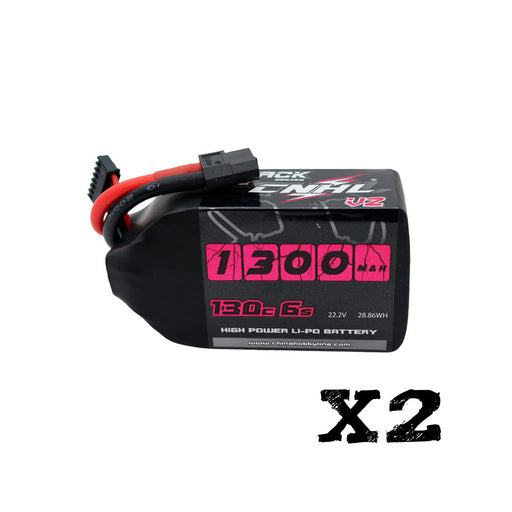
Pemeriksaan Kesesuaian Cepat 2 Packs CNHL Black Series V2.0 1300mAh 22.2V 6S 130C LiPo Battery dengan Colokan XT60 sangat cocok untuk pilot FPV yan...
Lihat detail lengkapSuku Cadang & Dukungan Jangka Panjang Kami memahami bahwa bagi pilot RC, dukungan suku cadang yang andal merupakan bagian penting untuk m...
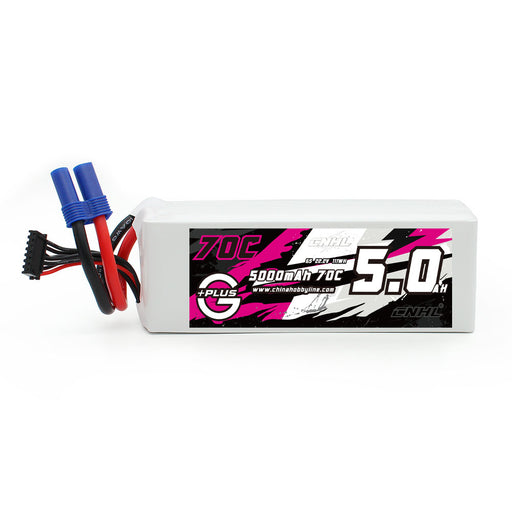
Lihat detail lengkapSpesifikasi: Nomor Stok: 500706EC5 Kapasitas: 5000mAh Voltase: 22.2V / 6-Sel / 6S1P Tingkat Discharge: 70C Kontinu / 140C Ledakan Tingkat Pengisi...
Lihat detail lengkap
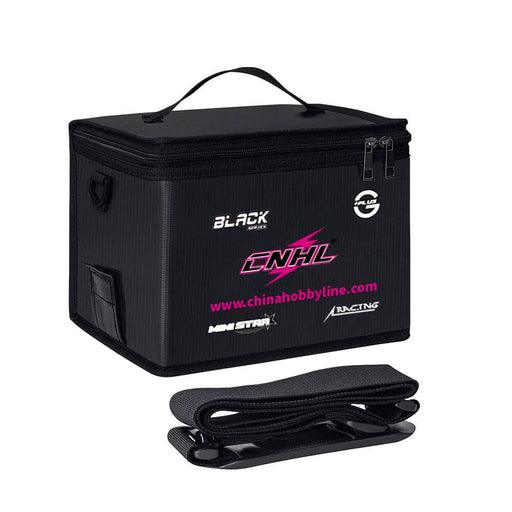
Tas Baterai LiPo CNHL dirancang untuk pengisian, transportasi, dan penyimpanan LiPo yang lebih aman di rumah atau di lapangan. Tas ini menambahkan ...
Lihat detail lengkapPemeriksaan Pemasangan Cepat 2 Paket CNHL Speedy Pizza Series Pro 1350mAh 6S 150C LiPo Battery dengan colokan XT60 dibuat untuk pilot FPV 5 inc...
Lihat detail lengkap

The CNHL Long Range Series BAK 65E 6350mAh 21700 Li-ion battery cell is built around one clear priority: maximum stored energy from a lightweight c...
Lihat detail lengkap

The CNHL Long Range Series BAK 50D 5000mAh 21700 Li-ion battery cell is designed for custom high-energy battery packs that need a strong balance be...
Lihat detail lengkap

The ISDT C4 EVO is a versatile smart battery charger built for AA, AAA and cylindrical rechargeable cells from compact 10440 batteries all the way ...
Lihat detail lengkap

The CNHL Long Range Series 6350mAh 21.6V 6S1P 21700 Li-ion battery combines six BAK 65E high-energy cells into a 137.16Wh pack designed for ultra-e...
Lihat detail lengkap

The CNHL Long Range Series 5000mAh 21.6V 6S1P 21700 Li-ion battery combines six BAK 50D cells into a compact 108Wh pack designed around long-range ...
Lihat detail lengkap




Tinggalkan komentar