
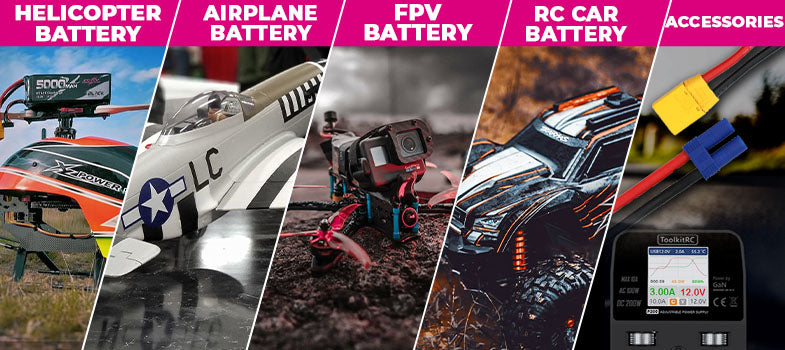
CNHL Baterai Lipo
CNHL bertujuan menyediakan baterai Li-Po berkualitas tinggi dan produk RC kepada semua penggemar hobi dengan layanan pelanggan yang luar biasa dan harga yang kompetitif

Even years after their initial release, the DJI S1000, S900, and S800 EVO continue to appear in professional UAV fleets around the world. While newer industrial drones have moved toward closed, proprietary systems, these three platforms remain in active use for one simple reason: they are open, serviceable, and still capable of handling real industrial tasks.
Rather than being replaced outright, the S1000, S900, and S800 EVO have gradually shifted into a different role. They are no longer positioned as cutting-edge products, but as dependable tools trusted by operators who value flexibility, predictable performance, and full control over their payload and power systems.
In the industrial UAV world, longevity is rare. Many platforms disappear once manufacturer support ends or spare parts become difficult to source. The DJI S-series avoided that fate by being modular by design, with widely available components and an open power architecture that allows operators to adapt their setups over time.
In real-world deployments, the difference between the S900 and S1000 is not purely a matter of price. Once fully configured with flight controller, data link, gimbal, landing gear, and power system, operators often find that total system investment falls within a similar overall range.
What ultimately separates these platforms is scale. Frame size, motor spacing, and maximum takeoff weight define how much flexibility an operator has when balancing payload, stability, and endurance.

The DJI S1000 is the largest and most capable platform in this comparison. Its wider motor-to-motor diameter and octocopter configuration provide increased stability under load, especially when carrying heavier cameras or inspection equipment.
From a structural standpoint, the S1000’s larger footprint allows it to handle higher all-up weight. This additional margin gives operators more freedom to configure missions where stability or endurance is prioritized over compactness.
In inspection scenarios—such as bridge structures, wind turbines, or industrial facilities—the S1000’s ability to lift larger sensors and maintain stable positioning remains a key advantage.

The DJI S900 has earned its reputation as the most commonly deployed platform among the three. It strikes a practical balance between payload capacity, portability, and operational efficiency.
Physically, the S900 measures roughly 36 inches in motor-to-motor diameter, compared to about 41 inches for the S1000. That difference may appear small on paper, but in practice it affects how the aircraft handles wind, payload inertia, and transport logistics.
For many operators, the S900 represents the point where professional capability meets manageable size. It is large enough for serious work, yet compact enough to transport, deploy, and maintain without excessive overhead.

The S800 and its updated EVO version are noticeably smaller and lighter than the S900 and S1000. While their payload capacity is lower, these platforms offer clear advantages in setup speed, transport convenience, and operational efficiency.
They are commonly used for pilot training, light inspection tasks, and experimental payload testing. Lower operating weight and simpler logistics make them appealing for teams that do not require heavy-lift capability.
For many organizations, the S800 EVO serves as a practical entry point into industrial multirotor operations.
| Specification | DJI S1000 | DJI S900 | DJI S800 / S800 EVO |
|---|---|---|---|
| Frame Diagonal (mm) | 1045 mm | 900 mm | 800 mm |
| Empty Weight | 4.2 kg | 3.3 kg | 2.6–3.7 kg |
| Takeoff Weight | 6.0–11.0 kg | 4.7–8.2 kg | 5.0–8.0 kg |
| Battery (Typical) | 6S LiPo 10000–20000mAh | 6S LiPo 10000–16000mAh | 6S LiPo 10000–16000mAh |
| Hover Time | ≈15 min* | ≈18 min* | ≈16–20 min* |
| Typical Payload Capacity | Up to ~11 kg total | Up to ~8.2 kg total | Up to ~8 kg total |
| Power Consumption (Max) | ≈4000 W | ≈3000 W | ≈2100–3000 W |
*Hover times are approximate and based on standard LiPo battery usage and specific payload configurations. Actual flight durations vary with load, battery capacity, weather conditions, and mission profile. Source: DJI official specs and user flight tests. :contentReference[oaicite:0]{index=0}
While the DJI S1000, S900, and S800 EVO share a similar design philosophy, they serve different operational priorities once placed into real-world use.
The DJI S1000 is best suited for missions where payload capacity, stability, and endurance flexibility matter most. Its octocopter layout and larger frame allow operators to lift heavier sensors, cinema cameras, or inspection equipment, while also offering the option to trade payload weight for larger battery capacity when extended range or flight time is required. For infrastructure inspection, industrial filming, and demanding professional tasks, the S1000 remains the most capable platform of the three.
The DJI S900 represents the most balanced choice. It delivers professional payload capability without the size, weight, and logistical overhead of the S1000. This balance has made it a long-standing workhorse in surveying, aerial cinematography, training, and general industrial operations. For many operators, the S900 provides the best combination of performance, portability, and ease of deployment.
The DJI S800 and S800 EVO focus on efficiency and practicality. Their lighter airframes, faster setup, and lower operating costs make them ideal for pilot training, light inspection tasks, and experimental payload testing. While they are not designed for heavy-lift missions, they remain highly effective platforms where agility, transport convenience, and operational simplicity are prioritized.
Ultimately, the right choice depends less on specifications and more on mission requirements. Operators who understand how payload, endurance, and deployment constraints interact will find that each of these platforms still offers meaningful value when matched to the right task.
One defining characteristic shared by all three platforms is their open power architecture. Unlike modern industrial drones that rely on proprietary smart batteries, the S1000, S900, and S800 EVO are designed to run standard high-voltage LiPo configurations.
This openness gives operators the freedom to adapt their power system based on mission requirements. In practice, batteries are not simply a way to extend flight time—they are a mission variable. Many professional operators choose their power setup from a range of UAV battery options depending on payload weight, flight profile, and endurance targets.
On platforms like the S1000, operators often trade payload weight for increased battery capacity when range or endurance is more critical than lift. This ability to re-balance payload and power is one of the reasons these aircraft remain relevant today, and why DJI S-series pilots frequently explore different DJI battery configurations to match specific operational needs, often comparing real-world options available in dedicated DJI S1000, S900, and S800 battery collections.
Different missions place different demands on an airframe. Short inspection flights may favor lighter configurations for agility and efficiency, while longer survey or filming operations benefit from more stable voltage delivery and extended endurance.
Experienced operators rarely rely on a single setup. Instead, they fine-tune each configuration based on payload, environmental conditions, and mission duration—using the platform’s flexibility to their advantage.
Operating older industrial UAV platforms requires a disciplined maintenance approach. Regular inspections of frames, motors, connectors, and wiring are essential for safe operation.
Power system management is equally important. Proper charging, balanced storage, and temperature control help ensure consistent performance and extend component lifespan.
With thoughtful upgrades and regular care, these platforms can remain productive long after newer systems dominate the market.
The DJI S1000, S900, and S800 EVO no longer represent the latest generation of industrial UAVs, but they continue to deliver dependable results. Their open design philosophy gives operators control over payload integration and power system choices that many modern platforms no longer offer.
For professionals who value reliability, transparency, and long-term serviceability, these aircraft remain practical tools. With the right configuration and mission planning, they can continue flying real-world operations for years to come.
CNHL bertujuan menyediakan baterai Li-Po berkualitas tinggi dan produk RC kepada semua penggemar hobi dengan layanan pelanggan yang luar biasa dan harga yang kompetitif
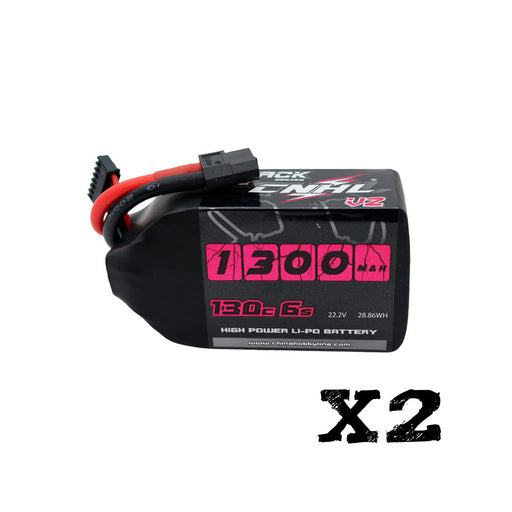
Pemeriksaan Kesesuaian Cepat 2 Packs CNHL Black Series V2.0 1300mAh 22.2V 6S 130C LiPo Battery dengan Colokan XT60 sangat cocok untuk pilot FPV yan...
Lihat detail lengkapSuku Cadang & Dukungan Jangka Panjang Kami memahami bahwa bagi pilot RC, dukungan suku cadang yang andal merupakan bagian penting untuk m...
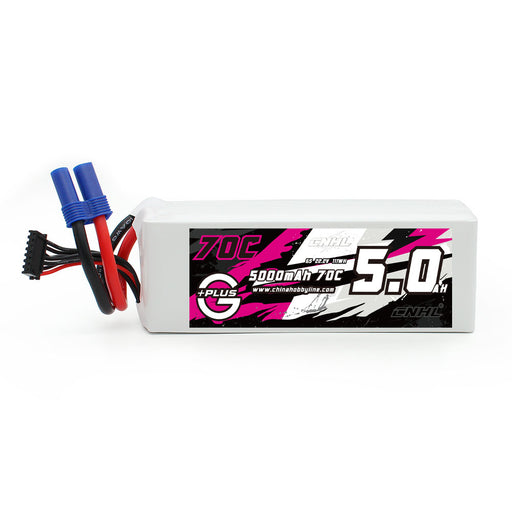
Lihat detail lengkapSpesifikasi: Nomor Stok: 500706EC5 Kapasitas: 5000mAh Voltase: 22.2V / 6-Sel / 6S1P Tingkat Discharge: 70C Kontinu / 140C Ledakan Tingkat Pengisi...
Lihat detail lengkap
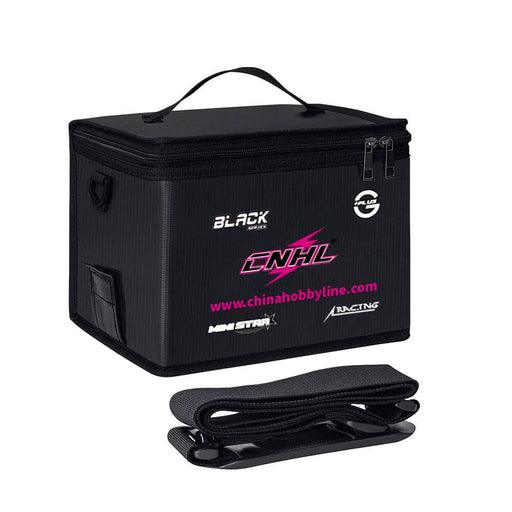
Tas Baterai LiPo CNHL dirancang untuk pengisian, transportasi, dan penyimpanan LiPo yang lebih aman di rumah atau di lapangan. Tas ini menambahkan ...
Lihat detail lengkapPemeriksaan Pemasangan Cepat 2 Paket CNHL Speedy Pizza Series Pro 1350mAh 6S 150C LiPo Battery dengan colokan XT60 dibuat untuk pilot FPV 5 inc...
Lihat detail lengkap

The CNHL Long Range Series BAK 65E 6350mAh 21700 Li-ion battery cell is built around one clear priority: maximum stored energy from a lightweight c...
Lihat detail lengkap

The CNHL Long Range Series BAK 50D 5000mAh 21700 Li-ion battery cell is designed for custom high-energy battery packs that need a strong balance be...
Lihat detail lengkap

The ISDT C4 EVO is a versatile smart battery charger built for AA, AAA and cylindrical rechargeable cells from compact 10440 batteries all the way ...
Lihat detail lengkap

The CNHL Long Range Series 6350mAh 21.6V 6S1P 21700 Li-ion battery combines six BAK 65E high-energy cells into a 137.16Wh pack designed for ultra-e...
Lihat detail lengkap

The CNHL Long Range Series 5000mAh 21.6V 6S1P 21700 Li-ion battery combines six BAK 50D cells into a compact 108Wh pack designed around long-range ...
Lihat detail lengkap




Tinggalkan komentar