

CNHL Baterai Lipo
CNHL bertujuan menyediakan baterai Li-Po berkualitas tinggi dan produk RC kepada semua penggemar hobi dengan layanan pelanggan yang luar biasa dan harga yang kompetitif
LiPo charger modes are designed for different jobs. Balance Charge is normally the preferred everyday program for a conventional multi-cell LiPo battery. Fast Charge may shorten the final stage, Storage moves the battery toward a suitable resting voltage, and Discharge removes energy from the pack. These programs should not be treated as interchangeable shortcuts.
Quick answer: Use LiPo Balance Charge for most normal full charges, Storage when the battery will not be used soon, and Discharge only when you intentionally need to reduce its state of charge. Fast Charge can save some time, but it may finish with less balancing or at a slightly lower state of charge depending on the charger. Parallel Charging is not a battery chemistry mode; it is a method of connecting several compatible packs to one charging channel.
Before starting any program, confirm battery chemistry, cell count, capacity, charge current and connection method. A correct mode cannot make an incorrect chemistry selection, damaged battery or mismatched parallel group safe.

| Program or Method | Main Purpose | Typical Use | Main Limitation |
|---|---|---|---|
| Balance Charge | Charges while monitoring and correcting individual cells | Routine full charging of multi-cell LiPo packs | May take longer when cells are out of balance |
| Charge | Performs a standard lithium charging cycle | Systems where balancing is handled separately or internally | Behavior varies by charger and may not balance conventional packs |
| Fast Charge | Reduces charging time by altering the final stage | Occasional quick turnaround | May finish with less balancing or slightly less capacity |
| Storage | Charges or discharges toward a storage voltage | Batteries that will not be used soon | Discharging a full large pack may take a long time |
| Discharge | Removes energy to a selected cutoff voltage | Testing, preparation or controlled energy removal | Internal discharge power is often much lower than charge power |
| Cycle | Runs repeated charge and discharge operations | Capacity checking on supported battery types | Not a routine LiPo maintenance requirement |
| Parallel Charging | Charges several matched packs through one channel | Efficient multi-pack charging | Requires strict pack matching and combined-current calculations |
Balance Charge is normally the most appropriate program for a conventional 2S, 3S, 4S, 6S or other multi-cell LiPo battery. The charger uses the main power connection to deliver most of the charging current and the balance connection to monitor individual cell voltages.
During the charge, the cells do not always rise at exactly the same rate. One cell may reach the upper voltage limit before the others. The charger then reduces current and uses its balancing circuit to limit the leading cell while the lower cells continue to catch up.
The objectives are to:
For a standard LiPo battery, each cell normally finishes close to 4.20V. A three-cell pack may therefore finish near 12.60V in total, but the individual readings are still important. A total of 12.60V would not be satisfactory if one cell were significantly higher and another significantly lower.

Use Balance Charge for routine full charging of most conventional multi-cell RC LiPo batteries, especially when:
A 1S pack has only one cell, so there are no cells to balance against each other. It still requires the correct chemistry mode and voltage limit.
For the complete procedure, read How to Balance Charge a LiPo Battery.
The exact difference between Charge and Balance Charge depends on the charger. On many conventional chargers, Charge mode focuses on total pack voltage and the main power lead, while Balance Charge also uses the balance connection to monitor and correct individual cells.
Some chargers may still read the balance lead during more than one lithium program. Proprietary smart systems may also combine power and balancing through one connector. Because implementation varies, the charger manual is the final reference.
| Question | Charge Mode | Balance Charge Mode |
|---|---|---|
| Charges the battery? | Yes | Yes |
| Monitors total pack voltage? | Yes | Yes |
| Monitors individual cells? | Depends on charger design and connection | Normally yes |
| Corrects cell differences? | Not always | Yes, within the charger's balance capability |
| Best everyday default? | Only when the system instructions call for it | Normally yes for conventional multi-cell LiPo packs |
Do not assume that a faster-looking Charge program is automatically better. Saving a few minutes is less useful if the charger cannot show that the individual cells finished within an acceptable range.
Fast Charge is frequently misunderstood. It does not automatically mean that the charger applies a higher C rate. The selected current and the charging program are separate settings.
A charger may save time in Fast Charge by:
The precise behavior varies by charger. On some models the difference is modest; on others it can produce a more noticeable reduction in final balancing time.
Consider these two examples:
The C rate controls current relative to capacity. Fast Charge controls how the charging program completes the process.
Fast Charge may be useful when:
For routine charging, Balance Charge remains the more informative default. Read Balance Charging vs Fast Charging for the dedicated comparison.
A LiPo battery should not remain fully charged or deeply discharged for extended periods. Storage mode moves the pack toward a moderate cell voltage that is more suitable for resting between uses.
Many chargers target approximately 3.8–3.85V per cell for a standard LiPo, although the exact program target can vary. Follow the battery and charger instructions where they specify a particular value.
Storage mode works in two directions:
| Battery Condition | Storage Mode Action | Practical Result |
|---|---|---|
| Below storage target | Charges the pack | Usually reasonably quick |
| Above storage target | Discharges the pack | Can be slow on a low-discharge-power charger |
| Cells not closely matched | May also balance during the process | Completion may take longer |
Use Storage mode when:
Do not use Storage mode as a substitute for inspecting the battery. A swollen, damaged or abnormal pack still requires appropriate isolation and assessment.
Many chargers advertise hundreds of watts of charging power but only a small amount of internal discharge power. Charging transfers energy into the battery efficiently; internal discharging normally converts energy into heat inside the charger.
For example, a charger capable of 200W charging may provide only 5W, 10W or another relatively modest internal discharge rating. A large, fully charged 6S battery can therefore take hours to reach storage voltage.
Storage time depends on:
Do not assume the charger is defective merely because its discharge process is much slower than charging. Check the discharge specification rather than the charge-output figure.
Discharge mode removes energy until the battery reaches a selected cutoff. It can be useful for controlled testing, reducing state of charge or measuring delivered capacity under a defined low-current load.
Possible applications include:
Discharge mode should not be used carelessly to run a LiPo as low as possible. The selected cutoff must remain appropriate for the battery chemistry and intended test.
In standard internal discharge, the charger converts battery energy into heat. The charger may reduce power when its internal temperature rises.
Some chargers can send energy back to a suitable input battery, power supply or another battery rather than wasting all of it as heat. This can provide much higher discharge power, but only when the complete system is designed for energy return.
Never send regenerative energy into a power source that does not support reverse current. Confirm the charger manual and destination limits before using regenerative discharge.
Some chargers support an external discharge load. This can increase discharge power but adds wiring, thermal and configuration requirements. The load, cable and connectors must all be correctly rated.
Cycle mode repeatedly charges and discharges a battery for a selected number of cycles. This feature is often associated with capacity testing or older nickel-based battery maintenance.
A LiPo battery does not normally need routine cycling to prevent memory effect. Lithium-polymer batteries do not have the same maintenance requirement as older NiCd packs.
Cycle mode can still be useful for controlled measurement when you understand:
Do not repeatedly cycle a LiPo simply because the charger provides the function. Every full cycle contributes to battery usage and aging.
Parallel Charging is often grouped with charger modes because users select Balance Charge after connecting a parallel board. Electrically, however, parallel charging is a connection method.
Several compatible packs are joined so the charger sees:
For example, four 3S 1500mAh batteries connected in parallel appear to the charger as a 3S battery with 6000mAh combined capacity.
Combined capacity: 1500mAh × 4 = 6000mAh
Approximate 1C current for the group: 6A
After making the correct parallel connections, the charger will normally use an ordinary lithium program such as Balance Charge. The parallel board itself does not create a separate chemical charging algorithm.

Before connecting packs in parallel, confirm:
Once batteries are connected in parallel, current can flow between them immediately. The charger cannot undo a large voltage mismatch that already existed at connection.
Read How to Parallel Charge LiPo Batteries Safely before using a parallel board.
A dual-channel or quad-channel charger treats each battery as a separate charging task. A parallel board combines several batteries into one electrical group.
| Comparison | Independent Channels | Parallel Charging |
|---|---|---|
| Cell count | Can differ by channel where supported | Must match |
| Charge current | Set independently | Calculated from combined capacity |
| Starting voltage | Can differ within each channel's operating range | Must be sufficiently close before connection |
| Battery condition | Monitored separately | A weak pack can be harder to identify inside the group |
| Ease of use | More straightforward | Requires additional matching and calculations |
| Hardware cost | More charger channels required | Can add capacity to one suitable channel |
For users with mixed batteries, independent channels are generally easier to manage. The ToolkitRC M6D provides two DC-powered charging channels, while the ToolkitRC Q6AC is designed for four independent charging tasks.
For a direct decision guide, see Dual-Channel Charger vs Parallel Charging Board.
Some chargers estimate the internal resistance of each cell or the complete pack. These readings are most useful for tracking trends on the same charger under similar conditions. They should not be treated as perfectly comparable across different chargers, temperatures and connection setups.
A capacity cutoff stops the task after a selected amount of charge has passed. It is a secondary protection setting, not a replacement for correct chemistry, voltage and current.
A safety timer stops the charger after a selected duration. A timer that repeatedly expires during a normal charge may indicate an unrealistic setting, inadequate charger power, cell imbalance or another issue that needs investigation.
Some dual-channel chargers can combine channel resources for one higher-power output. This is not the same as parallel charging several batteries. It combines charger hardware, while the connected battery remains one charging task.
Some chargers can operate as an adjustable DC power supply. This function is separate from battery charging and requires its own current, voltage and load limits.
Balance Charge, Fast Charge and Storage are not the only settings that matter. The selected battery chemistry determines the voltage profile and final voltage limit.
| Chemistry | Typical Charger Program | Important Warning |
|---|---|---|
| Standard LiPo | LiPo | Do not select a higher-voltage LiHV limit |
| LiHV | LiHV | Use the pack manufacturer's specified final voltage |
| LiFe | LiFe | Do not use a standard LiPo voltage profile |
| Li-ion | Li-ion or the specified lithium profile | Voltage limit depends on the exact cell type |
| NiMH / NiCd | NiMH or NiCd | These modes use different termination logic and are not for LiPo charging |
Never use a nickel-battery program to bypass a lithium charger warning or attempt to force-charge a deeply discharged LiPo. A charger warning is a reason to inspect the battery, not a barrier to work around.
| Your Goal | Recommended Starting Point | Check Before Starting |
|---|---|---|
| Normal full charge | Balance Charge | Chemistry, S count, current and balance connection |
| Quicker turnaround | Fast Charge where appropriate | Mode behavior, battery balance and final capacity expectation |
| Battery will not be used soon | Storage | Storage target and charger discharge power |
| Controlled energy removal | Discharge | Cutoff voltage, load power and battery temperature |
| Several matched packs on one channel | Parallel connection followed by Balance Charge | Chemistry, S count, voltage matching and combined current |
| Several different packs | Independent charger channels | Total power and per-channel limits |
Do not choose a charger simply because it has a long feature list. Start with the functions that match your battery fleet and charging routine.
Useful specifications include:
Browse the CNHL LiPo battery charger collection for balance chargers, dual-channel models and multi-channel charging systems.
For ToolkitRC chargers, external power supplies and related equipment, visit the ToolkitRC collection.
For a complete product-selection method, read How to Choose the Right LiPo Battery Charger for Your RC Batteries.
Use LiPo Balance Charge as the normal starting point for a conventional multi-cell LiPo pack. Confirm the chemistry, cell count, current and balance connection before starting.
It can take longer when the charger needs to correct cell differences. The exact difference depends on the charger and the condition of the battery.
Not necessarily. Fast Charge describes program behavior, while the C rate and amp setting determine charging current. The charger can use the same current setting in different modes.
It may finish near full charge, but some chargers shorten the final constant-voltage or balancing stage. The final capacity and cell balance can therefore differ from a complete Balance Charge.
Many chargers target approximately 3.8–3.85V per cell for a standard LiPo, but the exact programmed target can vary. Check the battery guidance and charger settings.
The battery may be fully charged while the charger has relatively low internal discharge power. Large, high-voltage packs can therefore take much longer to discharge than they took to charge.
No. Storage mode automatically targets a moderate resting voltage and may either charge or discharge. Discharge mode removes energy toward a user-selected cutoff.
Routine cycling is not required to prevent memory effect. Cycle mode may be used for controlled testing, but repeated cycling adds wear and should have a clear purpose.
Strictly speaking, no. It is an electrical connection method that combines compatible batteries on one channel. The charger then runs an appropriate lithium program, normally Balance Charge.
Capacity does not have to be identical in every possible parallel setup, but chemistry, series cell count, voltage, condition and the combined current calculation must all be suitable. Using closely matched packs is easier to manage, especially for beginners.
No. Packs connected to the same parallel charging group must use the same series cell count.
Usually yes when each channel independently supports the selected chemistry, S count, current and power demand. Check whether the charger shares total output between channels.
Do not use a nickel-battery mode to bypass a lithium safety warning. A deeply discharged LiPo may be internally damaged and requires appropriate assessment rather than forced charging under the wrong chemistry program.
The best charger mode is determined by the job you need to perform. Balance Charge prepares a multi-cell pack for use, Storage prepares it to rest, Discharge removes energy for a defined purpose, and Fast Charge trades some of the final charging process for quicker turnaround. Parallel Charging adds another layer because the batteries must be compatible before the charger begins its normal program.
For the complete single-pack connection and verification process, read How to Charge a LiPo Battery Safely. For the broader topic cluster, visit the CNHL LiPo Battery Charging Guide.
CNHL bertujuan menyediakan baterai Li-Po berkualitas tinggi dan produk RC kepada semua penggemar hobi dengan layanan pelanggan yang luar biasa dan harga yang kompetitif

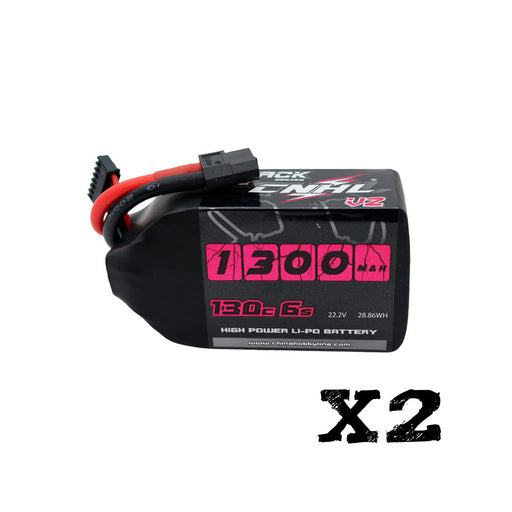
Pemeriksaan Kesesuaian Cepat 2 Packs CNHL Black Series V2.0 1300mAh 22.2V 6S 130C LiPo Battery dengan Colokan XT60 sangat cocok untuk pilot FPV yan...
Lihat detail lengkapSuku Cadang & Dukungan Jangka Panjang Kami memahami bahwa bagi pilot RC, dukungan suku cadang yang andal merupakan bagian penting untuk m...
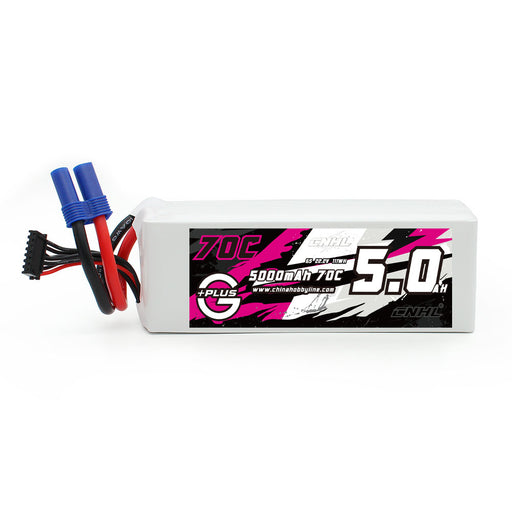
Lihat detail lengkapSpesifikasi: Nomor Stok: 500706EC5 Kapasitas: 5000mAh Voltase: 22.2V / 6-Sel / 6S1P Tingkat Discharge: 70C Kontinu / 140C Ledakan Tingkat Pengisi...
Lihat detail lengkap
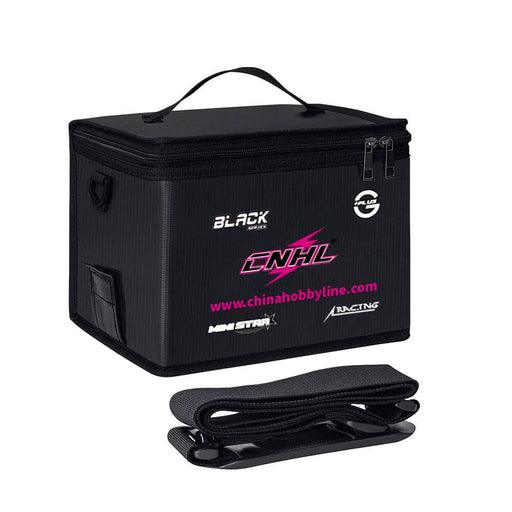
Tas Baterai LiPo CNHL dirancang untuk pengisian, transportasi, dan penyimpanan LiPo yang lebih aman di rumah atau di lapangan. Tas ini menambahkan ...
Lihat detail lengkap

Pemeriksaan Pemasangan Cepat 2 Paket CNHL Speedy Pizza Series Pro 1350mAh 6S 150C LiPo Battery dengan colokan XT60 dibuat untuk pilot FPV 5 inc...
Lihat detail lengkap

Quick Fit Check The CNHL Speedy Pizza Series 2200mAh 22.2V 6S 120C LiPo Battery with XT60 Plug combines the familiar 2200mAh 6S format with a ligh...
Lihat detail lengkap

Quick Fit Check The CNHL Speedy Pizza Series 2200mAh 14.8V 4S 120C LiPo Battery with XT60 Plug combines a widely used 2200mAh 4S format with a sli...
Lihat detail lengkap

Quick Fit Check The CNHL Speedy Pizza Series 2200mAh 11.1V 3S 120C LiPo Battery with XT60 Plug takes the familiar 3S 2200mAh aircraft battery form...
Lihat detail lengkapThe CNHL Long Range Series BAK 65E 6350mAh 21700 Li-ion battery cell is built around one clear priority: maximum stored energy from a lightweight c...
Lihat detail lengkap

The CNHL Long Range Series BAK 50D 5000mAh 21700 Li-ion battery cell is designed for custom high-energy battery packs that need a strong balance be...
Lihat detail lengkap




Tinggalkan komentar