
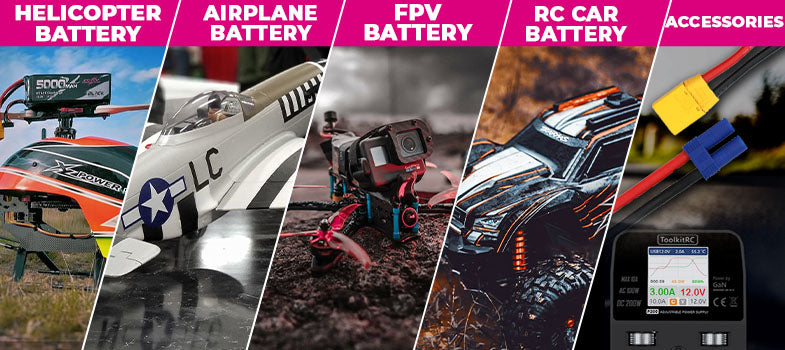
CNHL Baterai Lipo
CNHL bertujuan menyediakan baterai Li-Po berkualitas tinggi dan produk RC kepada semua penggemar hobi dengan layanan pelanggan yang luar biasa dan harga yang kompetitif
The Traxxas TRX4 Ford F-150 and Chevrolet K10 are not trying to reinvent the TRX4 platform. That is exactly why they matter. Instead of another lifted High Trail release, these two classic truck models bring the Ford and Chevy bodies back down to a standard-height, Sport-style chassis with clear windows, clipless bodies, portal axles, single-speed drivetrains, locked axles, and simple 2S or 3S trail power.

For many RC crawler fans, that is the version they wanted from the beginning. The High Trail trucks look dramatic, but not every driver wants a lifted stance, extra height, and a more top-heavy trail feel. The newer standard-height TRX4 Ford F-150 and Chevrolet K10 feel more like practical trail trucks: lower, cleaner, simpler, and easier to enjoy on real terrain.
This review looks at why these two models have created so much discussion, how they compare with the High Trail versions, what the Sport-style drivetrain means, and how to choose the right TRX4 2S and 3S LiPo battery setup for trail driving.
The Traxxas TRX4, officially written as TRX-4, is one of the most recognizable 1/10 scale trail truck and crawler platforms in RC. These newer Ford F-150 and Chevrolet K10 releases use the familiar TRX4 formula, but package it in a lower, standard-height layout instead of the lifted High Trail setup.
| Model | Body Style | Chassis Style | Drivetrain | Battery Direction |
|---|---|---|---|---|
| TRX4 Ford F-150 | 1979 Ford F-150 Ranger XLT | Standard-height TRX4 Sport-style chassis | Single speed, locked axles, portal axles | 2S or 3S LiPo |
| TRX4 Chevrolet K10 | Classic Chevrolet K10 pickup | Standard-height TRX4 Sport-style chassis | Single speed, locked axles, portal axles | 2S or 3S LiPo |
In simple terms, these are classic truck bodies on a leaner TRX4 trail platform. They keep the toughness and portal axle ground clearance that made the TRX4 popular, but they avoid the extra lifted stance that some drivers felt was less ideal for technical trails.
The biggest reason these trucks have attracted attention is not the motor, ESC, or transmission. It is the stance.

Traxxas already had Ford and Chevrolet classic truck options in the High Trail family, but many drivers wanted the same kind of scale pickup look without the lifted suspension. The standard-height TRX4 Ford F-150 and Chevrolet K10 answer that demand directly.
A lower trail truck normally feels more planted on rocks, roots, loose dirt, and sidehills. It may not look as wild as a High Trail truck on the shelf, but on uneven terrain the lower center of gravity can make the truck feel more predictable. For drivers who enjoy technical lines rather than just the lifted show-truck look, this setup makes sense.
That does not mean the High Trail versions are wrong. They have their own style and appeal. But these newer standard-height trucks feel more like the practical, trail-focused versions that many TRX4 fans were already building on their own by lowering High Trail trucks or swapping bodies onto Sport-style chassis setups.
Mechanically, the TRX4 Ford F-150 and TRX4 Chevrolet K10 are very close. The battery choice, drivetrain behavior, ESC support, and general trail performance logic are effectively the same. The difference is mainly personality.
The Ford version uses the officially licensed 1979 Ford F-150 Ranger XLT body. It leans heavily into chrome trim, a classic pickup look, clear windows, clipless mounting, and scale details such as the grille, bumpers, mirrors, door handles, wipers, and light-ready lenses. It is the kind of body that attracts buyers before they even think about electronics.
The Chevrolet K10 follows the same general idea with a different classic truck identity. It gives Chevy fans a standard-height alternative to the lifted truck look, with the same TRX4 portal axle trail foundation underneath. For buyers who prefer GM styling over Ford styling, the K10 is the natural choice.
Because the chassis and power system direction are so similar, most buyers will choose between them based on body preference, brand loyalty, color, and scale style rather than battery requirements.
One of the strongest community reactions around these trucks has been clear windows. That might sound like a small detail, but for scale RC owners it matters.
Clear windows make the body feel more realistic and more premium, especially on licensed classic truck shells. Many owners have complained for years about decal-style windows on certain scale bodies, so seeing clear windows on these Ford and Chevy trucks makes the release feel more complete even though the chassis underneath is familiar.
The only downside is that clear windows also make the lack of an included interior more obvious. Some drivers will not care. Others will immediately start looking for an interior tray, driver figure, or custom scale details. That is part of the attraction of these trucks: they are ready to run, but they also invite customization.
This is where opinions split. These trucks use a simpler Sport-style drivetrain rather than the full-featured TRX4 setup with remote-locking differentials and a two-speed transmission.
For some drivers, that is a good thing. A single-speed, locked-axle crawler is simple, predictable, and easy to drive. There are fewer features to manage, fewer servos involved, and less complexity for new owners. For trail driving and basic crawling, locked axles and a single-speed transmission are completely normal.
For other drivers, it feels like a downgrade. One reason the full TRX4 platform became famous is the combination of portal axles, two-speed shifting, and remote-locking diffs. If you enjoy switching between trail speed and crawling control, or unlocking diffs while hiking with the truck, then the Sport-style setup may feel less special.
The fairest way to look at it is this: the Ford F-150 and Chevrolet K10 are not the most feature-heavy TRX4 trucks. They are cleaner, simpler, standard-height trail trucks with excellent bodies. That is either the entire appeal or the main complaint, depending on what you want from a TRX4.
Both trucks keep the TRX4 portal axle layout. From a driving perspective, that is a major strength. Portal axles increase ground clearance at the axle, reduce torque twist, and help the truck move over rocks and trail obstacles more easily. For trail performance, they are one of the reasons the TRX4 platform remains popular.
From a scale realism perspective, not everyone agrees. Some drivers want straight axles under classic pickup bodies because that would look more realistic compared with the real trucks. This is a fair criticism. The portal axles make the truck more capable, but less perfectly scale.
That tradeoff has always been part of the TRX4 identity. Traxxas tends to favor trail capability and durability over exact underbody realism. For most drivers who actually run their trucks outdoors, that is a practical compromise.
The power system is familiar: the XL-5 HV waterproof electronic speed control paired with the Titan 21T 550 brushed motor. This is not a high-end brushless setup, and it is not meant to be. It is a durable trail truck power system designed for smooth driving, waterproof use, and broad battery compatibility.
The XL-5 HV supports 6–7 cell NiMH packs and 2S–3S LiPo batteries. For most owners, that means the real decision is not whether to run extreme voltage, but whether 2S or 3S better matches their driving style.
On 2S, the truck feels smooth, controlled, and easy to manage. On 3S, it gains more wheel speed and stronger punch for dirt climbs, loose terrain, and heavier accessory builds. Because these trucks are crawlers and trail trucks, the best battery choice is about control, runtime, fit, and balance rather than maximum top speed.
The Ford F-150 and Chevrolet K10 share the same basic battery logic. Both work best with properly sized 2S or 3S LiPo packs, and both benefit from choosing a battery that fits the tray cleanly without adding unnecessary top-heavy weight.
| Battery Setup | Best For | Driving Feel | Fitment Notes |
|---|---|---|---|
| 2S LiPo | Scale driving, beginners, technical crawling, relaxed trails | Smoother throttle response and easier low-speed control | Usually lighter and easier to manage in a trail truck chassis. |
| 3S LiPo | Loose dirt, climbs, heavier builds, drivers wanting more wheel speed | More punch and stronger trail performance | Check battery height, wire direction, and hold-down clearance carefully. |
| High-capacity 3S LiPo | Long trail sessions and hiking-style runs | More runtime, but more weight | Only makes sense if it fits securely and does not hurt stability. |
For most owners, a 3S LiPo around the 5000mAh class is the most balanced all-around direction. It gives useful runtime and stronger performance without automatically pushing the truck into an oversized, heavy battery setup. A 2S LiPo still makes sense for drivers who prioritize smooth control, especially on tight technical lines.
If you want a broader battery fitment guide for the full TRX4 platform, including Sport, Defender, Bronco, High Trail, Pathfinder, Ford F-150, and Chevrolet K10 models, see our Traxxas TRX4 LiPo battery collection.
With TRX4 crawlers, battery capacity is only part of the story. The more important question is whether the pack physically fits the truck without fighting the tray, hold-down, body cage, wire exit, or connector position.
For the TRX4 Ford F-150, the listed battery compartment is approximately 159mm × 47mm × 23/26mm. That makes height especially important. A battery can be short enough and narrow enough, but still feel awkward if it is too tall for the stock hold-down or if the wires exit in the wrong direction.
This is why some TRX4 owners move to a strap-style battery setup when running taller packs. A strap can make fitment more flexible, but the same rule still applies: the battery should be secure, balanced, and clear of moving parts or sharp edges.
For trail trucks, bigger is not always better. A very large LiPo may extend runtime, but it can also raise the center of gravity, affect sidehill stability, and make the truck feel less planted. A battery that fits cleanly is often a better upgrade than the largest battery you can force into the tray.
No TRX4 battery discussion is complete without mentioning connectors. Many Traxxas vehicles use Traxxas High-Current or iD-style battery connectors, while many aftermarket LiPo packs use standard connectors such as XT60, Deans/T Plug, EC3, or IC3.
This is one of the biggest reasons some owners search for a non-Traxxas battery for TRX4. They may already own standard LiPo packs for other RC vehicles, or they may prefer batteries and chargers that work across multiple brands. That does not mean every aftermarket battery is plug-and-play. It simply means connector setup needs to be handled correctly.
If your TRX4 still has the stock Traxxas connector and your battery uses XT60, Deans/T Plug, EC3, or IC3, you may need a suitable adapter or an ESC-side connector change. The safest approach is to confirm voltage, dimensions, connector type, polarity, and charger compatibility before driving.
This is also why a clear battery recommendation matters. The right LiPo pack is not just the right voltage. It must fit the truck, match the connector setup, and suit the way you drive.
The positive reaction to these trucks is easy to understand. The bodies look excellent, the clear windows are a major visual upgrade, and the standard-height stance is exactly what many trail drivers wanted. The Ford F-150 and Chevrolet K10 both bring classic pickup energy to a platform that many people already trust.
Drivers who like these releases usually praise three things: the look, the lower stance, and the simplicity. They are not trying to be complicated, feature-packed crawlers. They are good-looking trail trucks on a proven chassis, and for many owners that is enough.
The TRX4 platform also has a huge aftermarket ecosystem. Brass portal covers, steering upgrades, lighting kits, interiors, wheels, tires, bumpers, and body accessories are all easy directions for future customization. That makes these trucks attractive not only as ready-to-run models, but also as long-term build platforms.
The criticism is just as predictable. Some drivers see these trucks as another version of an old platform with a new or revised body. Others think the price is high for a Sport-style chassis with a brushed motor, plastic wheels, no included interior, and no full lighting kit.

The lack of two-speed shifting and remote-locking differentials is another dividing point. Some people prefer the simpler Sport setup, while others feel those features are what make a TRX4 special. There is no single right answer. It depends on whether you want simplicity or maximum mechanical features.
There is also ongoing debate about portal axles under classic pickup bodies. Portal axles make the truck more capable, but some scale-focused drivers would prefer straight axles for a more realistic look. Again, this is a classic TRX4 tradeoff: capability first, perfect realism second.
You do not need to upgrade these trucks immediately, but they respond well to small, practical improvements. A better-fitting LiPo setup is one of the easiest places to start, especially if you want longer runtime or prefer standard connectors. A 2S or 3S pack that fits cleanly can make the truck more enjoyable without changing its character.
After that, the most logical upgrades depend on your terrain. If you drive technical rock sections, front-end weight and tire choice can make a noticeable difference. If you care about scale looks, lighting and interior details may matter more. If you drive in wet and muddy areas, keeping wiring clean and connectors protected becomes more important than adding shiny parts.
The good thing about the TRX4 platform is that you do not have to build everything at once. Drive the truck first, learn where it struggles, then upgrade based on real use.
These trucks make the most sense for drivers who want a classic pickup body, a proven trail chassis, and a lower stance than the High Trail versions. They are especially appealing if you like the TRX4 Sport idea but want a more detailed licensed body right out of the box.
They are less ideal for someone who expects a completely new Traxxas crawler platform, a brushless power system, straight axles, a two-speed transmission, remote-locking differentials, a full interior, and a lighting kit all included. Those buyers may see these models as too familiar or too expensive.
But for the right driver, the formula works. The Ford F-150 and Chevrolet K10 are not revolutionary. They are clean, good-looking, capable standard-height TRX4 trail trucks with enough scale detail to feel special and enough simplicity to be easy to enjoy.
The Traxxas TRX4 Ford F-150 and Chevrolet K10 are best understood as community-requested versions of trucks many people already wanted: classic bodies, clear windows, standard ride height, portal axle capability, and simple Sport-style drivetrains. They do not replace the High Trail models, and they do not make the full-featured TRX4 obsolete. They simply fill a gap.
If you want the most advanced TRX4 feature set, these may not be the models for you. If you want a lower, cleaner, classic pickup trail truck that looks great and drives on a proven platform, they make a lot of sense.
For battery setup, keep it simple. Choose 2S if you want smooth scale control. Choose 3S if you want more wheel speed and stronger trail performance. In either case, check the tray dimensions, battery height, wire direction, and connector before ordering. The best TRX4 battery is not always the biggest one; it is the one that fits securely and makes the truck feel right on the trail.
No. These versions are standard-height, Sport-style TRX4 trail trucks. They are lower than the lifted High Trail models and are aimed at drivers who want a more planted trail feel.
They follow the same battery direction. Both are best matched with properly sized 2S or 3S LiPo batteries. Always confirm battery dimensions, height, connector setup, and wire clearance before ordering.
2S is better for smooth, controlled scale crawling. 3S is better if you want more wheel speed, stronger climbs, and extra punch on loose dirt or heavier builds. Many TRX4 owners choose 3S for all-around trail use.
Yes, but check the connector first. If your battery uses XT60, Deans/T Plug, EC3, or IC3 and your truck still uses a Traxxas connector, you may need a suitable adapter or an ESC-side connector change.
Many drivers prefer the lower stance because it feels more stable and trail-focused than a lifted High Trail truck. The clear windows, licensed classic bodies, and proven TRX4 platform also make the Ford F-150 and Chevrolet K10 attractive to scale trail fans.
Some drivers feel they are expensive for Sport-style trucks, and some miss the two-speed transmission, remote-locking diffs, included lighting, or interior details. Others simply want a completely new Traxxas crawler platform instead of another TRX4-based release.
Need a battery for your TRX4 build? Browse our Traxxas TRX4 LiPo battery recommendations for 2S and 3S packs suited to Sport, Defender, Bronco, High Trail, Pathfinder, Ford F-150, Chevrolet K10, and other TRX4 trail trucks.
CNHL bertujuan menyediakan baterai Li-Po berkualitas tinggi dan produk RC kepada semua penggemar hobi dengan layanan pelanggan yang luar biasa dan harga yang kompetitif
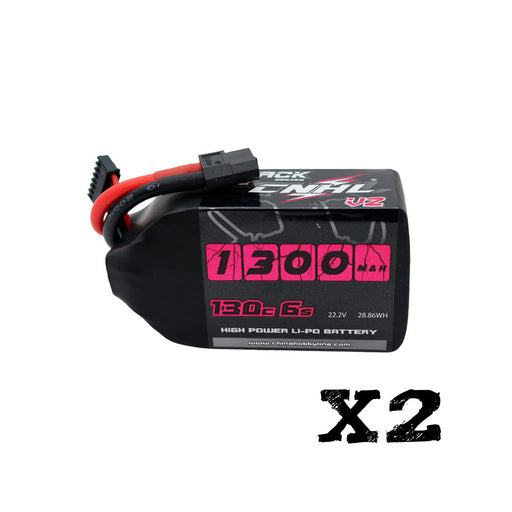
Pemeriksaan Kesesuaian Cepat 2 Packs CNHL Black Series V2.0 1300mAh 22.2V 6S 130C LiPo Battery dengan Colokan XT60 sangat cocok untuk pilot FPV yan...
Lihat detail lengkapSuku Cadang & Dukungan Jangka Panjang Kami memahami bahwa bagi pilot RC, dukungan suku cadang yang andal merupakan bagian penting untuk m...
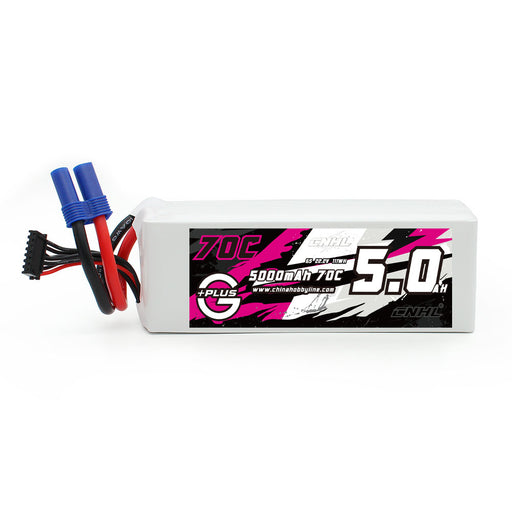
Lihat detail lengkapSpesifikasi: Nomor Stok: 500706EC5 Kapasitas: 5000mAh Voltase: 22.2V / 6-Sel / 6S1P Tingkat Discharge: 70C Kontinu / 140C Ledakan Tingkat Pengisi...
Lihat detail lengkap
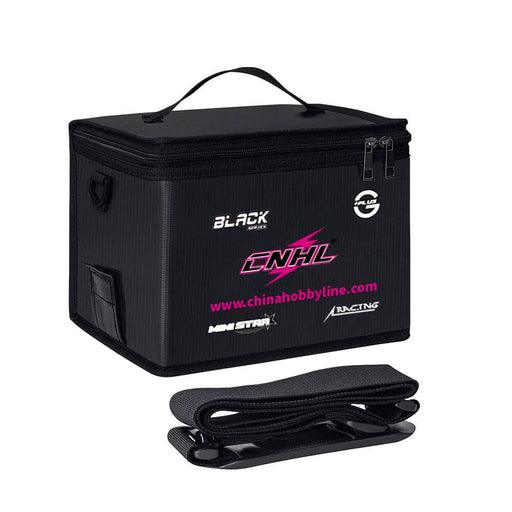
Tas Baterai LiPo CNHL dirancang untuk pengisian, transportasi, dan penyimpanan LiPo yang lebih aman di rumah atau di lapangan. Tas ini menambahkan ...
Lihat detail lengkapPemeriksaan Pemasangan Cepat 2 Paket CNHL Speedy Pizza Series Pro 1350mAh 6S 150C LiPo Battery dengan colokan XT60 dibuat untuk pilot FPV 5 inc...
Lihat detail lengkap

The CNHL Long Range Series BAK 65E 6350mAh 21700 Li-ion battery cell is built around one clear priority: maximum stored energy from a lightweight c...
Lihat detail lengkap

The CNHL Long Range Series BAK 50D 5000mAh 21700 Li-ion battery cell is designed for custom high-energy battery packs that need a strong balance be...
Lihat detail lengkap

The ISDT C4 EVO is a versatile smart battery charger built for AA, AAA and cylindrical rechargeable cells from compact 10440 batteries all the way ...
Lihat detail lengkap

The CNHL Long Range Series 6350mAh 21.6V 6S1P 21700 Li-ion battery combines six BAK 65E high-energy cells into a 137.16Wh pack designed for ultra-e...
Lihat detail lengkap

The CNHL Long Range Series 5000mAh 21.6V 6S1P 21700 Li-ion battery combines six BAK 50D cells into a compact 108Wh pack designed around long-range ...
Lihat detail lengkap




Tinggalkan komentar