
CNHL Lipo akut
CNHL pyrkii tarjoamaan korkealaatuisia Li-Po-akkuja ja RC-tuotteita kaikille harrastajille erinomaisella asiakaspalvelulla ja kilpailukykyisillä hinnoilla

The E-flite Conscendo 2.0m PNP makes a strong first impression, but not always in the way people expect. At first glance, the removable landing gear and larger 2-meter size grab most of the attention. Spend a little more time with the airplane, though, and the real story feels different. This is not just a stretched Conscendo Evolution 1.5m. It feels like a more complete, more mature version of the idea, with a wider flight envelope, more practical field use, and a much stronger sense of versatility than the first photos suggest.
That matters because the Conscendo name has always lived in an interesting space. It has never been a pure thermal machine in the sleepy old-school sense, and it has never been just a long-wing sport plane with a folding prop either. The appeal has always come from the mix: glide when the throttle is closed, real climb when the power comes in, enough speed to feel alive, and enough slow-flight control to keep the airplane approachable. The 2.0m version keeps that identity, but adds more runway practicality, more setup flexibility, and more room for pilots to decide how they want the airplane to behave.
That is what makes this release feel more important than a routine “larger version” update. The Conscendo 2.0m is the kind of airplane that makes more sense after a few flights than it does in the first product photo.
The E-flite Conscendo 2.0m does not depend on one single headline feature to feel interesting. What makes it stand out is how many useful ideas have been brought together in one airframe. The larger platform, the removable landing gear, the quick wing removal, the optional light path, the 8-channel capability, the vario support, and the crow potential all push it beyond the usual “bigger version” formula.
That is also why the airplane immediately feels like it has real character. Some pilots will love the runway-friendly gear right away. Others will prefer the cleaner gear-off look. Some will wish the lights were included from the start. Others will be perfectly happy keeping them optional so the airframe stays lighter and simpler by default. None of that hurts the airplane. If anything, it suggests the Conscendo 2.0m has enough personality and enough range to make people care how they want to use it.

The easiest mistake to make with the Conscendo 2.0m is to assume that size is the whole story. Yes, the airframe is larger. Yes, it carries more presence in the air. Yes, it looks more serious than the smaller models. But the more important part is what that extra size does to the flying feel.
In the air, the larger format gives the airplane a smoother, more settled, and more confident character without losing the broad speed envelope that made earlier Conscendo models so easy to enjoy. That kind of balance is not automatic. Plenty of scaled-up airplanes lose the playful, flexible side that made the smaller version fun in the first place. The Conscendo 2.0m keeps it. It still feels willing to slow down, float, climb, and carve around rather than becoming a one-note machine that only wants to be flown one way.
This is where the new version starts to feel more mature rather than simply larger. It carries itself like an airplane designed around actual field use, not just around the headline of “now available in 2 meters.”
At first glance, the landing gear looks like the most controversial part of the airplane. For some pilots, a Conscendo with wheels feels a little unusual. The silhouette is different. The vibe is different. It moves the airplane away from the image of a pure hand-launch, belly-land sailplane. Once the airplane is actually used the way it was intended, though, the gear starts to make a lot more sense.
It opens up runway takeoffs, taxiing, touch-and-go practice, and easier operation for pilots who do not enjoy hand launching. Just as important, it is not a permanent identity change. The gear can be removed quickly, so the airplane can still be flown in the cleaner, more traditional Conscendo style when that is the preferred mood. That flexibility matters because it broadens the audience. Some pilots will buy this model because it can roll from a smooth field. Others will buy it because it can do that and still go back to a gear-off setup in minutes.
In other words, the gear is not just a cosmetic add-on. It changes how the airplane fits into a real flying routine. That is a far more meaningful upgrade than it looks in a static photo.

One of the most useful ways to understand the Eflite Conscendo 2.0m is to stop trying to force it into one category. It is not a pure thermal glider in the old-school sense. It is not simply a hotliner. It is not just a sport plane with an efficient wing. It lives in the middle of those ideas, and that is exactly why it feels interesting.
Closed-throttle glide performance still matters here. So does slow-flight behavior. So does the ability to work energy through turns instead of leaning on the motor all the time. At the same time, this airframe clearly welcomes quicker climb-outs, more spirited passes, sport aerobatic behavior, and more runway-centered use than many traditional sailplane buyers would expect. That is what gives the Conscendo 2.0m its real identity. It is not trying to be one narrow thing. It is trying to cover a broader range of flying without feeling confused or compromised.
This hybrid character is also the reason battery choice changes the airplane so much. On a very single-purpose aircraft, battery choice mostly shifts duration and balance. On the Conscendo 2.0m, battery choice can move the plane along a spectrum from relaxed and glide-oriented to much more energetic and sport-driven.
The 4S versus 6S discussion is not just about “more power” versus “less power.” It is really about what kind of airplane the pilot wants to bring to the field that day.
On 4S, the E-flite Conscendo 2.0m leans further toward the sailplane side of its personality. It still climbs, it still covers ground, and it still feels capable, but it asks the pilot to think more about energy. It feels more like flying the airframe and less like letting the motor do all the work. That is not a weakness. For many glider-minded pilots, that is exactly where the charm lives.
On 6S, the airplane wakes up in a more obvious way. Climb becomes more immediate. The broad envelope becomes easier to access. The larger airframe feels more like it is showing what it was built to do instead of politely holding something back. This is the setup direction that brings out the bigger Conscendo personality most clearly.
That does not mean 4S is the compromise setting and 6S is the “real” one. It means the airplane supports two meaningful personalities. One is calmer and more glide-oriented. The other is more eager and more performance-centered. The better choice depends on what kind of session sounds more fun.
For pilots who want the more energetic side of the Eflite Conscendo 2.0m, a 6S setup sits in the most natural sweet spot. For pilots who want a smoother and more relaxed setup, 4S remains a very valid choice. Based on the current CNHL fit direction for this model, the two clearest starting points are a 6S 4000mAh pack for stronger all-around performance and a 4S 5000mAh pack for a calmer, glide-focused feel.
Those two directions make sense because they highlight two different strengths of the airplane. The 6S route brings out the stronger, more athletic side of the 2.0m airframe. The 4S route lets the model lean further into the smoother, more relaxed side of the experience without taking away what makes the airplane enjoyable.
For pilots who want the full breakdown of matching packs, including EC5 and IC5 search-fit options plus additional 4S, 6S, and LiHV choices, the collection page is here: best LiPo battery for E-flite Conscendo 2.0m PNP.
Many 2-meter airplanes do not lose buyers because they are difficult to fly. They lose buyers because they are annoying to live with. Transport becomes a mental barrier. Assembly becomes one more step between arrival and takeoff. Storage turns into a compromise. That is why the Conscendo 2.0m’s quick-release wing design and easy field assembly deserve more attention than they usually get in spec summaries.
This is the kind of convenience feature that changes how often a plane gets flown. A very capable airplane that is easy to break down and easy to reassemble has a much better chance of becoming a regular field companion instead of a “special day” model. On a smaller plane, that would be nice. On a 2-meter aircraft, it can be the difference between a purchase that gets used often and one that stays home too much.
Even a strong release does not appeal to everyone in exactly the same way, and the Conscendo 2.0m has a few obvious dividing lines.
One is visual. Not everyone loves the look of the landing gear, especially on a plane carrying the Conscendo name. Another is philosophical. Some pilots want lights included from the factory and see that as part of the fun. Others would rather keep lights optional and avoid paying for something they may never install. There is also the category question. Pilots who want a purer thermal machine may still see this as more of a sport glider than a traditional sailplane, while pilots coming from sport models may see that same blend as the airplane’s biggest strength.
Price will also shape expectations. Once a model moves into the range where buyers start thinking more carefully, the airplane has to justify itself through real usefulness rather than simple novelty. The good news here is that the Conscendo 2.0m gives buyers several different ways to enjoy it, which makes the price discussion a lot more practical than emotional.
The Conscendo 2.0m makes sense for at least three kinds of pilots.
First, it is a very natural target for existing Conscendo fans. Anyone who already liked the Evo because it could be both sporty and glidy at different moments will understand this model quickly. It feels like a bigger, more developed expression of the same idea rather than a reset.
Second, it fits pilots who have spent most of their time around sport planes and are curious about the wider flight envelope that glider-style aircraft can offer. This airplane is not trying to teach the hobby through boredom. It shows how glide, speed, slow flight, and energy management can all live in the same airframe.
Third, it works well for returning pilots who want one airframe with room to grow. The combination of optional gear, broad battery compatibility, runway operation, hand-launch potential, and advanced wing configuration paths gives the model more life than a plane that only does one trick well.
| Pilot Type | Best Direction | Why It Makes Sense |
|---|---|---|
| Glide-focused flyer | 4S setup | Smoother feel, easiergoing sessions, more emphasis on energy management |
| Balanced all-around pilot | 6S 4000mAh direction | Strong climb, broad envelope, and a very natural fit for the larger airframe |
| Pilot chasing the stronger Conscendo feel | 6S setup | Brings out the more energetic, sport-oriented side of the model |
| Pilot worried about runway use and transport | Either 4S or 6S | The removable gear and quick-release structure matter as much as battery choice |
The Eflite Conscendo 2.0m PNP is one of those rare RC airplanes that becomes more convincing the longer you spend with it. In a single release, it manages to speak to runway flyers, hand-launch flyers, returning pilots, long-time Conscendo fans, and people who simply want a large electric sailplane that does not feel trapped in one role.
It is not the purest sailplane in spirit, and that is exactly why it may end up being so appealing. The best way to think about it is not as a traditional glider with a motor attached, but as a broad-envelope hybrid that can soar, slow down, climb hard, and still feel playful. The removable gear, advanced wing potential, broad battery range, and easy transport story all push it further in that direction.
If the goal is a very narrow specialty aircraft, there are more focused choices in the hobby. But if the goal is a 2-meter airplane that can do many things well without feeling compromised or dull, the new E-flite Conscendo 2.0m is a very strong answer. It is the kind of airplane that probably wins more people over after a few flights than it does in the first product image, and that may be the clearest sign that the design got the important things right.
Is the E-flite Conscendo 2.0m more of a sport glider or a true sailplane?
It leans more toward a hybrid sport glider than a pure traditional sailplane. That is part of its appeal. It can still glide and slow down well, but it also carries a broader, more playful flight envelope than a classic thermal-only design.
Is 4S enough for the Eflite Conscendo 2.0m PNP?
Yes. A 4S setup is a valid choice, especially for pilots who want a smoother, more relaxed, and more glide-oriented experience rather than the stronger punch of 6S.
Why are so many pilots interested in the 8-channel setup and crow potential?
Because those features make the airplane feel more flexible and more advanced. They give owners more room to explore landing control, wing behavior, and sailplane-style setup depth beyond a simple basic flap configuration.
Does the optional landing gear actually improve the experience?
For many pilots, yes. It adds taxi, takeoff, landing, and touch-and-go practicality, especially on smooth fields. Just as importantly, it can be removed when a cleaner gear-off setup is preferred.
Should you choose 4S or 6S for the Conscendo 2.0m?
Choose 4S if you want a calmer, glide-focused setup. Choose 6S if you want stronger climb, quicker response, and a more energetic expression of what the larger Conscendo airframe can do.
Where can you find the best LiPo battery for the E-flite Conscendo 2.0m?
A full CNHL setup guide with matching 4S, 6S, EC5, IC5, and adapter-friendly options is here: Best LiPo Battery for E-flite Conscendo 2.0m PNP.
CNHL pyrkii tarjoamaan korkealaatuisia Li-Po-akkuja ja RC-tuotteita kaikille harrastajille erinomaisella asiakaspalvelulla ja kilpailukykyisillä hinnoilla
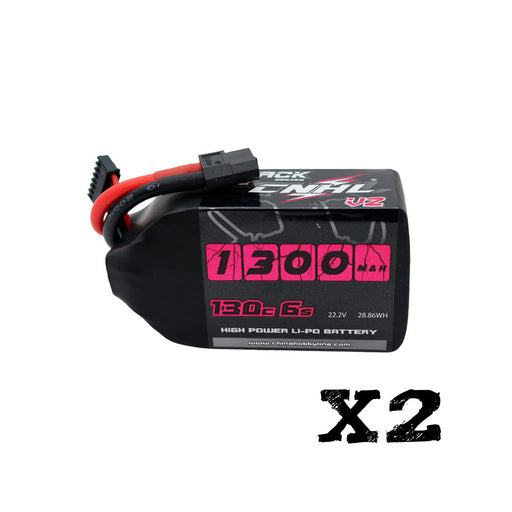
Nopea sovitustarkistus 2 Packs CNHL Black Series V2.0 1300mAh 22.2V 6S 130C LiPo-akku XT60-liittimellä sopii erinomaisesti FPV-lentäjille, jotka ha...
Näytä täydet tiedotVaraosat ja pitkäaikainen tuki Tiedämme, että RC-piloteille luotettava varaosatuki on tärkeä osa sitä, että lentokone pysyy lentokunnossa vuo...
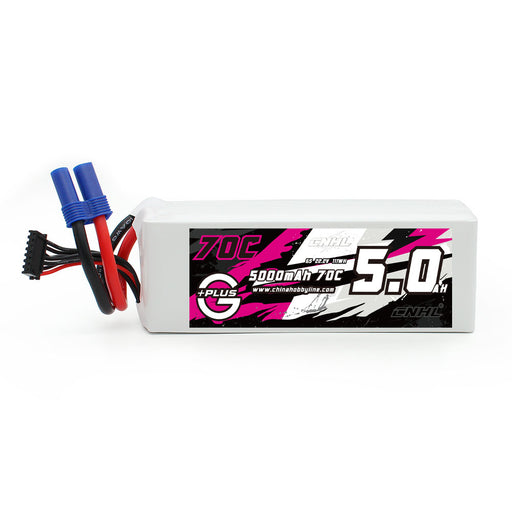
Näytä täydet tiedotTekniset tiedot: Varastonumero: 500706EC5 Kapasiteetti: 5000mAh Jännite: 22,2V / 6-kennoa / 6S1P Purkunopeus: 70C jatkuva / 140C hetkellinen Lata...
Näytä täydet tiedot
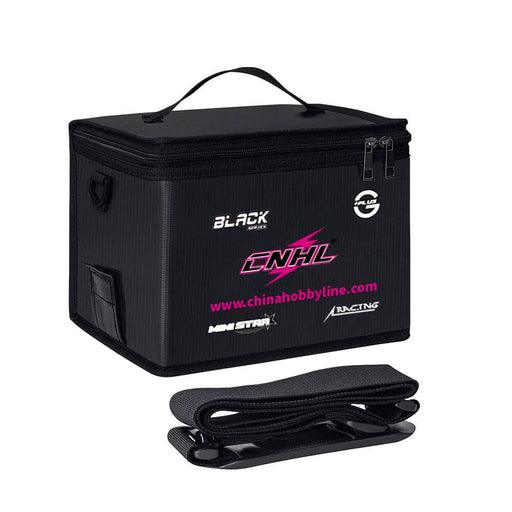
CNHL LiPo Battery Bag on suunniteltu turvallisempaan LiPo-lataukseen, kuljetukseen ja säilytykseen kotona tai kentällä. Se lisää käytännöllisen suo...
Näytä täydet tiedotNopea sovitustarkistus 2 paketin CNHL Speedy Pizza Series Pro 1350mAh 6S 150C LiPo -akku XT60-liittimellä on suunniteltu 5-tuuman FPV-piloteill...
Näytä täydet tiedot

The CNHL Long Range Series BAK 65E 6350mAh 21700 Li-ion battery cell is built around one clear priority: maximum stored energy from a lightweight c...
Näytä täydet tiedot

The CNHL Long Range Series BAK 50D 5000mAh 21700 Li-ion battery cell is designed for custom high-energy battery packs that need a strong balance be...
Näytä täydet tiedot

The ISDT C4 EVO is a versatile smart battery charger built for AA, AAA and cylindrical rechargeable cells from compact 10440 batteries all the way ...
Näytä täydet tiedot

The CNHL Long Range Series 6350mAh 21.6V 6S1P 21700 Li-ion battery combines six BAK 65E high-energy cells into a 137.16Wh pack designed for ultra-e...
Näytä täydet tiedot

The CNHL Long Range Series 5000mAh 21.6V 6S1P 21700 Li-ion battery combines six BAK 50D cells into a compact 108Wh pack designed around long-range ...
Näytä täydet tiedot




Jätä kommentti