
CNHL Lipo akut
CNHL pyrkii tarjoamaan korkealaatuisia Li-Po-akkuja ja RC-tuotteita kaikille harrastajille erinomaisella asiakaspalvelulla ja kilpailukykyisillä hinnoilla

Internal resistance is one of the fastest ways to explain why two LiPo batteries with similar labels can feel completely different in real use. One pack feels sharp, clean, and confident under load. Another feels soft, sags early, and gets warm too quickly. The difference is not always capacity or printed C rating. Very often, a large part of the answer is internal resistance, usually shortened to IR.
Quick answer: lower internal resistance usually helps a LiPo battery deliver cleaner power with less sag and less wasted energy as heat. Higher internal resistance usually makes the battery feel weaker under load, especially in setups that demand strong, repeated current. IR is not the only thing that matters, but it is one of the clearest indicators of how healthy and capable a pack still feels in real driving or flying.
If you want the broader C-rating foundation first, start with LiPo C Rating Explained: What 30C, 100C, and 130C Really Mean. For the wider cluster view, continue into the LiPo C Rating and Battery Performance Guide.
Internal resistance is the battery’s internal opposition to current flow. In simpler terms, it is part of the reason energy does not move through the pack perfectly. Every battery has some resistance inside it. The problem starts when that resistance becomes high enough to make the pack lose voltage more easily, waste more energy as heat, and feel weaker when the setup asks for real power.
That is why IR matters so much in RC. It is not just a technical number hidden inside a charger menu. It directly affects what the battery feels like when the throttle is used hard. Lower IR usually means cleaner power delivery. Higher IR usually means more sag, more heat, and less confidence once the model is under load.

A lower-IR battery usually feels better because more of its energy goes into actual output instead of being lost as heat. In practice, that often means cleaner throttle response, less sudden softness under load, and a more stable feeling once the run or flight gets serious. Users often describe this as a pack feeling stronger, fresher, or more willing.
That does not mean IR is the only performance variable, but it does explain a lot of what hobbyists feel without always being able to name it. When a battery seems to punch harder, sag less, and stay more composed during repeated use, lower internal resistance is often part of the reason.
When internal resistance rises, the battery usually starts feeling worse in the ways users notice most. Voltage drops more easily under load. Heat builds up faster. The pack may still function, but it no longer feels clean or eager. That is why an old battery can technically still work while already feeling disappointing in real use.
High IR does not always mean the battery is instantly unusable, but it usually means the pack is losing the qualities that made it feel strong in the first place. In a mild setup, the change may feel gradual. In a demanding setup, the difference can become obvious very quickly.
Internal resistance and voltage sag are not exactly the same thing, but they are closely connected. Sag is what you notice when voltage drops under load. IR is one of the main reasons that drop becomes worse. A battery with higher internal resistance usually struggles more once the setup asks for real current, so the voltage falls faster and the pack feels softer.
This is one reason old or tired packs often feel weak even before they are fully discharged. The label may still say the same capacity and the same C rating, but the voltage no longer holds as cleanly when the load comes in. That is why users often describe a high-IR battery as one that “still works, but feels flat.”
If you want the full breakdown of loaded voltage drop itself, continue into What Is Voltage Sag? Causes, Effects, and How to Reduce It.

This is where a lot of users get misled. A high printed C rating does not guarantee low internal resistance. Two packs can both say 100C and still feel very different in the model. One may hold voltage well and stay cleaner under load. The other may sag earlier and feel softer, even though the wrapper looks just as aggressive.
This is one reason some Amazon brands attract skepticism from experienced hobbyists. Large C-rating claims may look convincing on the label, but real under-load behavior can still vary a lot. If a pack sags early, heats up too quickly, or shows uneven cell behavior, the real performance story is not as impressive as the wrapper suggests.
That is why internal resistance helps explain the difference between label claims and real-world behavior. C rating can describe intended discharge ability, but IR often tells you more about how healthy and capable the battery still feels right now. If you want that bigger performance question unpacked first, see Does Higher C Rating Really Matter? and Burst C Rating vs Continuous C Rating.
Internal resistance usually rises as a battery ages. That can happen from normal cycle wear, heat stress, poor storage habits, over-discharge, over-charging, cell imbalance, or simply repeated hard use. A pack that felt sharp when new may slowly lose that clean feeling as IR climbs over time.
Temperature matters too. A cold battery often shows worse apparent IR behavior and feels weaker under load, even if the pack itself is not permanently damaged. That is one reason battery feel can change so much in winter. The key point is that IR is not a static number. It changes with age, condition, and circumstances.
If you want to see how temperature changes battery feel in real use, continue into LiPo Batteries in Cold Weather: Performance Loss, Voltage Sag, and What to Do.
This is one of the most common questions. There is no single magic IR number that defines every good LiPo battery. A reading that looks fine for one pack may look high for another, because cell count, capacity, pack size, brand, age, and temperature all influence the result.
In practice, lower IR is usually better, but consistency matters just as much. A pack with fairly even cell readings is usually a healthier sign than a pack with one clearly weak cell. Trend matters too. A battery that has climbed noticeably over time is often more concerning than one single isolated reading taken on one random day.
| Situation | What to focus on |
|---|---|
| New pack | Lower and balanced IR across cells |
| Used pack | Whether IR has risen noticeably over time |
| Comparing packs | Compare similar voltage and capacity packs only |
| One weak cell | Large cell-to-cell IR gaps are a warning sign |
The easiest way to check LiPo internal resistance is to use a charger or battery checker that can read IR. Many modern chargers show IR by individual cell, which is much more useful than looking at a single pack total. The main goal is not just to get one number, but to understand how even the cells are and how the pack compares to similar batteries.
A simple practical process looks like this:
It is also important to remember that different chargers may show slightly different IR values. Temperature affects the reading too. That is why IR is best used as a comparison and health-tracking tool, not as one perfect universal truth.
If you want the practical step-by-step version focused on charger readings, cell comparison, and trend tracking, continue into How to Measure the Internal Resistance of a LiPo Battery.
IR becomes most useful when you stop treating it like a random technical number and start using it for practical decisions. It helps explain why one battery feels stronger than another. It helps track whether a pack is aging well or falling off. It helps reveal when one cell is drifting weaker than the others. And it helps show why a battery that still charges normally may already feel disappointing in real use.
That said, IR should not be treated like the only number that matters. A battery can have decent IR and still be the wrong pack because of size, voltage, connector choice, or application mismatch. The best use of IR is as part of a bigger picture, not as a replacement for common sense.
If you want the user-facing version of this same problem, continue into Why Some LiPo Batteries Feel Weak Despite Similar Specs.
In FPV, higher internal resistance usually shows up as worse punch and heavier sag, especially after repeated hard throttle snaps. A pack that looked fine on the charger may suddenly feel flat in the air when the current demand gets serious. In high-performance RC cars, the same thing shows up in weaker launches, softer repeated acceleration, and more heat build-up once the setup is run hard.
In airplanes and EDF jets, sustained load often makes IR even easier to notice. A battery with rising internal resistance may still get the model airborne, but it often feels less confident in the air and loses its clean delivery earlier in the run. That is why IR matters across very different RC categories even though the symptoms may show up in slightly different ways.
| Use case | How high IR usually shows up | What users often notice |
|---|---|---|
| FPV freestyle / racing | More sag during punch-outs | Softer power and weaker recovery feel |
| High-performance RC cars | More heat and weaker repeated acceleration | Less punch and less consistency over the run |
| Airplanes / EDF jets | Earlier drop in clean sustained delivery | Less confident power once load stays high |
For the core C-rating definition page, continue into LiPo C Rating Explained: What 30C, 100C, and 130C Really Mean. For the broader question of whether bigger numbers really improve performance, see Does Higher C Rating Really Matter?. For the continuous-versus-burst part of the label, continue into Burst C Rating vs Continuous C Rating. If you want the loaded-voltage symptom explained more directly, continue into What Is Voltage Sag? Causes, Effects, and How to Reduce It. If you want the practical step-by-step version of checking IR, continue into How to Measure the Internal Resistance of a LiPo Battery. For the wider cluster view, continue into the LiPo C Rating and Battery Performance Guide.
What is internal resistance in a LiPo battery?
It is the battery’s internal opposition to current flow, and it strongly affects sag, heat, and how strong the pack feels under load.
Is lower internal resistance better?
Usually yes. Lower IR generally helps a battery deliver cleaner power with less sag and less wasted energy as heat.
Does high internal resistance cause voltage sag?
It is one of the main reasons sag becomes worse. Higher IR usually makes the battery struggle more once current demand rises.
Why does an old LiPo battery feel weak?
Because internal resistance often rises with age, cycle wear, heat stress, and storage damage, which makes the battery feel softer under load.
Can two batteries with the same C rating have different IR?
Yes. That is one reason two batteries with similar labels can still feel very different in real use.
What is a bad internal resistance reading for a LiPo?
There is no single universal number. It is better to compare similar packs, look at cell balance, and watch whether IR rises noticeably over time.
Should I replace a battery if its internal resistance rises?
Not always immediately, but rising IR is a warning sign. If the pack also sags badly, heats up too fast, or feels weak in use, replacement becomes more likely.
CNHL pyrkii tarjoamaan korkealaatuisia Li-Po-akkuja ja RC-tuotteita kaikille harrastajille erinomaisella asiakaspalvelulla ja kilpailukykyisillä hinnoilla
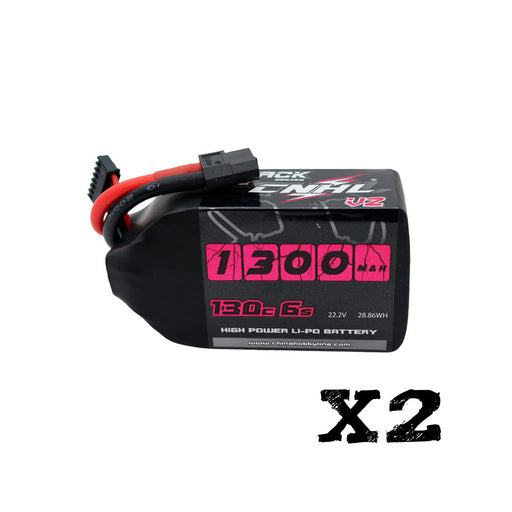
Nopea sovitustarkistus 2 Packs CNHL Black Series V2.0 1300mAh 22.2V 6S 130C LiPo-akku XT60-liittimellä sopii erinomaisesti FPV-lentäjille, jotka ha...
Näytä täydet tiedotVaraosat ja pitkäaikainen tuki Tiedämme, että RC-piloteille luotettava varaosatuki on tärkeä osa sitä, että lentokone pysyy lentokunnossa vuo...
Näytä täydet tiedot
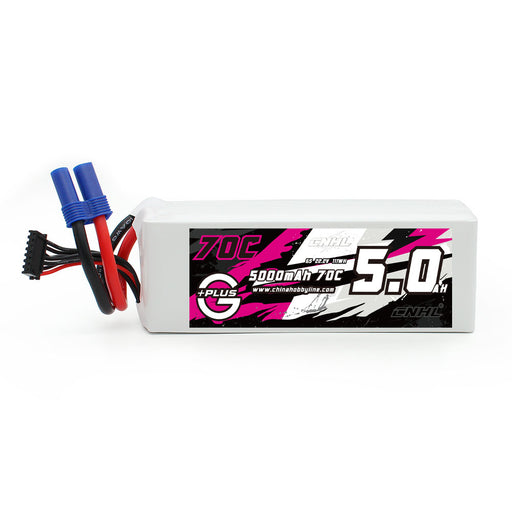
Tekniset tiedot: Varastonumero: 500706EC5 Kapasiteetti: 5000mAh Jännite: 22,2V / 6-kennoa / 6S1P Purkunopeus: 70C jatkuva / 140C hetkellinen Lata...
Näytä täydet tiedot
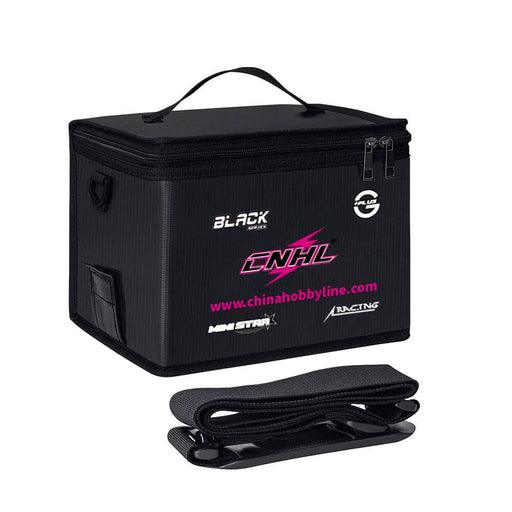
CNHL LiPo Battery Bag on suunniteltu turvallisempaan LiPo-lataukseen, kuljetukseen ja säilytykseen kotona tai kentällä. Se lisää käytännöllisen suo...
Näytä täydet tiedot

Nopea sovitustarkistus 2 paketin CNHL Speedy Pizza Series Pro 1350mAh 6S 150C LiPo -akku XT60-liittimellä on suunniteltu 5-tuuman FPV-piloteill...
Näytä täydet tiedot

Quick Fit Check The CNHL Speedy Pizza Series 2200mAh 22.2V 6S 120C LiPo Battery with XT60 Plug combines the familiar 2200mAh 6S format with a ligh...
Näytä täydet tiedot

Quick Fit Check The CNHL Speedy Pizza Series 2200mAh 14.8V 4S 120C LiPo Battery with XT60 Plug combines a widely used 2200mAh 4S format with a sli...
Näytä täydet tiedot

Quick Fit Check The CNHL Speedy Pizza Series 2200mAh 11.1V 3S 120C LiPo Battery with XT60 Plug takes the familiar 3S 2200mAh aircraft battery form...
Näytä täydet tiedot

The CNHL Long Range Series BAK 50D 5000mAh 21700 Li-ion battery cell is designed for custom high-energy battery packs that need a strong balance be...
Näytä täydet tiedot

The ISDT C4 EVO is a versatile smart battery charger built for AA, AAA and cylindrical rechargeable cells from compact 10440 batteries all the way ...
Näytä täydet tiedot


Jätä kommentti