
CNHL Lipo Batteries
CNHL aim at providing high-quality Li-Po batteries and RC products to all hobby enthusiasts with excellent customer services and competitive prices

Burst C rating and continuous C rating often appear together on LiPo battery labels, but they do not mean the same thing and they should not be treated the same way. Many hobbyists notice the larger number first, assume it is the most important one, and end up judging the battery by the least useful figure on the label. That is one reason LiPo battery specifications can look more impressive on the wrapper than they feel in real driving or flying.
Quick answer: continuous C rating matters more for choosing a LiPo battery because it is meant to describe the pack’s ongoing discharge ability, while burst C rating only refers to short peak output. Burst rating can still matter in sudden high-load moments, but it should never be used as the main number for comparing batteries.
If you want the broader foundation first, start with LiPo C Rating Explained: What 30C, 100C, and 130C Really Mean. If you want the wider cluster view, continue into the LiPo C Rating and Battery Performance Guide.
Continuous C rating is supposed to describe how much current a LiPo battery can deliver on an ongoing basis, not just for one quick spike. In practical terms, this is the number that is meant to be closer to the battery’s real working output during normal heavy use. That is why it is usually the more important rating when comparing two packs.
If a battery is being pushed in a way that feels normal for the setup, the continuous rating is the part of the label that should matter more. It is more useful for understanding whether the pack can support repeated throttle use, sustained load, and the overall demands of the system without collapsing into heavy sag too early.
Burst C rating refers to a short peak discharge ability. It is meant to describe what the battery may be able to deliver for a brief moment, such as a hard throttle hit, a quick acceleration burst, or a sudden punch-out. It is not supposed to describe what the battery can handle as a normal continuous working load.
This is where a lot of confusion begins. Because burst rating is often the bigger number, it tends to look more impressive on the wrapper. But the fact that it is larger does not make it more important. In many cases, it is the less useful number for making an actual buying decision.
| Rating type | What it means | How long it applies | How useful it is for choosing a battery |
|---|---|---|---|
| Continuous C rating | Ongoing discharge ability | Sustained use | High |
| Burst C rating | Short peak discharge ability | Very brief spikes | Secondary only |
The real difference is simple: continuous C rating is supposed to tell you what the battery can keep doing, while burst C rating only suggests what it may be able to do briefly. In everyday RC use, that difference matters a lot. Most runs and flights are not defined by one single spike. They are defined by how the battery behaves over repeated throttle use, repeated load, and the way it holds voltage once the fun actually starts.
That is why continuous discharge is the better comparison point. Burst rating can still be relevant, especially in sudden high-load moments, but it should sit in the background. When users treat burst like the main number, they often end up overestimating what the battery will feel like in real use.

The confusion usually starts on the battery label itself. Burst numbers are often bigger, easier to notice, and easier to market. For a new buyer, that larger number looks like the stronger promise. It feels natural to assume that the most aggressive-looking number must be the most meaningful one.
But the buying decision becomes clearer once you understand that burst is not the normal working number. It is more like a short-duration headline figure. That may still matter a little, but it should not be the foundation of how the battery is judged.
For most users, continuous C rating matters more. It is the more useful first filter because it is meant to reflect how the battery handles ongoing load in real use. If the pack starts struggling once the setup is used hard for more than a brief moment, a high burst number usually does not change much.
That said, continuous rating is still only one part of the picture. Real battery performance also depends on voltage sag, internal resistance, temperature, battery age, and the overall quality of the pack. A battery can look strong on the label and still feel average once the setup is actually under load.
If you want to go deeper into that side of the decision, the most useful next reads are Does Higher C Rating Really Matter? and the broader LiPo C Rating and Battery Performance Guide.
A battery can advertise a very high burst figure and still feel unimpressive in actual use. If the continuous discharge behavior is weak, or if the pack sags badly under repeated load, the driving or flying experience will still feel soft. This is why burst C rating can easily create false confidence when it is read in isolation.
Two packs can also advertise very similar burst numbers and still behave differently once the setup is genuinely demanding. Real-world battery feel comes from sustained output quality, not just peak marketing figures. That is why burst should be treated as supporting information, not the main reason to buy one battery over another.
If you want to understand why two batteries with similar-looking labels can still feel very different under load, continue into How Internal Resistance Affects LiPo Performance.
In FPV, burst rating does have some meaning during sudden punch-outs, hard throttle snaps, and quick recovery moments. But even there, the overall feel of the pack usually depends more on how well it controls sag over repeated use than on one short peak number. A battery that looks impressive in burst but sags badly after a few hard moves still does not feel like a strong pack.
In RC cars, the same pattern shows up during launches, throttle hits, and repeated acceleration. Burst may help describe short spikes, but the truck or buggy will still reveal whether the battery has real continuous strength once the trigger keeps getting used. In airplanes and EDF jets, sustained load matters even more, which makes continuous discharge logic usually more useful than burst claims.
| Use case | Does burst matter? | What usually matters more |
|---|---|---|
| FPV freestyle / racing | Yes, somewhat | Real sag control and sustained output quality |
| High-performance RC cars | Yes, somewhat | Repeated throttle stability and usable discharge behavior |
| Airplanes / EDF jets | Usually less | Sustained load handling and consistent delivery |
If the behavior you notice is really about the battery going soft under load, the next useful read is What Is Voltage Sag? Causes, Effects, and How to Reduce It.
The better way to read a LiPo label is to treat burst C rating as a secondary clue, not the headline truth. Start with the battery voltage, then capacity, then the continuous C rating. After that, judge the battery more cautiously by brand consistency, real-world feedback, voltage sag behavior, and if possible, internal resistance.
That order is not as exciting as chasing the biggest printed number, but it is much closer to how experienced hobbyists actually choose batteries. It keeps the focus on what the battery is likely to feel like once it is in the model, not just on what the wrapper says in large text.
If you want to see how label claims and real battery behavior can separate in practical testing, continue into Why Real LiPo Battery Performance Matters: What 17 Packs Reveal About True C Ratings.
For the core definition page, continue into LiPo C Rating Explained: What 30C, 100C, and 130C Really Mean. For the broader question of whether bigger numbers create better real performance, see Does Higher C Rating Really Matter?. If you want to understand why similar labels can still produce different real-world battery feel, continue into How Internal Resistance Affects LiPo Performance. If the softer feel you notice is really about loaded voltage drop, the next useful read is What Is Voltage Sag? Causes, Effects, and How to Reduce It. For the wider cluster view, continue into the LiPo C Rating and Battery Performance Guide.
What is burst C rating on a LiPo battery?
Burst C rating refers to the battery’s short peak discharge ability for very brief moments of high load.
What is continuous C rating?
Continuous C rating is supposed to describe the battery’s ongoing discharge ability during normal sustained use.
Which matters more, burst or continuous C rating?
Continuous C rating matters more for choosing a battery because it is the more useful reference for real ongoing performance.
Can I choose a battery by burst C rating alone?
No. Burst should only be treated as secondary information. It is not the main number for comparing batteries.
Why do some batteries advertise burst more clearly?
Because it is the larger number and it looks more impressive, even though it is usually less useful than continuous discharge information.
Does higher burst rating mean better real-world battery performance?
Not automatically. Real-world performance depends much more on sustained delivery, sag control, internal resistance, and overall pack quality.
CNHL aim at providing high-quality Li-Po batteries and RC products to all hobby enthusiasts with excellent customer services and competitive prices
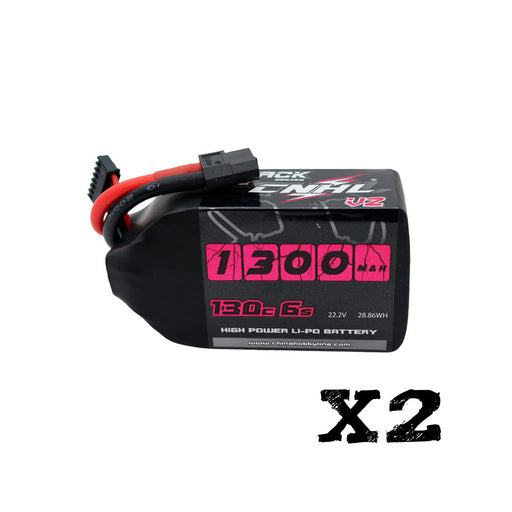
Quick Fit Check The 2 Packs CNHL Black Series V2.0 1300mAh 22.2V 6S 130C LiPo Battery with XT60 Plug is a strong fit for FPV pilots who want a prov...
View full detailsSpare Parts & Long-Term Support We know that for RC pilots, reliable spare parts support is an important part of keeping an aircraft fl...
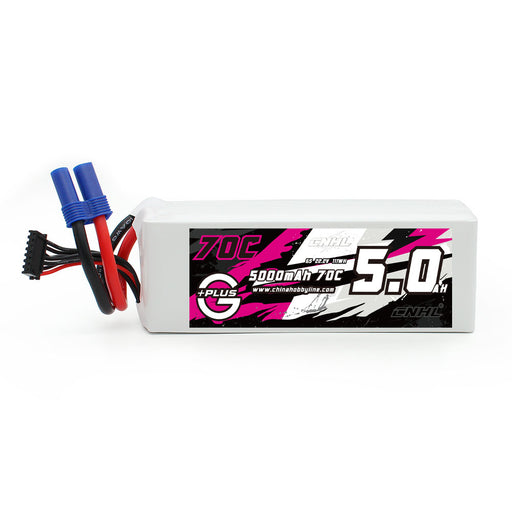
View full detailsSpecifications: Stock Number: 500706EC5 Capacity: 5000mAh Voltage: 22.2V / 6-Cell / 6S1P Discharge Rate: 70C Continual / 140C Burst Charge Rate: ...
View full details
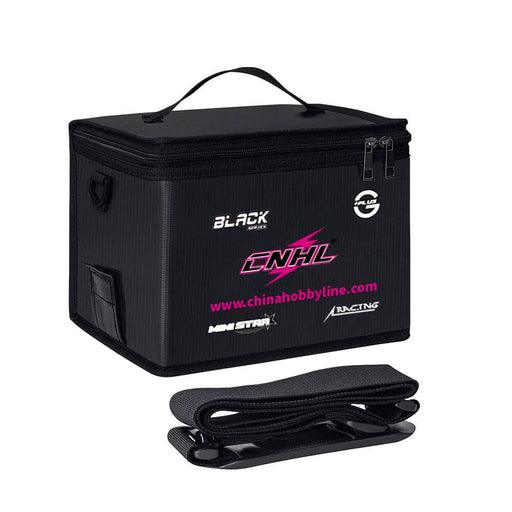
The CNHL LiPo Battery Bag is designed for safer LiPo charging, transport, and storage at home or at the field. It adds a practical layer of protect...
View full details

Quick Fit Check The 2 Packs CNHL Speedy Pizza Series Pro 1350mAh 6S 150C LiPo Battery with XT60 Plug is built for 5-inch FPV pilots who want a ...
View full details

Quick Fit Check The CNHL Speedy Pizza Series 2200mAh 22.2V 6S 120C LiPo Battery with XT60 Plug combines the familiar 2200mAh 6S format with a ligh...
View full details

Quick Fit Check The CNHL Speedy Pizza Series 2200mAh 14.8V 4S 120C LiPo Battery with XT60 Plug combines a widely used 2200mAh 4S format with a sli...
View full details

Quick Fit Check The CNHL Speedy Pizza Series 2200mAh 11.1V 3S 120C LiPo Battery with XT60 Plug takes the familiar 3S 2200mAh aircraft battery form...
View full details

The CNHL Long Range Series BAK 50D 5000mAh 21700 Li-ion battery cell is designed for custom high-energy battery packs that need a strong balance be...
View full details

The ISDT C4 EVO is a versatile smart battery charger built for AA, AAA and cylindrical rechargeable cells from compact 10440 batteries all the way ...
View full details


Leave a comment