

CNHL Lipo akut
CNHL pyrkii tarjoamaan korkealaatuisia Li-Po-akkuja ja RC-tuotteita kaikille harrastajille erinomaisella asiakaspalvelulla ja kilpailukykyisillä hinnoilla

LiPo battery performance is one of the most talked-about topics in RC, and also one of the easiest to oversimplify. Many users start by looking at one big printed number on the wrapper, usually the C rating, and assume that number tells them nearly everything they need to know. In real use, it does not work that way. A battery can look strong on the label and still feel average in the model. Another can look less dramatic on paper and still deliver cleaner, more stable power once the load rises.
Quick answer: LiPo battery performance is not controlled by one number alone. C rating matters, but so do burst versus continuous discharge, internal resistance, voltage sag, battery age, temperature, and how demanding the actual setup is. The best way to judge a LiPo battery is to understand how those factors connect rather than relying on one headline specification.
This guide brings the main LiPo performance ideas into one place, so it is easier to understand how the label, the battery’s real condition, and actual load all work together in practice.
Real LiPo battery performance comes from how well the pack handles load, not just from how impressive the wrapper looks. The most important factors usually include the battery’s stated C rating, whether the label is being read correctly, how high or low the pack’s internal resistance is, how badly the voltage sags once current demand rises, and whether the battery is actually a good match for the setup.
That is why two batteries with similar advertised specs can still feel very different in the same model. One may stay cleaner under repeated throttle use. Another may sag earlier, heat up faster, or lose punch sooner than expected. The label matters, but the label is only the start.
| Factor | What it affects | Why it matters |
|---|---|---|
| C rating | Claimed discharge ability | Sets expectations, but does not guarantee real-world strength |
| Burst vs continuous | How the label should be read | Helps users avoid overvaluing short peak numbers |
| Internal resistance | Sag, heat, punch, and battery health | Explains why similar-looking packs can feel very different |
| Voltage sag | Loaded voltage drop | One of the clearest real-world symptoms users actually feel |
| Real use case | How demanding the setup is | Determines whether the battery is truly well matched |
C rating is the number most users notice first because it is usually printed large and meant to look performance-oriented. In simple terms, it is supposed to describe the battery’s discharge ability relative to its capacity. That makes it an important starting point, but not a complete performance verdict.
If you want the full definition first, the best place to start is LiPo C Rating Explained: What 30C, 100C, and 130C Really Mean. That page covers the basic meaning of C rating and why numbers like 30C, 100C, and 130C attract so much attention in RC.
A larger printed C number can help, but only when the rating is honest and the setup is demanding enough to use it. In many cases, higher numbers look more impressive than the actual difference users feel on the ground or in the air. That is why some batteries with eye-catching specs still fail to feel especially strong once the load rises.
If you want that question answered directly, continue into Does Higher C Rating Really Matter? The Truth About LiPo Battery Performance. That page focuses on when larger C ratings really help and when they mostly create label appeal.
One reason users misread LiPo labels is that batteries often show both continuous and burst C ratings. The burst number is usually larger and easier to notice, but it is not usually the better comparison number. Continuous discharge is the one that matters more for real sustained use.
If you want the full breakdown, see Burst C Rating vs Continuous C Rating: What Actually Matters in a LiPo Battery?. That article explains why the label can be technically correct and still easy to misread.
This is where the discussion becomes much more useful. Internal resistance often explains why similar-looking batteries behave differently once real current demand arrives. Lower IR usually helps a pack hold voltage more cleanly, waste less energy as heat, and feel sharper under load. Higher IR usually means earlier sag, softer response, and a battery that feels older or weaker than the label suggests.
If you want the deeper explanation, continue into How Internal Resistance Affects LiPo Performance. That page explains why IR is one of the most important hidden numbers behind real-world battery behavior.
For many hobbyists, voltage sag is the first battery symptom they actually feel. The pack may look fine at rest, but once the setup demands real current, the voltage drops and the model feels softer. Punch weakens, power flattens out earlier, and the whole setup loses some of its clean feel.
If you want a full explanation of what sag is, why it happens, and how to reduce it, go to What Is Voltage Sag? Causes, Effects, and How to Reduce It. That page connects the symptom users notice to the deeper causes behind it.

These five ideas describe the same battery from different angles. C rating is the claim printed on the label. Burst versus continuous helps explain how to read that claim more accurately. Internal resistance helps explain why two similar-looking packs can feel different under load. Voltage sag is the symptom users actually notice when the battery cannot hold voltage cleanly enough for the setup.
Put together, they explain why a battery can look strong on paper but still feel average in real use. The wrapper may suggest one level of performance, but real battery behavior is shaped by load, sag, internal resistance, temperature, age, and the overall quality of the pack.
In practice, battery performance is easiest to judge in a simple order. Start with the setup requirements first, then use the label more intelligently, and finally trust what the battery actually does under load.
That process is less exciting than choosing the battery with the biggest number on the wrapper, but it is much closer to how experienced RC users actually make better battery decisions.
| Topic | What it explains | Best page to read |
|---|---|---|
| C rating basics | What the label is trying to say | LiPo C Rating Explained |
| Higher C rating claims | Whether bigger numbers really help | Does Higher C Rating Really Matter? |
| Burst vs continuous | How to read the label correctly | Burst C Rating vs Continuous C Rating |
| Internal resistance | Why similar batteries can feel different | How Internal Resistance Affects LiPo Performance |
| Voltage sag | What users actually feel under load | What Is Voltage Sag? |
If you are new to LiPo performance, the best order is usually this:
If you are already dealing with a battery that feels weak or inconsistent, this order usually makes more sense:
If you want to go further, the most useful next support topics include real-world battery comparison, internal resistance measurement, and how cold weather changes LiPo behavior under load. These pages help extend the performance picture beyond the label itself.
Why Real LiPo Battery Performance Matters: What 17 Packs Reveal About True C Ratings
How to Measure the Internal Resistance of a LiPo Battery
LiPo Batteries in Cold Weather: Performance Loss, Voltage Sag, and What to Do
What affects LiPo battery performance the most?
Real performance usually depends on a mix of C rating, how the label is interpreted, internal resistance, voltage sag, battery age, temperature, and how demanding the setup is.
Is C rating the best way to compare LiPo batteries?
No. It is an important starting point, but it does not tell the whole story on its own.
What is the difference between burst and continuous C rating?
Continuous rating is the more useful number for sustained use, while burst rating only refers to short peak output.
Why do similar batteries feel different in real use?
Because similar labels do not guarantee similar internal resistance, sag behavior, battery age, or overall pack quality.
Does internal resistance matter more than C rating?
Not always more, but it often explains real-world differences better than the label alone.
What does voltage sag mean?
It means the battery voltage is dropping under load, often because the setup is demanding more than the pack can hold cleanly at that moment.
How do I judge whether a LiPo battery is still strong?
Look at how it behaves under load, how much it sags, how much heat it builds, how balanced the cells are, and whether internal resistance has risen noticeably over time.
CNHL pyrkii tarjoamaan korkealaatuisia Li-Po-akkuja ja RC-tuotteita kaikille harrastajille erinomaisella asiakaspalvelulla ja kilpailukykyisillä hinnoilla
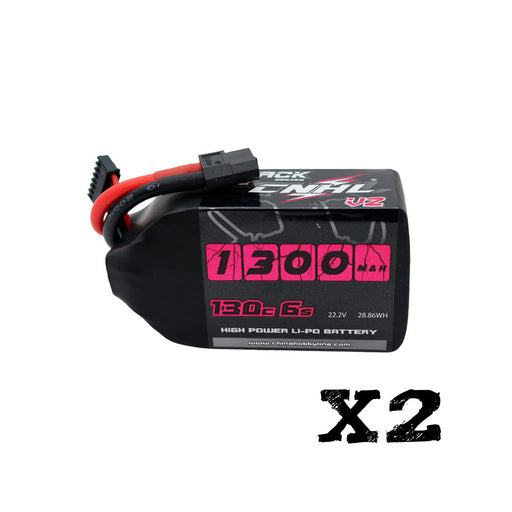
Nopea sovitustarkistus 2 Packs CNHL Black Series V2.0 1300mAh 22.2V 6S 130C LiPo-akku XT60-liittimellä sopii erinomaisesti FPV-lentäjille, jotka ha...
Näytä täydet tiedotVaraosat ja pitkäaikainen tuki Tiedämme, että RC-piloteille luotettava varaosatuki on tärkeä osa sitä, että lentokone pysyy lentokunnossa vuo...
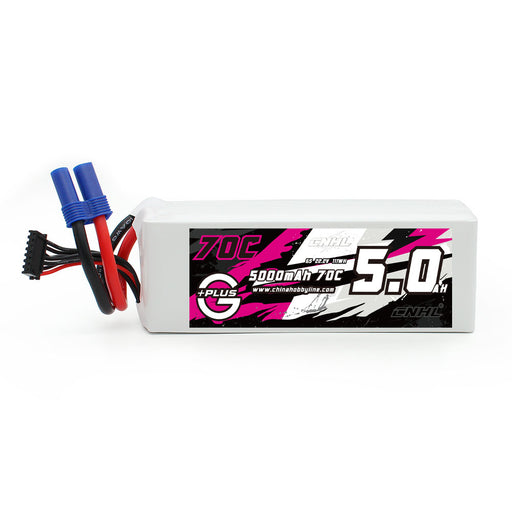
Näytä täydet tiedotTekniset tiedot: Varastonumero: 500706EC5 Kapasiteetti: 5000mAh Jännite: 22,2V / 6-kennoa / 6S1P Purkunopeus: 70C jatkuva / 140C hetkellinen Lata...
Näytä täydet tiedot
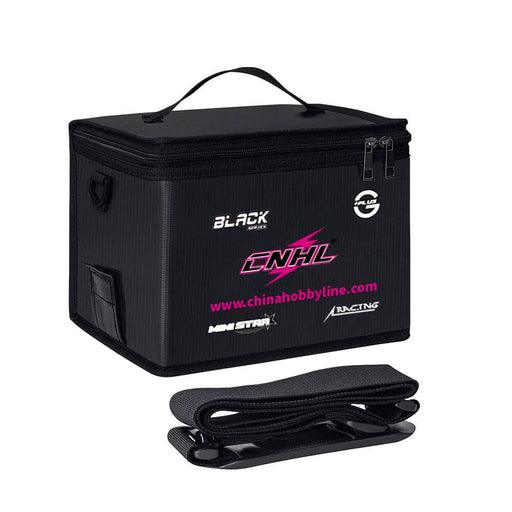
CNHL LiPo Battery Bag on suunniteltu turvallisempaan LiPo-lataukseen, kuljetukseen ja säilytykseen kotona tai kentällä. Se lisää käytännöllisen suo...
Näytä täydet tiedotNopea sovitustarkistus 2 paketin CNHL Speedy Pizza Series Pro 1350mAh 6S 150C LiPo -akku XT60-liittimellä on suunniteltu 5-tuuman FPV-piloteill...
Näytä täydet tiedot

The CNHL Long Range Series BAK 65E 6350mAh 21700 Li-ion battery cell is built around one clear priority: maximum stored energy from a lightweight c...
Näytä täydet tiedot

The CNHL Long Range Series BAK 50D 5000mAh 21700 Li-ion battery cell is designed for custom high-energy battery packs that need a strong balance be...
Näytä täydet tiedot

The ISDT C4 EVO is a versatile smart battery charger built for AA, AAA and cylindrical rechargeable cells from compact 10440 batteries all the way ...
Näytä täydet tiedot

The CNHL Long Range Series 6350mAh 21.6V 6S1P 21700 Li-ion battery combines six BAK 65E high-energy cells into a 137.16Wh pack designed for ultra-e...
Näytä täydet tiedot

The CNHL Long Range Series 5000mAh 21.6V 6S1P 21700 Li-ion battery combines six BAK 50D cells into a compact 108Wh pack designed around long-range ...
Näytä täydet tiedot




Jätä kommentti