
CNHL Lipo Batteries
CNHL aim at providing high-quality Li-Po batteries and RC products to all hobby enthusiasts with excellent customer services and competitive prices
There’s a specific kind of confusion that only happens in RC. You’re not trying to write a thesis about aviation history. You just want the right airplane—one that looks like a Super Tucano, fits in your car, matches your field, and won’t turn your first weekend into a troubleshooting marathon.
Then you start searching and suddenly you’re staring at multiple names that all seem to point to the same thing: “Super Tucano,” “A-29,” “EMB-314,” sometimes even older references that pull you in a different direction. It’s not that the internet is wrong—it’s that aircraft names don’t behave like product SKUs. Different naming systems can refer to the same aircraft, and RC listings often reflect that reality.
This article is a practical decoder. No hype, no keyword-stuffing, no pretending you’re buying a full-scale turboprop. Just a clear explanation of what A-29 and EMB-314 mean, how those labels show up in RC listings, and how to use that information to find the exact Super Tucano RC plane you actually want.

Most of the confusion disappears once you understand this: aircraft can carry a manufacturer designation and a military/service designation at the same time. Those names can live side-by-side for decades, and different communities prefer different labels.
“EMB-314” is commonly used as a manufacturer-style designation tied to Embraer’s internal naming. “A-29” is widely used as a military-style designation. Both get attached to the “Super Tucano” identity in the real world, and those habits leak directly into RC titles, product descriptions, and YouTube video captions.
From a buyer perspective, the important takeaway isn’t which naming convention is “more correct.” The important takeaway is that these labels often point to the same family of aircraft—so if you see both used in RC contexts, it’s usually a sign that the listing is trying to be searchable across different audiences, not that you’re looking at three different airplanes.
In RC, a product page has two jobs at once: it has to describe what the model is, and it has to help the right people find it. The second job is trickier than it looks because RC buyers don’t all search the same way.
Some buyers arrive from RC warbird channels and just search the aircraft nickname. Others arrive from aviation content and use formal designations because that’s how they learned the aircraft. A listing that acknowledges both patterns is often doing something practical: it’s bridging two search habits.
That said, there’s a big difference between “covering common naming” and “stuffing every possible term into one sentence.” The best listings mention the naming clearly once, then move on to the details that actually determine whether you’ll enjoy owning the model: wingspan class, power system, retract configuration, flap setup, assembly complexity, and spare parts support.
So here’s the rule of thumb: A good RC listing uses the name to help you find the model, and uses the specs to help you choose the model.

Once you accept that the naming can be flexible, the next step is choosing the right version for your flying style and field. These are the details that consistently matter more than whether the title leans “A-29” or “EMB-314.”
“Super Tucano RC plane” can mean very different things depending on wingspan. A 1.6m (63-inch class) foam model is a different ownership experience than a smaller park-flyer size. The larger class typically gives you more presence in the air, more stability in mild wind, and a more “scale-like” feel on approach—but it also demands more space, more battery, and more care during transport.
Retracts are one of those features that people romanticize until they own them. They can be absolutely worth it—especially when the model is designed around them—but you should go in with the right mindset. Retracts add realism and reduce drag in flight, but they also add moving parts, alignment sensitivity, and “check it before you send it” discipline.
Flaps are not just a checkbox. On many warbird-style airframes, flaps are the difference between a controlled, predictable landing and a tense, floaty approach that ends with a last-second drop. If the listing highlights effective flaps, treat that as a real usability advantage—especially if your runway is short or your field is grass.
A Super Tucano-style model with retracts and flaps is typically happiest with a radio setup that doesn’t force you into awkward mixing or sacrificing a feature. If you want the “complete” experience, make sure your radio and receiver can support the functions you care about. It’s a small planning step that prevents a lot of frustration.
Foam models are durable, but they’re not invincible. A nose gear mishap, a prop strike, a hard landing—these are normal RC moments. What separates a “great purchase” from a “regret” is whether you can get the parts you need without turning it into a scavenger hunt.
If you’re shopping for a Super Tucano in the 1600mm class, this is where choosing a reputable brand and a page with clear support matters.
If you want to avoid bouncing between unrelated results, tighten your search using one “identity term” plus one “version term.” Think of it like narrowing a map.
This approach works because it forces the search engine to show you results that match both the aircraft family and the build class. It also reduces the chance you accidentally land on unrelated Tucano variants or smaller models that share a similar silhouette.

If you’re reading this because you’re deciding on a specific model rather than just learning the naming, here’s the most helpful way to use the information: treat “A-29 / EMB-314” as a signpost, then confirm the version details on the product page.
For example, if your target is a 1600mm class Super Tucano with retracts and flaps, you’ll want a page that clearly shows the airframe class, what’s included, and how the setup is intended to be flown. If you want to see how CNHL positions that configuration, you can reference the product page here: Super Tucano 1600mm RC Plane.
You don’t need to memorize naming conventions to buy the right model. You just need enough clarity to recognize that the naming differences are normal—and enough discipline to confirm the version details that will shape your actual flying experience.

Before you click buy, scan the listing like a pilot, not like a collector. The goal is a clean first weekend.
If you do those six checks, the “A-29 vs EMB-314” question becomes what it should have been all along: a helpful naming clarification, not an obstacle.
In many RC and general aviation contexts, they’re used to refer to the same Super Tucano family through different naming conventions. For an RC buyer, the practical move is to use the name to locate the right family of results, then rely on the model’s size and configuration details to choose the correct version.
Sometimes. Spare parts listings may follow the naming habit of whoever created the catalog. That’s why pairing the name with a clear wingspan class (like 1600mm) and a feature (retracts/flaps) often finds the correct parts faster than the name alone.
Choose the size class you can realistically transport and fly, then make sure the listing clearly matches that class and includes the features you expect (retracts, flaps, channel guidance, and parts support). Names help you find; specs help you choose.
If you’re currently comparing listings and want a concrete reference point for a 1600mm class configuration, you can review the CNHL product page here: Super Tucano 1600mm RC Plane.
CNHL aim at providing high-quality Li-Po batteries and RC products to all hobby enthusiasts with excellent customer services and competitive prices
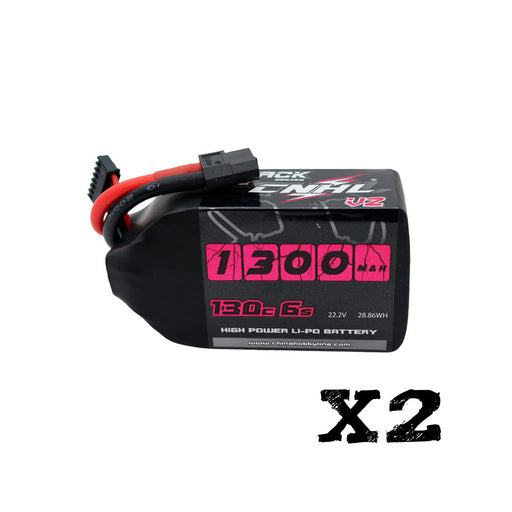
Quick Fit Check The 2 Packs CNHL Black Series V2.0 1300mAh 22.2V 6S 130C LiPo Battery with XT60 Plug is a strong fit for FPV pilots who want a prov...
View full detailsSpare Parts & Long-Term Support We know that for RC pilots, reliable spare parts support is an important part of keeping an aircraft fl...
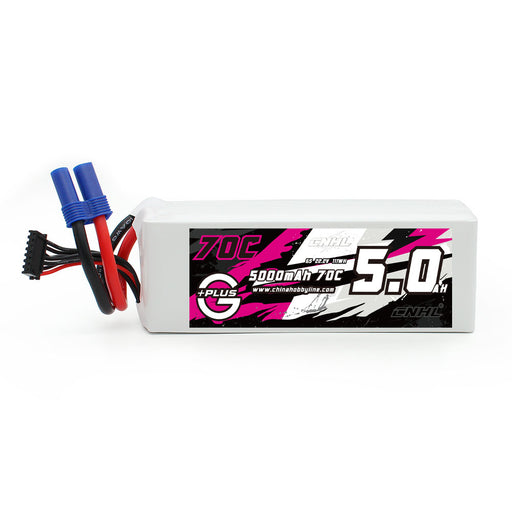
View full detailsSpecifications: Stock Number: 500706EC5 Capacity: 5000mAh Voltage: 22.2V / 6-Cell / 6S1P Discharge Rate: 70C Continual / 140C Burst Charge Rate: ...
View full details
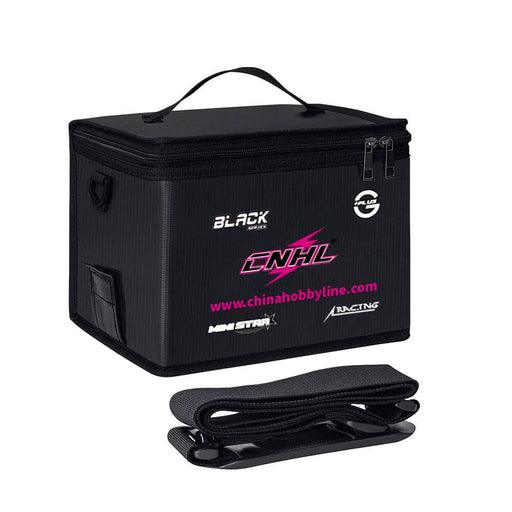
The CNHL LiPo Battery Bag is designed for safer LiPo charging, transport, and storage at home or at the field. It adds a practical layer of protect...
View full detailsQuick Fit Check The 2 Packs CNHL Speedy Pizza Series Pro 1350mAh 6S 150C LiPo Battery with XT60 Plug is built for 5-inch FPV pilots who want a ...
View full details

The CNHL Long Range Series BAK 65E 6350mAh 21700 Li-ion battery cell is built around one clear priority: maximum stored energy from a lightweight c...
View full details

The CNHL Long Range Series BAK 50D 5000mAh 21700 Li-ion battery cell is designed for custom high-energy battery packs that need a strong balance be...
View full details

The ISDT C4 EVO is a versatile smart battery charger built for AA, AAA and cylindrical rechargeable cells from compact 10440 batteries all the way ...
View full details

The CNHL Long Range Series 6350mAh 21.6V 6S1P 21700 Li-ion battery combines six BAK 65E high-energy cells into a 137.16Wh pack designed for ultra-e...
View full details

The CNHL Long Range Series 5000mAh 21.6V 6S1P 21700 Li-ion battery combines six BAK 50D cells into a compact 108Wh pack designed around long-range ...
View full details




Comments
Leave a comment