
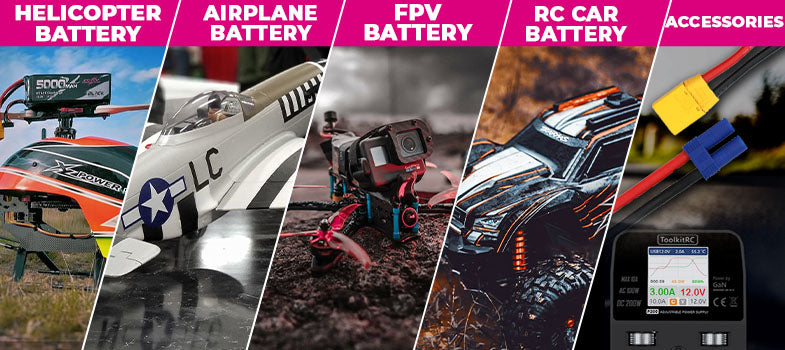
CNHL Lipo Batteries
CNHL aim at providing high-quality Li-Po batteries and RC products to all hobby enthusiasts with excellent customer services and competitive prices
Since its first release back in 2008, the Axial SCX10 has become almost a rite of passage for scale crawling fans. If you have been around the RC world long enough, chances are you have owned one, driven one, or spent plenty of time looking at somebody else's build on the trail. What started as a relatively simple ladder-frame crawler has now grown into three generations and a wide family of 1/10 rigs built around very different ideas of scale realism, trail driving, and technical crawling.
The interesting part is that the SCX10 story is no longer as simple as Gen 1, Gen 2, and Gen 3. Today's SCX10 III lineup includes models such as the Coyote, Base Camp, Jeep CJ-7, 1987 Toyota SR5, Jeep JT Gladiator, Jeep JLU Wrangler, and now the new Motobilt Waypoint Jeep JT Gladiator. They share SCX10 DNA, but they do not all use exactly the same axle setup, wheelbase, battery layout, or performance formula. So what actually changed over the years, and what does the expanding SCX10 III family tell us about where Axial is taking the platform next?

When the original SCX10 arrived in 2008, part of its appeal was how straightforward it felt. The ladder-frame chassis, link suspension, solid axles, and relatively uncomplicated drivetrain gave hobbyists a durable foundation they could understand and modify without turning every change into a major project.
That simplicity became one of the SCX10's biggest strengths. Owners changed bodies, wheels, tires, motors, links, shocks, bumpers, and electronics until two trucks that started from the same model could end up looking completely different. For many people, an SCX10 was as much a building platform as it was a ready-to-drive crawler.
By modern standards, a Gen 1 may not have the ground clearance, steering geometry, or out-of-the-box technical ability of a newer crawler. But that is almost beside the point. Many are still running today, and the original SCX10 helped establish the idea that scale trail trucks could be capable, customizable, and fun without being dedicated competition machines.

By 2016, the SCX10 II moved the formula forward without throwing away what had made the original work. Axial improved the axle and steering package, refined the suspension geometry, and leaned harder into licensed bodies and scale presentation.
The difference was noticeable on the trail. The truck still felt familiar to anyone coming from an original SCX10, but it was more refined when picking through rocks and negotiating tighter lines. At the same time, models such as the Jeep Cherokee helped push scale crawling further toward the miniature-4x4 look that now feels normal across the hobby.
That balance is one reason the SCX10 II remains popular. It sits in an interesting middle ground: more refined and realistic than Gen 1, but still relatively straightforward compared with some of the more mechanically complex SCX10 III variants that followed.

The arrival of the SCX10 III pushed the platform into a more modern era. Several early SCX10 III models used AR45 portal axles, giving the truck additional ground clearance while reducing torque loads through the rest of the drivetrain. Suspension geometry, chassis packaging, transmission options, and scale detail also became more sophisticated.
What becomes especially important when looking at the SCX10 III today is that there is no longer one configuration that defines every model. Some SCX10 III trucks use portal axles; others use straight axles. Wheelbases can differ. Battery mounting arrangements differ. Some versions prioritize licensed scale detail, while others clearly lean harder toward technical crawling.
In other words, SCX10 III has become a platform family rather than one truck with different bodies. That distinction matters when comparing performance, choosing upgrades, or even selecting something as basic as a battery.

The Axial 1/10 SCX10 III Coyote 4X4 RTR Brushed Rock Crawler was important because it showed how far Axial could push the existing platform without calling it a new generation. It was more than a new body over familiar hardware.
Axial moved the battery forward in front of the transmission to improve weight distribution, added revised shock towers and oil-filled shocks with more adjustment, introduced front overdrive for better maneuverability and climbing, reshaped the sliders for cleaner clearance, and added a clipless mounting system for the Pro-Line Coyote body.
The result is a truck with a noticeably more performance-oriented personality than many scale-heavy SCX10 III variants. It still looks like an SCX10 and remains highly upgradeable, but the priorities are different: cleaner breakover behavior, better weight placement, more tuning options, and stronger performance around technical gates.
That also explains why the Coyote generated so much discussion among existing Axial owners. Some saw it as a very capable starting point for local competition-style crawling. Others immediately started making wish lists that included beadlock wheels, servo-on-axle steering, straight axles, or brushless power. Either way, the conversation showed that people were judging the Coyote by performance rather than simply by how realistic its body looked.

The newest example of how wide the SCX10 III family has become is the 1/10 Axial SCX10 III Motobilt Waypoint Jeep JT Gladiator 4X4 RTR. At first glance it may look like another licensed Gladiator, but its specification tells a more interesting story.
Axial partnered with Motobilt to recreate the company's Waypoint Jeep JT Gladiator build, complete with a bobbed bed, Motobilt bumpers, Baja Designs lighting, KMC Grenade beadlock wheels, Maxxis Trepador tires, inner fenders, and plenty of scale hardware. Underneath all of that detail is a 13.9-inch extended-wheelbase SCX10 III chassis.
More importantly, the Waypoint uses AR45 straight axles rather than treating portal axles as mandatory for the SCX10 III formula. It combines those axles with a front 3-link and rear 4-link suspension, aluminum threaded-body shocks, an updated two-piece Panhard mount, multiple upper-link positions for suspension and anti-squat tuning, and a factory-installed DIG system operated from the third channel.
That combination gives the Waypoint a very different personality from the Coyote. The Coyote takes a shorter, more competition-inspired approach with front overdrive and forward battery placement. The Waypoint mixes a long 13.9-inch wheelbase and heavy scale influence with straight axles, DIG, beadlocks, adjustable suspension geometry, and other features that still give serious drivers something to work with.
It is a useful reminder that two trucks carrying the SCX10 III badge can now be aimed at quite different buyers.
The current SCX10 III family includes a broad mix of vehicles such as the Jeep CJ-7, 1987 Toyota SR5, Base Camp, Coyote, Jeep JT Gladiator, Jeep JLU Wrangler, and the new Motobilt Waypoint Jeep JT Gladiator, along with Builder's Kit projects.
It would be easy to look at that list and think Axial is simply rotating different licensed bodies through the same chassis. In reality, the differences can go deeper. Depending on the model, Axial changes axle configuration, wheelbase, body packaging, battery placement, suspension hardware, transmission features, and the balance between scale realism and technical performance.
That is why comparing SCX10 III models by body style alone can be misleading. A Jeep badge does not tell you whether the truck uses portals or straight axles, how much battery room it has, whether DIG is installed, or what kind of wheelbase you are dealing with. The platform name tells you where the truck comes from; the individual model specification tells you how it is actually meant to drive.
Another reason the SCX10 has lasted so long is the size of the upgrade ecosystem around it. Wheels, tires, shocks, links, bumpers, brass weights, drivetrain parts, bodies, electronics, and suspension tuning parts are all common directions for an SCX10 build.
But as the family has expanded, compatibility has become more model-specific. A part designed for one SCX10 III may not automatically fit another simply because the trucks share the same generation name. Wheelbase, axle type, body mounting, suspension geometry, and transmission configuration all need to be checked before assuming a part transfers directly.

The same applies to batteries. SCX10 owners commonly use 2S and 3S LiPo packs, but there is no longer one battery size that can represent every truck in the family. Tray location and usable space vary by model, and some newer trucks support different battery formats. The Motobilt Waypoint, for example, accepts standard or shorty packs, while other SCX10 III versions use different layouts and recommended capacities.
If you are matching a pack to a specific truck, our LiPo battery collection for Axial SCX10 brings the SCX10, SCX10 II, and SCX10 III battery options together with model-specific fitment guidance.

The SCX10 has never existed in a vacuum. The Traxxas TRX-4, Redcat Gen8, and many newer crawler platforms give buyers plenty of alternatives.
The TRX-4 is well known for integrating features such as remote-locking differentials and, on many versions, a two-speed transmission into a highly developed trail platform. Redcat has often competed aggressively on value and scale presentation. Axial's advantage is somewhat different: the SCX10 has accumulated years of community knowledge, aftermarket support, and different factory configurations around one familiar platform name.
The expanding SCX10 III lineup makes that strength even clearer. A buyer who wants scale-heavy portal-axle realism, a relatively affordable Base Camp-style starting point, the performance direction of the Coyote, or the long-wheelbase straight-axle character of the Motobilt Waypoint can now stay within the same broader SCX10 ecosystem.
The Waypoint is interesting not because it predicts one specific future model, but because it shows that Axial is willing to keep stretching the SCX10 III platform in different directions.
Straight axles are now part of a new factory RTR configuration. The 13.9-inch Gladiator wheelbase remains relevant. DIG can coexist with a highly scale-focused licensed build. True beadlock wheels and aluminum shocks can appear alongside an elaborate body and lighting package. At the same time, models such as the Coyote continue pushing toward a lighter, more performance-conscious setup.
That suggests the important question for future SCX10 releases may no longer be, “What body will Axial put on the SCX10 III next?” A better question is, “Which parts of the SCX10 III formula will Axial combine next?”

The reaction to the Coyote showed how demanding the crawler community has become. Many owners liked its price-to-performance balance, clipless body, revised sliders, shock towers, and more competition-friendly direction. Others immediately asked why it did not include beadlocks, servo-on-axle steering, straight axles, or brushless power.
That kind of feedback is useful because it shows there is no single definition of the “ideal” SCX10 anymore. Some drivers want a realistic trail truck. Some want a highly capable RTR that can start chasing gates almost immediately. Others want a simple chassis they can rebuild from the ground up.
The new Motobilt Waypoint does not answer every request, nor should it be treated as a direct response to individual comments. But its straight axles, true beadlocks, factory DIG, aluminum shocks, and adjustable suspension geometry show that Axial continues to explore different combinations within the SCX10 III platform rather than locking every release into the same specification.
The Axial SCX10 has lasted because it has been allowed to change without losing its identity. Gen 1 gave hobbyists a simple trail platform they could personalize almost endlessly. SCX10 II added refinement and scale realism. SCX10 III expanded the idea much further, and models such as the Coyote and Motobilt Waypoint now show just how different two trucks from the same generation can be.
That variety makes today's SCX10 lineup more interesting than simply asking which generation is “best.” A longtime trail driver may still prefer the simplicity of an older rig. Someone who loves licensed scale detail may gravitate toward a Jeep or Toyota build. A driver interested in technical crawling might be more attracted to the Coyote's performance-focused changes, while the Motobilt Waypoint offers a very different mix of long-wheelbase scale presence, straight axles, DIG, and suspension tuning.
The SCX10 is no longer one crawler with a few body choices. It has become an ecosystem — and that may be the clearest sign of how far the platform has come since 2008.
They represent three major stages in the evolution of Axial's 1/10 SCX10 platform. The original SCX10 established the highly customizable scale trail formula, SCX10 II refined the axles, steering, suspension, and scale presentation, and SCX10 III expanded into a more sophisticated family with different axle configurations, wheelbases, transmission features, battery layouts, and performance priorities depending on the model.
No. The Coyote shares the broader SCX10 III platform but adds meaningful functional changes, including forward battery placement, revised shock towers and shocks, front overdrive, redesigned sliders, and a clipless body mounting system.
The Motobilt Waypoint uses a 13.9-inch extended-wheelbase SCX10 III chassis with AR45 straight axles, factory DIG, front 3-link and rear 4-link suspension, aluminum adjustable shocks, true beadlock KMC wheels, Maxxis Trepador tires, and an adjustable battery system that accepts standard or shorty packs. Its licensed Motobilt Waypoint body also adds a bobbed bed, Motobilt bumpers, Baja Designs lighting, and other scale details.
No. Portal axles are used on several SCX10 III models, but they are not a universal requirement of the platform. The Motobilt Waypoint Jeep JT Gladiator is a current example of an SCX10 III RTR using AR45 straight axles.
No. Battery position, available space, body clearance, and mounting arrangement vary between SCX10 III models. Most of the current battery conversation centers on 2S and 3S LiPo packs, but dimensions and capacity should be matched to the exact truck rather than the SCX10 III name alone. See our Axial SCX10 battery collection for model-specific guidance.
Each platform approaches scale crawling differently. The TRX-4 is known for integrated trail features such as locking differentials and available two-speed transmissions, while Redcat has built a strong position around value and scale-focused models. The SCX10's strength is its long-running platform ecosystem, broad aftermarket support, and the growing variety of factory configurations available across the SCX10 III family.
Popular SCX10 III models include the Coyote, Base Camp, Jeep CJ-7, 1987 Toyota SR5, Jeep JT Gladiator, Jeep JLU Wrangler, the new Motobilt Waypoint Jeep JT Gladiator, and Builder's Kit-based projects. Individual specifications differ, so the platform name should not be treated as a guarantee that every chassis part, battery, or upgrade fits every version.
If reading about the SCX10 family has you thinking about your own setup, explore our full range of RC crawler batteries for TRX-4, SCX10, SCX24 and more.
CNHL aim at providing high-quality Li-Po batteries and RC products to all hobby enthusiasts with excellent customer services and competitive prices
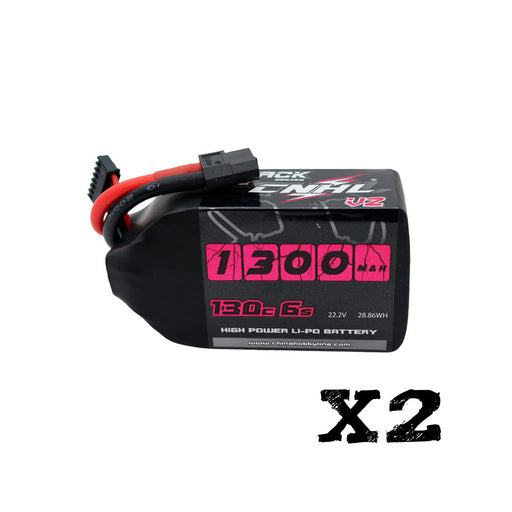
Quick Fit Check The 2 Packs CNHL Black Series V2.0 1300mAh 22.2V 6S 130C LiPo Battery with XT60 Plug is a strong fit for FPV pilots who want a prov...
View full detailsSpare Parts & Long-Term Support We know that for RC pilots, reliable spare parts support is an important part of keeping an aircraft fl...
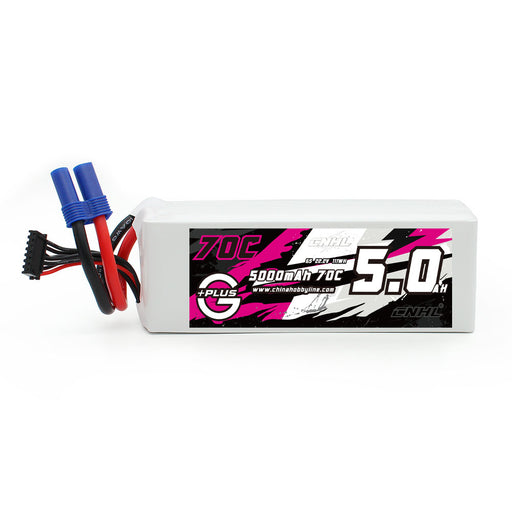
View full detailsSpecifications: Stock Number: 500706EC5 Capacity: 5000mAh Voltage: 22.2V / 6-Cell / 6S1P Discharge Rate: 70C Continual / 140C Burst Charge Rate: ...
View full details
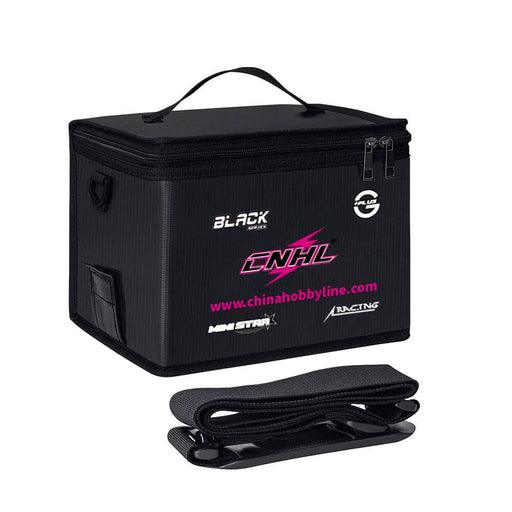
The CNHL LiPo Battery Bag is designed for safer LiPo charging, transport, and storage at home or at the field. It adds a practical layer of protect...
View full details

Quick Fit Check The 2 Packs CNHL Speedy Pizza Series Pro 1350mAh 6S 150C LiPo Battery with XT60 Plug is built for 5-inch FPV pilots who want a ...
View full details

Quick Fit Check The CNHL Speedy Pizza Series 2200mAh 22.2V 6S 120C LiPo Battery with XT60 Plug combines the familiar 2200mAh 6S format with a ligh...
View full details

Quick Fit Check The CNHL Speedy Pizza Series 2200mAh 14.8V 4S 120C LiPo Battery with XT60 Plug combines a widely used 2200mAh 4S format with a sli...
View full details

Quick Fit Check The CNHL Speedy Pizza Series 2200mAh 11.1V 3S 120C LiPo Battery with XT60 Plug takes the familiar 3S 2200mAh aircraft battery form...
View full details

The CNHL Long Range Series BAK 50D 5000mAh 21700 Li-ion battery cell is designed for custom high-energy battery packs that need a strong balance be...
View full details

The ISDT C4 EVO is a versatile smart battery charger built for AA, AAA and cylindrical rechargeable cells from compact 10440 batteries all the way ...
View full details


Leave a comment