
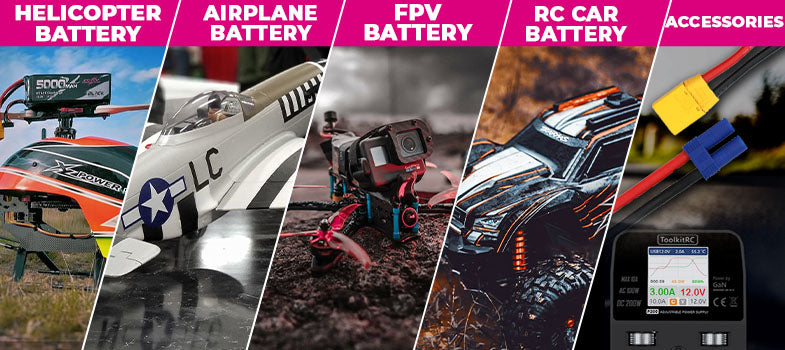
CNHL Lipo Batteries
CNHL aim at providing high-quality Li-Po batteries and RC products to all hobby enthusiasts with excellent customer services and competitive prices
The HobbyKing L39 Albatros revives one of the most recognizable jet trainer silhouettes — the Aero L 39 Albatros. While the full-scale aircraft was designed in the Czech Republic for advanced jet training, this 64mm EDF version delivers a compact, hand-launch RC experience that feels both forgiving and surprisingly quick.

Built around an 8-blade 64mm fan unit powered by a 2220–3300KV brushless outrunner and a 50A ESC, it runs on 4S LiPo power instead of the smaller 3S setup used in earlier 50mm designs. The result is a compact jet that launches easily, tracks true, and offers EDF-like whistle with real thrust behind it.
Assembly is minimal: wings and tailplane are glued into place, forming a rigid one-piece airframe. The EPO foam is dense and well-molded, and several thoughtful reinforcements make this model tougher than it looks. Reinforced control surfaces reduce flutter at higher speeds, and servo horn covers prevent snagging or scraping during grass landings.

Inside the fuselage, there’s a clean layout with space for standard-size 4S 1800–2200mAh packs and an XT60 connector. The canopy latch uses magnets — quick to open and secure in flight.
The recommended center of gravity (CG) is around 49mm from the leading edge. Most pilots found the model balances perfectly when the 4S pack is pushed fully forward. Elevator travel should be set modestly; the jet flies smooth, and small inputs go a long way. SAFE/AS3X stabilization (if added via Spektrum AR631/AR630) performs well — even in gusty 25–30mph winds, as seen in several test flights.
Launch technique is simple: a steady underhand toss at about 70% throttle will see the L-39 climb smoothly without dropping a wing. For pilots using stabilization receivers, SAFE mode provides reliable launch assist for clean climbs.
In flight, the l-39 albatros feels locked in. It’s fast without being twitchy, tracks straight on low passes, and glides beautifully with the throttle cut. Inverted flight needs very little elevator correction, and it retains energy well in wide turns. Most flyers report around 3–3.5 minutes of mixed throttle flight on a 2200mAh 4S pack, which is ideal for this size EDF.

Landing is straightforward — reduce power, let it glide in, and flare just before touchdown. The reinforced belly and skid plates protect against rough grass, though you’ll still want to avoid high-angle arrivals.
For best results, pilots recommend staying within the 4S 1800–2200mAh range. These CNHL packs have been tested for fit, weight balance, and voltage stability:
Explore more compatible options in our 4s lipo battery and 2200mah 4s lipo battery collections.
In field tests, pilots consistently praised how “honest” the L-39 feels in flight. It reacts predictably to control inputs, even in turbulent conditions, and doesn’t tip-stall easily. As one flyer put it: “It’s a fun little rocket — light, fast, and simple.”

Although some wished for a rudder for crosswind correction, most agreed the simplicity of the 3-channel setup keeps it easy and light. The 64mm EDF produces a satisfying high-pitched turbine sound — especially at full throttle passes.
Stick with 4S packs in the 1800–2200mAh range. 2200mAh fits snugly in the bay, while 1800mAh gives slightly better agility for windy or tight fields.
It’s designed for hand launches only, but grass landings are fine thanks to reinforced skids. Always check the belly for debris before re-arming.
Around 3.5 minutes of mixed flying or about 4 minutes of light throttle cruising. Set your timer accordingly.
Yes. It’s stable, forgiving, and doesn’t require flaps or retracts. As a first EDF trainer, it’s a smart and affordable way to enter jet-style flying.
You can view all recommended batteries for this model on our HobbyKing L-39 Albatros collection page.
Compact, fast, and confidence-inspiring — the HobbyKing L-39 Albatros is one of those EDFs that feels “just right.” It’s easy to transport, quick to assemble, and pure fun in the air. Whether you’re testing wind limits or cruising low passes, it reminds you why small EDFs are making a comeback.
CNHL aim at providing high-quality Li-Po batteries and RC products to all hobby enthusiasts with excellent customer services and competitive prices

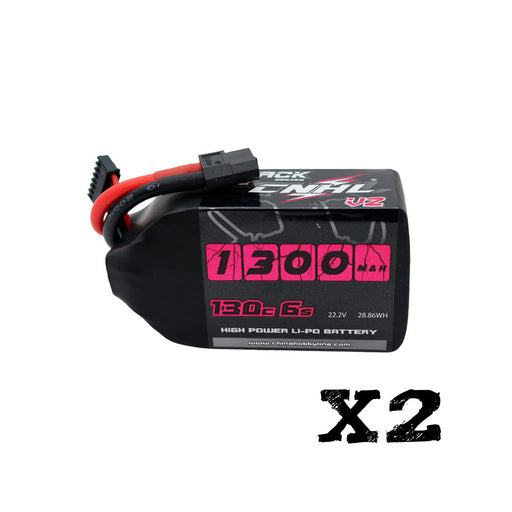
Quick Fit Check The 2 Packs CNHL Black Series V2.0 1300mAh 22.2V 6S 130C LiPo Battery with XT60 Plug is a strong fit for FPV pilots who want a prov...
View full details

Spare Parts & Long-Term Support We know that for RC pilots, reliable spare parts support is an important part of keeping an aircraft fl...
View full details
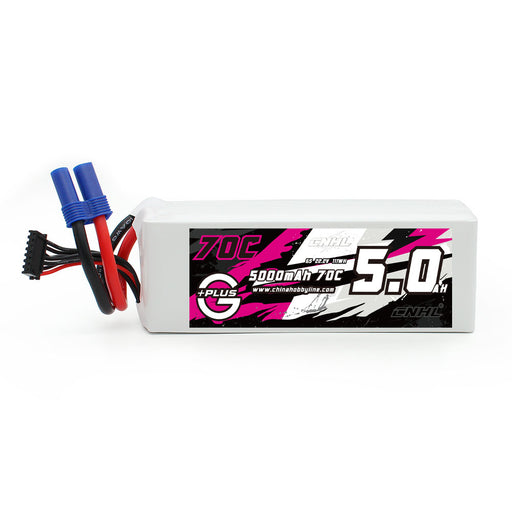
Specifications: Stock Number: 500706EC5 Capacity: 5000mAh Voltage: 22.2V / 6-Cell / 6S1P Discharge Rate: 70C Continual / 140C Burst Charge Rate: ...
View full details
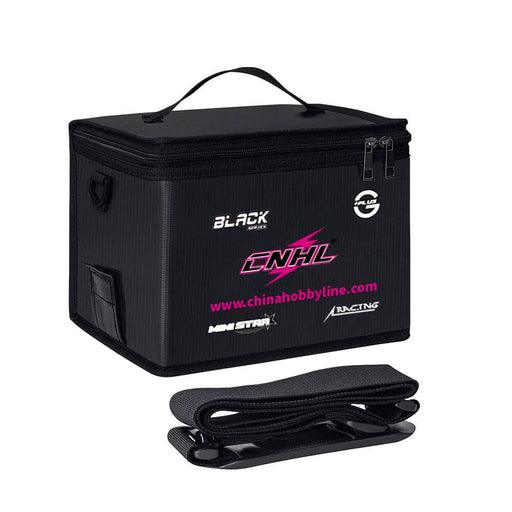
The CNHL LiPo Battery Bag is designed for safer LiPo charging, transport, and storage at home or at the field. It adds a practical layer of protect...
View full detailsQuick Fit Check The 2 Packs CNHL Speedy Pizza Series Pro 1350mAh 6S 150C LiPo Battery with XT60 Plug is built for 5-inch FPV pilots who want a ...
View full details

The CNHL 75mm EDF pilot figure is designed for 80–90mm RC jet airplanes that need a more realistic cockpit appearance without adding excessive weig...
View full details

The WNF Mitsubishi Lancer Evolution IX is an officially licensed Mitsubishi Motors 1:64 RC drift car that combines detailed Evo IX styling with rea...
View full details

The ISDT K4 is a high-power 8S LiPo smart dual charger built for demanding RC battery setups. It combines two independently controlled charging cha...
View full details

The ISDT PC-4860S is a compact four-port XT60 parallel charging board designed for experienced RC and FPV users who want to connect multiple co...
View full details

Quick Take: This officially licensed WNF 1:43 Land Rover Defender 110 Pick-Up RC crawler combines the proportions and detailing of the 1993 ...
View full details

Leave a comment