
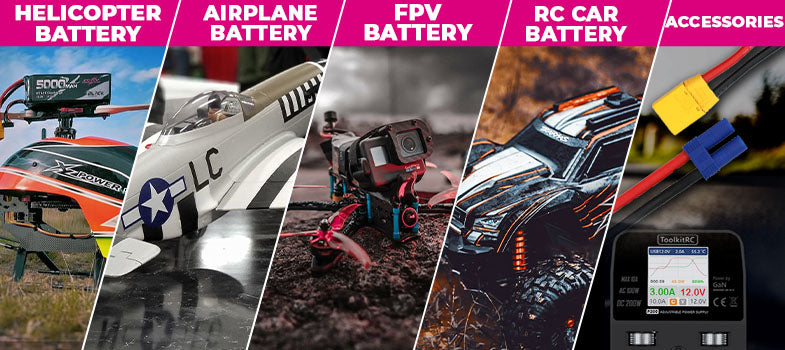
CNHL Lipo Batteries
CNHL aim at providing high-quality Li-Po batteries and RC products to all hobby enthusiasts with excellent customer services and competitive prices
If you have been shopping for a beginner FPV package, chances are you have seen both the betafpv aquila16 fpv kit and the newer betafpv aquila20 fpv kit. On the product pages they look similar: ducted whoop, ready-to-fly combo, radio, goggles, batteries included. In the air, however, they behave very differently.
In this review we are not just repeating the spec sheets. We will compare how the betafpv aquila16 and betafpv aquila20 actually feel to fly, where the Aquila20 genuinely fixes the weaknesses of the older kit, and when it makes more sense to upgrade straight to larger, more open FPV drones powered by standard LiPos.

On paper, the betafpv aquila 20 fpv kit is the “bigger brother” in almost every direction. Here is a quick side-by-side overview:
| Feature | betafpv aquila16 fpv kit | betafpv aquila20 fpv kit |
|---|---|---|
| Wheelbase | 86 mm | 100 mm |
| Takeoff weight | ≈72.5 g | ≈119 g |
| Battery | 1S HV 1100 mAh (BT2.0) | 2S HV 1100 mAh smart battery (BT3.0) |
| Motors | 1102 18000 KV | 1103 10500 KV |
| Camera | C02 1/4" CMOS analog | C04 1/3" CMOS analog, 10°–30° tilt |
| VTX power | Adjustable, limited output | 25–350 mW, 200 m+ rated range |
| Goggles | VR03 (compact, no DVR, not glasses-friendly) | VR04 (DVR, works over glasses) |
| Radio | LiteRadio 2 SE | LiteRadio 4 SE, ExpressLRS 2.4G V3 |
| Flight time | Around 8 minutes | Around 10 minutes at low VTX power |
The numbers already show why so many pilots call the betafpv aquila20 an upgrade. But the real difference only shows up when you look through the goggles and actually try to fly ACRO.

One of the most common criticisms of the betafpv aquila16 was its camera. Several pilots commented that the contrast on the C02 camera was so harsh that it was difficult to see into shaded areas after flying out of bright sunlight. In one story a pilot nearly flew into a dog because the shadows turned into a dark blob on the goggles.
The betafpv aquila20 addresses this head-on with the newer C04 1/3" CMOS analog camera. The image is still analog, but the dynamic range and shadow detail are noticeably better. Moving from sunlight into trees or from a bright yard into the side of a house, you can actually see what you are about to fly into instead of guessing.
That upgrade alone makes the betafpv aquila 20 far easier to recommend as a first FPV kit. When you are learning, you already have enough to think about with throttle and orientation. Fighting a poor camera at the same time is the last thing you want.

Both kits advertise three flight modes, but they do not feel equal in practice.
In N (Normal) mode the betafpv aquila 20 fpv kit behaves almost like a small camera drone. Thanks to a barometer and optical-flow system it can hold altitude and “sit in the air” while you figure out what your thumbs are doing. Coming from a DJI Mini or Mavic, this is exactly what you expect: move the sticks, the quad responds gently; let go, it stops and waits for the next command.
The betafpv aquila 16 also has a beginner-friendly mode, but the combination of lower power and that harsh camera made it less confidence-inspiring, especially in cramped indoor spaces.
Switch into S mode and both quads start to feel more like true FPV machines. Self-level is still on, but bank angles are higher and you carry more speed. Indoors, medium-speed S mode on the betafpv aquila20 is a sweet spot: fast enough to be fun, not so twitchy that you are bouncing off every doorway.
The older betafpv aquila16 could also be pushed in this mode, but pilots frequently reported wobble in fast turns. You could feel the limits of the tune and the 1S power system when trying to carve aggressive lines.
M mode is where the betafpv aquila20 really pulls away. Outside on a cold morning, test flights in full manual showed that the 2S 1103 motor setup has plenty of power in reserve. Rolls and flips felt predictable, and the quad recovered cleanly without needing to slam the throttle to the stops.
Captain Drone summed it up nicely in his review: in M mode, the betafpv aquila20 flies like a “real FPV drone”, not just a toy whoop with training wheels. That is something the betafpv aquila16 simply never managed. In manual the 16 always felt a bit unsettled, and several pilots said they avoided its acro mode altogether.

Video transmission is another area where pilots noticed big differences. On the betafpv aquila16, turning the VTX power up could make the system run hot, and some users reported instability when pushing range.
The betafpv aquila20 uses an adjustable analog VTX from 25 mW up to 350 mW. At 25 mW you can hit the advertised ten-minute flights indoors without issue. For outdoor sessions, bumping it up to 350 mW gives enough punch to fly all the way across a typical flying field before static becomes a concern.
The antennas on both the quad and the VR04 goggles are not designed for heavy modding, so you cannot treat this like a long-range project. But for what it is meant to be – a trainer and park-flyer – the range and link quality on the Aquila20 are comfortably ahead of the older kit.
The goggles might be the most underrated upgrade between the two kits. The VR03 goggles bundled with the betafpv aquila16 worked, but if you wear glasses they were basically a non-starter. Many pilots had to choose between flying half-blind or building a completely separate FPV setup.
The VR04 goggles in the betafpv aquila20 fpv kit change that. They are box-style goggles with more room inside, foam padding that actually seals, and a form factor that slips over regular glasses without pressure points. They also include a built-in DVR. Recording flights to a microSD card is incredibly helpful when you are trying to see what went wrong in a crash or how your lines are improving.

Both kits arrive with a compact controller, but the LiteRadio 4 SE that ships with the betafpv aquila 20 is much more forward-looking than the LiteRadio 2 SE from the older kit.
Some experienced pilots still prefer full-size radios with screens, model memories and more switches. But for a first combo, the LiteRadio 4 SE is one of the few bundled transmitters that does not immediately end up in a drawer after you buy your second quad.

Both kits make one controversial choice: they rely on proprietary batteries. The betafpv aquila16 uses a 1S 1100 mAh pack with the BT2.0 connector, while the betafpv aquila20 uses a 2S 1100 mAh smart battery with a BT3.0 interface and an onboard management chip.
For absolute beginners, that is actually comfortable. You plug the pack into the included dongle, it charges, it doubles as a voltage checker, and you do not have to know anything about balance leads or storage voltage. The trade-off is that your power system is locked to that one platform.
If you plan to keep flying the betafpv aquila16 for a while, you can still improve your experience by upgrading to higher-quality 1S BT2.0 packs. For example, you can look at:
4 Packs CNHL MiniStar HV 500mAh 3.8V 1S 75C LiPo Battery with BT2.0
These 1S BT2.0 FPV batteries are designed for whoops in the same class as the betafpv aquila16 fpv kit and can offer more consistent performance compared to tired stock packs.

Longer term, though, most pilots move away from proprietary batteries and into open ecosystems where one set of LiPos can be shared across multiple quads. When you are ready to step up to toothpicks, cinewhoops or 5-inch builds on 2S–6S, it makes sense to plan your power system more carefully.
To explore that next chapter, you can browse a full lineup of FPV LiPos here:
CNHL FPV LiPo batteries for whoops, micros and freestyle drones
Beyond the specs, the comments around these two kits tell a clear story:
In other words, even pilots who were disappointed by the betafpv aquila 16 fpv kit feel that the betafpv aquila20 finally delivers on the promise of a beginner RTF that can grow with them.
If you are starting from zero today, here is the simple answer:
For most new pilots, the betafpv aquila20 fpv kit is easily the better long-term investment. You will not outgrow it in a weekend, and when you are ready to move on, your skills and your LiteRadio 4 SE will transfer directly to your next FPV builds.
No. In N mode with optical-flow and altitude hold, the betafpv aquila20 behaves very much like a small camera drone. You can practice take-offs, hovering and gentle turns without worrying about sudden drops. As you gain confidence you can step into S and M modes.
If you are frustrated by the Aquila16 camera, wobble in fast turns, or goggles that do not work with your glasses, the Aquila20 is a meaningful upgrade. If you mainly fly slow indoor circuits and rarely push harder, you can stay with the Aquila16 and simply invest in better 1S BT2.0 batteries.
Not easily. Both kits use proprietary smart-style packs (BT2.0 or BT3.0), so they are not drop-in compatible with standard XT30/XT60 builds. That is why many pilots treat these kits as a stepping stone and then move to open-battery platforms for their next quads.
Yes. The LiteRadio 4 SE runs ExpressLRS 2.4G V3, so any drone with a compatible ELRS receiver can bind to it. That makes the betafpv aquila20 a better first kit if you plan to stay in the FPV hobby for more than a few weeks.
Once you are comfortable flying the betafpv aquila20 in manual mode, the natural next step is a toothpick, cinewhoop or 5-inch freestyle quad running standard LiPos. At that point, building a small fleet of quality FPV batteries becomes more important than the kit itself, which is where a dedicated LiPo brand such as CNHL can really help you grow.
CNHL aim at providing high-quality Li-Po batteries and RC products to all hobby enthusiasts with excellent customer services and competitive prices

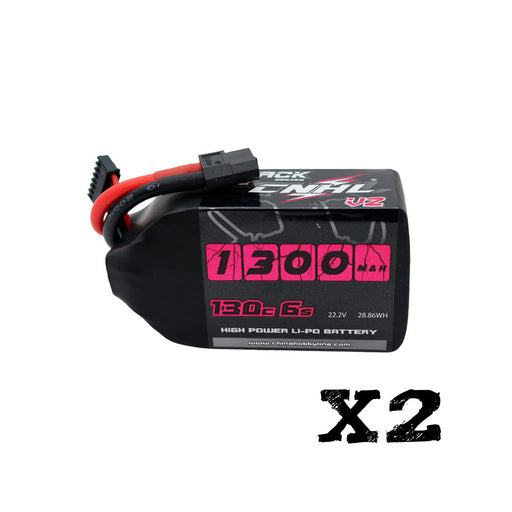
Quick Fit Check The 2 Packs CNHL Black Series V2.0 1300mAh 22.2V 6S 130C LiPo Battery with XT60 Plug is a strong fit for FPV pilots who want a prov...
View full details

Spare Parts & Long-Term Support We know that for RC pilots, reliable spare parts support is an important part of keeping an aircraft fl...
View full details
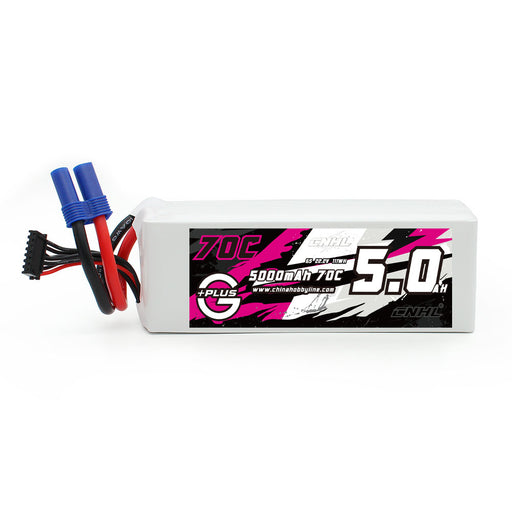
Specifications: Stock Number: 500706EC5 Capacity: 5000mAh Voltage: 22.2V / 6-Cell / 6S1P Discharge Rate: 70C Continual / 140C Burst Charge Rate: ...
View full details
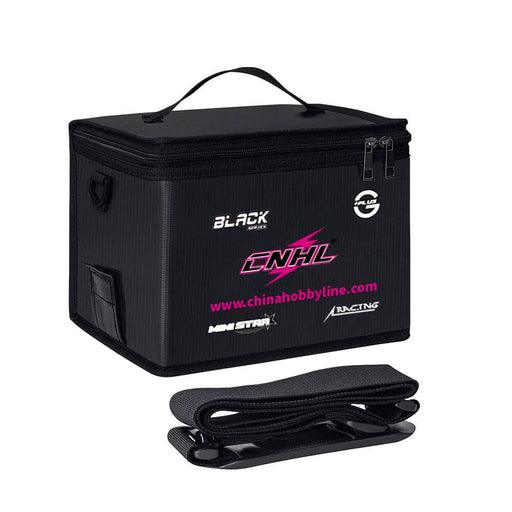
The CNHL LiPo Battery Bag is designed for safer LiPo charging, transport, and storage at home or at the field. It adds a practical layer of protect...
View full detailsQuick Fit Check The 2 Packs CNHL Speedy Pizza Series Pro 1350mAh 6S 150C LiPo Battery with XT60 Plug is built for 5-inch FPV pilots who want a ...
View full details

The WNF Mitsubishi Lancer Evolution IX is an officially licensed Mitsubishi Motors 1:64 RC drift car that combines detailed Evo IX styling with rea...
View full details

The ISDT K4 is a high-power 8S LiPo smart dual charger built for demanding RC battery setups. It combines two independently controlled charging cha...
View full details

The ISDT PC-4860S is a compact four-port XT60 parallel charging board designed for experienced RC and FPV users who want to connect multiple co...
View full details

Quick Take: This officially licensed WNF 1:43 Land Rover Defender 110 Pick-Up RC crawler combines the proportions and detailing of the 1993 ...
View full details

Quick Fit Check Continuous / Peak Current: 20A / 30A peak Battery: 3-4S LiPo BEC: No Motor Connectors: 3.5mm gold female ...
View full details

Leave a comment