
CNHL Lipo Batteries
CNHL aim at providing high-quality Li-Po batteries and RC products to all hobby enthusiasts with excellent customer services and competitive prices

Few foam jets turn heads the way a Tomcat does. When Freewing released the original 64mm twin EDF version, many pilots jumped on it because it captured the look and sound of the F14 in a size that runs on a single 6S pack. Now the updated freewing f14 64mm V2 is here with a new wing, a new Wolfpack paint scheme, and a handful of small tweaks aimed at making it fly just a bit better.
This article is written from a pilot’s point of view rather than a spec sheet. We will look at what has actually changed from the original freewing f 14, how the V2 behaves in the air, what to expect from the battery bay, which 6S packs work well, and a few setup tips to help you get a smooth maiden. If you are on the fence between the first Freewing F14 and the new freewing f 14 tomcat V2, this is for you.

On paper the V2 looks very similar to the original freewing f14 64mm. It is still a twin 64mm EDF jet built from EPO foam, still runs on a single 6S pack with EC5 connector, and still uses a swing-wing mechanism with full-flying stabilisers, flaps, retracts, and a gyro-equipped control board.
The most important change is the new wing design. Freewing reworked the wing profile and planform with the goal of increasing the critical angle of attack and adding lift at low speeds. In plain language, they tried to make the jet less fussy on approach and less likely to suddenly drop a wing if you come in a bit slow or a little high on the nose.
The second obvious change is the VF-1 “Wolfpack” paint scheme. The original Jolly Rogers scheme has plenty of fans and some pilots are disappointed to see it go, but in person the Wolfpack colours are bright, clean and easy to see in the air. The red fins, nose accents, and stripe down the fuselage give the Freewing F14 a strong silhouette against the sky.
Smaller tweaks include:

In the air, the updated freewing f14 feels very familiar if you have flown the V1, but there are some clear differences. With the wings out and the gyro in its default mode, the jet tracks smoothly and feels more “honest” when you start to slow down. You can ease the nose up and let it float rather than constantly managing throttle to keep it from biting.
With the wings swept, the Freewing F14 64mm still feels like a little rocket. It carves big turns, handles high-speed passes with authority, and really brings out the classic Tomcat personality. The sound from the twin 64mm fans is a big part of the experience; it has that dense, turbine-like whoosh that many pilots enjoy.
Pilots who have flown both versions often describe the V2 as the best flying foam Tomcat they have had in a long time. The jet seems less interested in punishing small mistakes near the ground, yet it retains the fun factor of the original freewing f 14 when you open it up and “turn and burn”.

Before talking about specific packs, it is worth understanding how much space the airframe actually gives you. Real-world measurements taken from the original freewing f14 64mm show a bay length of about 288mm, a width around 65mm, and a maximum height near 59mm. Those numbers sound generous, but there are a couple of catches.
First, the front section of the bay sits under a step in the canopy, and that reduces the usable height by roughly 10mm over the front 50–55mm. Second, the wires and connectors that run toward the rear of the fuselage eat up another millimetre or two of height, especially if you route them on top of the pack. A battery that looks fine on paper can suddenly feel tight once you add Velcro, foam padding, and real-world wiring.
Because of this, many pilots stick with packs in the 6S 4000–5200mAh range and avoid very tall hard case styles. A typical soft-case 6S 5000mAh pack fits comfortably if you are careful with padding and keep the Velcro thickness modest. The V2 uses essentially the same internal layout, so the same guidelines apply when choosing a pack for the updated freewing f 14 tomcat.
The nice part about this twin 64mm platform is that it runs on a single 6S pack, not a pair, which keeps operating costs and field logistics simple. For most pilots, a quality 6S 5000–5200mAh pack strikes a good balance between flight time, weight and fit in the bay.
When we talk about packs for the freewing f 14, three things matter:
CNHL offers several 6S EC5 packs that line up well with these requirements. Four that work particularly well for a freewing f14 64mm build are:
All of these packs come with EC5 connectors, so they plug straight into the Freewing F14 power system without adapters. If you want a quick overview of these batteries in one place, you can browse the dedicated collection here: Freewing F14 64mm 6S battery collection.
Freewing’s control board in the freewing f 14 tomcat takes care of all the complicated mixing for you. As a pilot you set the model up as a conventional airplane with aileron, elevator, rudder, flaps and gear, then plug everything into the labelled pins on the board. The board handles the tailerons, swing-wing actuation, and gyro logic behind the scenes.
For throws, many testers found that the factory high rates felt a bit aggressive on the ailerons. A good starting point is:
This keeps the jet responsive enough to feel like a Tomcat without making it twitchy. Make sure your neutral elevator is set mechanically, not by using large amounts of sub-trim. The manual references a specific tailplane height relative to the fuselage spine; taking the time to set that up pays off on the maiden.
One convenience feature worth noting is that when the flaps are down, the control board disables wing sweep. That means you cannot accidentally sweep the wings while you are on approach or rolling down the runway with flap deployed. Once the flaps are back up, the swing-wing function returns on your switch.
If you already own the original freewing f14, you might be wondering whether the new version is worth buying or if you should simply upgrade parts of your existing airframe. The good news is that Freewing designed the V2 wing to be retro-fittable onto the older fuselage. In other words, you can keep your current electronics, fans and batteries, and simply install the updated wing set.
For pilots who are comfortable with the way the V1 flies and rarely had issues with tip stalls, the main attraction of the V2 is the new Wolfpack scheme and subtle aerodynamic refinement. For those who found the original freewing f 14 tomcat a bit unforgiving during landing, upgrading to the V2 wings may be exactly the nudge needed to make the model feel more relaxed on final.
Either way, your 6S packs are not going to waste. The same 5000–5200mAh batteries that work well in the original freewing f14 64mm are just as at home in the V2. That makes the wing upgrade a relatively low-risk path if you already have a stack of compatible LiPos on hand.
Yes. The V2 wing set was designed so that it can be fitted to the original freewing f14 fuselage. This lets V1 owners benefit from the revised wing profile and improved low-speed behaviour without replacing the entire model.
Visibility is always subjective, but many pilots find the Wolfpack colours easier to track in the air. The red tail, nose markings and stripe down the fuselage give strong contrast, which helps you keep orientation when the freewing f 14 tomcat is banking or flying away.
Most pilots settle on 6S packs between 4000 and 5200mAh. A 5000mAh pack is a very common choice and sits in a sweet spot between flight time and weight. Larger packs may fit but can feel tight in the bay and will add landing weight.
With mixed throttle flying, a typical flight on a 6S 5000mAh pack in the freewing f14 64mm is around four to five minutes, landing with a comfortable reserve. If you spend most of the time at full throttle, plan for shorter flights and check cell voltage after the first couple of runs.
The updated wing on the V2 makes it more tolerant of low-power and even zero-power approaches than the original freewing f 14. You still should avoid dragging it in at extreme nose-high attitudes, but the jet now feels happier floating in with a gentle descent and light throttle adjustments.
If you fly other aircraft alongside your Freewing F14, you can explore broader CNHL ranges here: CNHL airplane battery collection and 22.2V 6S LiPo battery collection. Both collections make it easier to match capacity, plug type and voltage across your fleet.
The freewing f14 64mm V2 does not reinvent the Tomcat, but it quietly fixes the parts that needed attention while keeping everything that made the original fun. The new wing gives the model a calmer temperament at low speed, the Wolfpack scheme stands out in the air, and the single 6S power system keeps things simple at the field.
If you are new to the airframe, start with sensible control throws, a well-fitting 6S 5000–5200mAh pack, and a few circuits with the wings out before exploring swept-wing runs. If you already own a V1, the option to retrofit V2 wings lets you upgrade the way it flies without rebuilding your entire setup. Either way, a properly set up freewing f 14 tomcat remains one of the most characterful foam EDF jets you can bring to the flight line.
For pilots who want to fine-tune their power system, you can always revisit the Freewing F14 64mm battery collection and experiment with different CNHL 6S EC5 packs until you find the feel that suits your style.
CNHL aim at providing high-quality Li-Po batteries and RC products to all hobby enthusiasts with excellent customer services and competitive prices

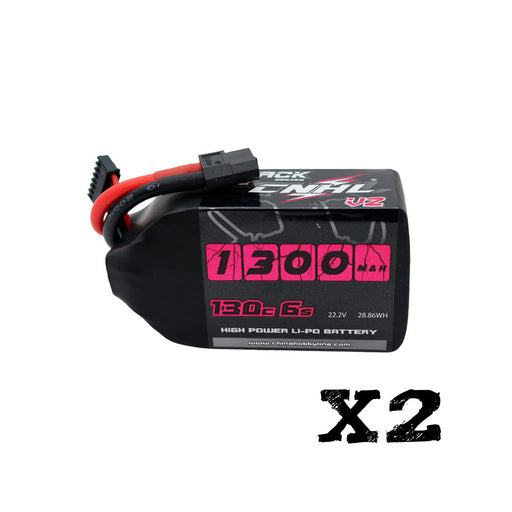
Quick Fit Check The 2 Packs CNHL Black Series V2.0 1300mAh 22.2V 6S 130C LiPo Battery with XT60 Plug is a strong fit for FPV pilots who want a prov...
View full details

Spare Parts & Long-Term Support We know that for RC pilots, reliable spare parts support is an important part of keeping an aircraft fl...
View full details
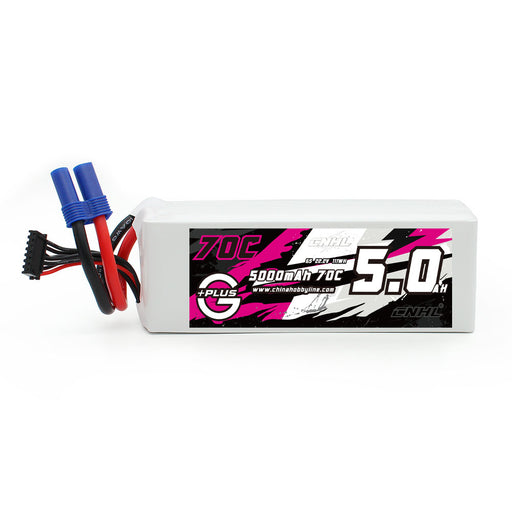
Specifications: Stock Number: 500706EC5 Capacity: 5000mAh Voltage: 22.2V / 6-Cell / 6S1P Discharge Rate: 70C Continual / 140C Burst Charge Rate: ...
View full details
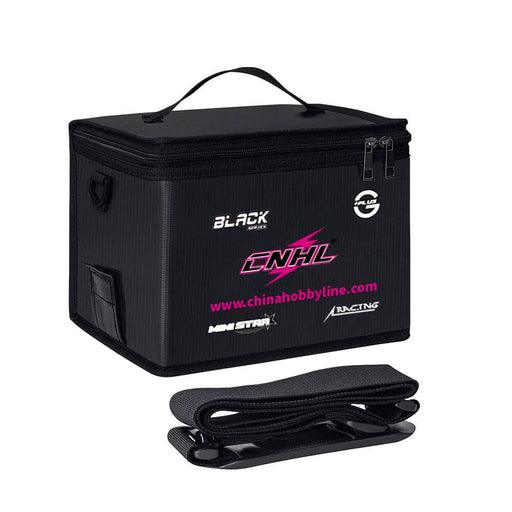
The CNHL LiPo Battery Bag is designed for safer LiPo charging, transport, and storage at home or at the field. It adds a practical layer of protect...
View full detailsQuick Fit Check The 2 Packs CNHL Speedy Pizza Series Pro 1350mAh 6S 150C LiPo Battery with XT60 Plug is built for 5-inch FPV pilots who want a ...
View full details

The CNHL 75mm EDF pilot figure is designed for 80–90mm RC jet airplanes that need a more realistic cockpit appearance without adding excessive weig...
View full details

The WNF Mitsubishi Lancer Evolution IX is an officially licensed Mitsubishi Motors 1:64 RC drift car that combines detailed Evo IX styling with rea...
View full details

The ISDT K4 is a high-power 8S LiPo smart dual charger built for demanding RC battery setups. It combines two independently controlled charging cha...
View full details

The ISDT PC-4860S is a compact four-port XT60 parallel charging board designed for experienced RC and FPV users who want to connect multiple co...
View full details

Quick Take: This officially licensed WNF 1:43 Land Rover Defender 110 Pick-Up RC crawler combines the proportions and detailing of the 1993 ...
View full details

Leave a comment