

CNHL Lipo Batteries
CNHL aim at providing high-quality Li-Po batteries and RC products to all hobby enthusiasts with excellent customer services and competitive prices
One of the most common questions in the RC hobby is, "How long can I fly?" Knowing your flight time isn't just about curiosity; it's crucial for safety and planning. Estimating it correctly means you can bring your drone or plane home safely before the power cuts out, plan that perfect video shot without running out of juice, and avoid over-draining your expensive LiPo battery, which can cause permanent damage. This guide will break down the simple math and methods you can use to figure it out.
Before we get to the formula, we need to understand the three key numbers that go into it. You can find most of these printed right on your battery.
Think of capacity as the size of your fuel tank. It's measured in milliamp-hours (mAh) or amp-hours (Ah). A bigger number means a bigger tank and, usually, a longer flight. Since our formula uses Amps, you'll need to convert mAh to Ah by simply dividing by 1000. So, a 5000mAh battery is the same as 5Ah.
The voltage of a LiPo battery is determined by how many cells are inside. You'll see this written as a number followed by "S" (e.g., 3S, 4S, 6S). Each cell has a "nominal" or storage voltage of about 3.7V and is fully charged at 4.2V. So, a 4S battery is roughly 14.8V (4 x 3.7V). While voltage is critical for your aircraft's power system, it's the capacity we need for the flight time formula.
This is the most important—and trickiest—number to find. It's a measure of how much "fuel" your motors are using on average. Just like a car's MPG changes when you're flooring it versus cruising, your aircraft's current draw changes constantly. An aggressive flight will draw way more amps than a gentle hover. That's why we need to find the average current draw for a typical flight.
Here's a critical rule for every LiPo battery: never drain it completely to 0%. Doing so will cause irreversible damage to the battery's chemistry. A safe and widely accepted practice is the "80% rule," which means you should only ever use 80% of your battery's total capacity. This leaves a 20% buffer to protect the battery's health and longevity.

Now let's put it all together. The math is surprisingly simple.
At its heart, the calculation is just your fuel tank size divided by how fast you're using the fuel.
Flight Time (in minutes) = (Battery Capacity (Ah) / Average Current Draw (A)) * 60
To follow the 80% rule, we first need to calculate our usable capacity.
Usable Capacity (Ah) = Battery Capacity (Ah) * 0.8
By putting the safety margin into our main formula, we get the one you should actually use for a realistic and safe flight time estimate.
Flight Time (in minutes) = (Usable Capacity (Ah) / Average Current Draw (A)) * 60
Let's say we have a 5000mAh (5Ah) LiPo battery and we've determined our drone draws an average of 20 amps during a normal flight.
1. Find Usable Capacity: 5 Ah * 0.8 = 4 Ah
2. Calculate Flight Time (in hours): 4 Ah / 20 A = 0.2 hours
3. Convert to Minutes: 0.2 hours * 60 = 12 minutes
So, you can expect a safe flight time of about 12 minutes.
This is the hardest part, but there are a few good methods.
Method 1: Using a Watt Meter/Power Analyzer
This is the most accurate way. You can plug this device between your battery and your aircraft and run a bench test (without props for safety!) to see the draw. Even better, some advanced flight controllers can log the current draw during an actual flight, giving you the most precise data.
Method 2: Estimation Based on Hover Test
This is a simple, "good enough" method for beginners. Charge your battery fully, hover your drone for a set amount of time (like 3-5 minutes), land, and then use a LiPo charger to see how many mAh you put back into the battery. You can then use that data to calculate the average draw during the hover.
Method 3: Using Online Calculators
Websites like eCalc can estimate your flight time if you input all your component details (motors, props, weight, etc.). They're a great starting point, but remember they are just estimates and can be inaccurate if your data isn't perfect.
Method 4: Analyzing Flight Logs
For more advanced pilots, flight controllers like Betaflight, Ardupilot, or iNav can record detailed logs of your flight, including the exact current draw from moment to moment. Analyzing this data will give you the most accurate average for your specific flying style.
Your calculated flight time is a baseline. In the real world, these factors will change it:
Want to stay in the air a little longer? Try these tips:

Calculating your flight time isn't about finding a single, perfect number. It's about understanding the relationship between your battery's capacity, your aircraft's power consumption, and your flying style. By using the formula and methods in this guide, you can move from guessing to making an educated estimate. This will help you fly more safely, plan your flights better, and keep your LiPo battery healthy for many adventures to come.
No. Without knowing the average current draw of your specific aircraft, you're missing the most important piece of the puzzle.
It's a safety guideline that says you should never discharge your LiPo battery below 20% of its total capacity to avoid causing permanent damage and to extend its overall lifespan.
They can be a good starting point for planning a new build, but they are only estimates. Real-world conditions and component variations mean your actual flight time will likely be different.
Absolutely. Cold temperatures reduce the chemical efficiency of a LiPo battery, which means you'll have less available power and a noticeably shorter flight time. Always keep your batteries warm before flying in the cold.
CNHL aim at providing high-quality Li-Po batteries and RC products to all hobby enthusiasts with excellent customer services and competitive prices

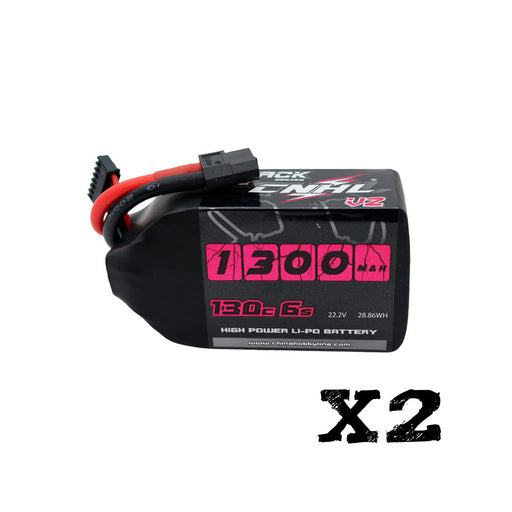
Quick Fit Check The 2 Packs CNHL Black Series V2.0 1300mAh 22.2V 6S 130C LiPo Battery with XT60 Plug is a strong fit for FPV pilots who want a prov...
View full detailsSpare Parts & Long-Term Support We know that for RC pilots, reliable spare parts support is an important part of keeping an aircraft fl...
View full details
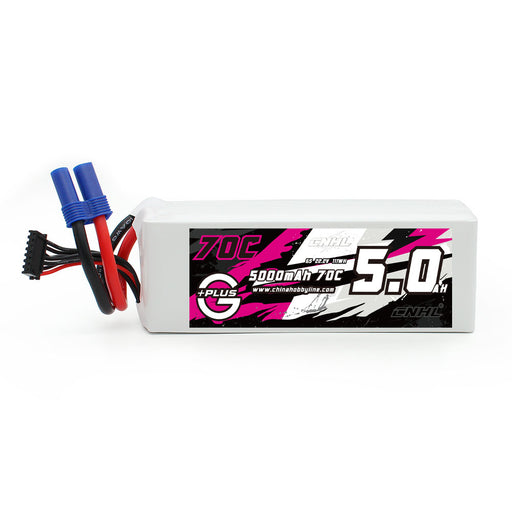
Specifications: Stock Number: 500706EC5 Capacity: 5000mAh Voltage: 22.2V / 6-Cell / 6S1P Discharge Rate: 70C Continual / 140C Burst Charge Rate: ...
View full details
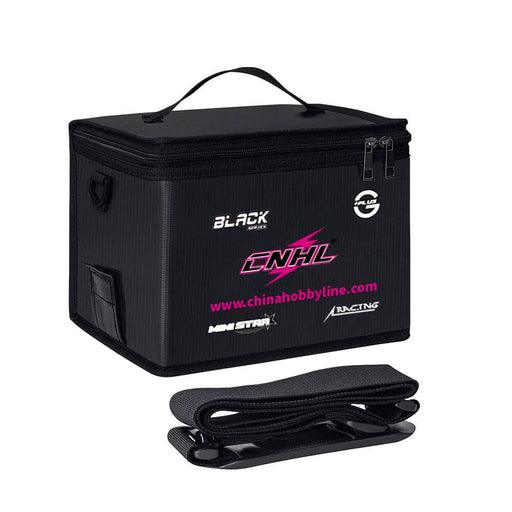
The CNHL LiPo Battery Bag is designed for safer LiPo charging, transport, and storage at home or at the field. It adds a practical layer of protect...
View full details

Quick Fit Check The 2 Packs CNHL Speedy Pizza Series Pro 1350mAh 6S 150C LiPo Battery with XT60 Plug is built for 5-inch FPV pilots who want a ...
View full details

Quick Fit Check The CNHL Speedy Pizza Series 2200mAh 22.2V 6S 120C LiPo Battery with XT60 Plug combines the familiar 2200mAh 6S format with a ligh...
View full details

Quick Fit Check The CNHL Speedy Pizza Series 2200mAh 14.8V 4S 120C LiPo Battery with XT60 Plug combines a widely used 2200mAh 4S format with a sli...
View full details

Quick Fit Check The CNHL Speedy Pizza Series 2200mAh 11.1V 3S 120C LiPo Battery with XT60 Plug takes the familiar 3S 2200mAh aircraft battery form...
View full detailsThe CNHL Long Range Series BAK 65E 6350mAh 21700 Li-ion battery cell is built around one clear priority: maximum stored energy from a lightweight c...
View full details

The CNHL Long Range Series BAK 50D 5000mAh 21700 Li-ion battery cell is designed for custom high-energy battery packs that need a strong balance be...
View full details


Comments
Leave a comment