
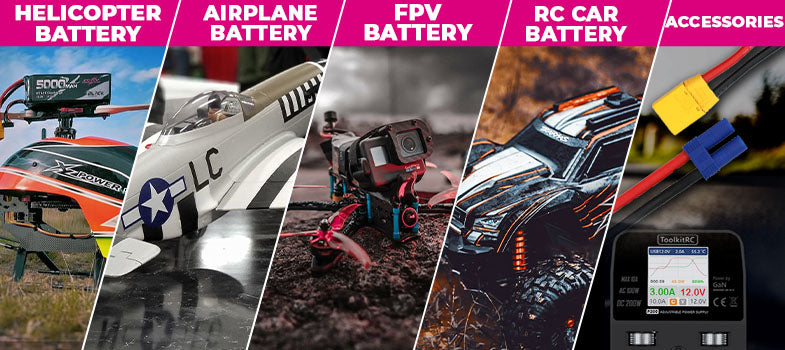
CNHL Lipo Batteries
CNHL aim at providing high-quality Li-Po batteries and RC products to all hobby enthusiasts with excellent customer services and competitive prices

Some RC cars are bought for performance. Others are bought for presence. The Primal RC / Traction Hobby Porsche 934 Rally Car sits in the rare middle ground: it looks like a display piece, yet it is built around a full-size brushless system and a drivetrain that invites real tuning. The immediate reaction from many enthusiasts is straightforward—at first glance it can pass for a real car in a photo. That is not marketing hype; it is the product of proportion, detailing, and a body that carries Porsche character correctly.
But scale realism alone is not enough. A high-detail body can still end up being a shelf queen if the underlying platform feels fragile, awkward to service, or inconsistent to drive. This is where the 934 rally platform becomes interesting. It arrives with a serious electronics specification (4274 brushless motor and a genuine Hobbywing 150A ESC), selectable drivetrain modes, and the kind of chassis adjustability that rewards owners who enjoy setup as much as driving.
The 934 is a classic shape, but it also happens to be an ideal rally-style RC silhouette. The long roofline, muscular rear, and signature tail bring instant identity, while rally accessories like spotlights and purposeful wheel/tire options make the car feel ready for mixed surfaces. For RC enthusiasts who like a model to “tell a story,” this platform lands immediately: it looks like a car meant to run on gravel stages, industrial lots, and dusty backroads, not just pristine asphalt.
Scale details matter more than many people expect. Working lights, driver figures, inner fenders, and a properly executed livery create a visual coherence that amplifies enjoyment even at moderate speed. When a car looks convincing while moving, the entire session feels more immersive—tight slides look intentional, braking looks dramatic, and even slow technical maneuvers look like real rally behavior.

This platform is not designed around a mild power system. A 4274 brushless motor paired with a 150A ESC signals that the car is expected to deliver sustained current and repeatable acceleration. The system is rated for 4S to 6S LiPo, which creates a wide performance range—from controllable, traction-focused rally driving on 4S to high-punch sessions on 6S where setup and heat management become critical.
It also matters that the electronics are not presented as generic “rebranded” items. When the ESC is explicitly a branded Hobbywing unit, owners have a more predictable baseline for calibration, throttle feel, and programming. That reduces guesswork and makes tuning decisions (like brake behavior or punch levels) easier to make systematically.

A standout feature of this platform is the ability to select between 4WD and RWD. This is not a gimmick. It changes how the car should be driven and how the chassis should be set up.
Practically, this means the Porsche 934 platform can serve two audiences: the scale rally driver who wants predictable grip and stability, and the enthusiast who wants controlled slides and dramatic rotation without needing to buy a second chassis.

Battery fitment is often treated as a quick spec line, but it directly impacts reliability. A pack that is too tight can pinch wires, deform heatshrink, rub on drivetrain parts, or stress connectors. For this Porsche 934 rally platform, the battery bay information provided for this build is:
That size is generous enough for many common 4S and 6S packs, and the tray design includes width adjustability. The benefit is not only “it fits.” The benefit is a clean installation: straps sit flat, wires can be routed safely, and the pack can be positioned without forcing the body down or twisting the leads.
Another practical advantage is serviceability. Rally driving is dusty by nature, and the car will be opened more often than a street-only model. A tidy battery installation speeds up maintenance and reduces the chances of damaging lighting leads or snagging cables when removing the shell.

Some builds ship with an XT60 battery plug even when the car is being run on 6S. XT60 can be workable in certain setups, but once current demand rises—especially with repeated acceleration and high-load driving—connection robustness becomes more important.
CNHL recommendation: For higher-current use (especially 6S), choose an XT90-equipped battery and connect it using a high-quality XT90-to-XT60 adapter. The adapter should be short, with solid soldering and minimal resistance. This approach keeps the battery-side connection stronger, while still remaining compatible with the stock ESC lead.
Just as important, keep wiring tidy. Loose leads near exposed drivetrain parts are a predictable failure point. Rally driving throws debris; wires that flap can move into gears, driveshafts, or hot components. Secure the adapter and leads so they stay in a consistent position from run to run. For battery options that are already proven to fit the Porsche 934 platform, you can refer to our Primal RC / Traction Hobby Porsche 934 battery collection .
Owners often ask “Is this really a 6S car?” The more useful question is “Which voltage matches the driving style and surface?” In rally conditions, traction is variable and full throttle is rarely used continuously. That is why many drivers find 4S surprisingly satisfying—enough speed to feel alive, enough control to place the car, and typically less heat accumulation per minute of driving.
For many owners, 4S becomes the go-to for rally wheels and gravel driving, while 6S is reserved for short, high-energy runs or more open spaces. The platform can support both; the key is to match the pack to the session goal instead of treating higher voltage as automatically better.

Before ordering any battery, physical fit should be confirmed first. For this platform, the bay size allows flexibility, but good fitment still depends on three practical details: pack dimensions, wire exit orientation, and strap clearance.
When a pack fits “just barely,” the car often becomes less enjoyable to live with. The shell can become harder to remove and install, wires can be squeezed into awkward paths, and small impacts can stress the connector. A slightly smaller pack that installs cleanly is often the better long-term choice.
High-power rally driving generates heat in predictable places: motor can, ESC, drivetrain friction points, and tires. On dusty surfaces, airflow can also be reduced by debris. Owners who plan sessions with short cool-down breaks usually get more consistent performance and fewer surprises.
For 6S use in particular, it is smart to treat the first run as a “baseline” run: drive a few minutes, check temperatures, and confirm wires remain secured. A platform can feel fine in the first minute and then build heat rapidly in later minutes if gearing, traction, or driving style is aggressive.
Another practical factor is braking behavior. If braking feels delayed or odd, that is often a radio or ESC setting rather than a mechanical problem. The best approach is to confirm calibration and settings first, then test again with a controlled run.
This platform is designed to be tuned. The most impactful adjustments for most owners are not exotic upgrades—they are setup fundamentals that shift how the car behaves across surfaces.
When the chassis is tuned correctly, the Porsche 934 becomes more than a good-looking model. It starts to feel cohesive: the car tracks straighter, transitions more smoothly, and looks more realistic because it behaves like a proper rally platform rather than a high-power toy.

| Use case | Voltage | Capacity guidance | Discharge guidance | Connector strategy | Notes |
|---|---|---|---|---|---|
| Balanced rally driving | 4S | Choose a pack that fits cleanly with safe wire routing | Quality pack with stable output | Prefer XT90 battery + short XT90-to-XT60 adapter | Control and consistency matter more than peak speed |
| Short high-energy sessions | 6S | Fitment within 158 × 50 × 60 mm is the priority | Higher current capability recommended | Strongly prefer XT90 battery + short XT90-to-XT60 adapter | Plan cool-down breaks and keep wiring secured |
| On-road style driving | 4S or 6S | Fitment and balance, avoid “just barely fits” installs | Quality output to reduce voltage sag | XT90 battery + short adapter keeps connection robust | Lower ride height and road tires can transform the feel |
Is 4S “enough” for this car?
Yes, for many rally-style sessions it is more than enough. 4S often delivers the most consistent and controllable driving on gravel while keeping heat more manageable in longer runs.
Why recommend XT90 if the car ships with XT60?
Because battery-side robustness matters when current increases. Using an XT90 battery with a short, high-quality XT90-to-XT60 adapter improves the higher-current side of the connection while staying compatible with the stock ESC lead.
Does battery size affect handling?
Yes. Beyond fitment, heavier packs can change weight distribution and how quickly the car transitions in corners. A clean fit that allows sensible placement on the tray usually produces the best balance.
Is the platform meant to be bashed hard?
This is best treated as a rally platform with scale priorities. It can be driven aggressively, but it is not designed to be launched repeatedly like a skate-park basher.
What is the simplest reliability habit?
Keep the wiring tidy and secure every run. Rally sessions throw dust and debris. Wires that drift toward moving parts eventually get damaged.
For suitable packs and additional options across voltage and capacity ranges, browse CNHL’s RC car battery collection below:
Final note: Always verify pack dimensions before ordering, and prioritize a clean install over forcing a tight fit. With the correct battery fitment, robust connector strategy, and a sensible tuning baseline, the Primal RC / Traction Hobby Porsche 934 Rally Car becomes exactly what it looks like—a premium rally platform that is both visually convincing and genuinely fun to drive.
CNHL aim at providing high-quality Li-Po batteries and RC products to all hobby enthusiasts with excellent customer services and competitive prices
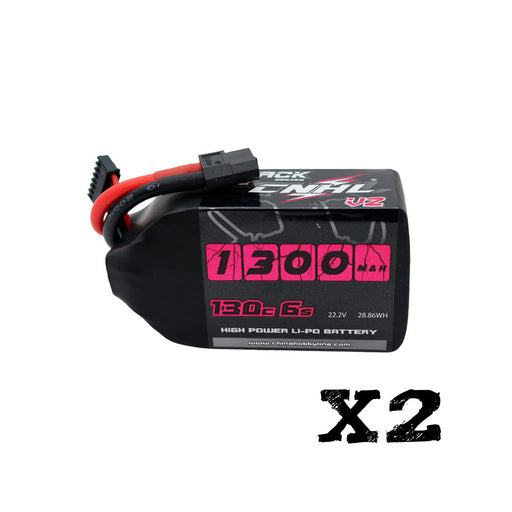
Quick Fit Check The 2 Packs CNHL Black Series V2.0 1300mAh 22.2V 6S 130C LiPo Battery with XT60 Plug is a strong fit for FPV pilots who want a prov...
View full detailsSpare Parts & Long-Term Support We know that for RC pilots, reliable spare parts support is an important part of keeping an aircraft fl...
View full details
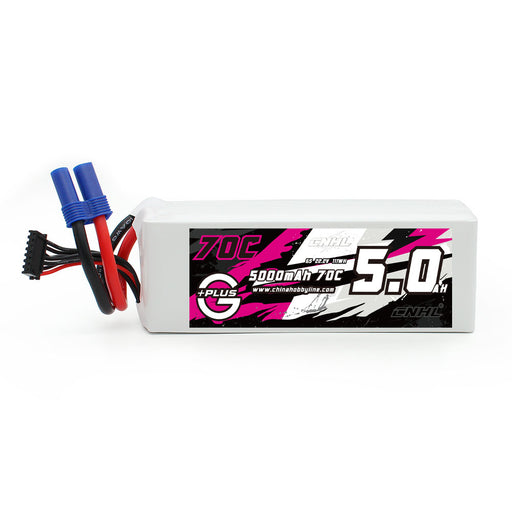
Specifications: Stock Number: 500706EC5 Capacity: 5000mAh Voltage: 22.2V / 6-Cell / 6S1P Discharge Rate: 70C Continual / 140C Burst Charge Rate: ...
View full details
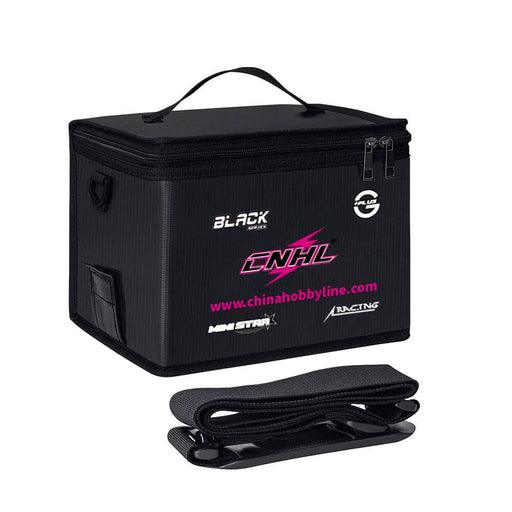
The CNHL LiPo Battery Bag is designed for safer LiPo charging, transport, and storage at home or at the field. It adds a practical layer of protect...
View full details

Quick Fit Check The 2 Packs CNHL Speedy Pizza Series Pro 1350mAh 6S 150C LiPo Battery with XT60 Plug is built for 5-inch FPV pilots who want a ...
View full details

Quick Fit Check The CNHL Speedy Pizza Series 2200mAh 22.2V 6S 120C LiPo Battery with XT60 Plug combines the familiar 2200mAh 6S format with a ligh...
View full details

Quick Fit Check The CNHL Speedy Pizza Series 2200mAh 14.8V 4S 120C LiPo Battery with XT60 Plug combines a widely used 2200mAh 4S format with a sli...
View full details

Quick Fit Check The CNHL Speedy Pizza Series 2200mAh 11.1V 3S 120C LiPo Battery with XT60 Plug takes the familiar 3S 2200mAh aircraft battery form...
View full details

The CNHL Long Range Series BAK 50D 5000mAh 21700 Li-ion battery cell is designed for custom high-energy battery packs that need a strong balance be...
View full details

The ISDT C4 EVO is a versatile smart battery charger built for AA, AAA and cylindrical rechargeable cells from compact 10440 batteries all the way ...
View full details


Leave a comment