
CNHL Lipo Batteries
CNHL aim at providing high-quality Li-Po batteries and RC products to all hobby enthusiasts with excellent customer services and competitive prices

Ever look at a new LiPo battery for your RC car and feel like you’re trying to read a secret code? You see this string of numbers and letters—like 7.4V, 5000mAh, and 70C—and it’s easy to feel a little lost. What does it all mean? And does a bigger number always mean a better battery?
Picking the right battery is key to getting the most fun out of your car, while picking the wrong one can lead to disappointment or even damaged parts. Don't worry, this code is way easier to crack than you think. Let's break down what those numbers really mean for your car’s speed, runtime, and acceleration.

The first number you’ll usually see is the voltage, marked with a "V." This number is the primary factor that determines your RC car’s potential top speed.
In simple terms, voltage is the amount of electrical "pressure" the battery provides. This pressure dictates how fast your car's motor can spin. A motor that is fed a higher voltage will spin at a higher RPM (revolutions per minute), which translates to more speed.
A good way to think about voltage is that it sets the RPM limit of your car’s motor. It’s like the redline on a real car’s tachometer. A higher voltage raises that redline, allowing the motor to spin faster and giving your car a higher potential top speed. It's the foundation for how fast your car can possibly go.
More volts generally means more speed. If you want your car to be faster, moving to a higher voltage RC battery is a common upgrade. But—and this is a big but—this is the one number you absolutely cannot guess on. Your car's motor and Electronic Speed Controller (ESC) are rated for a specific maximum voltage. Exceeding that limit is the quickest way to permanently fry your electronics. Always check your car’s manual first!

The next giant number on the battery label is its capacity, shown as "mAh" (milliampere-hours). This number has nothing to do with speed but everything to do with how long the fun lasts.
The mAh rating is simply a measure of how much energy the battery can store. A higher number means the battery holds more energy.
Think of mAh as the size of your car's "gas tank." It's that simple. A battery that says 9500mAh has a bigger gas tank than one that says 6000mAh. A bigger tank means you get to drive your car for more laps around the track or for more minutes out in the field before you have to head back to the charger.
If you’re tired of your runs being cut short, getting a battery with a higher mAh rating is the answer. It means more driving and less waiting. The only thing to keep in mind is that a bigger "gas tank" usually means a physically bigger and heavier battery, so you need to make sure the one you choose will actually fit in your car's battery tray.

While voltage sets the speed potential, the true measure of a battery's overall power—its "horsepower"—is found by combining voltage and capacity. This is measured in Watt-hours (Wh).
You usually won't see this number printed on the battery, but it's easy to figure out. You just multiply the voltage by the capacity (in Amp-hours). To get Amp-hours, you divide the mAh by 1000.
For example, for a 7.4V 5000mAh battery:
First, convert capacity: 5000mAh ÷ 1000 = 5Ah
Then, multiply: 7.4V × 5Ah = 37Wh
This 37Wh figure represents the total energy in the battery. A battery with more Watt-hours has more overall power to deliver, just like an engine with more horsepower.

The last part of the code is the C-Rating. This is often the most confusing number for newcomers, but it’s incredibly important for how "peppy" and responsive your car feels.
The C-Rating measures how quickly the battery can safely discharge its energy. A battery might hold a lot of power, but if it can't deliver that power to the motor quickly when you hit the throttle, your car will feel sluggish.
Let's go back to our car analogy. If Watt-hours are the horsepower and mAh is the gas tank, then the C-Rating is like the "width of your fuel line." A skinny fuel line can only send a trickle of gas to the engine, causing it to bog down when you floor it. A big, wide fuel line lets a ton of gas rush to the engine instantly, giving you that awesome, hard-hitting acceleration. A higher C-Rating is your big, wide fuel line.
A higher C-Rating gives your car better acceleration, or "punch." When you squeeze the trigger, a high C-Rating lets a huge wave of power rush to your motor, giving you an awesome takeoff from a standstill. For today's powerful brushless RC cars, a good C-Rating is a must. If it’s too low, the battery will struggle to keep up, leading to weak performance and potentially damaging the battery over time.

Now that we know the parts, let's look at a common LiPo battery: "2S 7.4V 5000mAh 70C".
That "secret code" on your RC battery isn't so intimidating anymore, is it? Just remember these key ideas when you're shopping: Voltage sets your top speed, mAh is your runtime, and the C-Rating is your punch. By understanding how these three parts work together, you can look at any LiPo battery, know exactly what it’s designed to do, and pick the perfect one for your RC car with confidence. Happy driving.
CNHL aim at providing high-quality Li-Po batteries and RC products to all hobby enthusiasts with excellent customer services and competitive prices
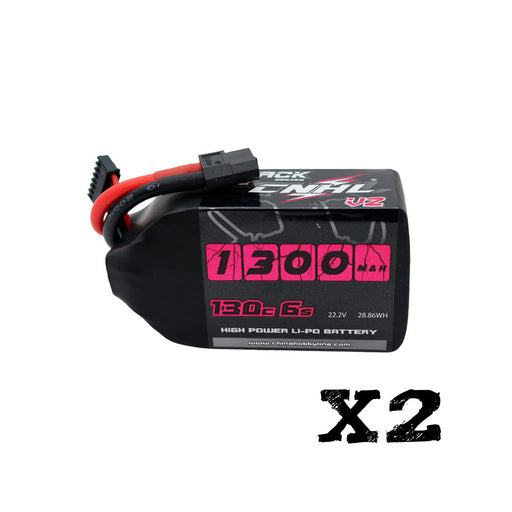
Quick Fit Check The 2 Packs CNHL Black Series V2.0 1300mAh 22.2V 6S 130C LiPo Battery with XT60 Plug is a strong fit for FPV pilots who want a prov...
View full detailsSpare Parts & Long-Term Support We know that for RC pilots, reliable spare parts support is an important part of keeping an aircraft fl...
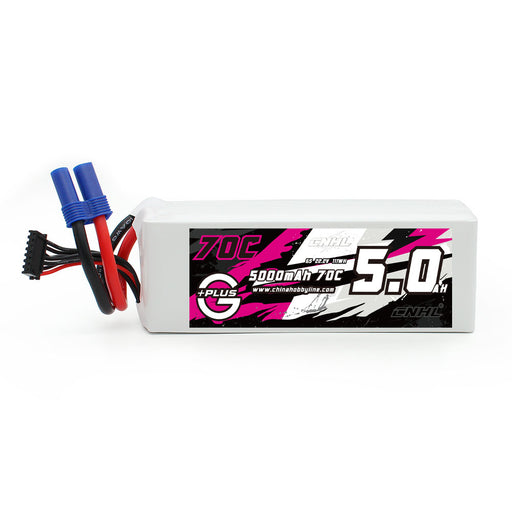
View full detailsSpecifications: Stock Number: 500706EC5 Capacity: 5000mAh Voltage: 22.2V / 6-Cell / 6S1P Discharge Rate: 70C Continual / 140C Burst Charge Rate: ...
View full details
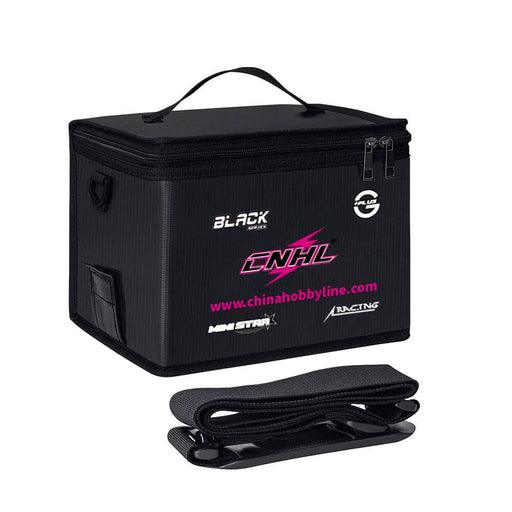
The CNHL LiPo Battery Bag is designed for safer LiPo charging, transport, and storage at home or at the field. It adds a practical layer of protect...
View full detailsQuick Fit Check The 2 Packs CNHL Speedy Pizza Series Pro 1350mAh 6S 150C LiPo Battery with XT60 Plug is built for 5-inch FPV pilots who want a ...
View full details

The CNHL Long Range Series BAK 65E 6350mAh 21700 Li-ion battery cell is built around one clear priority: maximum stored energy from a lightweight c...
View full details

The CNHL Long Range Series BAK 50D 5000mAh 21700 Li-ion battery cell is designed for custom high-energy battery packs that need a strong balance be...
View full details

The ISDT C4 EVO is a versatile smart battery charger built for AA, AAA and cylindrical rechargeable cells from compact 10440 batteries all the way ...
View full details

The CNHL Long Range Series 6350mAh 21.6V 6S1P 21700 Li-ion battery combines six BAK 65E high-energy cells into a 137.16Wh pack designed for ultra-e...
View full details

The CNHL Long Range Series 5000mAh 21.6V 6S1P 21700 Li-ion battery combines six BAK 50D cells into a compact 108Wh pack designed around long-range ...
View full details




Comments
Leave a comment