
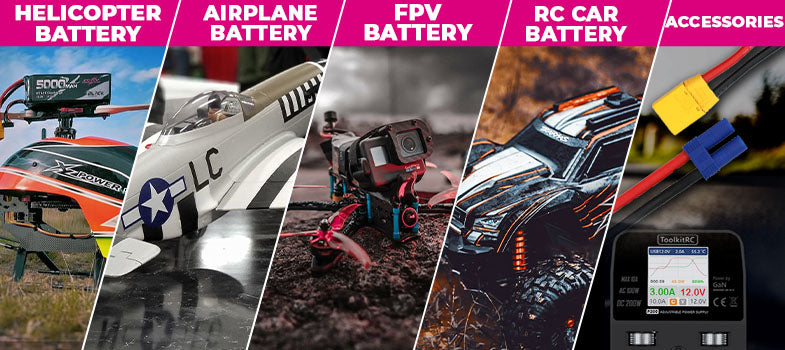
CNHL Lipo Batteries
CNHL aim at providing high-quality Li-Po batteries and RC products to all hobby enthusiasts with excellent customer services and competitive prices

Walk into any RC hobby shop, and you'll see an amazing range of sizes, from tiny cars that can drift on a tabletop to massive trucks that barely fit in a car trunk.
While the little ones are fun, most hobbyists eventually find themselves drawn to the bigger models: 1/10, 1/8, 1/6, and 1/5 scale. This is where power, performance, and a true driving feel come together, offering a much more immersive and capable experience.

So, what does "scale" actually mean? In simple terms, it's the model's size compared to the real vehicle it's based on. A 1/10 scale car is, you guessed it, one-tenth the size of the real thing. It's a simple idea, but it can be a little misleading.
Here's a key detail many beginners miss: not all 1/10 scale cars are the same size. A 1/10 scale monster truck will be much bigger than a 1/10 scale sports car because the real-life versions are vastly different. So, think of scale as a starting point, not a strict measurement.

To really see why so many people love large-scale RC, let's put the major size categories head-to-head.
Numbers on a box don't always paint the full picture. Here’s a better look at how these scales stack up in the real world.

Measuring around 20 inches (50 cm) long, this is the most common and versatile scale. It’s big enough for great performance but small enough to not be overwhelming. It's widely considered the best starting point for anyone new to the hobby.

At about 25 inches (63 cm) long, a 1/8 scale car is a noticeable step up in size and presence. These are often designed for racing, with powerful systems that make them incredibly fast and stable on a track.

Now we're getting into seriously impressive territory. These cars are often 30 inches (76 cm) or longer. With their massive size and high ground clearance, they are often designed for incredible realism and crawling over anything in their path.

These are true beasts, often measuring over 3 feet (91 cm) long. Their sheer size is awe-inspiring, and they have an incredible presence on the ground. Controlling a 1/5 scale requires skill and space, making them the choice for dedicated enthusiasts.
| Scale | Typical Length | Primary Use | Driving Feel | Terrain Capability | Speed Potential | Maintenance / Upgrades | Typical Battery | Pros | Considerations |
|---|---|---|---|---|---|---|---|---|---|
| 1/10 | ≈ 50 cm / 20 in | All-round: on-road, short course, crawler | Balanced; easy to control and learn | Pavement, dirt, short grass, light rocks | Medium–High (varies by class) | Parts abundant; simple to wrench | 2S–3S, 3000–6000mAh | Best starter scale; widest ecosystem | Less “wow” factor vs. larger scales |
| 1/8 | ≈ 63 cm / 25 in | Racing buggy, truggy, GT | Fast, planted, precise; race-ready | Dirt tracks, rough fields, jumps | High (powerful systems) | Robust hardware; tuning intensive | 4S–6S, 4000–7000mAh | Serious performance; stable at speed | Higher costs; needs larger running space |
| 1/6 | ≈ 76 cm / 30 in | Trail trucks, large crawlers, bashers | Heavy, composed; momentum over obstacles | Rocky trails, deep grass, uneven ground | Medium–High (geared for torque) | Large components; easy to work on | 6S, 5000–9000mAh | Great realism; excels in rough terrain | Bulky to transport; pricier consumables |
| 1/5 | ≥ 91 cm / 36 in | Large bashers, scale trucks; gas or high-power electric | Immersive, weighty; “real vehicle” feel | Open fields, beaches, dedicated large tracks | Very High (and high traction demands) | Spacious layout; premium parts & tools | 8S (or dual 4S in series), 7000–10000mAh+ | Maximum presence and durability | Highest cost; requires lots of space & transport |
A bigger car doesn't just mean a bigger body—it means a totally different driving experience. As scale increases, power systems and battery requirements change dramatically, which is why many drivers choose batteries based on both vehicle size and driving style. If you want to explore battery options tailored specifically for RC cars, you can find them all in our CNHL RC car batteries collection.
For electric RC cars, the battery is everything. It dictates your power, speed, and how long the fun lasts. Whether you're running a compact 1/10 basher or a full-size 1/5 monster truck, choosing the right pack makes a huge difference. Here’s a quick guide to matching the right battery to your scale, or you can browse all compatible options in our CNHL RC car battery collection.
Voltage/Capacity: 1S–2S (3.7V–7.4V) / 150mAh–1000mAh
Plugs: Tiny plugs like PH2.0 or JST.
Example: A CNHL MiniStar 900mAh 2S battery gives these tiny cars a surprising kick.
Voltage/Capacity: 2S–3S (7.4V–11.1V) / 3000mAh–6000mAh
Plugs: Common plugs like XT60, Deans, or EC5.
Example: A CNHL Racing Series 5600mAh 2S Hard Case Lipo is a great all-around choice.
Voltage/Capacity: 4S–6S (14.8V–22.2V) / 4000mAh–7000mAh
Plugs: High-current plugs like EC5 or XT90.
Example: The CNHL Racing Series 6200mAh 4S 90C battery can deliver the punch needed for a big motor.

Voltage/Capacity: 6S–8S (22.2V–29.6V) or two 4S packs in series / 6000mAh–10,000mAh+
Plugs: Heavy-duty plugs like EC5 or QS8.
Example: A massive CNHL Racing Series 9500mAh 6S 90C is what you need to power a monster like the Traxxas XRT.
While there are even bigger custom builds out there (like 1/4 scale), they are in a league of their own. For most drivers, the choice comes down to these main scales.
If you're just starting, you really can't go wrong with a 1/10 scale model. It's the perfect platform to learn on, with a huge variety of vehicles and endless upgrade options. It lets you get a feel for the hobby before you decide to go bigger and bolder into the exciting world of large-scale RC.
CNHL aim at providing high-quality Li-Po batteries and RC products to all hobby enthusiasts with excellent customer services and competitive prices
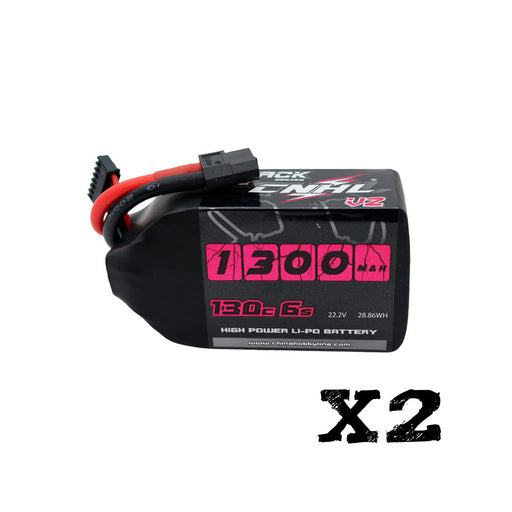
Quick Fit Check The 2 Packs CNHL Black Series V2.0 1300mAh 22.2V 6S 130C LiPo Battery with XT60 Plug is a strong fit for FPV pilots who want a prov...
View full detailsSpare Parts & Long-Term Support We know that for RC pilots, reliable spare parts support is an important part of keeping an aircraft fl...
View full details
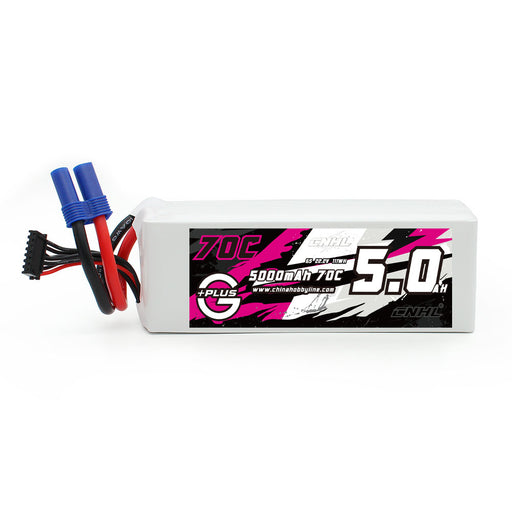
Specifications: Stock Number: 500706EC5 Capacity: 5000mAh Voltage: 22.2V / 6-Cell / 6S1P Discharge Rate: 70C Continual / 140C Burst Charge Rate: ...
View full details
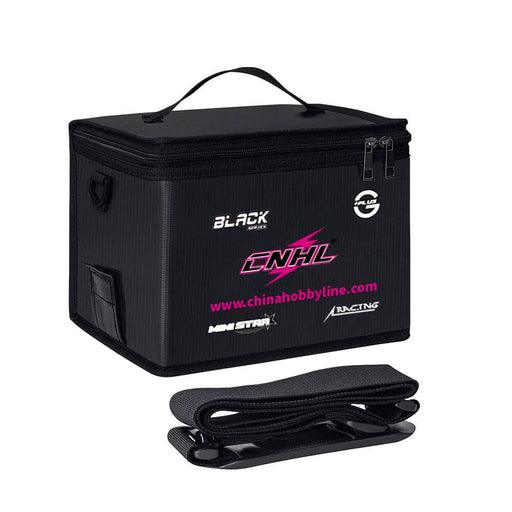
The CNHL LiPo Battery Bag is designed for safer LiPo charging, transport, and storage at home or at the field. It adds a practical layer of protect...
View full details

Quick Fit Check The 2 Packs CNHL Speedy Pizza Series Pro 1350mAh 6S 150C LiPo Battery with XT60 Plug is built for 5-inch FPV pilots who want a ...
View full details

Quick Fit Check The CNHL Speedy Pizza Series 2200mAh 22.2V 6S 120C LiPo Battery with XT60 Plug combines the familiar 2200mAh 6S format with a ligh...
View full details

Quick Fit Check The CNHL Speedy Pizza Series 2200mAh 14.8V 4S 120C LiPo Battery with XT60 Plug combines a widely used 2200mAh 4S format with a sli...
View full details

Quick Fit Check The CNHL Speedy Pizza Series 2200mAh 11.1V 3S 120C LiPo Battery with XT60 Plug takes the familiar 3S 2200mAh aircraft battery form...
View full details

The CNHL Long Range Series BAK 50D 5000mAh 21700 Li-ion battery cell is designed for custom high-energy battery packs that need a strong balance be...
View full details

The ISDT C4 EVO is a versatile smart battery charger built for AA, AAA and cylindrical rechargeable cells from compact 10440 batteries all the way ...
View full details


Comments
Leave a comment