





Why the AE RC10B7.1D Is So Sensitive to Battery Choice
The AE RC10B7.1D is tuned for dirt and lower-grip surfaces where the car’s balance matters as much as outright power. A pack that’s too heavy, too tall, or inconsistent from run to run can make the car feel lazy on direction changes—or nervous when the track goes slick and dusty.
Shorty packs give you two important advantages on the RC10B7.1 platform: (1) a compact footprint that fits the chassis the way it was intended, and (2) the ability to fine-tune the car’s balance by shifting the pack position. On 2WD buggies, those small balance changes can show up immediately in steering response and traction on exit.
Battery Specs That Actually Make Sense for RC10B7.1 / RC10B7.1D
For the vast majority of racers, the “correct” battery spec is straightforward. What matters is choosing a pack that fits cleanly, holds voltage under load, and stays consistent across multiple runs.
| Item | Recommended for RC10B7.1 / RC10B7.1D | Why it matters on this chassis |
|---|---|---|
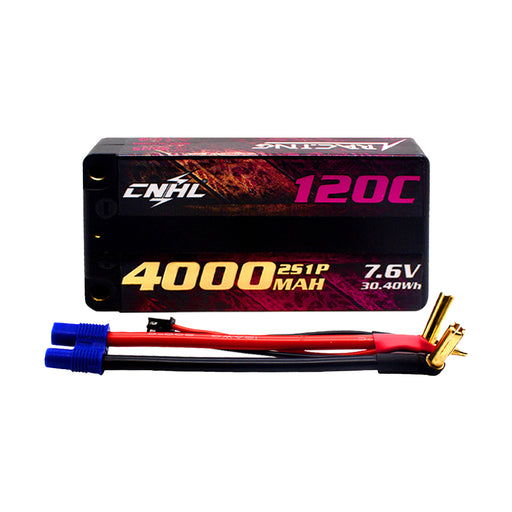
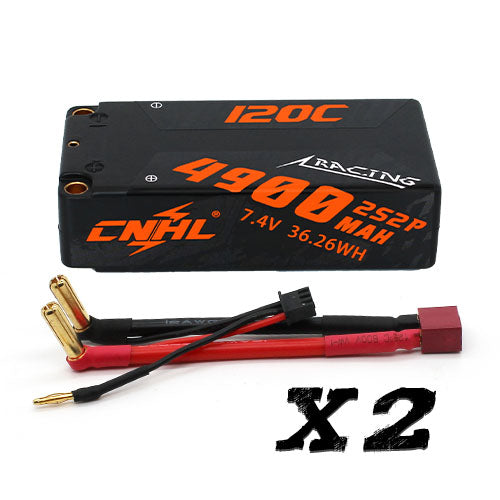
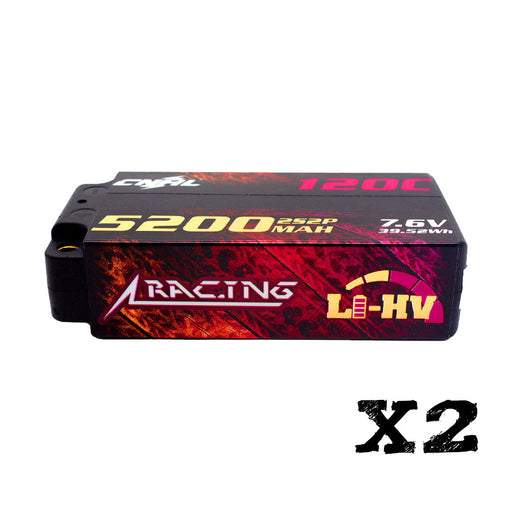
| Voltage | 2S (7.4V LiPo) or 2S LiHV (7.6V) | This is the class standard for 1/10 2WD buggy; predictable power and legal for typical race formats. |
| Form factor | Shorty / LCG shorty | Designed around modern battery positioning; helps balance and rotation without adding unnecessary mass. |
| Case | Hard case | Better protection in off-road environments; consistent fit in shorty trays and strap systems. |
| Capacity | Typically 4000–5200mAh | Enough runtime for most heats/mains without making the car feel heavy and slow to rotate. |
| Discharge rating | High-quality packs with stable voltage under load | In 2WD buggy, consistency and punch matter more than chasing extreme C numbers on paper. |
Practical tip: if you’re deciding between two packs with similar specs, choose the one that fits cleanly in the tray, doesn’t require cable “gymnastics,” and gives you repeatable lap times across multiple runs. That usually beats a pack that looks great on a spec sheet but feels inconsistent on track.
7.4V vs 7.6V LiHV on the AE RC10B7.1 Platform
Both 7.4V LiPo and 7.6V LiHV shorty packs can work well on the AE RC10B7.1 and AE RC10B7.1D. Where racers notice the difference is usually in the first part of the run: LiHV tends to feel a bit more “awake” off the bottom, while standard LiPo can feel slightly calmer and easier to manage on slick, low-grip surfaces.
If your local track is dusty or goes away as the day progresses, a smoother, more predictable power delivery can be a real advantage. If the surface has more bite (or you prefer a sharper throttle feel), LiHV is often the direction racers go. Either way, the most important thing is using a pack that stays consistent from run to run—especially on 2WD.
ESC Connector Notes (What Plug Does the RC10B7.1D “Use”?)
The kit itself doesn’t require a specific battery connector. In competitive 1/10 racing, most ESCs ship with bare leads (no plug) so racers can solder the connector that matches their batteries, keep wire runs short, and reduce resistance.
For many racers, XT60 is a practical, lightweight choice for 2S shorty packs. Others prefer direct soldering or an alternative plug based on their existing battery ecosystem. Whichever route you choose, keep two rules in mind: confirm polarity before soldering, and avoid long adapters unless you truly need them.
Who These Batteries Are For
This collection is built for racers and builders who want their RC10B7.1 / RC10B7.1D to feel predictable and repeatable. If you’re coming back to racing after a break, upgrading from an older AE platform, or simply want a clean, reliable 2S shorty setup that fits the B7.1 tray correctly, you’re in the right place.
- Club racers: consistent power, clean fitment, less fuss between rounds.
- Serious racers: repeatable punch, stable voltage, and a pack that supports precise chassis tuning.
- Builders: a tidy install that matches modern 2WD buggy layout and avoids messy wiring.
FAQ: AE RC10B7.1 / AE RC10B7.1D Battery Questions
Can I use a full-size 2S stick pack in the AE RC10B7.1D?
Most modern 2WD race chassis (including the RC10B7.1 series) are designed around shorty packs for balance and positioning. A full-size stick pack is usually the wrong shape and removes a lot of the chassis’ setup flexibility.
Do I need LiHV for the RC10B7.1D?
Not “need”—but LiHV can give a slightly sharper feel early in the run. If you prefer smoother power delivery on low-grip dirt, a quality 7.4V pack can be the easier choice. Consistency matters more than the label.
What connector should I run?
The kit does not specify a connector. Many racers use XT60 for 2S shorty setups, while others solder to match their battery system. The best connector is the one that matches your packs cleanly and keeps wiring short and reliable.
Is this setup legal for racing?
2S shorty packs are the standard for 1/10 2WD buggy racing. Always confirm your local track rules if you have a spec class that limits battery type, voltage, or dimensions.
Related Reading
The Team Associated RC10B7.1 and RC10B7.1D (often searched as AE RC10B7.1 and AE RC10B7.1D) are built around a modern 2S shorty battery layout. Choosing the right pack helps the chassis do what it does best: rotate cleanly, stay settled over bumps, and deliver repeatable lap times as track conditions change.
If you want a deeper look at what changed on the B7.1 platform (and how those updates influence setup choices), read our full guide here: RC10B7.1 / RC10B7.1D setup notes and what the updates actually change on track.