
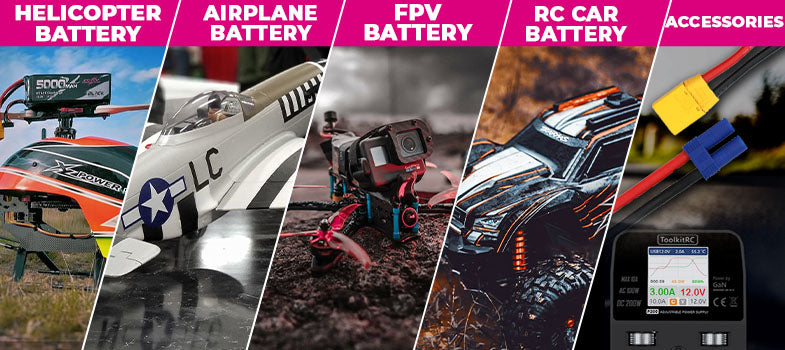
CNHL Lipo Batteries
CNHL aim at providing high-quality Li-Po batteries and RC products to all hobby enthusiasts with excellent customer services and competitive prices

Both kits share the same modern 2WD DNA, but the details (and intended surface) change how they feel on track.
The RC10B7 platform has been around long enough that most racers have formed a real opinion—usually based on track time, not marketing. Some drivers clicked with the B7 immediately. Others kept racing a well-sorted B6.3 or B6.4 because it already fit their local surface and driving style. And a lot of people simply waited to see what Team Associated would do after two full seasons of feedback.
That “next” arrived as the RC10B7.1 and RC10B7.1D. These aren’t clean-sheet cars, and they aren’t a “new generation” announcement. They’re a point revision—shaped by racing data, team driver notes, and the sort of durability and consistency fixes that only show up after hundreds of race days.
Among racers, Team Associated is often shortened to AE. In that language, the AE RC10B7.1 and AE RC10B7.1D represent a refinement of the modern AE 2WD buggy idea: reduce wasted rotating mass, make the front end lighter and more robust, and keep the chassis responsive to setup without turning it into a maintenance chore.

The headline change: fewer gears in the drivetrain to reduce rotating mass and internal drag.
It’s easy to see a “.1” update and assume it’s cosmetic. In racing, it rarely is. Once a platform has lived through multiple seasons, patterns become obvious: where parts take repeated hits, which components racers reinforce, what setup options people keep gravitating toward, and where driveline feel could be sharper. That is exactly the territory the B7.1 is aimed at.
Team Associated’s own explanation boils down to three practical goals: address small durability issues, reduce unsprung weight at the front end, and reduce drag in the drivetrain. Those may sound small in isolation, but 1/10 2WD buggy is a class where tiny differences compound. A front end that holds its alignment longer, a driveline that feels more direct, and a chassis that needs fewer “trackside fixes” can be the difference between a comfortable A-main run and a car that never quite settles.
For existing B7 owners, this matters: the B7 didn’t suddenly become unusable. The B7.1 just moves several popular refinements closer to “out of the box,” which is typically what racers want from a mature platform update.
Most of the discussion around the B7.1 starts with one change: the switch to a 3-gear laydown transmission. Some comments online frame it as “going backwards.” That’s an understandable reaction if the conversation is limited to history. But the more useful way to look at it is intent: what does a 3-gear layout accomplish on a modern 2WD buggy?
Two fewer gears means less rotating mass and fewer internal losses. Practically, that translates into a drivetrain that spools up faster and feels more connected to throttle inputs. On a 2WD car—especially on lower-grip tracks—drivers often value a powertrain that feels predictable and immediate, because it helps meter traction rather than overwhelm it.
So, rather than “old vs new,” the B7.1 transmission change reads as “efficiency and feel.” The goal is not to win a spec-sheet argument; it’s to deliver a car that responds crisply on and off throttle and stays consistent across a full race day.
| Area | What changed on B7.1 | Why racers care |
|---|---|---|
| Transmission | 3-gear laydown drivetrain | Less rotating mass and drag for a more direct throttle feel and quicker response. |
| Front end | Revised caster/steering blocks, simplified KPI/trail options, reduced unsprung weight | Front end feels calmer and more predictable, with less “fussy” parts swapping. |
| Durability | Reinforced front suspension arms with hinge-pin bracing style updates | Better resistance to front-end movement and repeated impacts over long race days. |
| Shock mounting | Updated shock towers and lowered mounting points in key areas | Lower CG and improved stability through transitions without dulling steering. |
Outside the transmission, the B7.1’s most meaningful improvements are the ones that make the car easier to drive consistently and easier to keep consistent. The front end receives multiple updates: revised arms and bracing, updated blocks, and geometry options that are presented more cleanly than before. These aren’t changes that turn the B7 into a different car overnight, but they do reduce the amount of “chasing” racers sometimes had to do when the track changed.

Front-end stability and durability improvements are aimed at keeping alignment consistent after repeated hits and landings.
There’s also a practical side to these revisions: assembly and maintenance. Modern race kits are already complex. When a platform update reduces the number of steps required to reach a stable, repeatable baseline, it tends to show up in lap time indirectly—because the car spends less time being “repaired into shape” between rounds.
One of the most important (and most overlooked) ideas in the B7.1 release is that AE continues to treat surface as a first-class decision. The RC10B7.1 and RC10B7.1D are tuned from the box for different traction environments, and that matters a lot more than many buyers expect.
The RC10B7.1D is aimed at dirt and lower-grip tracks. The goal is control, compliance, and smoothness when the surface is dusty, choppy, or changes from morning to afternoon. The standard RC10B7.1 is happier on higher grip surfaces like carpet, astroturf, or treated clay where response and precision are rewarded and where the car can lean on grip without feeling nervous.
| Version | Surface intent | Out-of-box tuning direction |
|---|---|---|
| RC10B7.1 | Carpet / astroturf / high-grip clay | Sharper response, higher-grip stability, race feel that rewards precision. |
| RC10B7.1D | Dirt / lower-grip surfaces | Smoother compliance and control to keep the car settled when traction is limited. |
A practical way to think about it: choosing the correct version for the local surface reduces the amount of setup “work” required to make the car feel normal. Choosing the wrong one doesn’t prevent racing, but it often forces compensations that can narrow the usable setup window.
One detail that deserves more attention is how AE treats arm length and sweep options between the surface-focused kits. The B7.1 family includes different arm lengths to match the traction environment, and the updated arm design introduces a practical “flip” option used in high-level racing development. In simple terms, these options are about how the car rotates and how stable it feels when the track is either high-bite or low-bite.
On a 2WD buggy, rear geometry changes can have a big effect on corner entry and how the car drives off the corner. A chassis that gives racers meaningful geometry options without needing exotic parts tends to earn trust quickly—because it supports both local tuning and travel racing where surfaces vary.

Battery talk can get overly “spec-sheet” fast, so it helps to keep it grounded: on modern 1/10 2WD buggies, the battery is a setup tool. The RC10B7.1 platform is built around a shorty battery layout that allows practical fore-and-aft positioning. That means the car’s balance can be tuned for steering feel, jump attitude, and corner exit traction—often with changes a driver can feel immediately.
This is also why racers frequently discuss battery choice in terms of consistency and balance rather than raw numbers. On dirt, the RC10B7.1D often rewards a setup that stays calm and predictable as the track loses grip. On higher bite, the RC10B7.1 tends to respond well to a sharper, more direct feel. In both cases, the “right” pack is the one that installs cleanly, holds voltage consistently, and supports repeatable lap times.
For readers who want a model-specific reference point, the recommended shorty packs for the RC10B7.1 and RC10B7.1D layout are organized here: Best 2S Shorty RC Batteries for Team Associated RC10B7.1 & RC10B7.1D.
The B7.1 platform makes the most sense for racers who enjoy the full experience of a competition kit: building, baseline setup, and incremental tuning. Returning racers who already understand 2WD behavior will appreciate how responsive the chassis is to thoughtful changes. Club racers benefit from durability and repeatability improvements that reduce between-round drama. And builders who simply enjoy the process will find that the B7.1 feels like a matured version of a modern race buggy rather than a marketing refresh.
On the other hand, if the goal is minimal setup, minimal maintenance, and “good enough” driving with almost no tuning, 2WD competition buggies can feel demanding. The B7.1 rewards involvement. For the right buyer, that’s the entire point.
Community comments around the B7.1 release tend to cluster into a few predictable themes: skepticism about the 3-gear change, frustration from buyers who recently picked up a B7D, and a steady group of racers who are still perfectly happy with older platforms. Those reactions are normal in racing. A car doesn’t need universal hype to be successful; it needs to be fast, consistent, and practical to race week after week.
The fairest conclusion is also the simplest: the B7.1 is a refinement targeted at the real-world details that separate a good kit from a great one. Drivetrain response, front-end weight and robustness, and a clearer surface-focused path (B7.1 vs B7.1D) matter more to lap times than slogans. For racers who want a modern AE 2WD buggy that feels direct and can be tuned intelligently, the RC10B7.1 platform is a logical step forward.
Is the RC10B7.1 a major upgrade over the B7?
It’s best described as a meaningful refinement. The biggest changes show up in driveline feel, front-end detail updates, and durability-focused improvements that help keep the car consistent over time.
Is the RC10B7.1D easier to drive on low-grip dirt?
The D version is built around control and compliance on lower grip. That usually translates into a calmer feel and fewer “surprises” as traction changes.
Why do racers keep mentioning AE RC10B7.1 and AE RC10B7.1D?
AE is simply shorthand for Team Associated. Many racers search using AE because it’s common trackside language, especially in 1/10 competition classes.
Does battery choice really matter that much?
On modern 2WD buggies, battery placement and weight can change balance and response. Many racers treat the battery as part of the setup rather than a generic accessory.
CNHL aim at providing high-quality Li-Po batteries and RC products to all hobby enthusiasts with excellent customer services and competitive prices

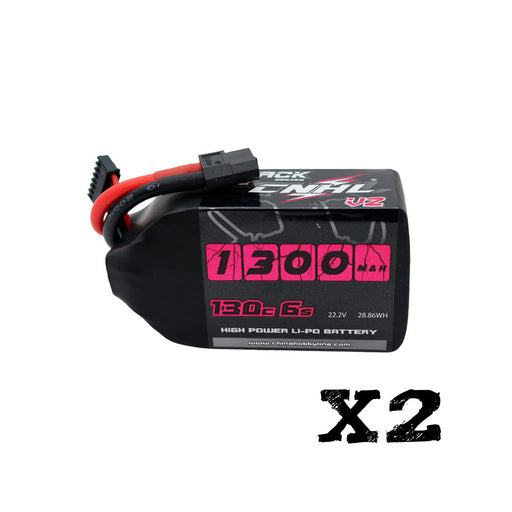
Quick Fit Check The 2 Packs CNHL Black Series V2.0 1300mAh 22.2V 6S 130C LiPo Battery with XT60 Plug is a strong fit for FPV pilots who want a prov...
View full detailsSpare Parts & Long-Term Support We know that for RC pilots, reliable spare parts support is an important part of keeping an aircraft fl...
View full details
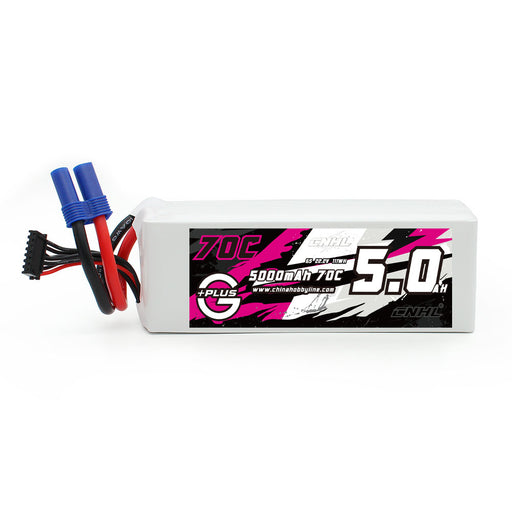
Specifications: Stock Number: 500706EC5 Capacity: 5000mAh Voltage: 22.2V / 6-Cell / 6S1P Discharge Rate: 70C Continual / 140C Burst Charge Rate: ...
View full details
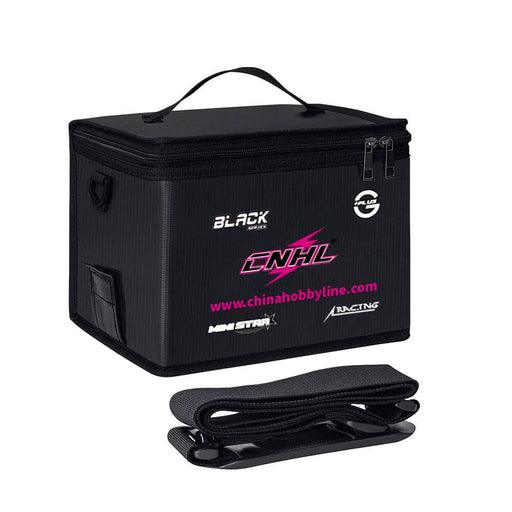
The CNHL LiPo Battery Bag is designed for safer LiPo charging, transport, and storage at home or at the field. It adds a practical layer of protect...
View full detailsQuick Fit Check The 2 Packs CNHL Speedy Pizza Series Pro 1350mAh 6S 150C LiPo Battery with XT60 Plug is built for 5-inch FPV pilots who want a ...
View full details

The CNHL 75mm EDF pilot figure is designed for 80–90mm RC jet airplanes that need a more realistic cockpit appearance without adding excessive weig...
View full details

The WNF Mitsubishi Lancer Evolution IX is an officially licensed Mitsubishi Motors 1:64 RC drift car that combines detailed Evo IX styling with rea...
View full details

The ISDT K4 is a high-power 8S LiPo smart dual charger built for demanding RC battery setups. It combines two independently controlled charging cha...
View full details

The ISDT PC-4860S is a compact four-port XT60 parallel charging board designed for experienced RC and FPV users who want to connect multiple co...
View full details

Quick Take: This officially licensed WNF 1:43 Land Rover Defender 110 Pick-Up RC crawler combines the proportions and detailing of the 1993 ...
View full details


Leave a comment