
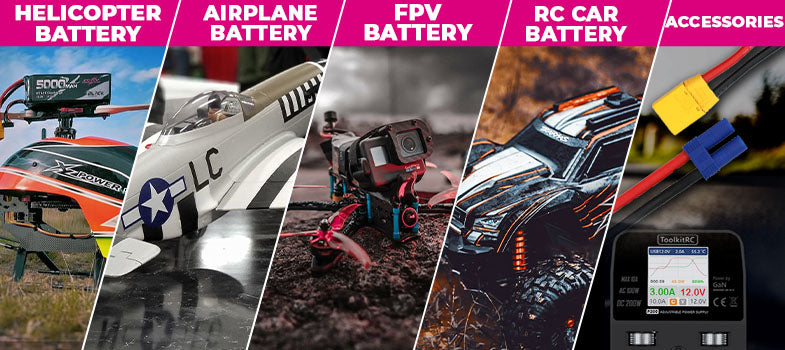
CNHL Lipo Batteries
CNHL aim at providing high-quality Li-Po batteries and RC products to all hobby enthusiasts with excellent customer services and competitive prices
Choosing the best LiPo battery bag is often one of the first safety upgrades RC users consider when charging batteries at home. While LiPo batteries are not inherently unstable, failures during charging can produce intense heat, flames, and heavy smoke if something goes wrong.
A fireproof bag for LiPo batteries does not eliminate risk, but it can significantly reduce the impact of a battery failure when combined with correct charging habits and active supervision.

A LiPo bag for batteries is a fire-resistant container designed to help contain flames, sparks, and debris if a lithium polymer battery fails during charging or storage. These bags are commonly made from fiberglass-based, fire-retardant materials and are widely used by RC hobbyists.
Experienced users emphasize that LiPo bags are a protective layer, not a substitute for proper battery handling. Balanced charging, correct cell voltage, and supervision remain essential parts of safe battery use.

Most LiPo battery incidents occur during charging, not storage. Charging pushes energy into the cells, increasing internal stress. If a cell is damaged, overcharged, or unbalanced, the reaction can escalate rapidly.
Industry educators consistently point out that LiPo fires are self-sustaining. They do not require oxygen from the air and can burn intensely even in confined environments. This is why charging location, containment, and attentiveness matter more than any single product.
A practical way to think about lipo battery charging safety is simple: most failures do not happen “randomly.” They happen when a battery is pushed outside safe limits, charged incorrectly, or left unattended long enough that warning signs are missed.
What makes LiPo incidents feel scary is the intensity. When a pack fails, the fire can be violent and fast. But the flip side is that most problems give clues before they become catastrophic. That is why the safest upgrade is not a new charger or a new bag—it is building a repeatable home routine you actually follow.

| Safety Option | LiPo Charging Bag | Metal Safety Box / Ammo Can | Fire-Resistant Safety Box |
|---|---|---|---|
| Primary Use | Charging and short-term storage | Storage and controlled charging | Dedicated charging and storage |
| Fire Resistance | Helps contain flames and sparks | Strong containment but transfers heat | High heat insulation and containment |
| Venting & Pressure Management | Passive venting through fabric | Requires modification to vent safely | Built-in venting and filtering |
| Portability | Lightweight and portable | Heavy and bulky | Moderate to heavy |
| Typical Users | Home RC hobbyists charging small batches | Users with dedicated charging areas | High-volume or indoor charging setups |
| Cost & Convenience | Affordable and easy to use | Low cost but requires setup | Higher cost, maximum protection |
A LiPo charging bag is lightweight, portable, and easy to integrate into everyday charging routines. Many users prefer LiPo safety bags for charging a small number of packs on a workbench or in a garage.
Metal safety boxes and ammo cans provide higher structural containment but introduce other considerations, such as pressure buildup and heat transfer to surrounding surfaces. Some experienced users modify metal containers to allow controlled venting, while others use fireproof bags as a more flexible solution.
Most families do not have a dedicated workshop, and most RC users are charging in normal living spaces: a garage bench, a spare room, a balcony corner, or a utility area. That is exactly where a lipo battery charging bag fits best—because it is easy to keep in your routine.
A practical home setup has three goals: reduce nearby flammables, contain the initial flame burst, and keep you close enough to react. If you can do those three things consistently, you are already ahead of most “random setup” charging habits.
One of the most repeated safety rules from experienced educators is simple: do not skip balance charging. The balance lead allows the charger to monitor each cell voltage and prevent a weak or drifting cell from being pushed beyond safe limits. In real-world incidents, many “surprise failures” started with a pack that was already unbalanced or damaged.
If someone only remembers one rule for lipo battery charging safety, it should be this: use a compatible balance charger and plug in the balance lead every time, even when you are in a hurry.
A LiPo fireproof bag is designed to slow flame spread and contain sparks long enough to reduce damage to nearby objects. It is not intended to fully extinguish a LiPo fire or make charging completely risk-free.
Real-world experiences shared by long-time RC users show that fireproof bags provide valuable reaction time. They help prevent immediate ignition of surrounding materials, allowing users to respond safely if a battery shows warning signs such as swelling, hissing, or smoke.
Think of a lipo battery safe bag as a “buffer” in your system. It buys time. It reduces the blast of flame. And it can help keep a bad moment from becoming a home disaster—especially when combined with attention and a safe charging location.
Across RC communities, the same warning signs come up repeatedly. The useful part is not the drama—it is the consistency. If a pack is about to fail during charging, users often report hearing crackling or hissing, noticing swelling, or catching a sharp chemical odor. These are the moments when a routine matters, because panic is what causes mistakes.
If any of these happen, stop the charge immediately. The goal is not to “finish charging.” The goal is to keep the situation small.
For healthy batteries stored at proper voltage, the risk of spontaneous failure is low. Many users store LiPo batteries in a lipo battery storage bag, metal containers, or dedicated safety boxes as an added precaution.
The most important factor in storage safety remains battery condition. Damaged, puffed, or unbalanced packs should never be charged or stored indoors. If a battery is questionable, treat it as a disposal candidate—not a “maybe it is fine” project.
The best LiPo battery bag is one that fits naturally into a safe charging routine. When combined with correct charger settings, supervision, and a fire-aware environment, LiPo bags offer RC users a practical and accessible layer of protection at home.
A LiPo charging bag is not mandatory, but it is widely recommended by experienced RC users. A LiPo charging bag adds a layer of protection by helping contain flames and sparks if a battery fails during charging, especially in home or indoor environments.
Most LiPo safety bags are made from fire-resistant materials and are often described as LiPo fireproof bags. In practice, they are designed to slow flame spread and reduce damage rather than completely stop a LiPo fire.
Using a LiPo fireproof bag does not make unattended charging safe. Experienced users consistently recommend staying nearby during charging so early warning signs such as swelling, hissing, or unusual smells can be noticed in time.
Many RC hobbyists use LiPo bags for short-term and long-term storage. For best results, batteries should be healthy, stored at proper storage voltage, and kept away from flammable materials.
If a battery becomes hot, puffs up, or produces smoke or unusual odors, charging should be stopped immediately. The battery should be moved to a fire-safe area outdoors and handled with caution.
To explore different sizes and styles, see our full range of LiPo safety bags and fireproof LiPo bags designed for RC battery charging and storage.
For users looking for a dedicated charging and storage solution, the CNHL LiPo battery bag offers a practical option for everyday home charging routines.
CNHL aim at providing high-quality Li-Po batteries and RC products to all hobby enthusiasts with excellent customer services and competitive prices
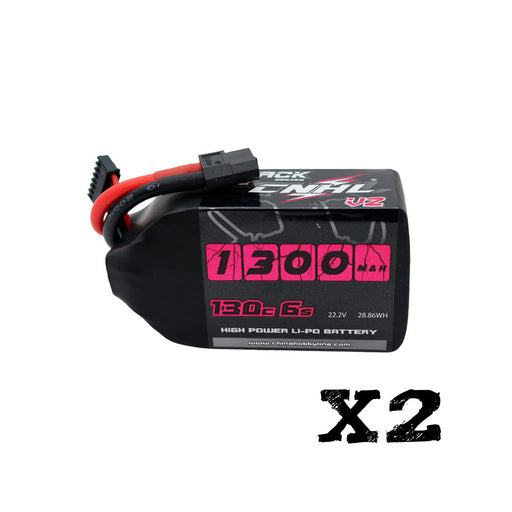
Quick Fit Check The 2 Packs CNHL Black Series V2.0 1300mAh 22.2V 6S 130C LiPo Battery with XT60 Plug is a strong fit for FPV pilots who want a prov...
View full details

Spare Parts & Long-Term Support We know that for RC pilots, reliable spare parts support is an important part of keeping an aircraft fl...
View full details
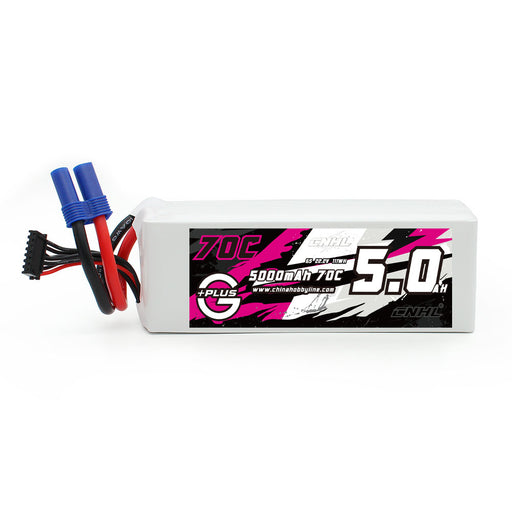
Specifications: Stock Number: 500706EC5 Capacity: 5000mAh Voltage: 22.2V / 6-Cell / 6S1P Discharge Rate: 70C Continual / 140C Burst Charge Rate: ...
View full details
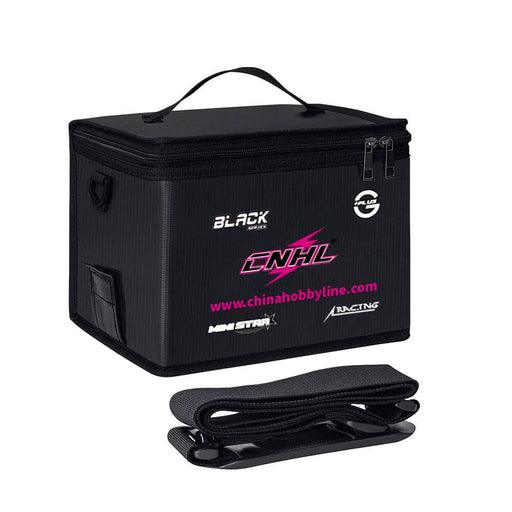
The CNHL LiPo Battery Bag is designed for safer LiPo charging, transport, and storage at home or at the field. It adds a practical layer of protect...
View full detailsQuick Fit Check The 2 Packs CNHL Speedy Pizza Series Pro 1350mAh 6S 150C LiPo Battery with XT60 Plug is built for 5-inch FPV pilots who want a ...
View full details

The WNF Mitsubishi Lancer Evolution IX is an officially licensed Mitsubishi Motors 1:64 RC drift car that combines detailed Evo IX styling with rea...
View full details

The ISDT K4 is a high-power 8S LiPo smart dual charger built for demanding RC battery setups. It combines two independently controlled charging cha...
View full details

The ISDT PC-4860S is a compact four-port XT60 parallel charging board designed for experienced RC and FPV users who want to connect multiple co...
View full details

Quick Take: This officially licensed WNF 1:43 Land Rover Defender 110 Pick-Up RC crawler combines the proportions and detailing of the 1993 ...
View full details

Quick Fit Check Continuous / Peak Current: 20A / 30A peak Battery: 3-4S LiPo BEC: No Motor Connectors: 3.5mm gold female ...
View full details


Leave a comment